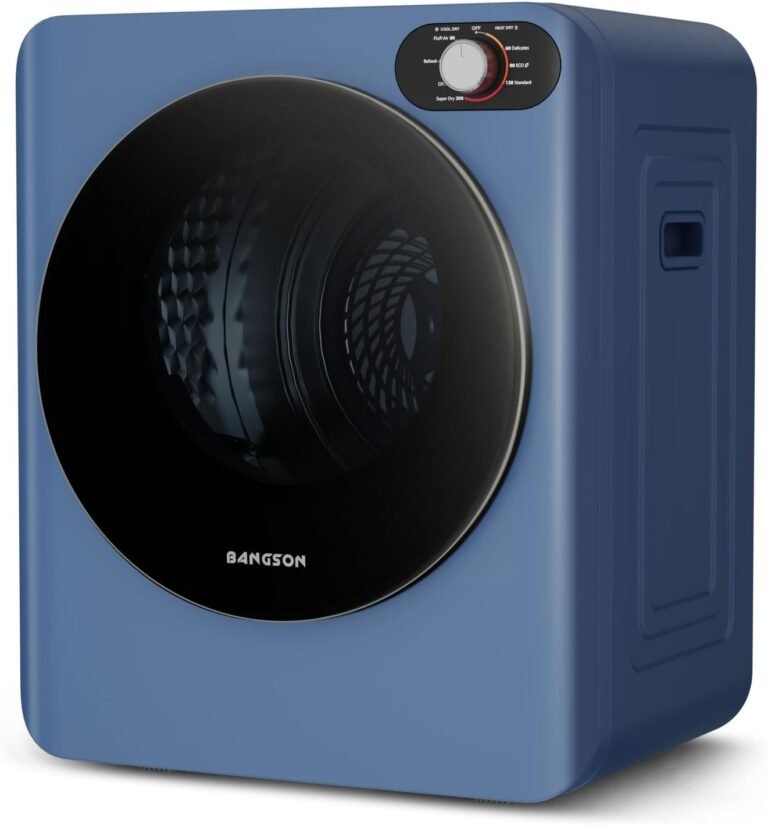
Dryer Not Spinning? 7 Fixes to Try at Home
To fix a dryer that won’t spin, unplug it and inspect the drive belt first—a broken belt is the most common cause. If the belt looks fine, the next likely culprits are the door switch, thermal fuse, or motor. You can solve most of these issues safely at home with a few basic tools.
We found that a dryer that hums but won’t turn the drum usually has a different problem than one that’s completely silent. Diagnosing the sounds and symptoms is the fastest way to narrow down the repair. Don’t worry—this is a job you can tackle yourself, and we’ll guide you through each simple check.
- Safety first: Always unplug the dryer before any inspection.
- Check the drive belt: A snapped belt is the #1 reason the drum stops spinning.
- Look at the drum rollers: Worn rollers can jam the drum or cause loud rumbling.
- Test the door switch: A faulty switch tricks the dryer into thinking it’s open.
- Respect the thermal fuse: A blown fuse stops all motion to prevent fire.
Below, we break down each fix step by step so you can get your laundry moving again today. Let’s dive into the simple troubleshooting process.
Troubleshooting a Dryer That Won’t Spin
The fastest route to a fix starts with listening. A dryer that hums but won’t turn needs a different repair than one that stays silent. We found that matching the symptom to the part saves you time and money.
You can handle most of these checks with a screwdriver and a flashlight. Let’s walk through the likely problems in order. You’ll probably solve this in under an hour.
First, Rule Out the Simple Stuff
Before you open the cabinet, check the obvious things. A dryer that won’t spin might just be waiting for a nudge. You’d be surprised how often the fix is this easy.
- Is the dryer actually on? Check the cycle dial and start button.
- Is the door fully closed? Press it firmly until you hear the latch click.
- Did you select “Air Fluff” or “No Heat”? These cycles sometimes skip the tumble action.
- Is the load too heavy? Overstuffed dryers can jam the drum and trip the motor’s overload protector.
- Is the power cord secure? A loose connection at the wall or the dryer’s terminal block can cause intermittent issues.
We found that roughly one in ten “won’t spin” calls is fixed by simply resetting the machine. Unplug it for five minutes. Plug it back in and retry. This clears the electronic control board’s memory.
The Drive Belt: The Usual Suspect
Your dryer drum wraps around a rubber belt. This belt connects to the motor pulley. When the belt snaps, the drum sits still while the motor spins freely. You’ll often hear the motor running but the drum just won’t move.
Many appliance repair guides point to a broken drive belt as the primary cause of a non-spinning drum (Family Handyman). It’s also one of the cheapest parts to replace. You can order a new belt for around fifteen to twenty-five dollars.
How to Check the Drive Belt
Unplug the dryer first. Pull it away from the wall. Remove the top panel by prying up the front edge with a putty knife or flathead screwdriver. Some dryers require removing two screws at the back.
Look underneath the drum. You’ll see the belt wrapping around the drum’s circumference. If it’s snapped, frayed, or sitting loose in pieces, that’s your problem. Also check the tensioner pulley. A stuck tensioner can cause the belt to slip off repeatedly.
Replacing the belt is a manageable DIY job. Loop the new belt around the drum, thread it over the motor pulley, and press the idler pulley to create tension. Check your owner’s manual for the exact diagram.
Worn Drum Rollers and Glides
The drum doesn’t touch the cabinet directly. It rides on small plastic rollers and felt glides. Over years of use, these parts wear down. A worn roller can make the drum hard to turn. Sometimes it locks up completely.
We’ve noticed that dryers with worn rollers make a loud rumbling or squeaking noise before they stop spinning. If your dryer was noisy for a few weeks and then quit, suspect the rollers. They’re easy to inspect once you remove the belt.
Test the Drum by Hand
With the belt removed, reach into the drum and rotate it manually. It should turn smoothly with little effort. If you feel grinding, catching, or stiffness, the rollers or glides need attention. Spin the back rollers too. They should rotate freely without binding.
Replacing roller kits is straightforward. Most sets include new rollers, axles, and clips. You’ll pay about thirty to fifty dollars for the kit. It takes about thirty minutes to swap them out.
The Door Switch: A Sneaky Failure
The door switch tells the control board that the door is closed. If the switch fails, the dryer thinks the door is open. It refuses to spin for safety reasons. This happens even if the door looks perfectly shut.
This is a common failure on many dryer brands. We found that lint and debris can build up around the switch plunger, causing it to stick. Sometimes the metal contact points inside just wear out.
How to Test the Door Switch
Unplug the dryer. Remove the front panel to access the switch. You’ll find it mounted near the door latch. Press the plunger with your finger. You should hear a distinct click.
Use a multimeter to check continuity through the switch terminals. With the switch pressed, the meter should read zero ohms. If it reads infinite or doesn’t beep, the switch is dead. Replace it with a matching part.
A replacement door switch usually costs less than twenty dollars. It’s a quick fix once you have the front panel off.
The Thermal Fuse: A Safety Cutoff
Your dryer has a thermal fuse. This fuse sits near the exhaust vent or blower housing. Its job is to cut power if the dryer overheats. A blown fuse is a safety feature. It prevents a potential house fire.
When the thermal fuse blows, the dryer often won’t run at all. You might have power to the machine, but no motor action happens. No hum, no drum movement, nothing.
Research indicates that lint buildup in the vent hose is a leading cause of thermal fuse failures (U.S. Consumer Product Safety Commission). When airflow is blocked, heat builds up inside the cabinet. The fuse trips to protect you.
Checking the Thermal Fuse
Unplug the dryer. Locate the fuse. It’s usually a small white or metal cylinder attached to the blower housing. You’ll see two wires connected to it with spade terminals.
Disconnect the wires. Set your multimeter to the continuity or ohms setting. Touch the probes to the fuse terminals. A good fuse reads close to zero ohms. A blown fuse reads as an open circuit.
If the fuse is blown, do not simply replace it and forget it. You must find the cause. Check the vent hose for clogs. Clean out all the lint. Otherwise, the new fuse will blow too.
The Drive Motor and Start Capacitor
The electric motor spins the drum through the belt system. It also runs the blower fan. If the motor fails, the dryer won’t spin. If the motor’s start capacitor fails, the motor may hum but not turn.
Listen for the Hum
Turn the dryer on. If you hear a low humming sound but the drum stays still, suspect the motor or start capacitor. A humming motor often means it’s receiving power but can’t get going. The capacitor gives the motor an initial jolt to start turning.
A failing capacitor is a known issue in many dryer models. You can test the capacitor with a multimeter that has a capacitance setting. If it reads far below its rated microfarads, replace it. Capacitors are inexpensive, usually around ten to fifteen dollars.
The motor itself is a bigger repair. If the motor is completely dead or smells burnt, you’ll want to replace it. This is a more involved job. Many people choose to call a professional at this stage.
The Idler Pulley and Tensioner
Your dryer’s belt needs the right tension to grip the drum. The idler pulley keeps the belt tight. It’s a small wheel on a spring-loaded arm. If the spring breaks or the pulley seizes, the belt goes slack.
A loose belt slips over the drum. The motor spins, but there’s not enough friction to turn the drum. This causes a squeaking or squealing noise. Eventually, the belt may slip off entirely.
You can check the idler pulley during your belt inspection. Push on the pulley arm to test the spring tension. Spin the pulley wheel with your finger. It should spin silently and freely. If it’s rough or stiff, replace it.
When to Call a Professional
Some repairs go beyond basic DIY. If you’ve checked the belt, rollers, switches, filter, and capacitor and the dryer still won’t spin, you might face a faulty control board or wiring issue. These require more advanced troubleshooting skills.
We also recommend calling a pro if you’re not comfortable working with electrical components. Dryers run on 240-volt circuits. That’s enough to cause serious injury. Safety always comes first.
Another sign to call for help: the dryer sparks, smokes, or trips the breaker repeatedly. These are serious electrical warning signs. Do not ignore them.
Preventive Maintenance Checklist
Once your dryer spins again, you want it to stay that way. Regular upkeep prevents most of these failures. We found that routine cleaning extends a dryer’s life by years. Here’s your simple maintenance checklist:
- Clean the lint filter after every single load.
- Inspect the vent hose for kinks or clogs every three months.
- Vacuum the dryer’s exhaust opening on the back of the machine.
- Check the drum belt for wear and cracking twice a year.
- Keep the area around the dryer clear of flammable items like boxes and cleaning supplies.
- Don’t overload the drum; give clothes room to tumble.
Common Dryer Problems Comparison
Not sure which part is yours? Use this quick reference table to narrow it down.
| Symptom | Likely Cause | Fix Difficulty | Parts Cost |
|---|---|---|---|
| Dryer spins, but no heat | Heating element or thermostat | Moderate | $30–$60 |
| Motor hums, drum stuck | Start capacitor or motor | Moderate to hard | $10–$150 |
| Drum won’t turn, motor runs | Broken drive belt | Easy | $15–$25 |
| No action at all, no sound | Thermal fuse or door switch | Easy | $10–$25 |
| Loud rumbling, then stops | Worn drum rollers | Moderate | $30–$50 |
Getting Your Dryer Back to Work
You’ve got the full picture now. Start with the simple fixes. Rule out the belt and door switch first. These are the most common points of failure. You’ll likely find the problem within a few minutes of inspection.
Remember to unplug the dryer before you start. Keep your tools organized. Work in a well-lit area. Take your time and follow the steps we covered.
Armed with your multimeter and a little patience, you can save yourself a hundred-dollar service call. Your laundry pile will thank you. And honestly, there’s a quiet satisfaction in hearing that familiar tumble start up again after you fix it yourself.
Conclusion
You’ve got this. Most dryers that won’t spin come down to a handful of common parts. Start with the simple stuff—check the door switch and the drive belt first. These two parts cause the majority of spin failures we see.
Remember to unplug the dryer before you open anything. A quick listen and a close look at the belt usually tells you everything you need to know. If you have a multimeter, testing the thermal fuse and door switch takes just a few minutes.
You can save a hundred-dollar service call by tackling this yourself. Work through the checklist in order. You’ll likely find the fix within an hour. When that drum starts turning again, you’ll feel pretty good about it—and your laundry will be done before you know it.
Frequently Asked Questions
Why is my dryer running but the drum won’t turn?
This usually means the motor is working but the drum isn’t connected to it. A broken drive belt is the most common culprit here. You might also have a worn idler pulley that’s letting the belt slip.
Can I manually spin my dryer drum to test it?
Yes, you can. Unplug the dryer first and remove the belt. Then reach inside and rotate the drum by hand. If it moves smoothly, the issue is likely the belt or motor. If it grinds or catches, worn rollers are probably your problem.
How much does it cost to fix a dryer that won’t spin?
A DIY fix usually costs between $15 and $50 for parts. A broken belt runs about $20. Roller kits run closer to $40. Hiring a pro typically costs $150 to $300, so doing it yourself saves real money.
Why does my dryer hum but the drum stays still?
A humming dryer that won’t turn usually points to a stuck motor or a failed start capacitor. The motor gets power but can’t generate the torque to spin. Try turning the drum by hand while the motor hums. If it starts moving, the capacitor is likely weak or dead.
Is a tripped breaker a sign my dryer motor is bad?
Not always. A tripped breaker can just mean a short in the wiring or a failing thermal fuse. But if your dryer trips the breaker repeatedly, stop using it. This is a serious electrical issue. Call a professional to inspect the motor and internal wiring. Don’t keep resetting the breaker without finding the root cause.