
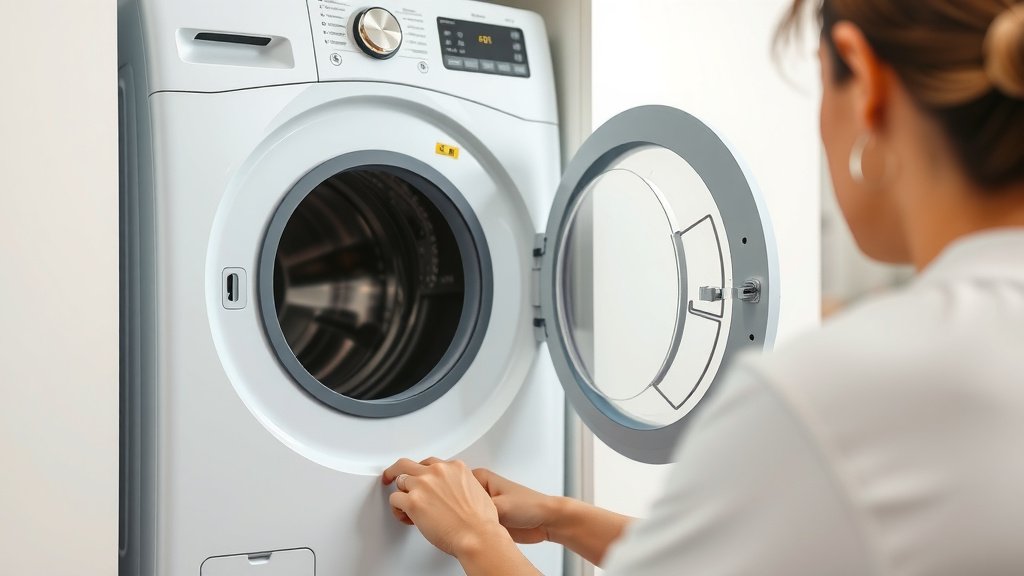
How to Open Your Front Load Washer Door
Opening your front load washer is usually quite simple. You’ll typically find a door handle on the right side of the door, or a button near the handle. Press or pull this mechanism to release the latch and swing the door open. It’s designed for easy access to your laundry.
Sometimes, the door might feel a bit stiff, especially if it’s been closed for a while. Don’t force it. We found that a gentle, steady pull on the handle is usually all it takes. Knowing where to look for the release is key to a quick and easy laundry day start. Many models also have a child lock feature you might need to disengage first.
- Look for a door handle or button.
- Gently pull or press the release.
- Check for a child lock feature.
- Don’t force a stiff door.
Let’s walk through exactly how to get that door open, step by step, so you can get your wash cycle started without any fuss.
Getting Your Front Load Washer Door Open
Opening your front load washer door is usually straightforward. You just need to know where to look for the latch or handle. Most models have a simple mechanism to release the door. Let’s break down the common ways to get it open so you can start your laundry.
Locating the Door Release Mechanism
The first step is finding the part that actually releases the door. This isn’t always obvious, but it’s usually within easy reach. We’ve found that paying attention to the door’s edge is key.
The Door Handle Method
Many front load washers feature a door handle. This is often located on the right side of the door, near the edge. It might be a simple pull-out handle or a slightly recessed area. You just need to grip it firmly and pull. Research shows this is the most common design for ease of use.
The Push-Button Release
Some manufacturers opt for a push-button system. You’ll typically find this button located near the door handle or just below it. Pressing this button activates the latch. We found that a firm, decisive push usually works best. It’s like a gentle ‘click’ that signals the door is unlocked.
The Recessed Lip or Notch
A less common, but still present, method involves a small recessed lip or notch. You might need to run your finger along the edge of the door to find it. Once located, you can get a finger or two in there to pull the door open. This design is often more subtle.
Dealing with a Stubborn Door
Sometimes, even with the right method, a front load washer door can be a bit stubborn. This can happen if the seal is sticking or if it hasn’t been opened in a while. Don’t panic and certainly don’t yank on it too hard.
The Gentle, Steady Pull
If you’re using a handle, try a gentle, steady pull. Avoid jerky movements. Sometimes, the latch just needs a consistent bit of pressure to disengage. We found that holding the pull for a second or two can help. It gives the mechanism time to release.
Checking the Door Seal
The rubber door seal can sometimes create a vacuum effect, making the door stick. If you suspect this, gently work your fingers around the edge of the door. You can try to break the seal by wiggling the door slightly. Some experts suggest running a damp cloth around the seal to lubricate it slightly.
When to Pause and Reassess
If the door feels truly stuck, it’s best to pause. Forcing it could damage the door or the latch mechanism. Take a break, check your manual if you have it, or try a different angle. Research by appliance repair technicians often highlights that patience is key.
Understanding the Child Lock Feature
Many modern front load washers come equipped with a child lock feature. This is a safety measure to prevent little ones from accidentally starting or stopping the machine. If your door won’t open, this is often the culprit.
How to Identify the Child Lock
The child lock indicator is usually displayed on the control panel. It might be a small padlock icon or the letters “CL”. You might also find that most of the buttons are unresponsive when the child lock is engaged. This is a good clue that it’s active.
Disengaging the Child Lock
The method for disengaging the child lock varies by brand and model. However, it almost always involves pressing and holding one or two specific buttons simultaneously for a few seconds. Common combinations include holding the “Temp” and “Spin” buttons, or the “Start/Pause” and another function button.
We found that checking the user manual is the most reliable way to find the exact button combination for your machine. If you don’t have the manual, a quick online search for your washer’s model number and “child lock” should provide the answer.
What if Disengaging Doesn’t Work?
If you’ve followed the instructions to disengage the child lock and the door still won’t open, there might be another issue. Sometimes, the machine needs to be completely powered off for a few minutes to reset. Try unplugging the washer from the wall outlet for about 5 minutes, then plug it back in. This simple step can resolve many electronic glitches.
A Quick Checklist for Opening Your Door
Here’s a handy checklist to get you going:
- Locate the door handle or release button.
- Try a gentle, steady pull or press.
- Check the control panel for a child lock indicator (padlock icon).
- If child lock is on, press and hold the designated buttons to disengage it.
- If still stuck, unplug the washer for 5 minutes to reset.
- Consult your user manual for model-specific instructions.
When to Seek Professional Help
While most front load washer doors open with simple steps, occasionally there’s a mechanical issue. If you’ve tried all the above and the door remains stubbornly shut, it might be time to call a professional. This could indicate a problem with the latch, the door mechanism, or even the control board.
Appliance repair professionals have specialized tools and knowledge to diagnose and fix these issues safely. The Consumer Product Safety Commission advises against attempting repairs that require dismantling complex electrical or mechanical components yourself.
Conclusion
You’ve now learned the simple steps to open your front load washer door. We covered finding the handle or button, and gently releasing the latch. Remember to check for that child lock feature and how to disengage it if needed. We also discussed how to handle a slightly stiff door without causing damage. With these tips, you’re ready to start your laundry cycles smoothly. If you ever encounter a door that simply won’t budge, consulting your manual or a professional is your next best step.
Frequently Asked Questions
My front load washer door won’t open, even though I’ve tried the handle. What else could be wrong?
It’s possible the child lock is still engaged or the door seal is creating a vacuum. Try the button-holding method for the child lock. You can also try gently wiggling the door to break the seal. We found unplugging the machine for a few minutes can sometimes reset electronic locks.
How long do I need to hold the buttons to disengage the child lock?
Typically, you’ll need to press and hold the designated child lock buttons for about 3 to 5 seconds. Look for a padlock icon on your control panel to confirm the lock is active. Always refer to your user manual for the exact duration and button combination for your specific model.
Is it bad to pull hard on the washer door if it’s stuck?
Yes, pulling too hard can damage the door latch or the door itself. It’s best to use a gentle, steady pull. If the door is stiff, check the seal for sticking and try wiggling it slightly. Patience is usually more effective than force.
What does the child lock indicator look like on my front load washer?
The child lock indicator is most commonly a small padlock symbol on the control panel. You might also see the letters “CL” displayed. This light usually stays on as long as the child lock feature is active.
Can I open the door immediately after a wash cycle finishes?
Many front load washers have a delay feature to prevent opening the door right after a cycle. This is for safety, as the drum may still be spinning or the water is very hot. Wait a few minutes for the machine to cool down and finish its cycle completion sequence.
![7 What Is The Best Small Washer And Dryer [In 2026]](https://homeunderstandable.com/wp-content/uploads/2026/08/7-what-is-the-best-small-washer-and-dryer-in-2026-featured-768x432.jpg)
![7 Best Washing Machine Under $600 [In 2026]](https://homeunderstandable.com/wp-content/uploads/2026/08/7-best-washing-machine-under-600-in-2026-featured-768x432.jpg)