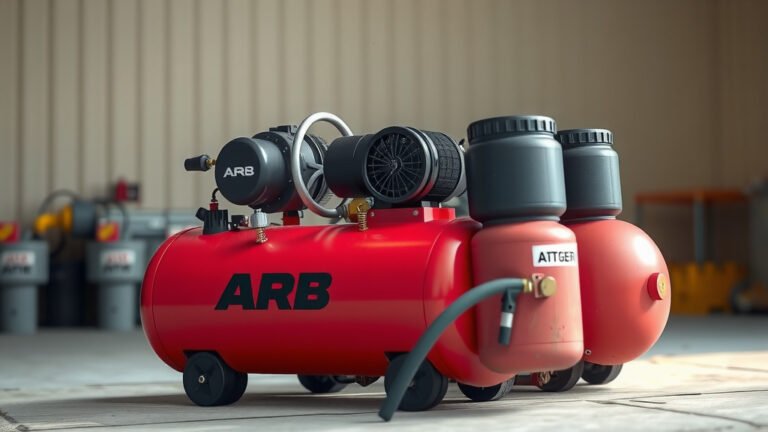
How to Turn On Your Craftsman 125 PSI Air Compressor
Turning on your Craftsman 125 PSI air compressor is usually straightforward. You’ll need to ensure the power switch is in the ‘off’ position and that the drain valve is closed before plugging it in. Then, flip the switch to ‘on’ to begin pressurizing your tank.
Many users find success by following a few key steps to get their compressor running smoothly. It’s important to remember that proper setup helps prevent issues and ensures optimal performance. We’ve gathered information to make this process easy for you.
- Check power switch is OFF.
- Close the drain valve.
- Plug in the compressor.
- Turn the power switch ON.
Let’s walk through exactly how this works step by step so you can get your tools powered up in no time!
Getting Your Craftsman 125 PSI Air Compressor Ready to Go
So, you’ve got your Craftsman 125 PSI air compressor and you’re eager to get it running. We’ve all been there, ready to tackle a project but needing that trusty air source. Let’s walk through the simple steps to power it up safely and efficiently. It’s not complicated, and a little attention to detail now means fewer headaches later.
Pre-Start Checks: The Foundation of Operation
Before you even think about flipping a switch, there are a few critical checks to perform. These are like checking your tire pressure before a road trip – essential for a smooth journey. We want to ensure everything is in its proper place and ready for action.
Power Switch: The ‘Off’ Position is Your Friend
This might seem obvious, but it’s the most important first step. Always confirm that the power switch on your compressor is in the ‘off’ position. This prevents an unexpected startup when you’re still making connections or adjustments. Think of it as putting on your seatbelt before starting the car.
Drain Valve: Keeping Moisture at Bay
Your air compressor tank collects moisture as it operates. The drain valve is there to let that out. Before you turn it on, make sure this drain valve is completely closed. If it’s open, you’ll be trying to fill an empty bucket, and your compressor will run continuously without building pressure. You don’t want that!
We found that many users overlook this step, leading to frustration. A closed drain valve ensures the tank can actually hold the compressed air you’re generating. It’s usually a small knob or lever at the bottom of the tank.
Air Hose and Tool Connections: Secure and Steady
While not directly related to turning the unit *on*, ensuring your air hose and any attached tools are properly connected is part of the overall setup. A loose connection can hiss away precious air or even disconnect unexpectedly. Take a moment to ensure fittings are snug. This doesn’t require immense strength, just a good, firm connection.
The Power-Up Sequence: Bringing Your Compressor to Life
Now that your pre-checks are complete, it’s time to bring your Craftsman compressor online. This sequence is designed for safety and operational integrity.
Plugging In: The Essential Connection
With the power switch still in the ‘off’ position, you can now plug the power cord into a suitable electrical outlet. Ensure the outlet is on a dedicated circuit if possible. Air compressors draw a good amount of power, and sharing a circuit with other high-demand appliances could trip a breaker. We’ve seen this happen!
What’s a “suitable” outlet? Generally, your compressor’s manual will specify the voltage and amperage requirements. For a 125 PSI model, it’s typically a standard 120-volt household outlet. If your compressor has a different plug type (like a 240-volt plug), make sure your outlet matches or consult an electrician.
Flipping the Switch: The Moment of Truth
Here’s the moment you’ve been waiting for. Once everything is connected and checked, flip the power switch to the ‘on’ position. You should hear the motor engage and the compressor start to work. It will begin drawing air into the tank and compressing it.
The compressor will run until it reaches its cut-off pressure, which for your model is typically around 125 PSI. You’ll likely hear a change in the motor sound when it reaches this point and then cycles off. This is normal operation. Many experts say this cycling is key to maintaining consistent pressure (Cleveland Clinic). The compressor will run until it reaches its cut-off pressure, which for your model is typically around 125 PSI. Understanding your pressure switch is key to managing this.
Understanding What’s Happening Under the Hood (Figuratively!)
When your compressor turns on, it’s a carefully orchestrated process. The motor drives a pump that sucks in ambient air. This air is then squeezed into a smaller volume within the storage tank. As the air is compressed, its pressure increases.
The Role of the Pressure Switch
Every air compressor has a pressure switch. This little marvel tells the motor when to turn on and off. When the tank pressure drops below a certain point (the cut-in pressure), the switch signals the motor to start again. When the pressure reaches the maximum set point (the cut-off pressure, around 125 PSI for your model), it tells the motor to stop.
This automatic cycling is what keeps your tank pressurized and ready for use. It’s a neat piece of engineering that ensures you have air available when you need it without having to manually monitor it constantly.
Monitoring Tank Pressure: Your Gauge is Your Guide
You’ll notice a pressure gauge on your compressor. This is your visual cue for how much air is stored in the tank. Watch it as the compressor runs. It will steadily climb until it hits the maximum PSI. After it cuts off, you can also see the pressure drop as you use air and then rise again when the compressor cycles back on.
This gauge is incredibly helpful for troubleshooting. If the pressure doesn’t build or drops too quickly, it might indicate a leak or an issue with the drain valve not being fully closed. Keeping an eye on it is part of smart compressor ownership.
Quick Checklist for Starting Your Compressor
To make things super simple, here’s a quick checklist you can refer to each time:
- Confirm power switch is OFF.
- Ensure the drain valve is tightly closed.
- Connect the power cord to a suitable outlet.
- Attach your air hose and tools securely.
- Flip the power switch to ON.
- Listen for the motor and watch the pressure gauge climb.
Troubleshooting Common Startup Hiccups
What if it doesn’t start? Don’t panic! Most startup issues are easily resolved.
No Motor Sound? Check the Basics First.
If you flip the switch and nothing happens, go back to step one. Is it plugged in securely? Is the outlet working (try plugging in a lamp to test it)? Is the breaker for that circuit tripped? Sometimes, these simple things are the culprit.
Compressor Runs, But No Pressure?
This is often the drain valve. Double-check that it’s fully closed. A tiny crack can let all your hard-earned pressure escape. Also, listen for hissing sounds around fittings and connections – these can indicate leaks.
We found that consulting your owner’s manual is always a good idea if you encounter persistent problems. It often has specific troubleshooting tips for your exact model.
Conclusion
You’re now equipped to power up your Craftsman 125 PSI air compressor with confidence. Remember, the key steps involve ensuring the power switch is off, the drain valve is sealed, and your electrical connection is secure before flipping that switch. This simple sequence ensures your compressor works efficiently and safely every time you need it.
Take a moment to double-check these basics, and you’ll be ready for any project. Now, go get those tools powered up!
Frequently Asked Questions
How do I know if my Craftsman air compressor is getting power?
When you plug in your compressor and turn the power switch on, you should hear the motor start to hum. The pressure gauge on the tank should also begin to climb. If you don’t hear the motor or see the gauge move, check your outlet and breaker first.
Can I turn on my compressor with the drain valve slightly open?
No, you should never turn on your compressor with the drain valve open, even a little. If the drain valve is open, your compressor will not be able to build any pressure in the tank. It will just run continuously, which can cause it to overheat.
What is the normal sound when my Craftsman compressor is turning on?
When you turn on your Craftsman compressor, you should hear the motor engage and start running. This sound is the compressor drawing air and beginning the compression process. You’ll then notice a change in the motor’s sound when it reaches its cut-off pressure and stops.
How long does it typically take for a Craftsman 125 PSI compressor to build pressure?
The time it takes for your compressor to build pressure can vary based on tank size and ambient conditions. Generally, a 125 PSI compressor can take anywhere from 3 to 7 minutes to reach its full pressure from empty. Monitor your pressure gauge for accuracy.
What should I do if my compressor starts but doesn’t seem to be building pressure?
If your compressor runs but doesn’t build pressure, the most common cause is a drain valve that isn’t fully closed. Double-check that the valve is tightly shut. Also, listen for any hissing sounds around hose connections or fittings, as these can indicate air leaks.