

Stackable Washer Dryer Widths Explained
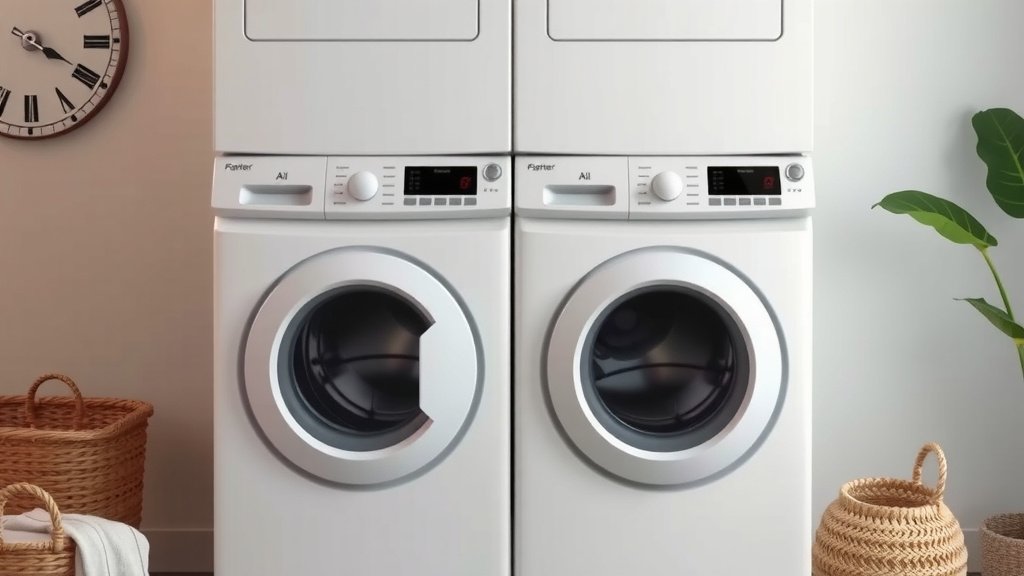
Stackable washer and dryer units typically come in two standard widths: 27 inches and 30 inches. The 27-inch width is the most common size for compact apartments or smaller laundry spaces. If you have a bit more room, a 30-inch unit might offer a larger drum capacity for your laundry needs.
When choosing a stackable set, consider not just the width but also the overall dimensions. You’ll need to account for the height when stacked and the depth required for ventilation and door clearance. Many models are designed to fit into standard closets, making them a great space-saving solution for modern homes. We found that measuring your available space carefully is the absolute first step.
- Stackable washers and dryers most often come in 27-inch and 30-inch widths.
- The 27-inch size is ideal for smaller living spaces.
- A 30-inch unit usually means a larger capacity.
- Always measure height, depth, and clearance too.
Now that you know the common sizes, let’s walk through how to measure your laundry space to ensure the perfect fit for your stackable washer and dryer.
Understanding Your Stackable Washer and Dryer Dimensions
You’re looking to maximize your living space with a stackable washer and dryer, which is a brilliant idea! These units are designed with efficiency in mind. We’ve found that the most critical aspect is understanding their physical footprint. This means looking beyond just the width and considering the whole picture of their size.
Common Widths: A Closer Look
As mentioned, stackable washer and dryer units typically measure either 27 inches or 30 inches wide. Think of these as the standard shirt sizes for laundry appliances. The 27-inch width is your go-to for tighter spaces, like a small apartment closet or a narrow utility nook. It’s designed to slip into places where a traditional side-by-side set just wouldn’t fit.
On the other hand, the 30-inch width offers a bit more breathing room. This extra few inches usually translates to a larger drum capacity. If your household is larger, or you find yourself washing bulky items like comforters frequently, that 30-inch unit might be worth the slightly bigger footprint. It’s like choosing between a comfortable tee and a relaxed-fit polo – both work, but one offers a bit more give.
Beyond Width: Height and Depth Matter Too
While width is a primary concern, you can’t forget about height and depth. When stacked, these machines can get pretty tall! We found that many units, when stacked, reach heights of 70 to 80 inches. You need to make sure your designated laundry space, whether it’s a closet or a alcove, has enough vertical clearance. Imagine trying to cram a tall cake into a short oven – it’s not going to end well!
Depth is another crucial dimension, especially when considering installation and operation. You’ll need space for the appliance itself, plus clearance for the hoses connecting to your water supply and the vent hose for the dryer. Experts generally recommend at least 6 inches of clearance behind the unit for proper ventilation. This is vital for efficient drying and to prevent potential fire hazards (National Fire Protection Association).
Measuring for Door Clearance
Don’t forget about the doors! You need enough space to open the washer and dryer doors fully. This allows you to load and unload laundry easily. If your stackable set is in a closet, you’ll need to factor in the width of the closet door swing as well. A good rule of thumb is to ensure there’s at least 1-2 inches of clearance on each side of the appliance for ease of access and maintenance.
What to Expect from Different Widths: Capacity and Features
So, how do those width differences actually impact your laundry routine? Let’s break it down. It’s not just about fitting the appliance; it’s about how well it will serve your household’s needs.
27-Inch Stackable Units: The Space Savers
These are the champions of compact living. A 27-inch wide unit is specifically designed for those with limited laundry space. They are perfect for urban apartments, small homes, or even as a secondary laundry solution in a home gym or workshop. While they might have slightly smaller drum capacities compared to their 30-inch counterparts, modern 27-inch models are surprisingly efficient.
We found that many 27-inch stackable washers offer capacities around 2.0 to 2.5 cubic feet. Dryers typically follow suit. These sizes are perfectly adequate for individuals, couples, or small families who do laundry regularly. You might just need to run a few extra loads if you have a very large family or tackle enormous amounts of laundry at once.
30-Inch Stackable Units: The Capacity Kings
Stepping up to a 30-inch width typically means you’re getting a more substantial machine. These units often boast larger drums, sometimes in the range of 4.0 to 4.5 cubic feet or even more for the washer. This means you can fit more clothes in a single load. Think about being able to wash that king-size comforter without a struggle!
The larger capacity is a real game-changer for busy households. You can reduce the number of loads you do each week, saving you time and energy. Many 30-inch models also come with more advanced features, such as steam cycles, sanitization options, and specialized fabric care settings. We found that while they require a bit more space, the convenience and capacity often make them a worthwhile investment for larger families or those who prioritize efficiency.
| Dimension | Typical 27-Inch Unit | Typical 30-Inch Unit |
|---|---|---|
| Width | ~27 inches | ~30 inches |
| Stacked Height | ~70-75 inches | ~75-80 inches |
| Washer Capacity (Approx.) | 2.0 – 2.5 cu. ft. | 4.0 – 4.5+ cu. ft. |
| Ideal For | Apartments, small spaces, singles/couples | Larger homes, families, bulky items |
Your Pre-Purchase Measurement Checklist
Before you fall in love with a specific model, let’s make sure it’s going to fit perfectly. A little bit of measuring upfront can save you a world of headaches later. We’ve put together a quick checklist to guide you.
- Measure Your Space: Use a tape measure to get the exact width, height, and depth of the area where the stackable unit will go.
- Account for Clearance: Add space for ventilation (at least 6 inches in the back) and door openings (1-2 inches on sides).
- Check Doorways and Hallways: Can you actually get the appliance into the room? Measure all doorways and hallways the unit will pass through.
- Consider Height Clearance: If placing in a closet, ensure the doors can open and close without hitting the stacked unit.
- Note Utility Access: Make sure water hookups and dryer vent paths are accessible and won’t be blocked.
- Double-Check Manufacturer Specs: Always refer to the specific product dimensions provided by the manufacturer. Sizes can vary slightly!
Conclusion
You’ve learned that stackable washer and dryer units typically measure 27 or 30 inches wide. The 27-inch models are perfect for tight spaces, while the 30-inch options offer larger capacities for bigger households or bulky items. Remember, it’s not just about width; height, depth, and clearance are just as important for a perfect fit. By carefully measuring your laundry area and considering your household’s needs, you can confidently choose a stackable set that maximizes your space and simplifies your laundry routine. Your next step is to grab that tape measure and head to your laundry space!
Frequently Asked Questions
Can a 30-inch wide stackable unit fit in a standard closet?
While 30-inch units offer more capacity, they also have a larger footprint. You’ll need to measure your closet’s internal width carefully. Many standard closets might be too narrow, so always confirm the exact dimensions against your space before purchasing.
Are 27-inch stackable washer and dryers less efficient than 30-inch ones?
Not necessarily. While 30-inch units often have larger drum capacities, modern 27-inch machines are designed for efficiency. They use less water and energy per load, making them a great choice for smaller households or those prioritizing resource conservation.
What is the minimum clearance needed behind a stackable washer and dryer?
You generally need at least 6 inches of clearance behind the unit for proper ventilation. This is essential for the dryer to operate efficiently and safely, preventing lint buildup and potential fire hazards.
Do I need to account for the dryer vent hose in my measurements?
Yes, absolutely. The dryer vent hose requires space behind the unit to connect properly. Ensure you have enough depth in your designated laundry area to accommodate both the appliance and the necessary vent connection, including any bends or turns in the hose.
Will a stackable unit fit through my doorway if the unit itself is wider than the door?
This is a common concern! You’ll need to measure the width of your doorways, hallways, and any stairwells the unit must pass through. Sometimes, appliances can be tilted or maneuvered to fit through narrower openings, but it’s crucial to check the dimensions of the appliance itself and your home’s access points beforehand.
![7 Best All In One Washer And Dryer [In 2026]](https://homeunderstandable.com/wp-content/uploads/2026/08/7-best-all-in-one-washer-and-dryer-in-2026-featured-768x432.jpg)

![7 What Front Load Washing Machine Is Best [In 2026]](https://homeunderstandable.com/wp-content/uploads/2026/09/7-what-front-load-washing-machine-is-best-in-2026-featured-768x432.jpg)
![7 Best Washing Machine [In 2026]](https://homeunderstandable.com/wp-content/uploads/2026/09/7-best-washing-machine-in-2026-featured-768x432.jpg)
![7 Best Deal On Washing Machines [In 2026]](https://homeunderstandable.com/wp-content/uploads/2026/09/7-best-deal-on-washing-machines-in-2026-featured-768x432.jpg)