Washer vs Washer Dryer: Which is Right for You
When choosing between a washer and a washer dryer combo, think about your space and laundry habits. A washer dryer combo is a single unit that both washes and dries your clothes, saving significant space. A separate washer and dryer require two distinct machines but often offer larger capacities and faster cycles.
Many people wonder if a washer dryer combo is worth it. While they are a fantastic solution for small apartments or areas with limited hookups, they can take longer to complete a full wash and dry cycle than using two separate machines. Research suggests that standalone units generally perform better for households with heavy laundry loads.
- Washer dryer combos save space but can take longer.
- Separate washers and dryers offer more capacity and speed.
- Consider your home size and how much laundry you do.
- Washer dryer combos are great for small living spaces.
Let’s break down the key differences and help you decide which laundry solution is the best fit for your home. Our guide to the best mid-size washer and dryer can help you find the right fit.
Washer vs. Washer Dryer Combo: Which Is Right For Your Home?
Choosing the right laundry setup can feel like a big decision. You might be wondering if a single unit that washes and dries, or two separate machines, best fits your lifestyle. We’re here to help you sort it out.
Let’s look at the core differences between a washer dryer combo and separate units. This will help you make the best choice for your laundry needs and living space.
Understanding the Washer Dryer Combo
A washer dryer combo is a single appliance that performs both washing and drying functions. Think of it as a two-in-one solution for your laundry. You load your dirty clothes, and it washes them, then dries them, all without you having to move a single sock.
Pros of a Combo Unit
The biggest advantage is definitely space-saving. If you live in a small apartment, condo, or have limited laundry space, a combo unit can be a lifesaver. You only need one set of hookups for water and electricity, which simplifies installation. Many units are also quite energy-efficient for their size.
- Saves a lot of floor space.
- Requires only one set of utility hookups.
- Good for small living areas.
- Can be very energy efficient.
Cons of a Combo Unit
While convenient, combos do have some downsides. One of the most common complaints is that drying cycles can take much longer than in a separate dryer. This is because they often have smaller capacities for drying compared to washing. You might also find they don’t handle large loads as well. Some research suggests that the constant heating and cooling in one drum can lead to wear and tear over time (Consumer Reports).
- Longer drying times.
- Smaller drying capacity than washing.
- May not handle bulky items well.
- Potential for more wear on a single unit.
Exploring Separate Washer and Dryer Sets
A separate washer and dryer means you have two distinct machines. One handles the washing, and the other handles the drying. This is the traditional setup many households have used for decades.
Advantages of Separate Machines
With separate units, you typically get larger capacities. This means you can wash and dry more clothes at once, which is fantastic for larger families or if you do laundry in big batches. Cycles are often faster too. You can wash a load, then immediately start a new wash while the first load is drying. Experts often note that separate dryers are more effective at removing moisture quickly (Energy Star).
- Larger capacity for both washing and drying.
- Faster wash and dry cycles.
- Can run wash and dry cycles simultaneously.
- Generally more durable for heavy use.
Disadvantages of Separate Machines
The most obvious drawback is that they take up more space. You need room for two machines and their associated hookups. This can be a significant issue in smaller homes or apartments. They also generally consume more electricity and water over the course of a full wash and dry cycle compared to a single combo unit, although modern Energy Star models are quite efficient.
- Requires double the floor space.
- Needs two sets of utility hookups.
- Higher initial purchase cost for two units.
- Can use more energy and water overall.
Key Factors to Consider When Deciding
So, how do you make the final call? It really comes down to your personal circumstances. Think about these points:
Your Living Space
This is often the biggest deciding factor. If you have a tiny kitchen or a small closet designated for laundry, a washer dryer combo is likely your best bet. If you have a dedicated laundry room or ample space in a basement or garage, you have the luxury of choosing separate units.
Your Laundry Habits
How much laundry do you do? If you’re a single person or a couple with light laundry needs, a combo unit might be perfectly fine. However, if you have a large family, kids, pets, or just tend to pile up laundry, the larger capacity and faster cycles of separate machines will probably serve you much better.
Installation and Hookups
Do you have the necessary plumbing and electrical outlets for two machines? Some older homes might only have hookups for one appliance. A combo unit simplifies installation, often requiring just one standard electrical outlet and water hookups.
Budget Considerations
While a combo unit might seem like a single purchase, prices can vary. Sometimes, buying two separate, mid-range machines can be comparable in cost to a high-end combo unit. You’ll also want to factor in the long-term costs of energy and water usage for each option. We found that, on average, separate dryers use more energy than combo units, but their faster cycles can sometimes offset this (Energy Star).
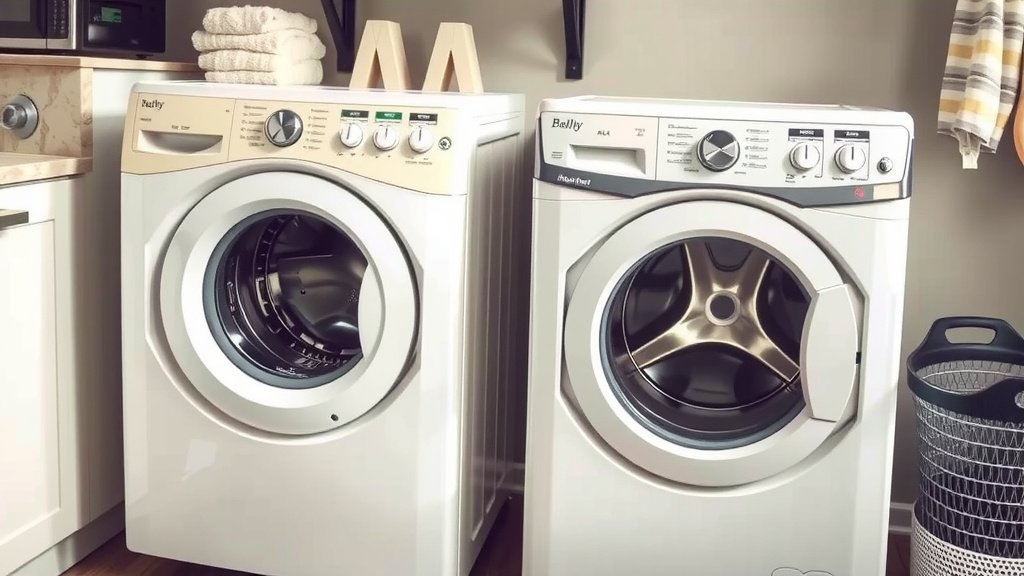
A Quick Comparison Table
Here’s a simple breakdown to help visualize the differences:
| Feature | Washer Dryer Combo | Separate Washer & Dryer |
|---|---|---|
| Space Required | Minimal (one unit) | More (two units) |
| Capacity | Smaller, especially for drying | Larger, for both wash and dry |
| Cycle Speed | Can be slower, especially drying | Generally faster |
| Installation | Simpler (one hookup set) | More complex (two hookup sets) |
| Best For | Small spaces, light laundry | Larger homes, heavy laundry loads |
Your Laundry Day Checklist
Before you commit, ask yourself these quick questions:
- Do I have enough space for two machines?
- How much laundry do I typically do each week?
- Are fast wash and dry cycles a priority for me?
- Is energy efficiency a major concern?
- What’s my budget for a new appliance?
- Are there any limitations on my home’s hookups?
Conclusion
Deciding between a washer dryer combo and separate units comes down to your unique needs. If space is your top priority and your laundry loads are light, a combo unit is a smart choice. It simplifies installation and keeps things compact. For larger families or those who tackle mountains of laundry, separate machines offer speed and capacity. Weigh your living space, laundry habits, and budget carefully. Ultimately, the best system is the one that makes your laundry day easier and fits your home perfectly.
Frequently Asked Questions
Can a washer dryer combo handle large loads?
Generally, washer dryer combos have smaller capacities, especially for the drying function. While they can wash a full load, the drying capacity is often half of the washing capacity. This means you might need to split larger loads for drying or do multiple cycles, which can be time-consuming.
Are washer dryer combos more energy-efficient than separate units?
This can be a bit tricky. A combo unit uses energy for both washing and drying in one cycle. Separate dryers often use more energy per cycle, but their faster drying times can sometimes make them more energy-efficient overall for the same amount of laundry. Modern Energy Star certified models for both types are highly efficient.
How long do washer dryer combo cycles typically take?
Wash cycles on combos are comparable to standard washers, usually around 30-60 minutes. However, the drying portion can take significantly longer, often 2-4 hours for a full load. This extended time is due to the compact design and the need to remove moisture efficiently from the single drum.
What maintenance is involved with a washer dryer combo?
Combo units require regular cleaning of the lint filter, which might be located inside the drum or behind a panel. You’ll also want to clean the door seal and detergent dispenser. Because they perform both functions, you’ll want to ensure you’re not overloading them to prevent excessive wear and tear on the single motor and drum.
Can I install a washer dryer combo myself?
Installation is generally simpler than for two separate units. You’ll need a water supply and a drain. Most combo units use a standard electrical outlet, unlike some dryers that require a 240-volt connection. However, it’s always recommended to check your home’s specific hookups and consult the manufacturer’s manual or a professional if you’re unsure.

![7 Best Compact Stackable Washer And Gas Dryer [In 2026]](https://homeunderstandable.com/wp-content/uploads/2026/09/7-best-compact-stackable-washer-and-gas-dryer-in-2026-featured-768x432.jpg)