
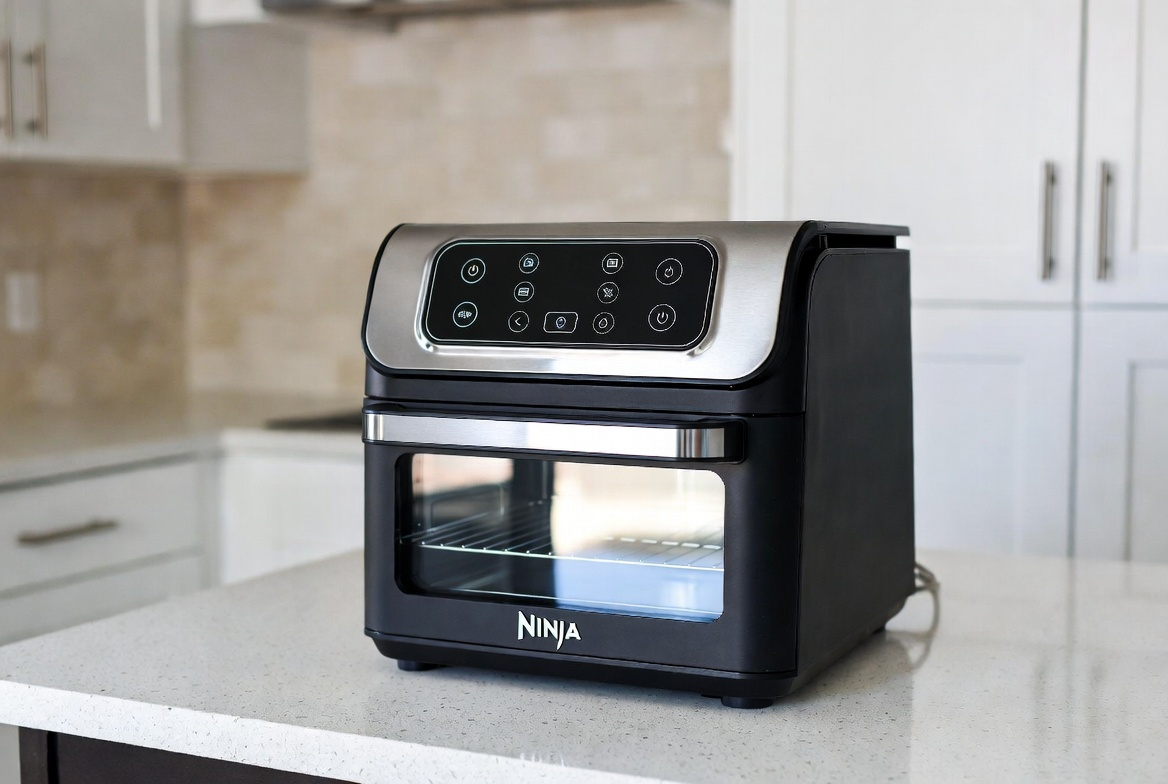
Microwave Air Fryer vs Air Fryer: Which Appliance Wins?
If you’re standing in your kitchen wondering whether to invest in a microwave air fryer or a traditional air fryer, you’re not alone. The world of kitchen appliances has become increasingly confusing, with new gadgets promising to revolutionize the way we cook. But here’s the thing—not all cooking devices are created equal, and understanding the differences between these two popular options can save you money and help you make a decision that actually fits your lifestyle.
Let me walk you through everything you need to know about these two appliances, so you can figure out which one deserves a spot on your countertop
Understanding the Basics: What Exactly Are These Appliances?
What Is a Traditional Air Fryer?
Think of an air fryer as a compact convection oven on steroids. It’s a countertop appliance that uses rapid air circulation and high heat to cook food incredibly quickly. The device has a heating element at the top and a powerful fan that circulates hot air at temperatures often reaching 400 degrees Fahrenheit or higher. When you place food in the basket, this circulating hot air surrounds it from all angles, creating a crispy exterior without requiring much oil.
Traditional air fryers come in various sizes, from small single-serving models to large family-sized units that can cook multiple portions at once. They typically have a digital interface with preset functions for different foods like chicken, fries, vegetables, and more.
What Is a Microwave Air Fryer?
Now, a microwave air fryer is a different beast entirely. This is a hybrid device that either attaches to your existing microwave or functions as a standalone unit that uses microwave radiation combined with heating elements to cook food. The idea behind this technology is to give you the speed of a microwave with the crispiness that comes from traditional air frying.
Some microwave air fryer models are actually microwave-compatible containers with special vented lids that allow you to use them inside your regular microwave. Others are standalone appliances that use both microwave and heat elements simultaneously. It’s basically trying to be the Swiss Army knife of kitchen appliances—combining multiple cooking methods into one device.
How They Heat Food: The Science Behind the Cooking
Air Fryer Heating Technology
Traditional air fryers work through a process called convection cooking. The heating element gets extremely hot, and the fan moves this hot air rapidly around the food. This high-velocity heat causes the water molecules on the food’s surface to evaporate quickly, creating what’s known as the Maillard reaction—that golden-brown, crispy exterior you get when frying food in oil, but without all the actual oil.
This method is remarkably efficient because the heat surrounds the food completely and consistently. There’s no hot spot or cold spot; every inch of your chicken wing or french fry gets treated to the same intense heat.
Microwave Air Fryer Heating Technology
Microwave air fryers use a combination approach. They send microwave radiation through the food to heat it from the inside out, much like a regular microwave does. Simultaneously, heating elements or halogen light burners create external heat to crisp up the exterior. This dual approach attempts to solve the microwave’s notorious problem—creating mushy, unevenly cooked food while also trying to achieve that crispy texture.
The theory is sound, but in practice, coordinating these two different heating methods creates some challenges that we’ll explore later.
Speed and Performance: Which One Cooks Faster?
Traditional Air Fryer Speed
Air fryers are legitimately fast. Most foods cook in 10 to 25 minutes, depending on what you’re preparing. A basket of frozen french fries typically cooks in about 15 minutes, while chicken thighs might take 20 minutes. The preheating time is minimal—usually just 3 to 5 minutes.
This speed comes from the intense heat and the efficient convection system. Every second you’re using an air fryer, that heat is working on your food from every angle.
Microwave Air Fryer Speed
Here’s where things get interesting. While microwave air fryers can be faster than a traditional oven, they’re not necessarily faster than a dedicated air fryer. Most microwave air fryer foods cook in 8 to 15 minutes, which sounds faster on paper. However, some models require a microwave-first, then air-crisp-second approach, which can extend cooking time.
The speed advantage is marginal at best, and depending on the model and food type, you might not see any real time savings compared to a traditional air fryer.
Food Quality and Taste: Does It Actually Taste Good?
Traditional Air Fryer Results
Users consistently report that traditional air fryers produce food with exceptional texture. Frozen french fries come out crispy on the outside and fluffy on the inside. Chicken gets a beautiful golden exterior while staying juicy inside. Vegetables caramelize nicely and develop a satisfying crunch.
The reason is simple: the intense, dry heat circulating around the food creates genuine browning and crisping. It’s about as close as you can get to deep-fried food without actually using a vat of oil.
Microwave Air Fryer Results
This is where microwave air fryers struggle more than their traditional cousins. Because microwave radiation heats food unevenly, you might end up with some parts that are perfectly cooked while others are overcooked or undercooked. Additionally, the external crisping element doesn’t always activate efficiently or reach high enough temperatures to create the browning that makes food delicious.
Many users report that microwave air fryer foods taste more like regular microwave meals—serviceable but not particularly inspiring. The texture can be inconsistent, with some parts crispy and others remaining somewhat rubbery or soft.
Price and Value: What’s This Going to Cost You?
Air Fryer Price Range
Traditional air fryers range dramatically in price. You can find budget models for around $50 to $80, mid-range options between $100 and $200, and premium models that exceed $300. For most households, a decent air fryer in the $100 to $150 range offers excellent value.
What you’re paying for is a specialized, single-purpose appliance that does one job exceptionally well. There’s no complexity here—you’re buying a convection oven in a compact form.
Microwave Air Fryer Price Range
Microwave air fryer containers or lids range from $20 to $60, making them seem incredibly economical. However, standalone microwave air fryer units typically cost between $100 and $250. When you factor in that you might already own both a microwave and a traditional air fryer, the value proposition becomes less compelling.
You’re often paying more for the novelty of a hybrid device than for genuine performance improvements.
Kitchen Space Considerations
Space Requirements for Air Fryers
Traditional air fryers require dedicated counter space. Most models measure around 10 inches by 10 inches and stand about 10 inches tall. If you’re tight on space, this can be a consideration. However, they’re vertical appliances, so they don’t sprawl across your counter too much. You can also store them in a cabinet if you prefer.
The trade-off is that your cooking capacity might be limited if you choose a smaller model to save space.
Space Requirements for Microwave Air Fryers
If you opt for a microwave air fryer container, you’re essentially adding a specialized dish to your cabinet—minimal space impact. However, standalone microwave air fryer units take up about the same amount of counter space as a traditional air fryer.
The potential advantage is if you already own both a microwave and an air fryer, a hybrid unit might allow you to replace one of them. But if you don’t currently own both, you’re not really saving space.
Versatility: What Can You Actually Cook?
What Air Fryers Can Do
Modern air fryers are surprisingly versatile. Beyond the obvious (frozen fries, chicken wings), you can roast vegetables, bake small cakes, cook fish, make meatballs, reheat pizza, and even make donuts. The dry heat environment means you’re essentially working with a small, efficient convection oven.
The limitation is that you’re cooking with dry heat, so foods that need moisture or steam (like steaming vegetables) won’t work as well. Also, larger items might not fit depending on your model size.
What Microwave Air Fryers Can Do
In theory, microwave air fryers could do everything: use microwave functions for heating, steaming, and defrosting, plus air-crisping for that crispy finish. In practice, coordinating these different cooking methods is complicated, and many users find that one function works better than the other, but rarely do both work equally well in the same appliance.
It’s like having a car that’s both a sports car and a family sedan—in trying to be everything, it doesn’t excel at any single thing.
Energy Efficiency: Which One Saves You Money on Electricity?
Air Fryer Energy Consumption
Traditional air fryers typically use between 800 and 1500 watts of electricity. Because they cook quickly and don’t require preheating for long, the total energy consumption per meal is quite reasonable. An air fryer meal might use 0.5 to 0.8 kilowatt-hours of electricity.
Compared to using a full-sized oven, which uses 2000-5000 watts and heats a much larger space, air fryers are genuinely efficient.
Microwave Air Fryer Energy Consumption
Microwave air fryers use between 600 and 1200 watts, depending on whether they’re using microwave, heating elements, or both simultaneously. Some models might actually use more total energy than traditional air fryers if they’re running both systems at once.
The efficiency gains over a traditional oven are similar, but you’re not necessarily gaining an advantage over a standard air fryer.
Ease of Use and Daily Maintenance
Using a Traditional Air Fryer
Air fryers are incredibly straightforward. You preheat it, put food in the basket, set the temperature and time, and press start. Most models have preset buttons for common foods, making it even easier. The learning curve is minimal—basically the same as using a toaster oven but faster.
Cleaning is simple: the basket and tray are usually dishwasher safe or easy to hand wash. There’s no oil to manage or splatters to clean up inside the appliance.
Using a Microwave Air Fryer
Using a microwave air fryer is less intuitive. Do you heat it first as a microwave, then switch it to air-crisp mode? Or do you use both simultaneously? Different models have different procedures, and this can be confusing. You’ll likely need to consult the manual for optimal results.
Cleaning is usually similar to an air fryer, but the combination of heating elements and microwave components means there are more potential failure points.
Health Benefits: Is One Healthier Than the Other?
Health Advantages of Air Fryers
Air fryers let you cook foods with minimal to no oil, which reduces calorie intake compared to traditional frying. They’re excellent for maintaining a health-conscious diet while still enjoying foods you love. The circulating hot air creates that crispy texture that satisfies without requiring deep-frying.
Studies suggest that air fryers produce lower levels of acrylamide (a compound formed when foods are cooked at high temperatures) compared to deep-fried foods, though still more than boiling or steaming.
Health Advantages of Microwave Air Fryers
Microwave air fryers offer similar health benefits to traditional air fryers—reduced oil usage and fewer calories than traditional frying. However, because some models use microwave radiation, there’s often concern about nutrient loss, though scientific evidence suggests microwave cooking preserves nutrients as well as other cooking methods.
The health advantage is roughly equivalent between the two, assuming both are used to prepare whole foods rather than heavily processed frozen items.
Best Use Cases: When Should You Choose Each One?
Choose a Traditional Air Fryer If:
- You want consistently excellent results with minimal learning curve
- You’re cooking for 2-6 people regularly
- You want the crispiest possible food texture
- You prefer simplicity and single-purpose appliances
- You have room in your kitchen budget
- You appreciate tried-and-true technology with lots of recipes available
- You value reliability and widespread product reviews
Choose a Microwave Air Fryer If:
- You currently own a microwave but not an air fryer
- You’re looking for maximum kitchen space savings
- You want the absolute lowest entry price point
- You’re willing to accept slightly less consistent results
- You want a device that can handle microwave functions like defrosting and reheating
- You enjoy experimenting with newer cooking technology
- You have a limited budget
Real-World Performance Scenarios
Scenario 1: Cooking Frozen Chicken Wings
Traditional air fryer: 20 minutes at 400°F yields perfectly crispy skin and juicy meat. Results are consistent and delicious.
Microwave air fryer: 12-15 minutes total (microwave plus crisping phase) might yield decent results, but some wings might be overcooked while others remain slightly soft. Texture is less consistently crispy.
Scenario 2: Reheating Day-Old Pizza
Traditional air fryer: 5 minutes at 375°F creates a crispy crust without hardening the cheese. Pizza tastes fresh again.
Microwave air fryer: Microwave mode alone might make it rubbery. Air-crisping mode takes longer but produces okay results. You might end up using just the microwave function, defeating the purpose.
Scenario 3: Cooking Homemade Vegetable Chips
Traditional air fryer: Vegetables crisp up beautifully, developing flavor through cara
![What Is The Best Beef Roast for Air Fryer [In 2026]](https://homeunderstandable.com/wp-content/uploads/2026/03/Best-Beef-Roast-for-Air-Fryer-768x516.jpg)

![5 Best Air Fryer for Crispy Chicken Wings [In 2026]](https://homeunderstandable.com/wp-content/uploads/2026/03/5-Best-Air-Fryer-for-Crispy-Chicken-Wings-768x516.jpg)

![What Is The Best Chicken Seasoning for Air Fryer [In 2026]](https://homeunderstandable.com/wp-content/uploads/2026/03/Best-Chicken-Seasoning-for-Air-Fryer-768x516.jpg)