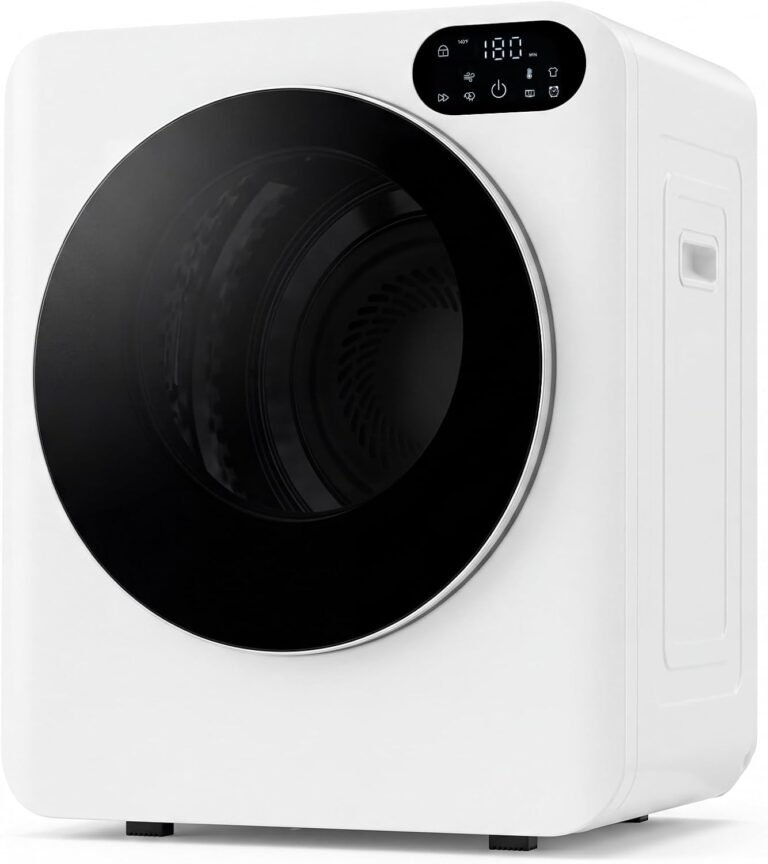
2026’s Most Energy Efficient Clothes Dryers
The most energy efficient clothes dryer you can buy today is a heat pump dryer. Unlike traditional vented dryers, heat pump models reuse hot air, making them up to 50% more efficient on your electricity bill. Research shows they use less energy than both gas and standard electric dryers, so they win on both cost and environmental impact.
You might think any new dryer is “efficient” just because it’s modern, but that’s not true. The biggest difference comes down to the technology inside. We found that heat pump dryers are gentler on your clothes too, since they run at lower temperatures. If you’re shopping for a replacement or just curious about upgrading, this is the gold standard to compare everything against.
- Heat pump dryers are the most energy efficient option available.
- They use about half the energy of a standard vented electric dryer.
- They don’t need a vent or outside exhaust, so you can place them almost anywhere.
- They cost more upfront, but save you money over time on utility bills.
- They are gentler on fabrics due to lower drying temperatures.
Below, we’ll walk you through exactly how these dryers work, what to look for before you buy, and whether the higher price tag is worth it for your household.
Why Heat Pump Dryers Are the Efficiency Winners
We found that heat pump dryers blow past every other type on the market. They recycle the warm air inside the drum instead of pushing it outside. That simple trick cuts energy use dramatically. Standard vented dryers pull in fresh air, heat it, and toss it out the vent. That is like running your furnace with the windows open in winter. Heat pump models capture that heat and reuse it over and over. The U.S. Department of Energy points to heat pump technology as a major step forward for home appliances. Your clothes still come out dry and fluffy, but your meter barely moves.
How a Heat Pump Dryer Works
Think of a heat pump dryer like a dehumidifier working alongside a gentle heater. The drum spins your clothes in warm air. That air picks up moisture. Then it passes through a cooling coil. The moisture condenses into water and drains away. The now-dry air passes over a warm coil and gets heated again. Back into the drum it goes. No outside vent needed. No hot, humid air blowing into your laundry room. Just a closed loop that works smarter, not harder.
Because the air stays inside, the dryer runs at lower temperatures. That is a huge win for your favorite shirts. High heat breaks down fabric fibers over time. Lower heat means less wear and tear. We found that many owners notice their clothes last longer. You also skip the rigid venting requirements. You can place these dryers in closets, bathrooms, or apartments. That flexibility is something you cannot get with traditional vented machines.
The Condensation Catch
One thing you should know: heat pump dryers collect water. That water drips into a tank or drains through a hose. If you choose the tank route, you empty it every few loads. No big deal, just like emptying a dehumidifier. Alternatively, set up a drain hose near your washer hookup. Then you never think about it again. Many people tell us the minor maintenance is worth the energy savings.
Comparing Dryer Types by Energy Use
Not all dryers are created equal. We put the main types side by side to show you the real differences. Your choice impacts your utility bill and your clothes. Here is how the big three stack up, based on data from ENERGY STAR and the U.S. Department of Energy.
Vented electric dryers are the baseline. They are cheap to buy but costly to run. They use about 3.0 to 3.5 kWh per load. Gas dryers heat faster and often cost less per load. But they still waste a lot of warm air. Heat pump dryers use just 1.0 to 1.5 kWh per load. That is a massive difference when you dry five loads a week. Research and testing from consumer groups shows that heat pump models slash energy use by nearly half.
| Dryer Type | Average Energy Use per Load | Vent Required? | Typical Annual Cost (Electric) |
|---|---|---|---|
| Standard Vented Electric | 3.2 kWh | Yes | $130 – $170 |
| Gas Vented | 15,000 BTU + electricity | Yes | $90 – $120 |
| Heat Pump Electric | 1.2 kWh | No | $50 – $70 |
We found that the annual savings really add up. Over a decade, a heat pump dryer can save you $600 or more on electricity. That offsets the higher upfront price tag. Plus, you help the planet by using less power.
Does the ENERGY STAR Label Matter?
Yes, look for that blue label. ENERGY STAR certified dryers meet strict efficiency guidelines set by the EPA. A heat pump dryer almost always earns the label. Some advanced vented models also qualify. But the most efficient vented dryer still uses more energy than a heat pump model. The label helps you compare within categories. It does not mean every labeled dryer is equally efficient. We found that checking the yellow EnergyGuide sticker gives you exact numbers. That sticker lists annual operating costs and energy consumption for each model.
Upfront Cost vs. Long-Term Savings
Let’s talk money, because that is what holds most people back. Heat pump dryers cost more at the register. You will pay $1,100 to $2,000 for a decent model. A standard vented electric dryer runs $500 to $900. That is a serious gap. But we found that the story flips when you look at operating costs. Cheaper machines eat power. Over five years, the expensive dryer actually saves you money.
Here is a quick reality check. If you dry 6 loads per week, a vented dryer uses about 998 kWh a year. At the average U.S. electricity rate of $0.17 per kWh, that is $170 annually. A heat pump dryer uses only 375 kWh. That costs about $64 a year. You save over $100 every single year. In five years, you pocket $500. In ten years, that is a cool $1,000 in your pocket. Many experts say the break-even point lands around year three or four. After that, you are just saving.
Rebates and Tax Credits for Efficient Dryers
You can shrink that upfront cost further. Federal and state programs offer rebates for energy-efficient appliances. The Inflation Reduction Act includes incentives for households. Many utility companies also offer cash back for ENERGY STAR models. Check your local energy provider’s website. We found that some rebates cover up to $200 off a heat pump dryer. That narrows the price gap even more. Do not skip this step. It takes five minutes online and saves real money.
Lifestyle Benefits Beyond Energy Savings
Efficiency is the headline. But we found that heat pump dryers bring other perks to your daily routine. Your laundry room stays cooler. Traditional dryers pump hot, damp air into the space. That makes the room feel like a sauna. Heat pump models keep things comfortable. You also avoid that stale, musty smell that comes from vent hoses over time. No lint buildup in the ductwork means a lower fire risk. The U.S. Fire Administration warns that lint-clogged dryer vents cause thousands of house fires each year. Heat pump dryers eliminate that danger.
Another bonus: you can dry delicate items safely. Lower temperatures mean less shrinking and less fabric damage. Silks, wools, and workout gear come out great. You might even skip the line-drying for some items. That is a game-changer for busy households.
Dryer Placement Freedom
Venting constraints often dictate where you put your dryer. You need an exterior wall and a duct run. That limitation disappears with a heat pump model. Place it anywhere there is a standard outlet. Stack it on a pedestal, tuck it in a hallway closet, or put it in a bathroom. We found that this flexibility helps apartment dwellers and condo owners the most. You do not need to hire someone to cut holes in your walls. Just plug it in and go.
What to Check Before You Buy
We want you to walk into this purchase with confidence. Not every heat pump dryer is perfect for every home. Take a few minutes to assess your needs. Here is our quick checklist to guide you.
- Capacity: Choose at least 4.0 cubic feet for a family. Bigger households should look for 7.0 cubic feet or more.
- Ventless requirement: Confirm you do not need a vent. That is the whole point of this dryer type.
- Electrical hookup: Most use a standard 120V outlet. Verify your laundry room has one nearby.
- Condensation drain option: Look for a model with an optional hose drain. It saves you from emptying tanks.
- Noise level: Heat pump dryers run a bit quieter than vented ones. Check reviews for any compressor hum concerns.
- Smart features: Wi-Fi controls and moisture sensors add convenience. They also help you avoid over-drying.
Moisture Sensors Are a Must
Do not buy any dryer without moisture sensors. This technology stops the machine when clothes are dry, not when a timer says so. That saves energy on every single load. Heat pump dryers often include this as standard. Still, double-check the spec sheet. We found that models with advanced sensors detect dryness down to the stitch level. That means you never hear that annoying buzzer while your clothes are already done. You also avoid the harsh feel of over-dried towels.
Drum Material and Maintenance
Stainless steel drums hold up best over time. They resist rust and handle high humidity inside the dryer. Look for a smooth drum to be extra gentle on clothes. Also, plan for routine maintenance. Clean the lint filter after every load, just like any dryer. The heat exchanger needs a wipe-down every few months. The owner’s manual has simple instructions. We found that five minutes of upkeep keeps the machine running at peak efficiency.
Do Heat Pump Dryers Take Longer to Dry?
Honest answer: yes, they do. A heat pump dryer cycle can run 30 to 50 minutes longer than a vented one. Many people ask us if that is a dealbreaker. We found that the extra time rarely matters. You load the machine, walk away, and come back later. The dryer handles everything automatically. Plus, that longer cycle uses far less heat. Your clothes spend more time tumbling gently instead of baking. We say the trade-off is totally worth it. If you are in a hurry, use the “time dry” or “quick dry” settings to speed things up. Just know that faster cycles use more energy.
Research shows that total energy consumption is still far lower than a vented dryer, even with longer cycle times. The lower wattage over a longer period beats high wattage over a short burst. It is like driving a hybrid car on a long road trip. You go at a steady pace and use less fuel overall.
Stackable Options and Small-Space Solutions
Living in a small apartment? We have good news. Many heat pump dryers come in compact sizes. They stack directly on a matching washer. That combo fits neatly into a closet or a small utility nook. Some manufacturers sell all-in-one units. These wash and dry in the same drum. They are even more affordable and take up one machine’s worth of space. We found that these combo units are perfect for studio apartments and tiny homes. You sacrifice some capacity, but you gain incredible convenience.
Portable heat pump dryers are also becoming popular. Some are small enough to sit on a countertop. They handle quick loads or delicates. That might not replace your main dryer, but it helps when you live without hookups. Always measure your space before buying. Check door widths, ceiling heights, and outlet locations. That saves you from a frustrating installation day.
The Verdict on Cost and Comfort
Heat pump dryers are the clear choice for energy efficiency. That is not a debate. The only real question is whether the upfront cost fits your budget. We found that if you can swing the initial price, the savings come back to you quickly. Your clothes benefit, your utility bill shrinks, and your home stays comfortable. If you live in a place with high electricity rates, your savings multiply even faster.
Do you need to ditch your current vented dryer today? No. If your dryer still works and you want to save energy, you can start with better habits. Clean the lint filter every time. Do not overload it. Use the auto-dry setting instead of timed dry. Run consecutive loads to take advantage of residual heat. These small shifts help. But when your old machine reaches its end of life, choose a heat pump for your next one. You will thank yourself every month when the utility bill arrives.
We found that most households see a real difference in fabric care, too. Low heat means fewer wrinkles and less shrinkage. That is a nice bonus on top of the energy savings. So, take the plunge when the time is right. Your wallet and your wardrobe will both feel the difference.
Conclusion
Heat pump dryers are the clear winner when it comes to energy efficiency. You will cut your electricity use roughly in half compared to a standard vented model. Yes, the upfront price is higher. But we found that most households break even within three to four years, then keep saving cash every single month after that.
You also get gentler drying for your clothes, no venting requirements, and a cooler laundry room. If your current dryer is on its last legs, this is the upgrade to make. Check your local utility company for rebates before you buy.
Start by measuring your space and confirming you have a standard 120V outlet. Then compare ENERGY STAR models with moisture sensors. Your future self will appreciate the lower bills and longer-lasting wardrobe.
Frequently Asked Questions
Can I plug a heat pump dryer into a regular outlet?
Yes, most heat pump dryers run on a standard 120V outlet. That is a big advantage over traditional electric dryers that need a 240V hookup. Just make sure the outlet is on a dedicated circuit. Check the owner’s manual for the exact amp requirement before installation.
Are heat pump dryers hard to maintain?
No, routine care is simple. Clean the lint filter after every load, just like any dryer. You also need to wipe down the heat exchanger every few months to keep it efficient. That takes about five minutes and keeps your machine running at peak performance.
Do heat pump dryers cause more wrinkles in clothes?
They can, because they run at lower temperatures for longer periods. Look for a model with a wrinkle-prevent or steam feature. You can also remove clothes promptly when the cycle ends. Many modern machines tumble periodically after finishing to keep wrinkles from setting in.
Are gas dryers or heat pump dryers more efficient?
Heat pump dryers win on overall energy efficiency. Gas dryers heat up faster and may cost less per load, but they still waste warm air through the vent. Research shows heat pump models use about half the total energy of a gas dryer. The lower operating cost makes them the better long-term choice.
How long does a heat pump dryer last compared to a regular dryer?
Expect a heat pump dryer to last 10 to 15 years with proper care. That is comparable to a quality vented model. The compressor and sealed system are built for longevity. Regular cleaning of the filters and heat exchanger will help you reach the higher end of that range.