
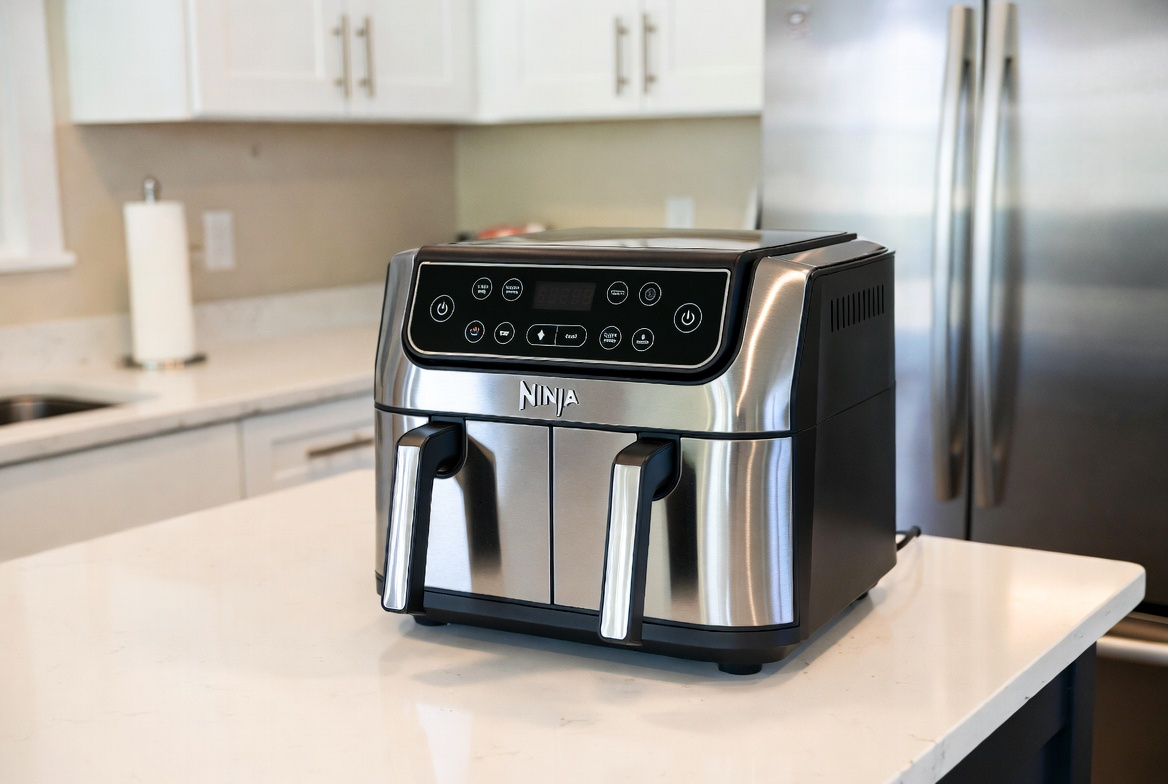
Ninja Air Fryer 6 Qt vs 8 Qt: Which Size Is Right for Your Kitchen?
When you’re standing in the kitchen appliance aisle or scrolling through online retailers, you’ve probably noticed that air fryers come in different sizes. The Ninja brand offers several popular models, and if you’re torn between the 6-quart and 8-quart versions, you’re not alone. This decision can feel surprisingly complicated when you think about what you’re actually trying to accomplish in your kitchen.
Let me be honest with you—choosing between these two sizes isn’t just about picking the bigger option. It’s about understanding your cooking habits, your kitchen space, and what makes sense for your lifestyle. I’m here to walk you through everything you need to know.
Understanding the Basics: What Does Quart Capacity Actually Mean?
Before we dive into the comparison, let’s establish what we’re actually talking about. A quart is a unit of volume, and when manufacturers list air fryer capacity, they’re telling you how much food space you have inside the cooking chamber. Think of it like this: a 6-quart air fryer can hold about 6 quarts of ingredients, while an 8-quart model gives you roughly 33 percent more cooking space.
But here’s the thing that catches most people off guard—more capacity doesn’t automatically mean better results. It’s all about how you plan to use it.
The 6-Quart Ninja Air Fryer: Understanding the Compact Powerhouse
Size and Countertop Footprint
The 6-quart Ninja air fryer is what I’d call the “Goldilocks” size for many households. It’s not too big, not too small—it sits somewhere in the middle that works for a lot of people. The countertop footprint is relatively modest, making it suitable for kitchens where every inch of space matters. If you’ve got a smaller kitchen or limited counter real estate, this might be your winner right from the start.
Cooking Capacity and Batch Sizes
With a 6-quart capacity, you can cook meals for a family of four to five people without needing multiple batches. Want to make crispy chicken wings for dinner? You can fit a decent amount in one go. Planning to air fry vegetables as a side dish? No problem. However, if you’re cooking for a large family, hosting dinner parties regularly, or meal-prepping for the entire week, you might find yourself running the air fryer more than once.
Heat Distribution and Cooking Performance
One advantage of the 6-quart model is that the heating elements and air circulation fans are optimized for that specific chamber size. This means you get more consistent, even cooking throughout the basket. When air fryers have the right amount of space relative to their heating power, you get better browning and crispier results overall.
Energy Consumption
The smaller capacity also means slightly lower energy consumption per cooking session. If you’re conscious about your electricity bill, the 6-quart model will cost a bit less to operate compared to its larger counterpart.
The 8-Quart Ninja Air Fryer: The Family-Sized Solution
Maximum Cooking Capacity
The 8-quart Ninja air fryer is built for people who think bigger. This size lets you cook substantially more food at once, which is a game-changer if you have a large household or frequently entertain guests. Imagine preparing enough chicken breasts for an entire week of meal prep in a single session, or cooking a full vegetable medley without worrying about space constraints.
Space Requirements and Counter Placement
Here’s where you need to be honest with yourself: an 8-quart air fryer takes up noticeably more counter space. It’s taller, wider, and generally more imposing than the 6-quart model. Before you commit to this size, measure your available space. Consider where you’ll actually keep it and whether you’re willing to dedicate that much real estate to one appliance.
Ideal User Profiles
The 8-quart model shines for specific situations. Large families with six or more members find it invaluable. If you’re someone who enjoys meal-prepping on weekends to prepare lunches for the entire work week, this size makes that process much more efficient. Restaurant owners or people who run small catering businesses from home also appreciate the extra capacity.
Energy Efficiency Considerations
While the 8-quart model uses more electricity per session, you’re actually cooking more food, so the cost per meal might actually be comparable or even lower when you consider the efficiency of cooking everything in one batch rather than multiple batches.
Direct Comparison: Key Differences Side by Side
Performance Metrics
- Cooking Speed: Both models heat up quickly, but the 6-quart may cook slightly faster due to more direct heat exposure per piece of food.
- Temperature Range: Both achieve similar maximum temperatures, typically around 400-450 degrees Fahrenheit.
- Air Circulation: The 8-quart uses upgraded fan systems to ensure even cooking across the larger chamber.
Price Point Differences
Generally speaking, the 8-quart model costs more upfront. You’re paying for additional capacity and a larger heating system. However, if you calculate cost per meal prepared, the larger model might actually provide better value if you use it frequently and cook for many people.
Noise Levels
The 8-quart model tends to produce slightly more noise due to its more powerful fan system pushing air through a larger chamber. If you have noise sensitivity or a small open-concept kitchen leading into a bedroom or living area, this is worth considering.
Making Your Decision: Questions to Ask Yourself
What Is Your Family Size?
This is the first and most important question. A family of three or four typically does fine with 6 quarts. If you’re regularly cooking for six or more people, the 8-quart becomes much more practical.
How Often Do You Entertain Guests?
Do you frequently host dinner parties or family gatherings? Do you like having friends over for casual weeknight dinners? If entertaining is part of your regular routine, the extra capacity of the 8-quart makes entertaining less stressful.
Are You a Meal-Prepper?
Meal-preppers live and breathe efficiency. If you spend Sundays preparing meals for the week ahead, you’ll absolutely appreciate the time savings that the 8-quart provides. You can cook multiple days’ worth of proteins and vegetables in fewer batches.
What’s Your Available Counter Space?
Be realistic here. Measure your space. Can you comfortably fit an 8-quart air fryer on your counter? Will it look cramped or overwhelming in your kitchen design? There’s no point in buying something that doesn’t fit your space, even if it’s technically better.
How Much Are You Willing to Spend?
Budget matters. The price difference between models isn’t trivial. Make sure whichever you choose represents good value for your specific needs, not just the best specs on paper.
Special Features and Modern Advancements
Smart Technology Integration
Modern Ninja air fryers, both sizes, often come with smart features like app connectivity, preset cooking programs, and digital displays. Check what features matter most to you and whether both models offer them equally.
Basket Design and Accessibility
The 8-quart model has a larger basket, which can actually make it easier to see and access food inside. However, it’s also heavier when you’re unloading cooked food. The 6-quart is easier to handle and clean due to its smaller size.
Real-World Cooking Scenarios
Scenario One: The Busy Weeknight Dinner
You get home at six o’clock and need to feed your family by seven. With a 6-quart air fryer, you can prepare crispy chicken wings and roasted vegetables simultaneously. The 8-quart would cook the same meal with less crowding, potentially resulting in even crisper results, but for a simple weeknight, both work fine.
Scenario Two: Sunday Meal Prep
You’re preparing lunch containers for the entire work week. With the 6-quart, you’re running the air fryer four or five times. With the 8-quart, you might get it done in two sessions. The time savings and reduced cleanup is significant.
Scenario Three: Holiday Dinner Party
You’re hosting twelve people for Thanksgiving. The 8-quart shines here because you can prepare side dishes and appetizers without constantly cycling through batches. The 6-quart is doable but requires more planning and patience.
Maintenance and Cleaning Considerations
Both models require regular cleaning to maintain performance. The 6-quart basket and tray are easier to maneuver in sinks and dishwashers due to their smaller size. The 8-quart components are more durable but require more effort to clean. If you have a smaller sink or limited space in your dishwasher, the 6-quart might actually be more practical long-term.
Storage and Organization
Where will you keep your air fryer when it’s not in use? Some people leave theirs on the counter permanently because they use it daily. Others store it in cabinets or pantries. The 6-quart is easier to tuck away if storage is limited in your home.
Warranty and Customer Support
Ninja generally offers excellent customer support and warranty coverage for both models. Check the specific warranty terms for each, as they may vary. Both are reliable brands with good track records for longevity.
Environmental Impact
From an environmental perspective, air fryers are already more efficient than traditional ovens because they use less energy overall. Choosing the right size for your needs means you’re not wasting energy on excess capacity you don’t use, nor are you running multiple cycles when one would suffice with a larger model.
Conclusion
Choosing between the Ninja air fryer 6-quart and 8-quart models isn’t about one being objectively better than the other. It’s about matching the appliance to your actual lifestyle and needs. The 6-quart is perfect if you have a small-to-medium family, limited counter space, or mainly cook for yourself and one other person. It’s efficient, heats evenly, and won’t overwhelm your kitchen.
The 8-quart model is the right choice if you frequently cook for larger groups, meal-prep extensively, or value the convenience of larger batch cooking. Yes, it takes up more space and costs more upfront, but for the right household, the benefits far outweigh these considerations.
Take time to honestly assess your cooking habits, available space, and budget. Both are quality products from a trusted brand. Your perfect air fryer is the one that fits seamlessly into your actual life, not someone else’s ideal setup. Whatever you choose, you’re investing in a kitchen tool that will make preparing delicious meals easier and faster.
Frequently Asked Questions
Can I fit a whole chicken in either the 6-quart or 8-quart Ninja air fryer?
A whole chicken can fit in the 8-quart model comfortably, though it might be snug. The 6-quart can accommodate a smaller whole chicken or a cut-up chicken. For optimal results and even cooking, cutting the chicken into pieces is usually recommended regardless of the model you choose.
How much louder is the 8-quart model compared to the 6-quart?
The 8-quart produces noticeably more noise, typically running at decibel levels that are 3-5 decibels higher than the 6-quart. If you’re sensitive to kitchen noise, this is definitely worth considering, especially during early morning or late evening cooking sessions.
Is the 8-quart air fryer more energy-efficient if I’m cooking for eight people?
Yes, when you’re cooking for large groups, the 8-quart becomes more efficient because you’re preparing everything in one session rather than running multiple cycles. You’ll save energy overall by consolidating cooking into fewer cooking runs, even though each individual session uses slightly more electricity.
Do both models come with multiple baskets or racks?
Most Ninja air fryer models come with a single cooking basket, though some versions include additional accessories like dividers or multiple racks. Check the specific product listing for your chosen model to see what accessories are included or available for purchase separately.
Can I use the same recipes and cooking times for both the 6-quart and 8-quart models?
Generally yes, but with one important caveat: if you’re significantly changing the amount of food you’re cooking, you might need to adjust cooking time slightly. A fully loaded 8-quart basket might cook marginally slower than a 6-quart, so watch for doneness rather than relying strictly on preset times when you’re making the switch.
“`
![What Is The Best Chicken Brine for Air Fryer [In 2026]](https://homeunderstandable.com/wp-content/uploads/2026/03/Best-Chicken-Brine-for-Air-Fryer-768x516.jpg)


![What Is The Best Costco Frozen Food for Air Fryer [In 2026]](https://homeunderstandable.com/wp-content/uploads/2026/03/Best-Costco-Frozen-Food-for-Air-Fryer-768x516.jpg)
