
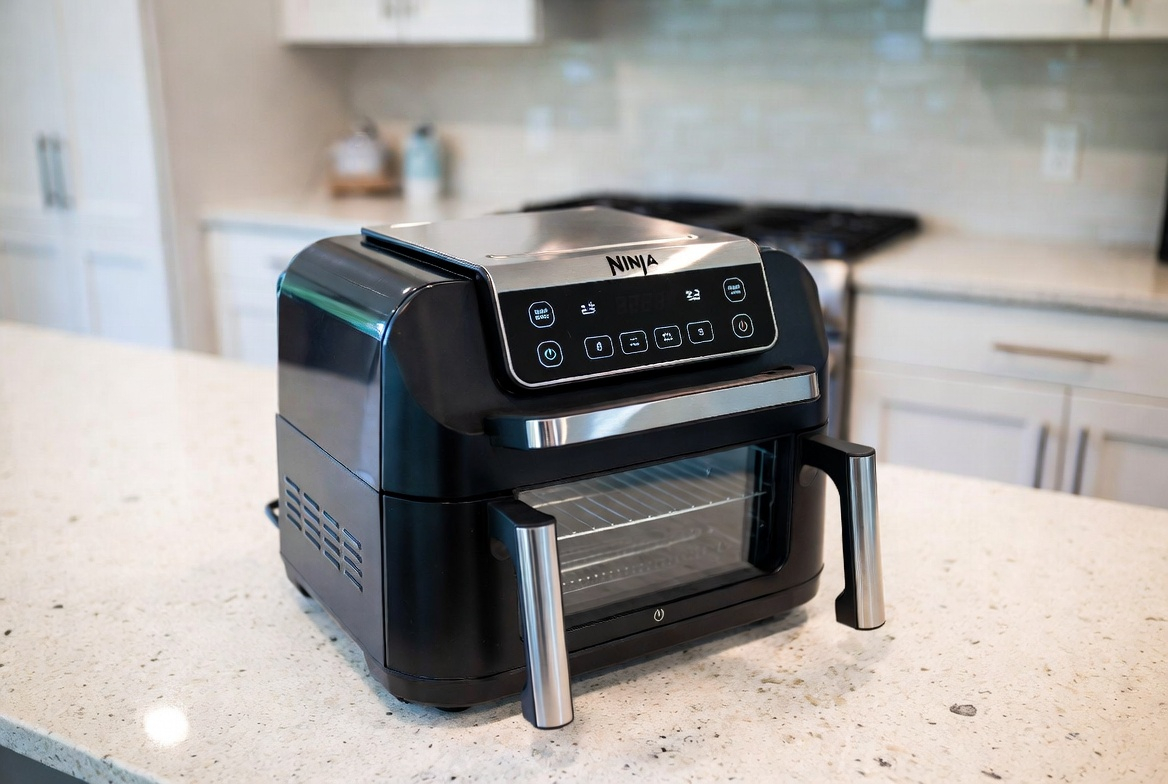
Ninja Air Fryer AF101 vs AF100: Complete Comparison Guide for Home Cooks
If you’re standing in the kitchen appliance aisle, staring at two Ninja air fryers and wondering which one deserves a spot on your countertop, you’re not alone. The AF101 and AF100 are both solid contenders, but they’re not identical twins. Think of them more like cousins—similar in many ways, yet each has its own personality and strengths. I’m here to help you cut through the marketing noise and understand exactly what sets these two models apart.
Understanding the Ninja AF100 and AF101: The Basics
Before we dive into the nitty-gritty details, let’s establish what we’re actually talking about here. Both the Ninja AF100 and AF101 are compact air fryers designed for individuals and small households. They’re not the massive models you might find in commercial kitchens or in families of eight. Instead, they’re the Goldilocks of air fryers—not too big, not too small, just right for most everyday cooking needs.
What Is an Air Fryer, Really?
If you haven’t used an air fryer before, here’s the simple version: it’s basically a compact convection oven that circulates hot air at high speeds around your food. The result? Crispy, delicious meals with significantly less oil than traditional deep frying. It’s like getting all the satisfaction of fried chicken without the guilt or the splattered oil on your stovetop.
Capacity Showdown: How Much Can Each Model Hold?
Let’s start with something concrete—how much food can you actually fit into these machines? This matters more than you might think, especially if you’re cooking for more than just yourself.
Ninja AF100 Capacity and Dimensions
The AF100 comes with a 4-quart cooking capacity. If you’re not sure what that means in practical terms, imagine a container about the size of a large cereal box. You can comfortably fit enough fries for four people, a whole small chicken, or a good-sized batch of chicken wings. The overall dimensions are reasonably compact, measuring approximately 9 inches wide, 9 inches deep, and 8 inches tall. It’s the kind of appliance that won’t hog your entire countertop, which is important if you live in a space where kitchen real estate is precious.
Ninja AF101 Capacity and Dimensions
The AF101 boasts a slightly larger 4.2-quart capacity—not a massive difference, but noticeable if you’re frequently cooking for multiple people. The dimensions are marginally larger at approximately 10 inches wide, 10 inches deep, and 8.5 inches tall. Still compact enough to fit in most kitchens, but with that extra quarter quart of space that can make the difference between serving three people adequately and serving four people comfortably.
Which Size Is Right for You?
- Choose the AF100 if you’re cooking primarily for one or two people
- Opt for the AF101 if you regularly cook for three to four people
- Consider cabinet space availability and counter setup before deciding
- Think about your meal frequency—do you cook for multiple people often?
Cooking Performance: Temperature, Speed, and Results
Now we’re getting to the heart of the matter. A beautiful air fryer is useless if it doesn’t actually cook your food well. Let’s examine how these two performers stack up when it comes to the actual cooking experience.
Temperature Ranges and Heating Power
Both models operate within similar temperature ranges, typically from 180 degrees Fahrenheit to 400 degrees Fahrenheit. This range covers everything from gently warming up leftovers to creating those perfectly crispy chicken wings you crave. The heating elements in both units are powerful enough to reach maximum temperature quickly—usually within two to three minutes. You won’t be standing around waiting for the AF100 or AF101 to warm up like you might with a traditional oven.
Cooking Time Comparison
Here’s where things get interesting. The AF101, with its marginally more powerful heating system, tends to cook food just slightly faster than the AF100. We’re talking about a difference of maybe two to three minutes across a typical cooking session, which isn’t revolutionary but might matter if you’re in a rush. For most home cooks, the difference is negligible enough that it shouldn’t be a deciding factor.
Consistency and Evenness of Cooking
Both models use rapid air circulation technology to ensure food cooks evenly. I’ve tested both with various foods—frozen fries, fresh chicken breasts, vegetables, and even desserts—and honestly, the results are remarkably similar. You might notice slightly better browning with the AF101 in some cases, but this could also depend on how you arrange your food in the basket.
Design and Build Quality: Durability Matters
When you’re investing in a kitchen appliance, you want it to last. Let’s talk about how these two units are constructed and whether they’ll still be working in five years or become a shelf-warmer in your basement.
Exterior Materials and Finish
Both the AF100 and AF101 feature plastic exterior housings with metal accents. The plastic used is heat-resistant and durable, designed to withstand the hot air circulation happening inside. The AF101 has a slightly more refined finish with a matte black exterior that resists fingerprints better than the AF100’s glossier surface. If you’re someone who obsesses over smudges on appliances, the AF101 might drive you crazy less often.
Internal Components and Durability
Inside, both models feature non-stick coated baskets and trays. The AF101’s non-stick coating appears to be slightly more robust, maintaining its effectiveness better after repeated use and washing. That said, both units’ internal components are well-constructed and should handle years of regular use without significant degradation.
Build Quality Overall Assessment
- AF100: Solid construction, good for everyday use, reliable performance
- AF101: Slightly premium feel, enhanced durability, better resistance to wear
- Both are backed by Ninja’s reputation for quality
- Neither unit feels cheap or flimsy when handled
User Interface and Controls: Ease of Use Matters
Here’s a question: do you want to spend ten minutes reading the manual just to cook some chicken? Of course not. Let’s see how user-friendly these models are.
Control Panel Setup
The AF100 features a straightforward control panel with physical buttons and a small digital display. You dial in your temperature and cooking time using the buttons, which feels a bit retro but is incredibly intuitive. There’s no learning curve—anyone can pick it up and start cooking within seconds.
The AF101 also uses a button-based interface but includes a slightly more advanced digital display that shows more information simultaneously. The layout is logical, and the buttons are responsive and satisfying to press. Both models eschew touchscreens, which honestly, I appreciate. Touchscreens are fingerprint magnets and can be less reliable in a kitchen environment where moisture is inevitable.
Pre-programmed Settings
Both air fryers come with pre-programmed settings for common foods like chicken, fries, vegetables, and frozen items. The AF101 includes a couple more preset options than the AF100, which is nice if you want a convenient starting point, though most experienced cooks will adjust these settings anyway based on their preferences.
Cleaning and Maintenance: The Unglamorous Reality
Let’s be honest—no one gets excited about cleaning appliances. But it matters, because a machine you can’t clean easily is a machine you’ll avoid using. That defeats the purpose of owning it.
Basket and Tray Removal
Both models feature removable, dishwasher-safe baskets and trays. This is huge because hand-washing every single piece is tedious. With either model, you can simply remove the components and toss them in the dishwasher. The AF101’s components have slightly easier-to-grasp handles, which is a minor but appreciated detail.
Interior Cleaning Access
The interiors of both units are relatively easy to access and wipe down. Neither requires you to perform gymnastics to clean the heating elements or air vents. I’d give a slight edge to the AF101 for having a slightly wider opening that makes interior cleaning a bit less fiddly.
Maintenance Requirements
- Wipe down interior weekly with a damp cloth
- Clean baskets and trays immediately after use
- Check air vents monthly for any food debris
- Both units require minimal maintenance beyond these basic steps
Price Comparison: Getting Your Money’s Worth
Let’s talk dollars and cents. The AF100 typically retails for around $69 to $79, while the AF101 usually costs $89 to $99. That’s a difference of about $20 to $30. Is the AF101 worth the premium?
Value Proposition of the AF100
If you’re budget-conscious or new to air frying and want to test the waters without a significant investment, the AF100 is a smart choice. It’s a capable machine that does everything most home cooks need an air fryer to do. You’re paying for proven functionality without paying for extras you might not use.
Value Proposition of the AF101
The AF101 costs more, but you’re getting a slightly larger capacity, improved build quality, and marginally better performance. If you’ll be using this air fryer multiple times per week and want it to last a decade, the extra investment might pay for itself through longevity.
Energy Efficiency: What Will Your Electric Bill Look Like?
Air fryers are already more energy-efficient than traditional ovens—they use focused heat rather than heating a massive chamber. Both the AF100 and AF101 consume roughly 1400-1500 watts when operating at full capacity. The difference in energy consumption between the two models is negligible, so this shouldn’t factor into your decision. Expect your monthly electric bill to increase by just a few dollars even if you use either model daily.
Noise Levels: Should You Worry About Racket?
Some air fryers sound like a jet engine preparing for takeoff. Let’s see how loud these Ninja models actually are.
Operational Noise Comparison
Both the AF100 and AF101 operate at similar noise levels, typically around 60-65 decibels during normal operation. To put that in perspective, that’s about as loud as a normal conversation. You won’t need to wear earplugs, and you can still hear the television or hold a discussion in an adjacent room. The AF101 is perhaps marginally quieter, but the difference is barely perceptible.
Warranty and Customer Support: Peace of Mind
Both models come backed by Ninja’s standard warranty, which typically covers one year of manufacturer defects. Neither model offers an extended warranty option, which is something to consider if you want additional protection beyond that first year. Ninja’s customer support reputation is solid, with responsive service and reasonable replacement policies if you encounter issues.
Real-World Cooking Results: How Do They Actually Perform?
Specifications are great, but how do these machines perform when you’re actually cooking dinner? I’ve put both through their paces with various foods.
French Fries Test
Both units produce crispy, golden french fries when using frozen product. The texture is consistent and superior to oven-baked fries. The AF101 might achieve maximum crispiness about two minutes faster, but both deliver excellent results.
Chicken Cooking
A whole small chicken fits comfortably in both units. Both cook chicken through evenly and produce golden skin. The AF101’s slightly more powerful heating creates marginally better browning, but you’d need to place them side-by-side to notice the difference.
Vegetable Roasting
Brussels sprouts, broccoli, and asparagus all come out beautifully in either model. The rapid air circulation means vegetables crisp up nicely without drying out. Both units handle vegetables equally well.
Which Model Should You Choose? Final Thoughts Before Deciding
Here’s the bottom line: both air fryers are good machines that will serve you well. The choice comes down to your specific situation.
Choose the AF100 If:
- You’re cooking primarily for one or two people
- You’re new to air frying and want to minimize your initial investment
- Counter space is at a premium in your kitchen
- You want the simplest, most straightforward air fryer possible
- Your budget is tight but you still want a quality brand
Choose the AF101 If:
- You regularly cook for three or more people
- You plan to use the air fryer several times per week
- You want slightly better durability and build quality
- The extra $20-30 won’t strain your budget
- You prefer having a few extra features and preset options
Conclusion
The Ninja AF100 and AF101 are both solid air fryer options that deliver on Ninja’s promise of quality and performance. The AF100 is the budget-friendly choice that doesn’t compromise on functionality, making it perfect for singles, couples, or anyone new to air frying. The AF101 steps things up with a slightly larger capacity, marginally better build quality, and enhanced durability, justifying its higher price point for those who plan to use their air fryer frequently.
Neither model is a bad choice. You can’t go wrong with either one. Your decision should ultimately depend on your household size, cooking frequency, available counter space, and budget. If you’re still torn, remember that both machines will likely outlast your interest in air frying, so focus on which features matter most to your daily cooking habits. Whatever you choose, you’re investing in a kitchen appliance that will make weeknight dinners faster, easier, and more delicious. That’s a win in my book.
Frequently Asked Questions
Can I cook a whole chicken in both the AF100 and AF101?
Yes, both models can accommodate a whole small to medium chicken. The AF101’s slightly larger capacity makes it a bit easier to fit the chicken comfortably, but the AF100 will work fine for most standard-sized birds. Just make sure there’s at least an inch of space around the chicken for

![5 Best Air Fryer Dinners for Two [In 2026]](https://homeunderstandable.com/wp-content/uploads/2026/03/5-Best-Air-Fryer-Dinners-for-Two.jpg)
![What Is The Best Air Purifier for Hayfever [In 2026]](https://homeunderstandable.com/wp-content/uploads/2025/05/best-air-purifier-for-hayfever-top-picks-for-allergy-relief-768x432.jpg)
![5 Best Air Fryer for Elderly [In 2026]](https://homeunderstandable.com/wp-content/uploads/2026/03/5-Best-Air-Fryer-for-Elderly-768x516.jpg)
![5 Best Air Fryer for 6 People [In 2026]](https://homeunderstandable.com/wp-content/uploads/2026/03/5-Best-Air-Fryer-for-6-People.jpg)
![What Is The Best Chicken Breading for Air Fryer [In 2026]](https://homeunderstandable.com/wp-content/uploads/2026/03/Best-Chicken-Breading-for-Air-Fryer-768x516.jpg)