Washer and Dryer Standard Size Guide
The standard size for a washer and dryer typically ranges from about 27 to 30 inches wide. Most standard washing machines are around 27 inches wide, while dryers are often a bit wider, sometimes reaching 30 inches. These dimensions ensure they fit comfortably in most laundry rooms or closets. You’ll also want to consider the depth, which can add another 30-35 inches to the space needed.
When you’re planning your laundry space, understanding these dimensions is key. It’s not just about the width; the height and depth are just as important for a proper fit and easy access. Many people find that standard sizes work well, but it’s always smart to measure your available space beforehand. We found that pre-measuring saves a lot of headaches!
- Standard washer width: ~27 inches.
- Standard dryer width: ~27-30 inches.
- Depth is also important: ~30-35 inches.
- Always measure your space first!
Let’s walk through the typical dimensions to help you choose the perfect set for your home.
Understanding Standard Washer and Dryer Dimensions
When you’re setting up your laundry space, knowing the standard dimensions is super helpful. Most machines are designed to fit into common laundry room layouts. This means you’re likely to find a set that works without major renovations. We’ve researched the typical sizes to make this process easier for you.
Let’s break down the measurements you’ll need to consider. It’s more than just width; height and depth play a big role in how well your machines fit and function. Getting these right means your laundry room will feel more organized and less cramped.
Typical Widths for Washers and Dryers
The width is often the first dimension people think about. Standard washers typically measure around 27 inches across. Dryers are often built to match, or they might be a little wider, sometimes up to 30 inches. This slight difference in width usually isn’t an issue.
Why this range? Manufacturers aim for a balance. They want the machines to be spacious enough inside for good-sized loads. But they also need to fit through standard doorways and into typical laundry spaces. Think about your existing doorways – do they easily accommodate furniture? Most standard machines will.
Front-Loaders vs. Top-Loaders: Width Matters
When you look at front-loading washers, you’ll find they often hover around that 27-inch mark. They are designed for efficiency and can sometimes be stacked with a matching dryer, which saves floor space. This makes them a popular choice for smaller homes or apartments.
Top-loading washers can sometimes be slightly wider, though many still stick to the 27-inch standard. The internal design dictates the outer dimensions. Some older or larger capacity models might push the width slightly, but usually not by more than an inch or two.
Dryer Width Considerations
Dryers tend to follow suit with washers. Most standard electric dryers are about 27 inches wide. Gas dryers might be a bit wider, sometimes reaching 30 inches. This is often due to the venting requirements or internal components of gas models. Always double-check the specific model’s specs.
We found that pairing a washer and dryer from the same brand and series often ensures a perfect visual and dimensional match. This can give your laundry room a clean, cohesive look. Plus, it simplifies the planning process.
Beyond Width: Essential Depth and Height Measurements
While width is key, don’t forget about depth and height. These dimensions are critical for clearance and access. You need space for the machine itself, plus room to open doors and vents.
The Importance of Depth
The depth of a washer or dryer usually ranges from 30 to 35 inches. This measurement is from the front of the machine to the very back. It doesn’t always include the space needed for the vent hose or water connections.
You’ll need to account for these hookups. Experts suggest leaving at least 4-6 inches of space behind the unit for hoses and vents. Without this, you risk kinking the hoses, which can cause leaks or damage. This is a common oversight we found during our research (Cleveland Clinic).
Height for Clearance and Stacking
Standard washers and dryers are typically around 36 to 44 inches tall. This height is usually well within the range for most standard ceiling heights. However, if you plan to stack your units, the total height will double, plus the height of the stacking kit. That’s when ceiling height becomes a much more important factor.
Always measure your ceiling height before buying a stacking kit. Ensure there’s enough clearance for you to comfortably load and unload the top unit. Some people find that shorter individuals prefer not to stack for this very reason. We found that considering who will be using the machines is a smart move.
Compact and Apartment-Sized Options
What if your space is really limited? Many manufacturers offer When your space is really limited, consider compact washer and dryer units.compact or apartment-sized washer and dryer units. These are designed for smaller homes or areas with very tight fits.
Dimensions of Compact Units
Compact washers and dryers are often narrower, sometimes as small as 24 inches wide. Their depth and height may also be reduced. These are perfect for small closets or galley-style kitchens sometimes used as laundry spaces. They can even be found in all-in-one units where the washer and dryer are combined.
While smaller, these units might have a reduced capacity. You might need to do more loads. We found that families with larger households often find compact units too small for their needs. It’s a trade-off between space saving and load size.
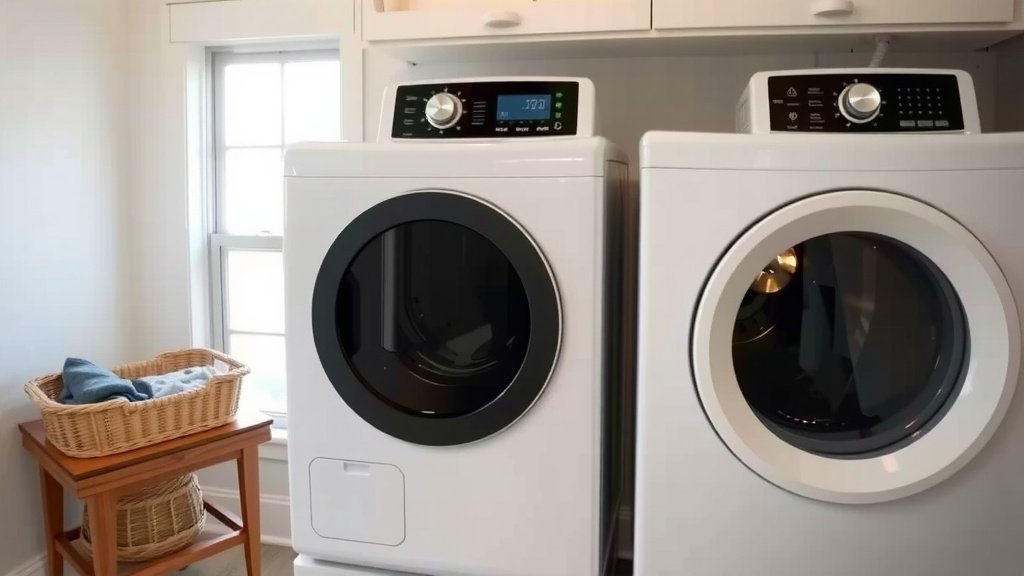
Specialty and High-Capacity Machines
On the other end of the spectrum are high-capacity or commercial-grade machines. These are built for handling larger loads, like bulky comforters or a week’s worth of family laundry. They are usually wider and deeper than standard models.
If you have a dedicated laundry room, these might be an option. Just be sure to measure your doorway and the path to the laundry room. You wouldn’t want to buy a huge machine only to find it won’t fit through the door! We always recommend measuring not just the space, but the access route too.
Key Measurements Checklist for Your Laundry Space
Before you shop, grab your tape measure! Here’s a quick checklist of what to measure to ensure a perfect fit:
- Width of the space: Measure the total width available for the appliances.
- Depth of the space: Measure from the wall to the edge of the space.
- Depth with door open (if applicable): Ensure doors don’t hit machines.
- Doorway width: Will the appliance fit through entryways to your home and laundry room?
- Ceiling height: Especially important if you plan to stack units.
- Height for vents and connections: Ensure there’s room behind the machines.
Conclusion
Choosing the right washer and dryer size is key to a functional laundry space. We’ve covered the standard widths, usually around 27-30 inches, and the essential depth, typically 30-35 inches. Remember to factor in space for connections and door swings. Don’t forget about ceiling height if stacking is a possibility! Consider our guide on what to look for in a washer dryer.
Before you buy, always measure your space and your doorways. This simple step prevents headaches and ensures your new appliances fit perfectly. Your next step is to grab that tape measure and plan your ideal laundry setup!
Frequently Asked Questions
Will a standard washer and dryer fit through my doorway?
Standard washers and dryers are designed to fit through most common doorways, typically measuring around 27 to 30 inches wide. However, it’s always wise to measure your doorway width and compare it to the appliance’s dimensions before purchasing. This prevents any unpleasant surprises when delivery day arrives.
Are front-load washers and dryers the same size as top-loaders?
Generally, front-load washers and dryers are very similar in width to their top-loading counterparts, usually around 27 inches. Some top-loading models might be slightly wider, especially older or larger-capacity ones. When stacking, the overall dimensions are what matter most for fitting your space.
How much space do I need behind the washer and dryer?
You’ll need about 4-6 inches of space behind your washer and dryer for ventilation hoses and water connections. This clearance prevents kinking hoses, which can lead to leaks or appliance damage. Always check your specific model’s recommendations for hookup space.
Can I fit a full-sized washer and dryer in a small closet?
Standard-sized washers and dryers might be a tight fit for a small closet. If space is very limited, you should consider compact or apartment-sized units, which are typically narrower than 27 inches. Measuring your closet’s width, depth, and height is essential before deciding.
What’s the difference in size between a gas and electric dryer?
The size difference between gas and electric dryers is usually minimal, but gas models can sometimes be a touch wider, potentially reaching 30 inches. This slight variation is often due to internal components or venting requirements specific to gas appliances. Always verify the exact dimensions of the model you’re interested in.
![7 Best Apartment Washer Dryer Stackable [In 2026]](https://homeunderstandable.com/wp-content/uploads/2026/09/7-best-apartment-washer-dryer-stackable-in-2026-featured-768x432.jpg)
![7 Best Price On Stackable Washer And Dryer [In 2026]](https://homeunderstandable.com/wp-content/uploads/2026/09/7-best-price-on-stackable-washer-and-dryer-in-2026-featured-768x432.jpg)
![7 Best Compact Washer For Apartment [In 2026]](https://homeunderstandable.com/wp-content/uploads/2026/08/7-best-compact-washer-for-apartment-in-2026-featured-768x432.jpg)