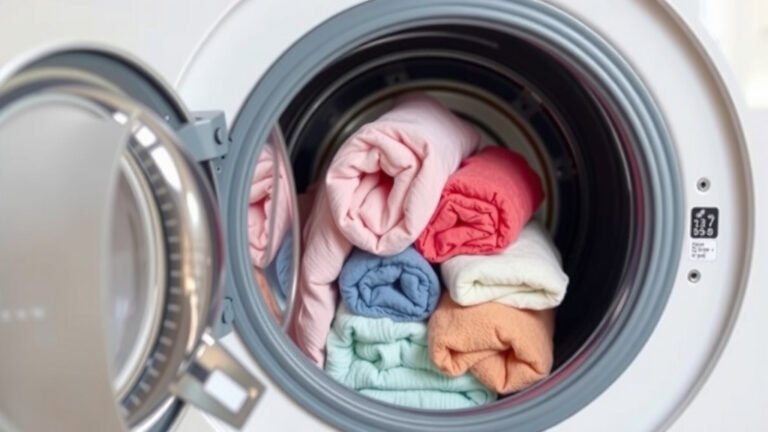
What Size Front Loader Washing Machine Do You Need
Choosing the right front loader washing machine size depends on your household needs and laundry habits. For a small family or couple, a 4.0 to 4.5 cubic foot capacity is often ideal. Larger families generating more laundry might need a 5.0 cubic foot or larger model to handle bigger loads efficiently.
When looking at front loaders, consider not just the cubic footage, but also the physical dimensions of the machine. You want a washer that fits comfortably in your laundry space without feeling cramped. Many washers come in standard widths, but depth can vary, impacting door swing and accessibility. Think about how much laundry you do each week and the types of items you wash most often.
- Most households do well with 4.0-4.5 cu. ft.
- Larger families need 5.0+ cu. ft. capacity.
- Consider the machine’s physical dimensions.
- Match capacity to your laundry volume.
Let’s walk through how to figure out the perfect front loader size for your home.
Finding the Right Front Loader Washer Capacity for Your Home
Picking the perfect front loader washing machine size is all about matching its capacity to your household’s laundry needs. You don’t want a machine that’s too small, leaving you with mountains of clothes. But you also don’t want one that’s excessively large, wasting energy and water on tiny loads. Let’s figure out what size works best for you.
Understanding Cubic Feet: What Does It Really Mean?
When we talk about washing machine size, we’re usually referring to its cubic foot capacity. This measurement tells you how much space is inside the drum. More cubic feet means a larger drum, which can hold more laundry in a single wash cycle. Think of it like packing a suitcase – a bigger suitcase lets you pack more clothes, but you need to consider how much you actually need to bring.
How Much Laundry Do You Actually Do?
To determine the right capacity, consider your family size and how often you run the washer. A good rule of thumb is to think about the average load size you typically wash. Are you washing a few shirts and a pair of jeans, or a king-size comforter and a week’s worth of towels? Research suggests that for a household of 1-2 people, a capacity between 2.5 and 3.5 cubic feet is often sufficient (Consumer Reports).
For families with children or households with higher laundry volumes, you’ll likely need more space. A family of three or four might find a capacity of 3.6 to 4.5 cubic feet to be a sweet spot. This allows for washing larger items like blankets or bedding without overstuffing the machine. If you have a very large family, say five or more people, or if you frequently wash bulky items, a capacity of 4.6 cubic feet or larger is probably your best bet.
Matching Capacity to Common Laundry Items
Let’s break down what different capacities can typically handle. This isn’t an exact science, as items vary in size and bulk, but it gives you a good idea.
Smaller Loads (Around 2.0 – 3.5 cu. ft.)
These smaller capacity machines are great for singles or couples. You can usually fit about 6-8 pounds of laundry in these. Think of a few outfits, towels for two, and maybe a set of twin sheets. They’re energy-efficient for smaller households.
Medium Loads (Around 3.6 – 4.5 cu. ft.)
This is where most households find their happy medium. These machines can hold about 10-14 pounds of laundry. You can comfortably wash a load of towels, a full set of queen-size bedding, or a week’s worth of clothes for a couple or small family. Many people find this size perfect for general laundry needs.
Larger Loads (4.6 cu. ft. and up)
If you have a large family, pets that shed, or a love for bulky items like comforters and sleeping bags, you’ll want a larger capacity. These can handle 15+ pounds of laundry. They make it easy to wash a week’s worth of clothes for a big family or a heavy king-size duvet in one go. While great for volume, remember they use more water and energy for smaller loads.
Beyond Cubic Feet: Considering Physical Dimensions
Capacity is king, but it’s not the only dimension to consider. You need to make sure the washer actually fits in your laundry space. Front loaders can vary in width, height, and depth. Standard widths are typically around 27 inches, but depth can be a real factor.
Measuring Your Laundry Space
Before you fall in love with a particular model, grab your measuring tape. Measure the width, depth, and height of the space where the washer will go. Don’t forget to account for clearance for hoses, ventilation, and the door swing. A front loader door opens outward, so you need enough room for it to swing open fully without hitting a wall or another appliance. Many experts suggest leaving at least 6 inches of space behind the machine for hoses and ventilation (Energy Star).
The Depth Factor: Door Swing and Accessibility
Deep washers can sometimes be a problem in smaller laundry rooms or closets. Measure the depth of the machine with the door open to ensure it won’t obstruct walkways or other cabinets. You want to be able to load and unload laundry easily without playing a balancing act.
Special Considerations for Your Laundry Habits
Think about the unique aspects of your laundry routine. Do you wash delicate items frequently? Do you have kids who track mud into the house weekly? These things can influence the best size for you.
Bulky Items: King-Size Challenges
If you regularly wash bulky items like king-size comforters, large dog beds, or sleeping bags, you’ll definitely need a larger capacity machine. Trying to stuff these into a smaller washer not only fails to clean them properly but can also damage the machine. Aim for 4.6 cubic feet or more for these larger, bulkier items.
Small Loads, Big Savings?
While a larger capacity machine can handle more, it doesn’t mean you have to fill it. Modern front loaders are quite water and energy efficient, even on smaller loads. However, running very small loads in a large machine will still use more resources than a small machine for the same small load. So, if your laundry volume is consistently low, a smaller capacity might offer better long-term savings on utilities.
Quick Checklist for Choosing Your Front Loader Size
Let’s sum it up with a quick guide:
- Measure your laundry space carefully, including door swing.
- Assess your household size and average weekly laundry volume.
- Consider if you frequently wash bulky items like comforters.
- Think about how much laundry you can realistically fit in one load.
- Prioritize a capacity that cleans well without constant overfilling.
Conclusion
Finding the perfect front loader size is about more than just fitting clothes. It’s about matching the washer’s capacity to your household’s unique rhythm. You’ve learned how cubic feet translate to real laundry loads and why physical space matters just as much. By measuring your laundry area and honestly assessing your weekly wash needs, you can confidently select a machine that makes laundry day easier. Your next step is to take those measurements and start looking at models that fit both your space and your lifestyle!
Frequently Asked Questions
What if my family size changes? Should I buy a bigger washer now?
It’s smart to consider potential changes. If you anticipate your family growing, opting for a slightly larger capacity now can save you from needing an upgrade later. Most modern machines are efficient even with smaller loads, so a bit of extra space often won’t hurt.
How do I know if a 4.5 cu. ft. washer is big enough for bulky items?
For a 4.5 cu. ft. washer, you can typically fit one standard queen-size comforter. If you have king-size bedding or multiple bulky items like sleeping bags, you’ll likely need a larger capacity, such as 5.0 cu. ft. or more, to ensure proper cleaning and prevent machine strain.
Are front loaders smaller on the outside than top loaders of the same capacity?
Generally, front loaders have a more compact exterior footprint compared to top loaders with similar drum capacities. This is due to their design, which allows for more efficient use of internal space. Always check specific model dimensions, as depth can vary significantly.
Can a smaller washer still clean large loads effectively?
While a smaller washer can technically fit more items, it won’t clean them as effectively if the drum is overstuffed. Clothes need room to tumble and agitate freely for proper cleaning and rinsing. For consistently large loads, a larger capacity machine is always recommended.
What’s the biggest mistake people make when choosing a washing machine size?
The most common mistake is focusing only on cubic footage and forgetting to measure the physical space. A washer might have a great capacity, but if it doesn’t fit through the doorway, into the laundry closet, or allow the door to open properly, it won’t work for your home.
![7 Best Washer And Dryer Pair [In 2026]](https://homeunderstandable.com/wp-content/uploads/2026/09/7-best-washer-and-dryer-pair-in-2026-featured-768x432.jpg)
![7 What Is The Best Small Washer And Dryer [In 2026]](https://homeunderstandable.com/wp-content/uploads/2026/08/7-what-is-the-best-small-washer-and-dryer-in-2026-featured-768x432.jpg)
![7 Best Small Washer And Dryer For Apartments [In 2026]](https://homeunderstandable.com/wp-content/uploads/2026/08/7-best-small-washer-and-dryer-for-apartments-in-2026-featured-768x432.jpg)