
Choosing the Right Washer: A Buyer’s Guide
Choosing the right washing machine depends on your laundry needs and available space. For most households, a high-efficiency (HE) model offers the best balance of cleaning power and water savings. Front-load washers generally clean better and use less water than top-loaders. Consider your budget and desired features when making your final choice for a reliable appliance.
Many factors influence which washer is best for you. Think about the size of your family and how much laundry you do weekly. Do you need a machine that handles bulky items like comforters? We found that energy efficiency and cycle options are key considerations for long-term satisfaction. Your home’s water pressure can also play a role.
- Front-load washers clean better and are more energy-efficient.
- Top-load washers are often cheaper and easier to load.
- High-efficiency (HE) models save water and electricity.
- Consider your laundry volume and available space.
- Look for features like steam cycles and smart connectivity.
Let’s break down the different types of washing machines so you can find the perfect fit for your home.
Choosing the Right Washing Machine for Your Home
We know picking out a new washing machine can feel like a big decision. After all, it’s a major appliance that handles a frequent chore. But don’t worry, we’re here to help you navigate the options. Our research found that understanding a few key differences will make finding the perfect washer much easier for your household.
Understanding the Basic Washer Types
The washing machine market has two main styles. These are top-load washers and front-load washers. Each has its own set of pros and cons. We’ve looked at what makes each one stand out to help you decide which is best for your laundry routine.
Top-Load Washers: The Familiar Choice
Top-load washers are what many of us grew up with. They have the controls and the door on the top. This means you can add clothes while the machine is running. It’s also generally easier to load and unload without bending over too much. Many older models use an agitator, a central post that spins clothes around.
Agitator vs. Impeller Top-Loaders
There are two main types of top-loaders today. The traditional agitator model uses a lot of water. It can also be a bit rougher on your clothes. Newer high-efficiency (HE) top-loaders use an impeller. This is a cone or disc at the bottom that spins. These models use less water and are gentler on fabrics. We found that HE top-loaders offer a good compromise for many families.
Front-Load Washers: The Modern Powerhouse
Front-load washers have the door on the front. They clean clothes by tumbling them. This method is very effective. It’s also much gentler on your garments compared to agitator models. Many experts say front-loaders are the most efficient type of washer available. They use less water and less energy.
Why Front-Loaders Shine
One big advantage of front-loaders is their spin speed. They spin much faster than top-loaders. This removes more water from your clothes. This means they will dry faster in the dryer. This can save you time and energy on drying loads. We also found that front-loaders often have more wash cycles and advanced features.
Key Features to Consider for Your Washer
Beyond the basic type, several features can make a big difference. Think about how you do laundry and what matters most to you. We’ve highlighted some of the most important ones to help you make an informed choice.
Capacity: How Much Laundry Do You Have?
Washer capacity is measured in cubic feet. This tells you how much laundry can fit inside. A smaller household might be fine with a 2.5 to 3.5 cubic foot machine. Families with lots of laundry or who wash bulky items like blankets may need a larger capacity, 4.0 cubic feet or more. We found that choosing the right size prevents extra loads and saves time.
Energy and Water Efficiency: Saving Money and the Planet
Look for the ENERGY STAR label on washers. These appliances meet strict energy efficiency guidelines set by the U.S. Environmental Protection Agency. HE machines, both top and front-load, generally use significantly less water and electricity. For example, a front-loader can use up to 50% less water than an older top-loader. Many studies show these savings add up over the life of the appliance.
Wash Cycles and Options: Tailoring Your Wash
Most washers come with standard cycles like normal, delicate, and heavy-duty. Consider if you need specialized cycles. Options like steam cycles can help remove tough stains and allergens. Some machines offer sanitizing cycles, which are great for baby clothes or those with allergies (Cleveland Clinic). You might also find cycles for activewear, bedding, or quick washes. We found that smart features can also allow you to download custom cycles.
Noise Levels: For a Quieter Home
Some washers can be quite loud, especially during the spin cycle. If your laundry area is near living spaces, noise level is important. Manufacturers often provide decibel ratings. Some models also feature special insulation or direct-drive motors to reduce noise. We found that many front-loaders tend to be quieter than traditional top-loaders.
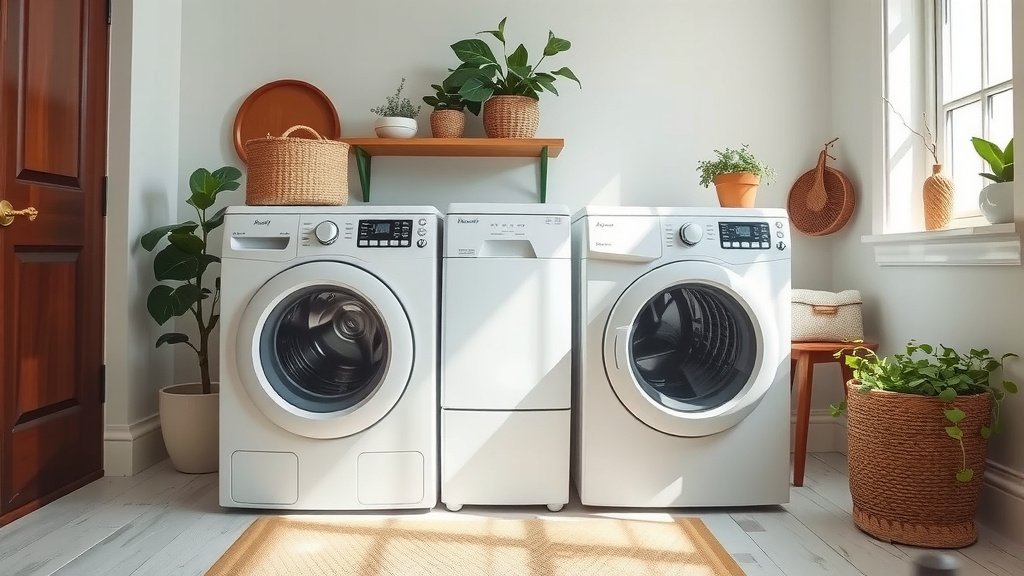
Comparing Washer Types: A Quick Overview
To help you visualize the differences, here’s a comparison of the main washer types.
| Feature | Top-Load (Agitator) | Top-Load (Impeller/HE) | Front-Load (HE) |
|---|---|---|---|
| Cleaning Performance | Good | Very Good | Excellent |
| Water Usage | High | Medium | Low |
| Energy Efficiency | Low | Medium | High |
| Gentle on Clothes | Fair | Good | Excellent |
| Price Range (Typical) | $$ | $$ – $$$ | $$$ – $$$$ |
| Ease of Loading | Easy | Easy | Requires bending |
Making Your Final Washer Decision: A Checklist
Ready to narrow down your choices? Here’s a quick checklist to guide you:
- Determine your typical laundry volume.
- Measure your available space carefully.
- Decide if a top-load or front-load best suits you.
- Prioritize energy efficiency for long-term savings.
- Note any special wash cycles or features you need.
- Set a realistic budget for your new washer.
By considering these points, you’ll be well on your way to finding a washer that makes laundry day a little bit easier.
Conclusion
You’ve now got a clearer picture of the washing machine types available. Remember, the best washer for you balances your laundry habits with your home’s needs. Front-loaders often offer superior cleaning and efficiency. HE top-loaders provide a good middle ground for many households. Consider capacity, energy savings, and special cycles. Your next step is to measure your space and set a budget. Then, you can confidently choose a machine that will make laundry day easier for years to come.
Frequently Asked Questions
Are front-load washers worth the higher price?
Many studies show front-loaders can be more cost-effective over time. They use less water and energy, saving you money on utility bills. Their gentler cleaning action also helps your clothes last longer. For many, the long-term savings and better performance justify the initial investment.
Can I do laundry in a top-load washer without bending over as much?
Yes, traditional top-load washers with agitators are generally easier to load and unload without bending. However, HE top-loaders with impellers also offer easier access than front-loaders. If bending is a major concern, a top-load model might be your best bet for comfort.
How important is the ENERGY STAR rating for a washing machine?
The ENERGY STAR rating is very important if you want to save on utility bills and reduce your environmental impact. ENERGY STAR certified washers are proven to use less energy and water than standard models. This can lead to substantial savings over the appliance’s lifespan.
Do steam cycles really make a difference in cleaning?
Yes, steam cycles can enhance cleaning performance. They help to lift stubborn stains and can also sanitize your laundry. This feature is particularly beneficial for families with children or those who suffer from allergies. It adds an extra level of clean beyond standard washing.
What does “high-efficiency” (HE) mean for a washer?
High-efficiency means the washer uses significantly less water and energy than older, conventional models. HE machines achieve this through improved drum design and agitation methods, like impellers in top-loaders or tumbling in front-loaders. You’ll need to use HE detergent with these machines for optimal results.
![7 Best Washer Dryers For Apartments [In 2026]](https://homeunderstandable.com/wp-content/uploads/2026/08/7-best-washer-dryers-for-apartments-in-2026-featured-768x432.jpg)
![7 Best Deals In Washing Machines [In 2026]](https://homeunderstandable.com/wp-content/uploads/2026/08/7-best-deals-in-washing-machines-in-2026-featured-768x432.jpg)