Dyson Air Purifier Coverage: How Many Square Feet
The square footage a Dyson air purifier covers depends entirely on the specific Dyson model you choose. Dyson offers a range of purifiers designed for different room sizes, from small bedrooms to large living areas. For instance, some models are best for rooms up to 999 square feet, while others are optimized for smaller spaces.
Choosing the right Dyson purifier means considering your room’s dimensions to ensure optimal air cleaning. We found that Dyson’s range includes options for various needs, focusing on effective air purification and powerful coverage. Knowing your room size helps you find a Dyson model that delivers the best air quality for your home.
- Dyson purifier coverage varies by model.
- Some models cover up to 999 sq ft.
- Match the purifier to your room size.
- Consider your specific needs for best results.
Let’s dive into the details of Dyson air purifier coverage so you can find the perfect fit for your space.
Understanding Dyson Air Purifier Coverage Area
So, you’re wondering just how much space a Dyson air purifier can actually clean? It’s a really common question, and the answer isn’t a single number. It honestly depends on the specific Dyson model you have or are considering. Dyson designs its purifiers for different needs. Some are built for cozy bedrooms, while others tackle expansive living rooms.
Think of it like choosing a heater for your home. You wouldn’t use a small space heater for a huge open-concept living area, right? The same logic applies to air purification. You need a unit that’s appropriately sized for the room you want to clean. We’ve found that Dyson offers a good range, but matching the model to your room’s square footage is key for getting the best air quality results.
Key Factors Affecting Coverage
Several factors influence how effectively a Dyson air purifier can cover a space. It’s not just about the raw square footage. The height of your ceilings plays a role. Taller rooms mean more air volume to circulate and clean. Think about the total cubic feet, not just the floor space.
Another big factor is how well your rooms are sealed. Drafty windows or doors mean that clean air can escape, and pollutants can easily enter. This makes it harder for any air purifier, including a Dyson, to maintain optimal air quality. We found that even the most powerful purifier will struggle in a leaky room.
Air Changes Per Hour (ACH) Explained
When looking at coverage, you’ll often see something called ACH, or Air Changes Per Hour. This is a super important metric! It tells you how many times the purifier can cycle and clean all the air in a room within one hour.
For a typical home environment, many experts suggest aiming for at least four ACH. This means the purifier completely cleans the air in your room four times every hour. Higher ACH ratings are generally better, especially if you have allergies or live in an area with poor outdoor air quality. Dyson models often highlight their CADR (Clean Air Delivery Rate) and ACH capabilities, which are good indicators of performance.
Room Size vs. Dyson Model Specifications
Dyson provides specific recommendations for room sizes for each of their purifier models. These are usually based on testing and designed to achieve a certain ACH. It’s always best to check the official Dyson specifications for the model you’re interested in.
For instance, some of their high-performance models are designed for large rooms, potentially up to 999 square feet under ideal conditions. However, this doesn’t mean it will perform optimally in every 999 sq ft space. It’s a guideline, and other factors like room layout and ceiling height still matter. We found that Dyson’s own website is the most reliable source for these numbers.
Matching a Dyson Purifier to Your Room Dimensions
Let’s get practical. How do you figure out which Dyson purifier is right for your space? The first step is simple: measure your room. You need to know the length and width of the area you want to purify.
Multiply the length by the width to get the square footage. So, if your living room is 15 feet long and 20 feet wide, that’s 300 square feet. Then, you’ll compare this number to the recommended coverage area of different Dyson models. It’s like choosing the right size of puzzle for your coffee table.
Example Coverage Scenarios
Let’s look at a few hypothetical scenarios. Imagine you have a standard 150-square-foot bedroom. Most smaller Dyson purifiers, or even mid-size ones, would likely do a fantastic job here. You might even find that a slightly larger model provides quicker purification and a higher ACH.
Now, consider a large open-plan living area that spans 600 square feet. You would definitely need one of Dyson’s more powerful, larger-coverage models. Trying to use a purifier designed for a bedroom in such a large space would be like trying to fill a swimming pool with a teacup – it just won’t be effective.
Understanding Maximum vs. Recommended Coverage
Dyson often lists a “maximum” coverage area. This is usually the largest space where the purifier can achieve a reasonable ACH. However, for the best results and the fastest purification, it’s often recommended to use the purifier in a space that is somewhat smaller than its maximum rated area.
If a purifier is rated for 500 sq ft, it might do okay in a 480 sq ft room. But if you have a 450 sq ft room, you’ll likely see much better performance and quicker air cleaning. We found that using a purifier in a slightly undersized room is often a smart move for optimal air quality.
Dyson’s Product Line and Coverage
Dyson offers various purifier series, and their coverage can differ significantly. For example, their Dyson Purifier Cool™ and Dyson Purifier Hot+Cool™ models come in different sizes, with varying coverage capabilities. Some are designed to be more compact for smaller spaces, while others are built for whole-room purification.
It’s worth noting that Dyson often integrates heating and cooling functions into their purifiers. This means the fan power needed for these additional features can impact the airflow dedicated solely to purification compared to a pure purifier model. Always check the specs for the specific product line you are considering.
| Dyson Series/Model Type | Typical Room Size (Square Feet) | Notes |
|---|---|---|
| Compact/Small Room Models | Up to 250 sq ft | Ideal for bedrooms, home offices |
| Mid-Size/Standard Models | 250 – 500 sq ft | Good for living rooms, larger bedrooms |
| Large Room/High-Performance Models | 500 – 999 sq ft | Suitable for open-plan living, large spaces |
This table gives you a general idea, but remember, Dyson’s actual specifications are the most reliable source. Coverage can vary even within a series based on the specific model number and its features. Many research papers on air purification emphasize that consistent air circulation is vital for effective particle capture (CDC).
Tips for Maximizing Your Dyson’s Coverage
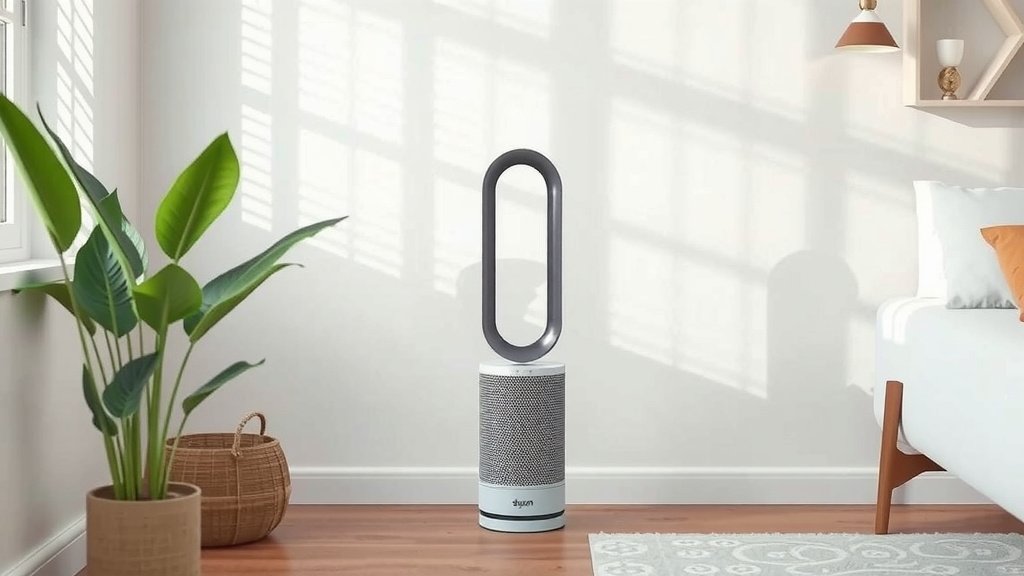
Once you’ve chosen a Dyson air purifier, there are ways to help it work as efficiently as possible. Proper placement is crucial. Don’t hide your purifier in a corner behind furniture. Place it in an open area where air can circulate freely around it.
Consider placing it near the source of pollutants if possible, like near a window if outdoor pollution is a concern, or in a room where cooking happens frequently. This helps capture particles before they spread throughout your home. We found that giving your purifier ‘breathing room’ makes a big difference.
Maintenance and Filter Checks
Don’t forget about maintenance! A clogged filter is like a clogged nose – it makes it hard to breathe. Regularly check and replace your Dyson’s filters according to the manufacturer’s instructions. A clean filter allows the purifier to draw in air more effectively and push out cleaner air.
Many Dyson models will alert you when it’s time to change the filter. Ignoring these alerts means your purifier won’t perform optimally, and its effective coverage area will shrink. Keeping it maintained ensures you get the most out of its intended coverage.
Controlling Other Air Quality Factors
An air purifier is just one piece of the puzzle for good indoor air quality. You can help your Dyson purifier work better by controlling other factors. Ventilation is important. Open windows periodically to let in fresh air, especially after cooking or cleaning. Just be mindful of outdoor air quality on those days.
Reducing sources of indoor pollution also helps. Try to use low-VOC cleaning products and paints. If you have pets, grooming them regularly can reduce airborne dander. Minimizing dust buildup through regular cleaning also means less work for your purifier. It’s a team effort!
When is a Dyson Purifier Enough?
For many homes, a well-chosen Dyson air purifier can make a significant difference in air quality. They are designed with advanced filtration and powerful fans to tackle common indoor pollutants like dust, pollen, and VOCs. If you’re looking to reduce allergens or simply breathe cleaner air, a Dyson can be a great solution.
However, if you have severe respiratory issues, or live in an area with extreme air quality concerns (like frequent wildfire smoke), you might need to consider multiple purifiers for different areas of your home. Or, you might look at Dyson’s largest capacity models. Always consult with an air quality professional or your doctor for specific health concerns. We found that for general home use, Dyson purifiers are highly effective within their recommended coverage areas.
To recap, choosing the right Dyson air purifier is all about matching its capabilities to your room’s size and your specific needs. Measure your space, check the Dyson specs carefully, and consider factors like ceiling height and room layout.
Here’s a quick checklist to help you on your way:
- Measure your room’s square footage accurately.
- Identify your primary air quality concerns (allergies, odors, etc.).
- Check the specific coverage area listed for Dyson models.
- Consider your ceiling height for total air volume.
- Ensure proper placement for optimal air circulation.
- Plan for regular filter maintenance and replacement.
Conclusion
You’ve learned that Dyson air purifier coverage isn’t one-size-fits-all. It truly hinges on the specific model you select. We’ve seen how measuring your room and checking Dyson’s official specs are your best next steps. Remember to think beyond just square footage; factors like ceiling height and room sealing play a part. By matching the purifier to your space and keeping it well-maintained, you’ll ensure the cleanest air possible in your home.
Frequently Asked Questions
Do I need a Dyson purifier for every room?
Not necessarily. For most homes, a well-chosen Dyson purifier for your main living area or largest bedroom can significantly improve overall air quality. If you have specific concerns about a particular room, like a nursery or a home office with poor ventilation, then a second unit might be beneficial.
What is the maximum square footage a Dyson air purifier can cover?
Some of Dyson’s high-performance models are rated for spaces as large as 999 square feet. However, this is often a maximum under ideal conditions. For the best purification speed and efficiency, it’s usually recommended to use a purifier in a room that is somewhat smaller than its stated maximum coverage.
How does ceiling height affect Dyson air purifier coverage?
Ceiling height impacts the total volume of air that needs purification. A room with 10-foot ceilings has more air than a room with 8-foot ceilings, even if they have the same square footage. Dyson’s coverage ratings typically assume standard ceiling heights, so very high ceilings might mean you need a more powerful unit than square footage alone suggests.
Can I use a smaller Dyson purifier in a large room?
While a smaller Dyson purifier will still filter air in a large room, it won’t be as effective or as fast. It will run constantly and may struggle to achieve the desired air changes per hour (ACH). For optimal performance, it’s best to match the purifier’s coverage rating to your room’s size.
Does Dyson offer guidance on which model to choose for my room size?
Yes, Dyson provides specific recommendations for room sizes for each of their purifier models on their official website and product packaging. We found these specifications to be the most reliable guide. Always cross-reference your room measurements with the model’s listed coverage area.