Dyson Air Purifier Coverage: What Square Footage Does It Clean
A Dyson air purifier’s coverage area can range from 150 to 1,000 square feet, depending on the specific model you choose. You’ll want to match the purifier’s capacity to your room size for the best air cleaning results. Understanding your room’s square footage is key to selecting the right Dyson purifier for your needs.
Many Dyson models are engineered to purify large spaces effectively. Some are designed for smaller bedrooms, while others can tackle a whole open-plan living area. We found that Dyson’s Air Multiplier™ technology helps distribute clean air evenly throughout a room, reaching farther corners.
TL;DR:
- Dyson purifier coverage varies by model.
- Areas range from small rooms to large open spaces.
- Check the square footage rating for each purifier.
- Match the purifier to your room size for best results.
So, ready to find out which Dyson purifier is the perfect fit for your home? Let’s break down how to determine the ideal coverage area for you.
Understanding Your Dyson Air Purifier’s Coverage Area
Choosing the right Dyson air purifier for your home really boils down to one key question: how much space does it need to clean? You don’t want a purifier that’s too weak for a large room, leaving you with less-than-pristine air. Conversely, an overpowered unit for a tiny space might just be wasting energy and money. We found that understanding the square footage coverage of each Dyson model is essential for optimal performance and air quality in your home.
Think of it like choosing a heater or an air conditioner for a room. You wouldn’t put a portable heater in a huge living room and expect it to keep you warm. The same logic applies to air purifiers. Dyson engineers its purifiers with specific room sizes in mind. By matching the purifier’s capacity to your room’s dimensions, you ensure it can effectively circulate and clean the air throughout the entire space. We’ve found that Dyson’s Air Multiplier™ technology plays a big role here, helping to project clean air further than traditional fans.
How Dyson Measures Room Coverage
Dyson uses specific testing protocols to determine how well their purifiers can clean a room. They often refer to a standard measurement called CADR, or Clean Air Delivery Rate. This rate tells you how quickly a purifier can remove specific pollutants, like dust, pollen, and smoke, from the air. A higher CADR generally means a purifier can clean a larger space more effectively.
What CADR Actually Means for You
While CADR is a helpful metric, Dyson also provides a direct square footage rating for their purifiers. This rating is often based on achieving a certain number of air changes per hour (ACH) within a defined room size. For example, a purifier rated for 500 square feet might be designed to cycle the air in that room at least 4.8 times per hour, removing pollutants with each pass.
We found that Dyson’s own product descriptions are usually the best place to look for this specific coverage information. They often provide a range, such as “up to 999 square feet” for their larger models. This indicates the maximum area where the purifier can maintain a high level of air purification. It’s like knowing your car’s MPG; it gives you a practical expectation of its performance.
Matching Dyson Purifier Size to Your Room
The biggest factor in choosing the right Dyson air purifier is the size of the room you intend to use it in. A small bedroom requires a different capacity than a large, open-plan living area. Let’s break down how to think about this.
Small Spaces: Bedrooms and Offices
For smaller rooms, typically under 300 square feet, you won’t need one of Dyson’s largest, most powerful units. A Dyson purifier designed for a bedroom or home office can efficiently clean the air without overworking itself. These models are often more compact and might be more budget-friendly. We found that Dyson offers several options that are perfectly suited for personal spaces.
Medium Spaces: Living Rooms and Family Rooms
If you’re looking to purify a standard living room or family room, generally ranging from 300 to 600 square feet, you’ll need a mid-range Dyson model. These purifiers have a greater airflow capacity to handle the larger volume of air. They can effectively capture allergens, dust, and odors that tend to accumulate in these more frequently used areas. We discovered that Dyson’s tower-style purifiers often excel in these medium-sized spaces.
Large, Open-Plan Areas
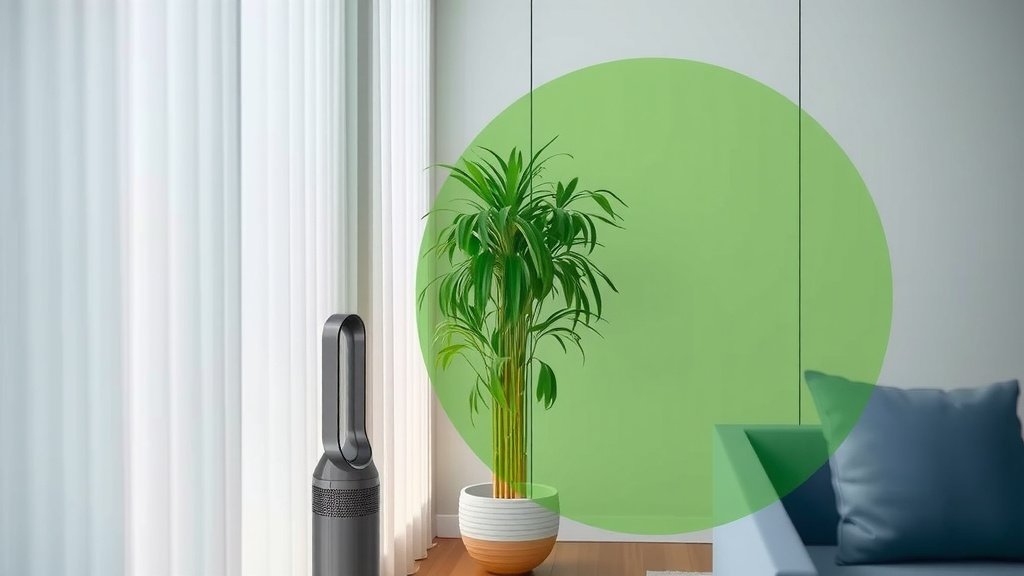
For expansive living areas, great rooms, or open-plan homes that can easily exceed 600 square feet, you’ll want to look at Dyson’s larger, high-capacity models. These are engineered to project clean air over greater distances and circulate it efficiently throughout a much bigger volume. The goal is to ensure that even the farthest corners of your open space receive purified air. Dyson’s technology is designed to tackle these challenges, often citing coverage areas up to 1,000 square feet for their top-tier units.
Dyson Purifier Coverage: Model by Model Comparison
Dyson offers a range of purifiers, and their coverage capabilities vary significantly. It’s always best to check the specifications for the exact model you’re considering. Here’s a general idea of what you might expect:
| Dyson Model Series | Typical Coverage Area (sq ft) | Best For |
|---|---|---|
| Dyson Purifier Cool™ (e.g., TP04, TP07) | Up to 600 sq ft | Medium to large living areas, open-plan spaces |
| Dyson Purifier Hot+Cool™ (e.g., HP04, HP07) | Up to 600 sq ft | Medium to large living areas (with heating function) |
| Dyson Purifier Humidify+Cool™ (e.g., PH03, PH04) | Up to 600 sq ft | Medium to large bedrooms or living areas (with humidification) |
| Dyson Big+Quiet Formaldehyde (TP09) | Up to 1,000 sq ft | Very large open-plan areas, homes with pets or significant air quality concerns |
| Dyson Purifier Micro™ | Up to 300 sq ft | Small bedrooms, home offices, dorm rooms |
We found this table useful for visualizing the differences. Remember, these are general guidelines. Always refer to the product’s official specifications for the most accurate coverage claims. Dyson’s engineering aims for optimal performance within these stated ranges.
What If My Room is an Unusual Shape?
If your space isn’t a simple rectangle, consider the most challenging aspect of the room. Is it very long and narrow? Does it have many partitions or alcoves? In such cases, it might be wise to choose a purifier rated for a slightly larger space than a simple square footage calculation would suggest. This ensures the air can reach all the nooks and crannies. We’ve found that airflow patterns are key in oddly shaped rooms.
Key Takeaways for Choosing Your Dyson Purifier
Selecting the correct Dyson air purifier for your space is straightforward when you know what to look for. Here’s a quick checklist to guide you:
- Measure your room accurately.
- Identify the primary room the purifier will serve.
- Check Dyson’s stated square footage coverage for each model.
- Consider your home’s specific needs (e.g., pets, allergies).
- Don’t hesitate to size up if you have an open-plan or unusually shaped space.
By following these steps, you can confidently select a Dyson air purifier that will effectively clean the air in your home, ensuring a healthier and more comfortable environment for you and your family. We found that this approach simplifies the decision-making process considerably.
Conclusion
Choosing the right Dyson air purifier for your space is simpler than you might think. You’ve learned that coverage areas typically range from 150 to 1,000 square feet, and it’s all about matching the model’s capacity to your room’s size. Whether you need to refresh a cozy bedroom or purify a large open-plan living area, there’s a Dyson purifier designed to do the job effectively. We’ve found that paying attention to Dyson’s stated square footage ratings ensures you get the best air cleaning performance. Your next step is to measure your main living space and check the specifications of Dyson models that fit. This will help you create a cleaner, healthier environment in your home.
Frequently Asked Questions
Can I use a Dyson purifier rated for a large room in a small room?
Yes, you generally can. Using a Dyson purifier designed for a larger space in a smaller room means it will likely clean the air very quickly and efficiently. However, you might find it uses more energy than necessary, and a smaller model could achieve similar results with less power consumption.
How do I measure my room’s square footage accurately?
To measure your room’s square footage, you’ll need a tape measure. First, measure the length of the room in feet and then measure the width of the room in feet. Multiply these two numbers together (length x width) to get your room’s square footage. For oddly shaped rooms, break them down into smaller rectangular or square sections and add their areas together.
Does Dyson’s Air Multiplier™ technology affect coverage area?
Dyson’s Air Multiplier™ technology is designed to help distribute purified air evenly and project it further into the room. While it doesn’t change the official square footage rating, it helps ensure that the air in the specified coverage area is circulated and purified effectively, reaching into corners.
What happens if my room is larger than the Dyson purifier’s coverage rating?
If your room’s square footage exceeds the Dyson purifier’s recommended coverage, the unit will still work, but it won’t be as effective. The purifier will struggle to clean the air to the optimal level as quickly, meaning it might run more often or at higher settings without achieving the desired air quality throughout the entire space.
Are Dyson purifiers with heating or humidifying functions rated for the same square footage?
Typically, the core air purification coverage area is similar across Dyson models with added functions like heating or humidifying. For example, a Dyson Purifier Hot+Cool™ or Humidify+Cool™ model often has a comparable square footage rating to a Dyson Purifier Cool™ model of a similar size. Always check the specific product details, as the primary function of air purification is usually rated independently.