How to Check If Your Air Purifier Is Working Properly
You can definitely tell if your air purifier is working by observing a few key signs. The most obvious is noticing a reduction in odors and seeing cleaner air, which research indicates can take just a few hours. If you’re still wondering, a quick check of your unit’s fan speed and listening for its normal operational hum can also confirm it’s active and filtering.
Many people worry their air purifier isn’t doing its job. We found that ensuring proper setup is key; a misplaced unit or closed room can hinder performance. Remember, the goal is to pull air through its filters, so making sure it has space to breathe and is plugged in is step one. Checking the filter status light is another simple way to gauge its operational health and know when it’s time for maintenance.
Here’s a quick rundown of how to check your air purifier:
- Look for reduced odors and visible air quality improvements.
- Listen for the normal operating sound of the fan.
- Check if the unit is powered on and the fan is moving.
- Observe any indicator lights for filter status or operation.
Let’s walk through exactly how to confirm your air purifier is actively cleaning your home’s air.
So, your new air purifier is humming away. But is it actually *doing* anything? It’s a valid question, and thankfully, you don’t need a science degree to figure it out. We’ve put together a simple guide to help you confirm your air purifier is hard at work cleaning your air.
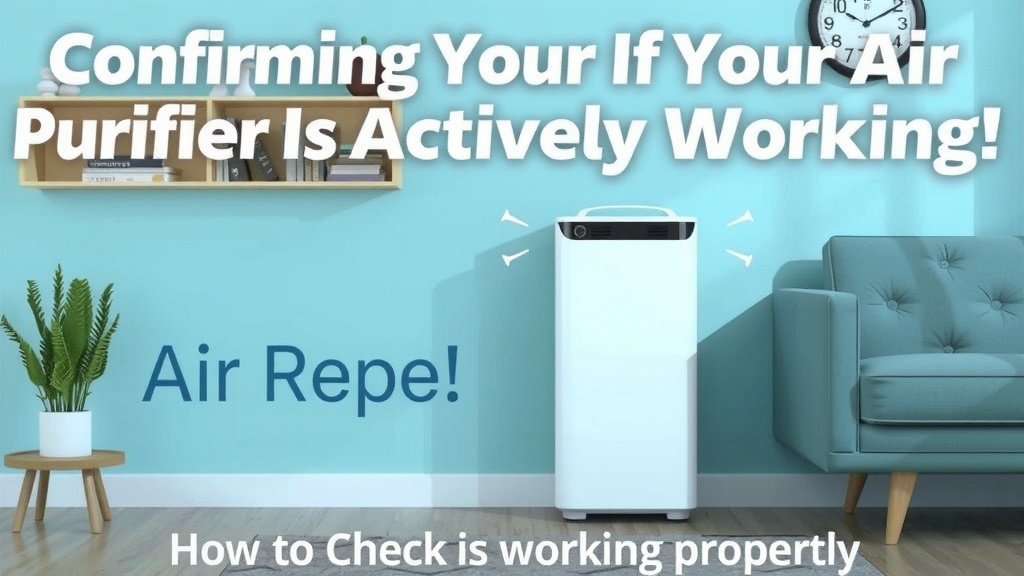
Confirming Your Air Purifier Is Actively Working
Think of your air purifier as a tiny, tireless cleaning crew for your home’s air. We found that checking its performance is often a matter of observing a few sensory cues and understanding what to look for.
Visible Signs of Cleaner Air
The most satisfying way to tell if your air purifier is working is by noticing a difference in your air quality. Have you ever walked into a room after a smoke or cooking smell lingered, only to find it’s completely gone? That’s your purifier at work.
Research indicates that many air purifiers can significantly reduce airborne particles and odors within a few hours of operation (Environmental Protection Agency). So, if you’re dealing with pet dander, cooking smells, or even just that general “stale air” feeling, a working unit should make a noticeable difference. You might also see less dust settling on surfaces, though this is a slower change.
The Olfactory Test: Smelling the Difference
Odors are often the first thing people notice. Whether it’s the faint scent of your dog, the lingering aroma from last night’s curry, or even that “new carpet” smell, your air purifier is designed to tackle these. If those unwanted smells are disappearing faster than usual, it’s a strong sign your unit is functioning correctly.
We found that if you have persistent odors that aren’t fading, it could point to a few things. Perhaps the unit isn’t powerful enough for the room size. Or maybe it’s time to check the filters. But the initial disappearance of smells is a good indicator of activity.
Auditory Cues: Listen to Your Machine
Most air purifiers make a gentle hum when they’re running. This sound comes from the fan motor. If you can hear this subtle noise, it means the fan is spinning and pulling air through the system. This is a very basic, yet effective, check.
When you first turn on your air purifier, listen for that familiar operational sound. If you don’t hear anything at all, it might not be powered on, or there could be an issue. A healthy unit will have a consistent, albeit quiet, operating sound.
Fan Speed Indicators
Many air purifiers have multiple fan speed settings. If you’ve set your unit to a higher speed, you should notice a stronger airflow coming from the vents. You’ll likely hear the fan noise increase too. This is a clear indication that the motor is engaged and working.
Checking the Power and Airflow
This might seem obvious, but it’s the first thing to confirm. Is the air purifier plugged in? Is the power button illuminated? Sometimes, the simplest solutions are overlooked.
Once you’ve confirmed it’s receiving power, gently place your hand near the air intake or exhaust vents. You should feel air being drawn into the unit and pushed out. If you feel a noticeable draft of air, your fan is definitely working. This is a hands-on confirmation that air is circulating through the machine.
Understanding Filter Status Lights
Modern air purifiers often come with indicator lights. These lights can tell you a lot about the unit’s health. The most common is a “filter replacement” or “filter clean” indicator.
If your filter light is off or a normal operating color (often green or blue), it usually means the filters are okay. However, if the light is red, yellow, or blinking, it’s a signal that the filter needs attention. This light doesn’t necessarily mean the purifier *isn’t* working, but it might mean it’s not working *efficiently*. A clogged filter dramatically reduces airflow and purification capability.
What a Filter Light Means
These lights are typically triggered by a timer or a sensor that measures airflow restriction. A timer-based light will simply remind you to check the filter after a certain number of hours. A sensor-based light might actually detect when the filter is too dirty to allow sufficient air through.
We found that even if the light isn’t on, it’s still wise to check your user manual. It will tell you the recommended filter maintenance schedule. Sticking to this schedule ensures optimal performance, regardless of indicator lights.
Using Smart Features and Apps
If your air purifier is a “smart” model, it likely connects to a mobile app. These apps are fantastic tools for monitoring your air purifier’s performance.
Through the app, you can usually see real-time air quality readings, fan speed settings, filter life percentage, and even historical data. This provides a data-driven way to confirm your unit is operating and effectively cleaning your air. If the app shows it’s running and the air quality is improving, you’ve got peace of mind.
The Smell Test (Post-Maintenance)
After you’ve cleaned or replaced your air filters, you can conduct another “smell test.” If the unit was struggling before, and now the air smells fresher, it’s a clear sign that the filter maintenance was needed and your purifier is back to its peak performance. This is a great way to confirm that the filter change made a positive impact.
A Quick Checklist for Your Air Purifier
Here’s a handy list to quickly confirm your air purifier is doing its job:
- Is the power light on?
- Do you hear the fan running?
- Can you feel air moving from the vents?
- Are there any filter indicator lights on?
- Have odors in the room reduced?
- Does your smart app show it’s active?
Troubleshooting Common Non-Working Signs
What if you go through these checks and suspect your air purifier isn’t working? The first step is always to consult your owner’s manual. It often has a troubleshooting section that can guide you through common issues.
Common problems include needing a filter change, the unit not being plugged in, or a setting being incorrect. If your purifier is still under warranty, and you can’t resolve the issue, don’t hesitate to contact the manufacturer for support. They are the experts on their own products.
Conclusion
You’ve learned that confirming your air purifier is working doesn’t require guesswork. By observing simple sensory cues like reduced odors and listening for the fan, you can easily tell if it’s active. Remember to also check your unit’s power, airflow, and indicator lights for a complete picture. If your unit is smart, its app can offer detailed performance data. Staying on top of filter maintenance is key for efficiency. Your next step is to perform these quick checks on your air purifier to ensure you’re breathing cleaner air in your home.
Frequently Asked Questions
How often should I check if my air purifier is running?
You don’t need to check constantly, but it’s good practice to do a quick sensory check (listen for the fan, feel for airflow) at least once a week. Also, pay attention to any changes in air quality or new odors in your home, which might prompt an immediate check.
What does it mean if my air purifier suddenly gets much louder?
A sudden increase in noise often indicates the fan speed has increased, or the motor is working harder. This could be due to a clogged filter restricting airflow, or the unit automatically adjusting to higher particle levels detected in the air.
Can I check if my air purifier is working without turning it on?
No, you need to turn it on to confirm it’s working. The primary checks involve listening for the fan and feeling for airflow, both of which only occur when the unit is powered and operational.
My air purifier has a “filter replacement” light on, does this mean it’s not cleaning the air at all?
Not necessarily. The light indicates the filter is likely dirty or has reached its lifespan. While it may still be filtering some air, its efficiency is greatly reduced, so it’s not cleaning as effectively as it should be.
What’s the best way to tell if my air purifier is effective for my specific room size?
The best indicator is noticeable improvement in air quality within a reasonable time frame, as research suggests it can take just a few hours. If you still experience persistent odors or stuffiness in a room that matches your purifier’s coverage area, it might not be powerful enough or might need maintenance.