Stacked Washer and Dryer Height: Your Complete Guide
A stacked washer and dryer unit typically stands between 60 and 70 inches tall. This height can vary slightly based on the specific models and brands you choose. It’s essential to measure your available space before you buy to ensure a proper fit. Many stacked units are designed to fit under standard 8-foot ceilings, offering a space-saving solution for laundry rooms.
When considering a stacked washer and dryer, you’re likely looking for ways to maximize your living area. These units combine both appliances vertically, which is a fantastic way to reclaim floor space. You’ll find they come in various configurations, often with the dryer positioned directly above the washer. This makes them a popular choice for apartments, condos, and homes with limited laundry room footprints.
- Stacked washer and dryer height is usually 60-70 inches.
- This measurement is crucial for fitting units into your space.
- They are designed to be taller but narrower than side-by-side models.
- Consider door clearances and ceiling height when measuring.
Let’s dive deeper and figure out the exact dimensions you need to know for your stacked laundry setup. Our guide to the best stackable washer and dryer can help you find the exact dimensions you need to know for your stacked laundry setup.
Understanding Stacked Washer and Dryer Dimensions
When you’re trying to fit a stacked washer and dryer into your home, you’re probably wondering about its height. You want to make sure it tucks away neatly. Most stacked units are designed to be quite tall. This allows them to fit both appliances in a single footprint. We’ve found that the typical height range is between 60 and 70 inches.
Think of it like stacking books. You can fit more books on a shelf by stacking them vertically, right? A stacked washer and dryer does the same for your laundry room. It’s a smart way to get a full-size washer and dryer without taking up twice the floor space. This makes them a fantastic solution for smaller homes and apartments.
Why Height Matters for Stacked Units
The height of a stacked unit is its most defining feature. Unlike side-by-side models, which spread out wide, these units go up. This vertical design is key to their space-saving appeal. You need to know this measurement for a few reasons. First, you need to make sure it fits under any cabinets or shelves you might have. Second, you need to ensure you can comfortably load and unload clothes from the top dryer.
We’ve seen many people underestimate the vertical space needed. It’s not just the appliance itself. You also need a little extra clearance above it. This is for ventilation and easy access. So, keeping that 60 to 70-inch range in mind is your first step.
Typical Height and Width Variations
Let’s get into the specifics of how tall and wide these units usually are. Knowing these numbers will help you measure your space accurately. You don’t want any surprises when your new appliance arrives.
Standard Height Ranges
As we mentioned, the average height is about 60 to 70 inches. Some models might be a little shorter, perhaps around 55 inches, while others can reach up to 75 inches. It really depends on the brand and the specific configuration. For instance, a very large capacity washer and dryer stacked might be on the taller end.
Many units are designed to fit under standard 8-foot ceilings. This means you generally have a good amount of wiggle room. However, if you have lower ceilings or soffits in your laundry area, you’ll need to be more precise. Always double-check the exact dimensions on the product spec sheet.
Width and Depth Considerations
While height is the primary concern for stacking, you can’t forget width and depth. Stacked units are typically narrower than side-by-side models. This is another reason they fit into tight spaces. You’ll commonly find them around 27 to 30 inches wide. This is similar to the width of a single appliance.
Depth is also important. Most stacked units are about 30 to 34 inches deep. This means they will likely protrude a bit from standard countertops. Make sure this won’t block a doorway or walkway. We found that measuring the depth from the wall to the furthest point of the appliance is critical.
| Dimension | Typical Range | Notes |
|---|---|---|
| Height | 60 – 70 inches | Can vary by model. Crucial for ceiling clearance. |
| Width | 27 – 30 inches | Similar to a single appliance width. |
| Depth | 30 – 34 inches | Check for door and walkway clearance. |
Factors Affecting Stacked Unit Height
Several things can influence the final height of your stacked washer and dryer. It’s not just a one-size-fits-all situation. Understanding these factors will help you choose the best unit for your needs.
Washer and Dryer Model Differences
Every manufacturer has its own design. Some brands might offer sleeker, more compact models. Others might focus on larger capacities, which naturally adds to the height. You might find a basic model that’s on the lower end of the height spectrum. A premium model with extra features could be a few inches taller.
We researched and found that some all-in-one units, which combine wash and dry functions in one machine, can have different height profiles too. So, it’s always best to look at the specific product specifications for any model you’re considering.
Installation Requirements
Installation plays a role in the perceived height. While the appliance itself has a set height, how it’s installed can matter. For example, some units might have adjustable leveling feet. These can add or subtract a small amount of height, typically less than an inch. This can be useful for getting the unit perfectly stable on an uneven floor.
Also, consider how the vent hose for the dryer is connected. Sometimes, the way this hose is routed can affect how close you can get the unit to the wall. This is less about the appliance’s height and more about the overall space it occupies.
Door and Ceiling Clearances
This is where things get really practical. You need to think beyond just the height of the stacked unit itself. What about the doors you need to open? Can you open the dryer door fully? Can you open the washer door without hitting anything?
We recommend adding a few inches to the appliance’s height measurement. This accounts for the space needed to comfortably open the dryer door. It also ensures you have enough room to load and unload laundry without hunching over too much. For ceilings, an 8-foot ceiling usually provides enough space for most 60-70 inch units. But measure your actual ceiling height to be sure.
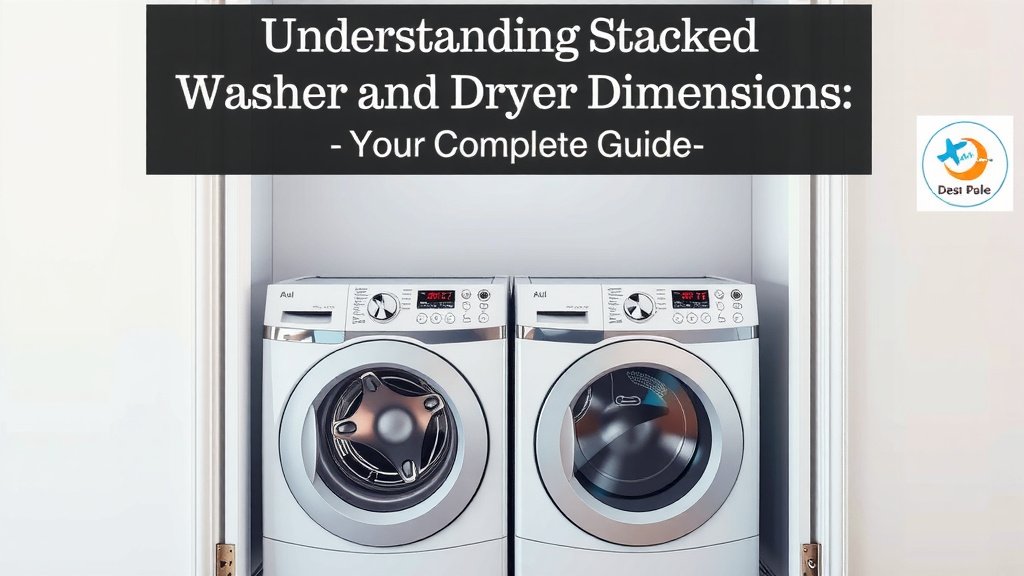
Tips for Measuring Your Space
Taking accurate measurements is the most important step before you buy. A few minutes with a tape measure can save you a lot of headaches later.
Measure Your Available Space Carefully
When you measure, think about the entire area where the stacked unit will go. Measure the width, depth, and height. Pay close attention to the vertical clearance from the floor to the ceiling or any overhead cabinets.
Don’t forget to measure door openings. You need to be able to get the appliance into the room and into its spot. Also, consider the space needed for the dryer vent hose. Sometimes, the vent connection requires extra depth behind the unit. This can push it further out than you expect.
Check Door Swings and Lid Openings
This is a common oversight. Make sure the dryer door can open completely. You don’t want it hitting a wall or a cabinet. If it’s a front-loading washer, check that the door opens far enough for you to easily put in a load of laundry. Some units have reversible doors, which can help if you have a specific space constraint.
We found that it’s helpful to mark out the footprint of the appliance with painter’s tape on the floor. Then, simulate opening the doors. This gives you a visual representation of the clearances needed. It’s a simple trick that provides great clarity.
Consider Utility Access
You’ll need space for the water hookups for the washer and the electrical outlet for both appliances. Often, these are located behind the units. Make sure there’s enough room to connect and disconnect them easily. Sometimes, the placement of these utilities can dictate how far the unit sits from the wall.
This isn’t usually a major height issue, but it’s part of the overall fit. Thinking about plumbing and electrical access now will save you trouble during installation.
Checklist for a Successful Installation
Before you click “buy” on that stacked washer and dryer, run through this quick checklist. It’s designed to help you avoid common installation pitfalls.
- Measure your laundry space height: floor to ceiling/cabinet.
- Measure the width and depth of the available space.
- Check if the dryer door opens fully without obstruction.
- Ensure the washer door also opens sufficiently.
- Confirm the unit height fits under any overhead elements.
- Verify you can easily access water and electrical hookups.
Conclusion
You’ve learned that stacked washer and dryer units typically measure between 60 and 70 inches tall. This vertical design is your best friend for saving precious floor space in smaller homes or apartments. Remember that width and depth matter too, so always measure your laundry area thoroughly. Don’t forget to factor in door swings and clearance for those essential utility hookups. Before you make your purchase, double-check the specific model’s dimensions against your measurements. Take these steps, and you’ll find the perfect space-saving stacked unit for your home with confidence.
Frequently Asked Questions
Can a stacked washer and dryer fit under an 8-foot ceiling?
Yes, most stacked washer and dryer units are designed to fit comfortably under standard 8-foot ceilings. The typical height range of 60 to 70 inches leaves ample room to spare. Always confirm the exact height of the model you’re considering to be absolutely sure.
Are stacked washer and dryer units the same width as regular machines?
No, stacked units are generally narrower than typical side-by-side washer and dryer pairs. You’ll usually find them to be around 27 to 30 inches wide, similar to the width of a single appliance. This narrower profile is a key benefit for tight laundry spaces.
Do I need extra height for the dryer door to open?
Yes, you should add a few inches to the total height measurement for dryer door clearance. This ensures you can easily open the dryer door fully to load and unload clothes. It also provides comfortable access without feeling cramped.
What if my laundry room has cabinets above the washer and dryer space?
You’ll need to measure the vertical space from the floor to the bottom of those cabinets. The stacked unit’s height must be less than this available space. It’s also wise to check if the dryer door can open without hitting the cabinets.
How much deeper are stacked units compared to single machines?
Stacked washer and dryer units are typically about 30 to 34 inches deep. This depth is similar to that of a standard front-load washing machine. Ensure this depth won’t obstruct doorways or walkways once installed.
![7 What Are The Best Washer And Dryers [In 2026]](https://homeunderstandable.com/wp-content/uploads/2026/09/7-what-are-the-best-washer-and-dryers-in-2026-featured-768x432.jpg)