

Front Load Washer Dimensions: What to Know
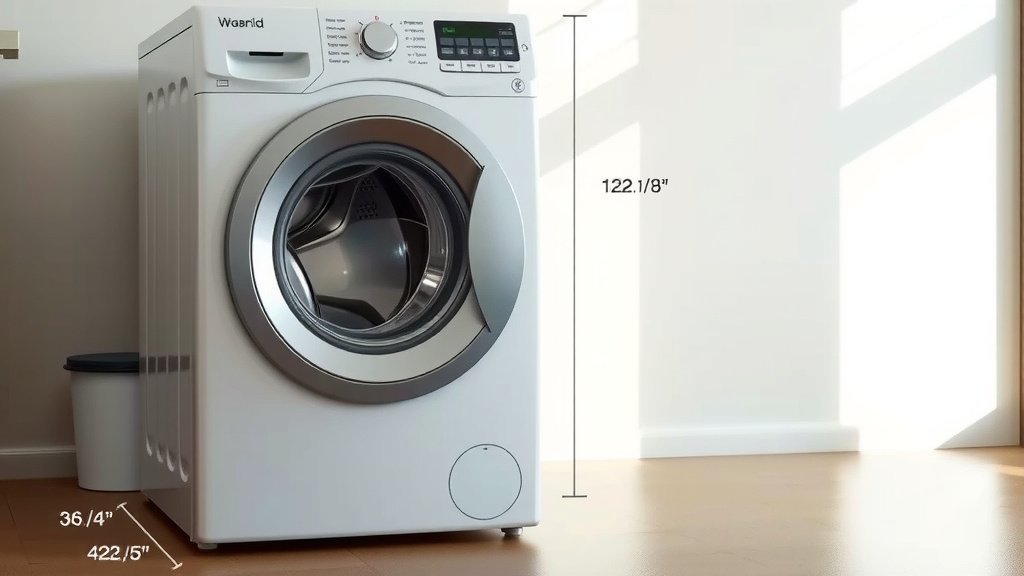
The dimensions of a front load washing machine can vary, but most standard models stand about 33-35 inches tall, are 27-29 inches wide, and measure 30-33 inches deep. You’ll want to measure your laundry space carefully. These measurements typically include the door and any hoses extending from the back. It’s always wise to add a few extra inches for airflow and door clearance.
When choosing a front loader, consider not just the exterior size but also the drum capacity. Larger drums mean you can wash more clothes at once, which can save you time and energy. Many modern machines are designed to be energy-efficient, so checking the Energy Star rating is also a smart move. Don’t forget to account for the space needed to open the door fully.
- Standard height: 33-35 inches
- Standard width: 27-29 inches
- Standard depth: 30-33 inches
- Consider drum capacity for load size.
- Factor in door swing and airflow space.
So, let’s get down to the nitty-gritty details and find the perfect fit for your laundry room!
Understanding Front Load Washer Sizes
So, you’re looking for a front load washing machine and need to know its dimensions? It’s a smart question to ask before you commit! Getting the right size is key to a happy laundry day. We’re here to help you figure out exactly how much space you’ll need. Let’s break down the typical measurements you can expect.
Typical Front Load Washer Dimensions
When we talk about front load washer dimensions, we’re generally referring to standard models. These are the ones you’ll find most commonly in stores and online. Think of them as the “average Joe” of washing machines.
Height: What to Expect
The height of a front load washer is usually measured from the floor to the highest point of the machine. This typically includes the top of the control panel. For most standard front loaders, the height falls between 33 and 35 inches.
This measurement is pretty consistent across many brands. It’s designed to fit under standard countertops in many laundry rooms or kitchens. Always double-check the specific model’s specs, though, as there can be slight variations.
Width: Fitting It In
The width is another important measurement. This is the side-to-side measurement of the machine. Most front load washing machines measure between 27 and 29 inches wide. This is a fairly narrow width, which is great for fitting into tighter spaces.
If you have a dedicated laundry room, you might have more flexibility. But if you’re squeezing it into a closet or a smaller nook, this width is your friend. It allows for easy maneuvering through doorways too.
Depth: The Space It Takes Up
Depth is often the measurement people forget, but it’s super important! This is how far the machine will stick out from the wall. Front load washers tend to be a bit deeper than top loaders. Expect a depth of around 30 to 33 inches.
Now, this depth measurement often includes the door and any hoses or connections at the back. You’ll want to add a few extra inches for these. This is for things like venting (though less so for front loaders compared to dryers), water hoses, and electrical cords.
Don’t Forget the Door Swing!
This is where depth gets tricky. Front loaders have doors that swing open, usually to the left or right. You need enough space for that door to open fully. We’re talking about a clear arc for the door to swing without hitting anything. This often adds another 15-20 inches to the required space.
Some machines have reversible doors, which can offer flexibility. Measure the space needed for the door to open 90 degrees, and ideally a bit more, so you can easily load and unload laundry. A small alcove might require careful planning here!
Beyond the Basic Box: Factors Affecting Dimensions
While we’ve covered the standard numbers, there are a few other things that can affect the actual space your washer needs. It’s not just about the metal box itself!
Control Panels and Lids
Some models have control panels that stick out a bit from the main body. Others have them integrated more smoothly. Likewise, the curvature of the door can add to the overall depth when closed. These are usually minor differences, but worth noting if you’re working with very tight tolerances.
Stacking Kits and Pedestals
Want to save floor space? Many front load washers are designed to be stacked with a matching dryer. This requires a stacking kit, which adds a little bit of height. You can also buy pedestals for front loaders. These raise the machine for easier loading and unloading. Pedestals add significant height, often 10-15 inches or more.
So, if you’re planning to stack or use pedestals, you’ll need to adjust your vertical space calculations. Always check the dimensions of the stacking kit or pedestal along with the washer and dryer.
Required Airflow and Clearance
Washing machines, like any appliance, need space to breathe. They generate heat and vibrations. Manufacturers usually recommend leaving a small gap around the machine. This is for proper ventilation and to prevent the machine from damaging surrounding surfaces. A few inches on the sides and at the back is often suggested.
We found that most guides recommend at least 1 inch of clearance on the sides and 4-6 inches at the back. This allows for air circulation and makes it easier to access hoses and cords. Don’t push your washer flush against the wall!
Comparing Dimensions: A Quick Look
To help you visualize, let’s put some typical numbers side-by-side. This isn’t exhaustive, as models vary, but it gives you a good baseline.
| Measurement | Typical Front Load Washer | Space Needed (with door swing & clearance) |
|---|---|---|
| Height | 33 – 35 inches | 33 – 35 inches |
| Width | 27 – 29 inches | 27 – 29 inches |
| Depth (Machine Only) | 30 – 33 inches | 30 – 33 inches |
| Total Depth (with door open & clearance) | – | Approximately 45 – 55 inches |
The “Space Needed” column for depth is an estimate. It includes the machine’s depth, the door swing, and a little extra for cables. Always measure your specific space, don’t just rely on averages!
Your Laundry Space Checklist
Before you buy, run through this quick checklist. It’ll help ensure your new front loader fits perfectly.
- Measure your doorway width and height for delivery.
- Measure the width, height, and depth of your laundry space.
- Account for the washing machine door swing.
- Add space for hoses, cords, and ventilation.
- Check if the machine will fit under any cabinets or shelves.
- Consider stacking options or pedestals if you plan to use them.
Conclusion
You’ve got the key dimensions for front load washing machines now! Remember, standard models typically stand 33-35 inches tall, are 27-29 inches wide, and measure 30-33 inches deep. But the real magic happens when you account for the door swing and necessary airflow. Don’t forget to consider options like stacking kits or pedestals if you’re looking to optimize your space. By carefully measuring your laundry area and considering these factors, you can confidently select a front loader that fits perfectly and makes laundry day a breeze. Your next step? Grab your tape measure and get precise measurements of your laundry space before you shop!
Frequently Asked Questions
Will a front load washer fit through my doorway?
Most standard front load washers are around 27-29 inches wide, which is narrow enough to fit through most standard doorways. However, always measure your doorways and hallways before delivery to be sure. Some decorative trim or tight corners could pose a challenge.
How much deeper is a front load washer than a top load washer?
Front load washers are generally deeper than traditional top load washers. While a front loader might measure 30-33 inches in depth, many standard top loaders are closer to 25-27 inches deep. This extra depth in front loaders often accommodates larger drum capacities.
Do I need extra space behind the washing machine?
Yes, it’s recommended to leave a few inches of space behind your front load washer. Manufacturers often suggest about 4-6 inches for proper ventilation and to easily access water hoses and power cords. Pushing the machine flush against the wall can hinder airflow and make maintenance difficult.
How much space does the door swing require?
You’ll need to account for the door swing, which can add about 15-20 inches to the machine’s depth when fully open. Measure the arc the door makes to ensure it won’t hit cabinets, walls, or other appliances. Some doors are reversible, offering more placement flexibility.
Can I stack a dryer on top of my front load washer?
Absolutely! Front load washers are designed to be stacked with compatible dryers using a specific stacking kit. This stacking kit will add a small amount of height, so be sure to factor that into your total vertical space calculation. It’s a great way to save floor space.

![7 Best Small Washer Machine [In 2026]](https://homeunderstandable.com/wp-content/uploads/2026/08/7-best-small-washer-machine-in-2026-featured-768x432.jpg)
![7 Best Price On Dishwashers [In 2026]](https://homeunderstandable.com/wp-content/uploads/2026/09/7-best-price-on-dishwashers-in-2026-featured-768x432.jpg)