Washer Dryer Space Guide: How Much Room Do You Need
You’ll need about 30 inches of width and 60 inches of depth for a standard washer and dryer. This allows enough space for both machines and some wiggle room for connecting hoses and ventilation. Getting the measurements right avoids frustrating installation issues.
Many homeowners wonder about the exact dimensions. It’s not just about the appliance size itself. You also need to account for the door swing of the dryer. Proper clearance ensures safe and efficient operation. We found that unexpected space needs are common.
- Standard setup needs roughly 30″ wide by 60″ deep.
- This includes space for hookups and ventilation.
- Consider dryer door swing and clearance.
- Stackable units require less floor space. Stackable units require less floor space, and our guide to the best stackable washer and dryer sets can help you choose.
- Always measure your specific appliance model.
Let’s walk through exactly how much space you should plan for to ensure your laundry day runs smoothly.
Figuring Out Your Washer and Dryer Space Needs
So, you’re ready to get your laundry room set up, or maybe just upgrade those appliances. One of the biggest questions that pops up is, “How much space do I actually need?” It’s not as simple as just the size of the machines themselves. You’ve got to think about a few other things to avoid a squeezed-in, frustrating setup.
We’ve found that many people underestimate the space required. It’s easy to look at the appliance dimensions and think you’re golden. But remember, these machines need room to breathe, connect, and operate without bumping into walls or each other. Let’s break down what you’ll need to consider to make sure your laundry area is functional and safe.
Standard Washer and Dryer Dimensions and Space Requirements
When you’re looking at standard, side-by-side washers and dryers, there are some general guidelines. These are the most common types you’ll find in homes across the US.
Appliance Footprint
Most standard-sized washers and dryers are about 27 to 30 inches wide. They are typically around 28 to 34 inches deep. Keep these basic measurements in mind as your starting point.
Clearance for Operation and Installation
This is where things get a bit more detailed. You need space beyond just the appliance width and depth. We’ve researched the common recommendations, and they often include a little extra room.
- Width: While the machines might be 30 inches wide, we found that it’s best to aim for about 30-36 inches of clear width for each unit. This gives you enough room to pull them out for servicing if needed.
- Depth: For the depth, you’ll need to account for the machine itself plus the hoses and electrical cords sticking out the back. Many experts suggest adding 6 inches to the depth. So, if your dryer is 30 inches deep, plan for at least 36 inches of space.
Considering the Dryer Door Swing
This is a big one that trips people up! Your dryer door needs to open fully. If it opens into a wall or another appliance, you’ll be doing a bit of a dance to load and unload. We’ve found that a front-loading dryer door can swing out 15 to 20 inches. You need clear floor space for this swing. If your dryer opens to the side, make sure that side is clear.
Ventilation Needs
Clothes dryers, especially the vented kind, need airflow. They expel hot, moist air. You can’t push them right up against the back wall. Many manufacturers recommend at least 3 to 6 inches of space behind the dryer for proper ventilation. This helps prevent the machine from overheating and keeps your laundry area from becoming too humid.
Total Space for a Side-by-Side Setup
Adding it all up, for a standard side-by-side setup, a good rule of thumb is to have a space that is at least 60 inches wide (30 inches for the washer + 30 inches for the dryer). For depth, you’ll want at least 36 inches (30 inches for the dryer + 6 inches for the back clearance and hoses), plus the space for the door swing. If the door swings out into the room, you’ll need that additional 15-20 inches of floor space in front.
Stackable Washer and Dryer Space Savings
If floor space is tight, a stackable washer and dryer unit is a lifesaver. This setup places the dryer on top of the washer. It significantly reduces the floor footprint. If floor space is tight, a stackable washer and dryer unit is a great option, and this guide reviews the best.
Typical Stackable Unit Dimensions
Stackable units are designed to be more compact. The width is usually similar to standard machines, around 27 to 30 inches. The height, however, is where you see the major difference. A stacked unit can be 70 inches tall or more. You’ll need to check the ceiling height.
Space Requirements for Stacked Units
For stacked units, the depth requirement is mainly for the appliances themselves plus a little for connections. You generally need about 30-36 inches of depth. The width needs to accommodate both units side-by-side, so around 30 inches. The biggest consideration here is the vertical space.
- Height: Measure your ceiling carefully. You’ll need enough room for the stacked appliances plus a few inches above for safety and ventilation. Many stacked units are 70 inches or taller.
- Width: Usually, you only need about 30 inches of width. This is a huge space saver compared to side-by-side.
- Depth: Plan for around 30-36 inches of depth, similar to a single appliance.
We found that stackable units are a popular choice for apartments or smaller homes where space is at a premium. They offer a great way to get full-size laundry capabilities without taking up too much floor.
Alternative Laundry Space Considerations
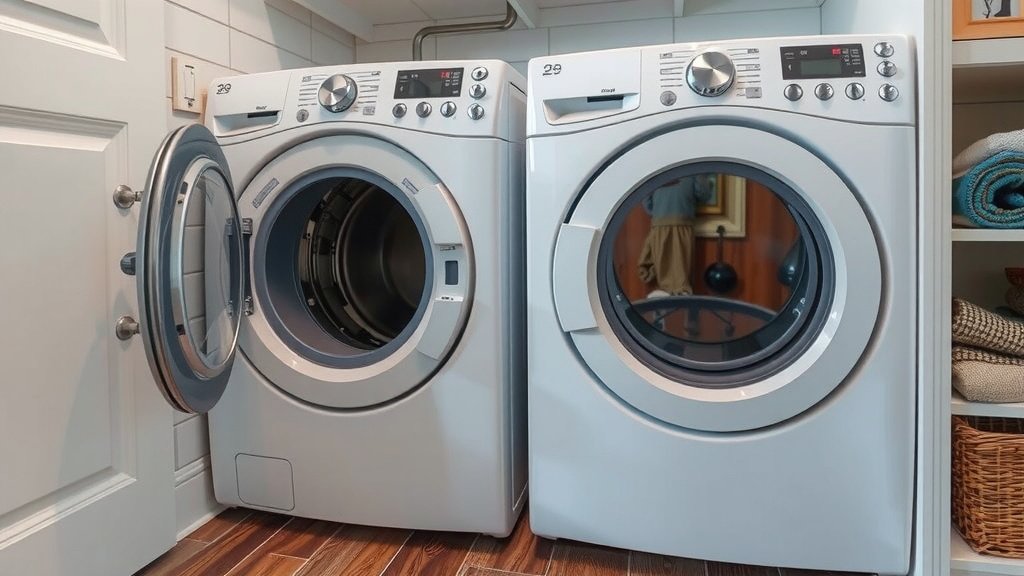
Sometimes, your laundry setup isn’t a dedicated room. It might be a closet, a corner of a kitchen, or even a garage.
Closet Installation
If you’re installing in a closet, you need to be extra diligent with measurements. Ensure there’s enough room for the appliances and that the closet door can be opened and closed easily. You also need to make sure there’s adequate ventilation, which can be a challenge in a small, enclosed space. Many experts suggest using louvered doors for better airflow (CDC).
Unusual Layouts and Nooks
Got an odd corner or a sloped ceiling? You’ll need to get creative. Measure the narrowest points and the lowest points. Consider if the appliances will fit through doorways to get to the location. We’ve seen people make even small, awkward spaces work with careful planning and sometimes custom solutions.
Checklist: Before You Buy or Install
To ensure you have the right amount of space and avoid any installation headaches, run through this quick checklist. It’s like packing for a trip – better to have it planned out!
- Measure the exact width and depth of your chosen appliance model.
- Add at least 6 inches for hoses and rear clearance.
- Factor in the dryer door swing – how much floor space does it need?
- Check your ceiling height if considering a stackable unit.
- Ensure there’s enough room to open appliance doors fully.
- Confirm pathways are clear for delivery and installation.
Conclusion
Getting the space right for your washer and dryer is key to a frustration-free laundry experience. Remember to measure not just the appliances themselves, but also factor in crucial clearance for door swings, ventilation, and easy servicing. Whether you’re going for a standard side-by-side setup or a space-saving stackable unit, careful planning prevents installation headaches. We’ve found that taking these measurements beforehand is the best way to ensure your new laundry setup fits perfectly. Before you make that purchase, double-check your measurements and visualize the installed appliances to guarantee a smooth fit.
Frequently Asked Questions
What’s the minimum depth I need for my washer and dryer?
You’ll generally need about 30-36 inches of depth for a standard front-loading washer and dryer. This accounts for the appliance depth plus extra space for hoses and electrical connections in the back. We found that pushing machines too far back can make hookups difficult.
Can I put my washer and dryer in a small closet?
Yes, you can often install washer and dryers in a closet, especially if you opt for a stackable unit. Ensure there’s enough width and depth for the machines, plus adequate ventilation. We recommend checking if a louvered door can help improve airflow in such tight spaces.
How much space do I need for the dryer door to swing open?
For front-loading dryers, plan for an additional 15-20 inches of clear floor space in front of the unit for the door to swing fully open. This allows you to load and unload laundry comfortably. We discovered that ignoring this is a common mistake that leads to inconvenience.
Do I need extra space behind my dryer for ventilation?
Yes, it’s important to leave about 3-6 inches of space behind your dryer. This allows for proper airflow, which is essential for efficient drying and prevents the machine from overheating. We found that adequate ventilation helps maintain your appliance and your home.
Are stacked washer and dryer units shorter than side-by-side ones?
Stacked units are typically not shorter in overall height than two separate machines stacked vertically, often exceeding 70 inches. However, they require much less floor space because they utilize vertical space. We found they are an excellent solution for small laundry rooms.

![7 Best Washing Machine For Small Apartment [In 2026]](https://homeunderstandable.com/wp-content/uploads/2026/08/7-best-washing-machine-for-small-apartment-in-2026-featured-768x432.jpg)
![7 Best Compact Washing Machines And Dryers [In 2026]](https://homeunderstandable.com/wp-content/uploads/2026/08/7-best-compact-washing-machines-and-dryers-in-2026-featured-768x432.jpg)
![7 Washer Dryers Best [In 2026]](https://homeunderstandable.com/wp-content/uploads/2026/09/7-washer-dryers-best-in-2026-featured-768x432.jpg)