150 PSI vs 200 PSI Air Compressor: Which is Right for You
When choosing between a 150 psi vs 200 psi air compressor, know that 200 psi compressors offer more power for demanding tasks. This higher pressure means your tools run longer and more efficiently. Think of it like a bigger gas tank for your air tools. You generally get better performance with the 200 psi option for serious jobs.
Understanding the difference is key to picking the right compressor for your workshop. PSI (pounds per square inch) is your main indicator of how much force your air compressor can deliver. A higher PSI means a more robust air supply. We found that many DIYers and professionals alike overlook this detail. It can lead to underpowered tools or a compressor that struggles.
- 200 psi offers more power than 150 psi.
- Higher PSI means tools run longer and better.
- Choose based on the air needs of your tools.
- Don’t buy a compressor that’s too small for the job.
Let’s break down the specific differences and help you figure out which PSI level is the perfect fit for your needs.
Understanding Air Compressor Pressure Ratings
So, you’re looking at air compressors and wondering about that PSI number. What exactly does 150 psi versus 200 psi mean for your workshop? In short, the PSI, or pounds per square inch, tells you the maximum amount of air pressure the compressor can store. Think of it like the water pressure in your home’s pipes. Higher PSI means more potential force.
We’ve found that many DIYers and pros alike get hung up on this number. It’s not just a technical spec; it directly impacts how your air tools will perform. A compressor that’s too low in PSI might leave your tools sputtering. Conversely, getting a higher PSI than you need usually isn’t a problem. It just means you have more power in reserve.
How PSI Affects Your Air Tools
Your air tools have specific pressure requirements. Most common air tools, like nail guns or impact wrenches, operate best within a certain PSI range. They often list a recommended operating pressure. If your compressor can’t consistently provide that pressure, your tools won’t work as intended.
150 PSI Air Compressors: The Workhorse
A 150 psi air compressor is a solid choice for many common workshop tasks. It can handle a wide variety of DIY projects and professional jobs. Think of framing with a nail gun, using an impact wrench for tire changes, or running a basic sander. These compressors offer enough punch for most everyday needs.
We found that a 150 psi unit is often more affordable. It also tends to be a bit lighter and more portable than its higher-pressure counterparts. This makes it a great option if space or budget is a concern. It’s the reliable friend that gets most jobs done without fuss.
200 PSI Air Compressors: The Powerhouse
Now, let’s talk about the 200 psi air compressor. This is where you get a significant boost in air power. What does this mean for you? It means your tools will likely run stronger and for longer periods. That’s especially true for tools that are air-hungry.
If you’re planning to use more demanding tools, like a high-volume paint sprayer or an automotive sander, the 200 psi compressor is your best bet. Many experts say that having extra PSI in reserve helps maintain consistent tool performance, even when the compressor is cycling on and off. It’s like having a bigger reserve of energy for your tools.
When Does the Difference Matter Most?
So, when does that extra 50 psi really make a difference? It comes down to the type of work you do and the tools you use. Some tools require a steady, high volume of air to operate efficiently. If your compressor can’t keep up, the tool’s performance will suffer.
Demanding Applications for Higher PSI
Certain tasks are notorious for draining an air compressor’s tank quickly. For example, if you’re doing a lot of automotive bodywork with sanders or grinders, you’ll appreciate the higher pressure reserve. Paint spraying, especially with HVLP (High Volume Low Pressure) sprayers, also benefits greatly from a consistent, high-pressure air supply.
We’ve observed that using a 150 psi compressor for tasks that truly need 200 psi can lead to frustration. You might find yourself waiting for the tank to refill more often. This breaks your workflow and can even affect the quality of your finish. For these jobs, the 200 psi is a clear advantage.
Everyday Tasks and 150 PSI Sufficiency
But does that mean you *always* need 200 psi? Not at all. For many common tasks around the house or in a small garage, 150 psi is perfectly adequate. If you’re mostly using a brad nailer for trim work, or inflating tires, a 150 psi compressor will serve you well. It’s often the sweet spot for value and performance for the average user.
Research we’ve reviewed suggests that most common DIY air tools operate within the capabilities of a 150 psi unit. The key is to match the compressor’s capability to your tool’s requirements. Don’t overspend on power you won’t use, but don’t underspend and get frustrated, either.
Storage Tank Size vs. PSI
It’s important to remember that PSI isn’t the only factor. The size of the air tank (measured in gallons) also plays a big role. A larger tank means the compressor can store more compressed air. This allows tools to run for longer before the compressor needs to kick on and repressurize. The size of the air tank also plays a big role in how long tools can run.
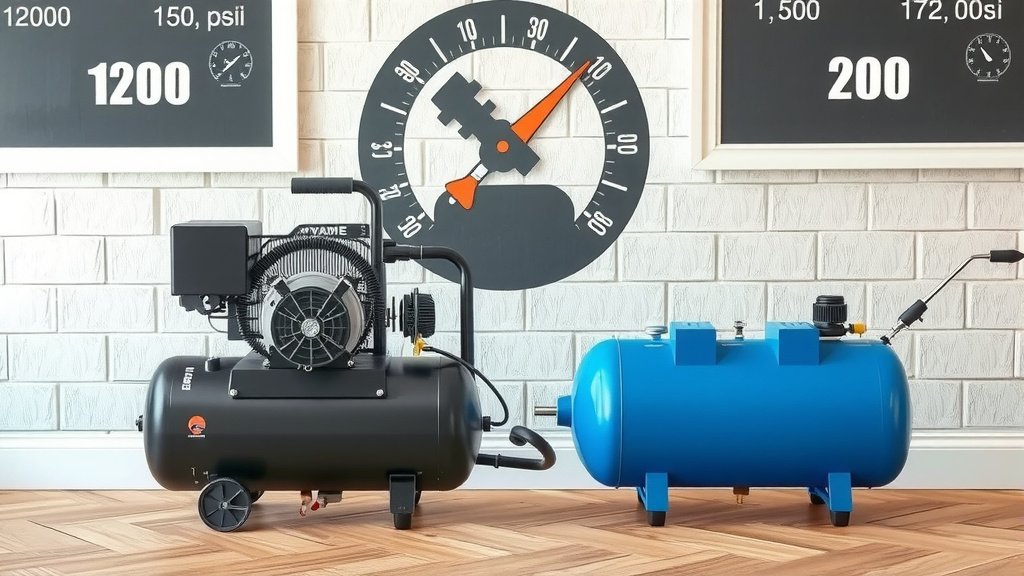
We often see people focus solely on PSI or tank size. The reality is, you need a balance. A high-PSI compressor with a tiny tank might still require frequent refills. Conversely, a large tank with low PSI won’t give you the power needed for demanding tools. For example, a 60-gallon, 150 psi compressor might be more suitable for some tasks than a 30-gallon, 200 psi unit.
Choosing the Right Compressor for You: A Quick Checklist
To help you decide, think about these points. This isn’t an exhaustive list, but it’s a good starting point. We found that considering these practical aspects makes the decision much easier.
- What are the PSI requirements of your most-used air tools?
- How often do you plan to use air-powered tools?
- Are you working on small DIY projects or larger professional jobs?
- Do you need to run multiple air tools at once?
- What’s your budget for a new air compressor?
- Do you have space limitations for a larger tank or unit?
By answering these questions, you’ll get a clearer picture of whether a 150 psi or a 200 psi compressor is the better fit for your needs. Don’t be afraid to check the manuals for your air tools. That’s often the best place to find their specific needs.
Comparing Key Features: 150 PSI vs. 200 PSI
Let’s lay out some of the general differences you might encounter. Keep in mind that specific models can vary, but this table gives you a good overview. We found that manufacturers offer a wide range of options within each PSI category. You can also explore different gallon air compressor options to find the best fit for your needs.
| Feature | 150 PSI Compressors | 200 PSI Compressors |
|---|---|---|
| Typical Applications | Nail guns, staplers, tire inflation, general DIY, light auto repair. | Heavy-duty auto repair, paint spraying, sanding, continuous tool use. |
| Power Output | Sufficient for most common tasks. | Higher output, better for demanding, air-hungry tools. |
| Tool Run Time | Good for moderate use. | Longer run times before compressor cycles. |
| Cost | Generally more affordable. | Typically a higher price point. |
| Portability | Often lighter and more compact. | Can be larger and heavier, especially with bigger tanks. |
| Tank Size Availability | Wide range, including smaller portable units. | Often paired with larger tanks (e.g., 60+ gallons). |
As you can see, there are trade-offs. We found that for many home garages, a 150 psi compressor with a decent-sized tank hits a great balance. If you’re running a professional shop or tackling very specific, demanding projects, the 200 psi might be the smarter investment.
Conclusion
You’ve learned that the 150 psi vs 200 psi air compressor choice boils down to your specific needs. A 150 psi unit is a fantastic workhorse for most common DIY and light professional tasks, offering a great balance of power and affordability. For those tackling more demanding jobs like heavy-duty auto repair or extensive painting, a 200 psi compressor provides the extra power reserve needed for optimal tool performance and longer run times.
Don’t forget to consider your air tools’ requirements and the tank size. We found that matching your compressor to your tools is key. Your next step is to list your primary air tools and check their recommended PSI. This will guide you directly to the compressor that will best serve your workshop.
Frequently Asked Questions
Will a 150 psi compressor damage my tools if they need less pressure?
No, a 150 psi compressor generally won’t damage your tools if they require less pressure. Most air tools have regulators that can be adjusted to match their specific needs. Your compressor simply provides the maximum potential pressure it can deliver.
Is a 200 psi compressor overkill for a home garage?
For many home garages, a 200 psi compressor might be more than you need. If your primary use involves tasks like brad nailing, tire inflation, or light auto maintenance, a 150 psi compressor with an adequate tank size is often sufficient. We found that it’s best to match the compressor to your most demanding tool.
Can I run more air tools simultaneously with a 200 psi compressor?
A 200 psi compressor offers more power and often comes with larger tanks, which helps maintain air flow. This can allow you to run more air tools simultaneously, or heavier-duty tools, before the compressor needs to cycle. However, the tank size and the CFM (Cubic Feet per Minute) rating are also critical factors here.
What’s the difference in tool run time between 150 psi and 200 psi?
With a 200 psi compressor, you can generally expect your air tools to run longer and more consistently. This is because the higher pressure means the compressor has more reserve air. It takes longer for the tank pressure to drop to a point where the compressor must kick on to refill it.
Should I prioritize PSI or tank size when choosing?
We found that both PSI and tank size are important, and the ideal choice depends on your usage. For continuous or demanding tasks, higher PSI with a larger tank is best. For intermittent use or smaller jobs, a 150 psi unit with a moderately sized tank might be perfectly adequate and more budget-friendly.