Dewalt vs Porter Cable Air Compressor: Which is Better
When choosing between DeWalt and Porter Cable air compressors, consider that DeWalt generally offers more durable build quality and higher performance, making it a better choice for heavy-duty professional use. Porter Cable provides a strong balance of affordability and reliability, often making it a favorite for DIYers and smaller workshops. Both brands have great options, but your specific needs will guide the decision.
Many factors go into picking the right air compressor. You’ll want to think about noise levels, portability, tank size, and the CFM output. Research and found that both DeWalt and Porter Cable have compressors designed for various tasks, from inflating tires to powering nail guns. It’s about matching the tool to your project’s demands to avoid frustration.
- DeWalt: Known for robust construction and top-tier performance, ideal for pros.
- Porter Cable: Offers excellent value and dependable performance, great for home use.
- Consider your project needs: power, portability, and noise are key.
- Both brands have models suited for different skill levels and budgets.
Let’s dive into a detailed comparison to help you figure out which brand and specific model will be your next workshop workhorse.
Choosing Your Next Air Compressor: DeWalt vs. Porter Cable
Deciding between a DeWalt and a Porter Cable air compressor can feel like a big choice for your workshop. We’ve looked at what makes each brand stand out. DeWalt often appeals to those who need serious power and don’t mind investing a bit more. Porter Cable, on the other hand, strikes a nice balance for many home users and smaller shops. Let’s break down what you should be looking for.
Understanding Key Air Compressor Features
Before we dive into the brands, it’s smart to know what you’re looking for. Air compressors are rated on a few key things. Understanding these will help you match a compressor to your tools and tasks. It’s not just about horsepower; other factors play a big role in how well it performs for you.
CFM: The Real Measure of Airflow
CFM stands for Cubic Feet per Minute. This tells you how much air the compressor can deliver. Tools that use a lot of air, like impact wrenches or sanders, need a higher CFM. A compressor with too low a CFM can’t keep up. Your tools might sputter or not work at all. You’ll need to check your tool’s CFM requirements. Then, find a compressor that exceeds that number. This gives you some breathing room.
PSI: The Force Behind the Air
PSI is Pounds per Square Inch. It’s about the pressure the compressor can build. Most air tools operate within a specific PSI range. Your compressor needs to reach this range. Many compressors have adjustable regulators to set the output pressure. It’s important that the compressor’s maximum PSI is higher than what your tools need. This ensures you have enough power for demanding tasks.
Tank Size Matters
The tank on an air compressor is like its storage tank for compressed air. A larger tank means the compressor can run longer before it needs to refill. This is great for tasks that require a constant air supply. Smaller tanks are fine for quick jobs like topping off tires or using a brad nailer for short bursts. Think about how long you’ll be using your tools without a break. We found that for continuous use, a bigger tank is usually better.
Noise Levels: Protecting Your Ears
Air compressors can be loud. Really loud. Some models are designed to be quieter than others. This is especially important if you work in a residential area or a shared space. Oil-lubricated compressors tend to be quieter than oil-free ones. We’ve seen manufacturers list decibel (dB) ratings. Lower numbers mean a quieter machine. If noise is a big concern, look for those models specifically designed for quieter operation.
DeWalt Air Compressors: Built for the Pro
DeWalt has a reputation for making tough tools. Their air compressors often reflect this. You’ll find they are built with robust materials. Many DeWalt models are designed for heavy-duty, daily use. If you’re a professional contractor or a serious DIYer, this might be your sweet spot. We’ve seen their units perform consistently well under pressure.
DeWalt’s Performance Edge
When you look at DeWalt, you’re often looking at higher CFM and PSI ratings. This means they can power more demanding tools. They are built to deliver air quickly and maintain pressure. Many experts say DeWalt’s pumps are engineered for longevity. This means less downtime and more work getting done. If your budget allows, a DeWalt could be a smart long-term investment for demanding jobs.
Portability and Durability
While some DeWalt models are designed for stationary use in a shop, others are quite portable. You’ll find many are built with sturdy frames and easy-carry handles. They can handle the bumps and scrapes of job sites. Research suggests that DeWalt uses high-quality components. This contributes to their overall durability. You’re paying for a tool that’s likely to last for many years.
Porter Cable Air Compressors: Value and Reliability
Porter Cable has long been a go-to brand for many. They offer a strong combination of good performance and affordability. If you’re a homeowner, a hobbyist, or run a small business, Porter Cable is often a fantastic choice. You get dependable performance without breaking the bank. We’ve found that their user-friendly designs are a big plus.
Balancing Power and Price
Porter Cable compressors offer solid CFM and PSI for most common tasks. You can easily find models suitable for framing with nail guns, inflating tires, or running smaller air tools. They often provide good airflow for their price point. This makes them accessible for many budgets. Many users report being very satisfied with the performance they get for the money. It’s a practical choice for many workshops.
Ease of Use and Maintenance
Many Porter Cable models are oil-free. This means less maintenance for you. You don’t have to worry about checking or changing oil. They are generally lighter and easier to move around. This is a big advantage if you don’t have a dedicated spot for your compressor. The controls are usually straightforward. You can get them up and running quickly without a lot of fuss. Many guidelines suggest oil-free pumps are great for portability (CDC).
Comparing Specific Features: A Quick Look
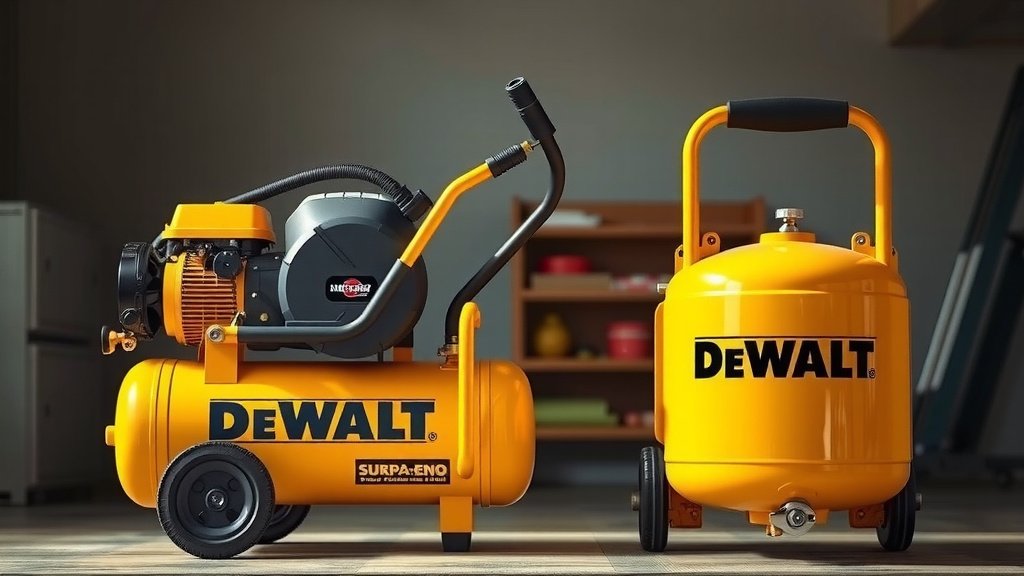
Let’s put some of the typical differences side-by-side. This can help you visualize which brand might fit your needs better.
| Feature | DeWalt (Typical) | Porter Cable (Typical) |
|---|---|---|
| Build Quality | Heavy-duty, professional grade | Durable, reliable |
| Performance | Higher CFM/PSI for demanding tasks | Good CFM/PSI for most common uses |
| Durability | Exceptional, built for frequent use | Very good, suitable for regular use |
| Noise | Varies, some are quieter than average | Can be louder, especially oil-free models |
| Price Point | Higher investment | More budget-friendly |
| Maintenance | May require oil changes (oil-lubricated models) | Often oil-free, low maintenance |
Making Your Final Choice: A Checklist
Feeling a little clearer now? Here’s a quick checklist to help you finalize your decision:
- What tools will you use most often? Check their CFM and PSI needs.
- How much air do you need consistently? This points to tank size.
- Where will you use the compressor? Consider portability and noise.
- What’s your budget? DeWalt is often an upfront investment, Porter Cable offers great value.
- How much maintenance are you comfortable with? Oil-free is easier for many.
- Are you a professional or a hobbyist? This often guides the durability needs.
Conclusion
You’ve learned that both DeWalt and Porter Cable air compressors offer solid performance. DeWalt stands out for its professional-grade durability and higher power output, ideal for demanding daily use. Porter Cable shines with its excellent value and user-friendly design, making it a fantastic choice for DIYers and smaller shops. Consider your specific tool needs, how often you’ll use the compressor, and your budget. By matching these factors, you can confidently pick the compressor that will be your workshop’s reliable workhorse for years to come.
Frequently Asked Questions
Which brand is better for heavy-duty shop use?
For heavy-duty shop use where durability and sustained power are critical, DeWalt generally has the edge. Their compressors are built with robust materials designed for frequent, demanding applications. You’ll often find they offer higher CFM and PSI ratings suitable for professional-grade tools.
Is Porter Cable good enough for a serious DIYer?
Absolutely. Porter Cable offers a great balance of reliability and performance that many serious DIYers appreciate. Their compressors can easily handle tasks like running nail guns, impact wrenches, and other common workshop tools without issue. You get dependable performance for your projects without the professional-grade price tag.
Are oil-free compressors more portable?
Yes, oil-free compressors are typically more portable than their oil-lubricated counterparts. They tend to be lighter in weight, making them easier to move around your workspace or take to different job sites. Plus, they require less maintenance since you don’t need to worry about oil levels.
How do I know if a compressor’s CFM is high enough?
You’ll need to check the CFM requirements of the air tools you plan to use most. Each tool has a specific CFM rating, usually listed in its manual. You should choose a compressor that can provide at least 1.5 to 2 times the CFM of your most demanding tool. This ensures your tools will run efficiently without interruption.
Which brand is generally quieter?
While noise levels vary by model within each brand, DeWalt often has a wider range of compressors designed for quieter operation, particularly some of their higher-end models. Porter Cable’s oil-free models, while convenient, can sometimes be louder. If noise is a primary concern, always check the decibel (dB) rating for specific models you’re considering.