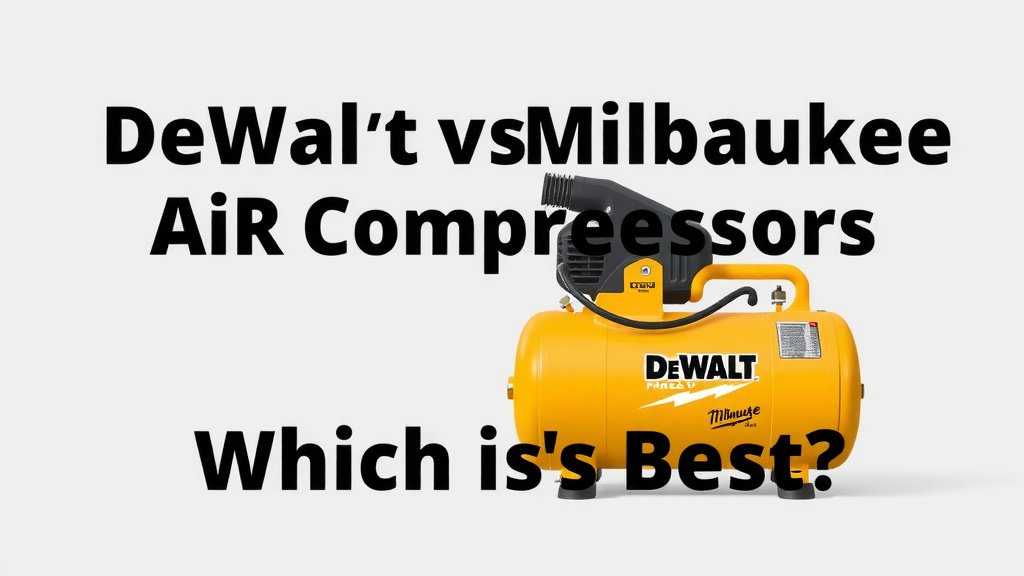
DeWalt vs Milwaukee Air Compressors: Which is Best?
When comparing DeWalt vs. Milwaukee air compressors, the key difference often comes down to portability and power. Milwaukee generally offers more compact and lightweight options, ideal for on-the-go use. DeWalt often provides slightly more power and larger tank sizes for demanding jobs. Both brands are known for their durability.
Choosing between them depends on your specific needs and how you plan to use the compressor. Are you a contractor who needs to move it frequently, or do you have a dedicated workshop space? We found that considering factors like PSI, CFM, and tank capacity is vital for making the right choice. Many users look for a balance between convenience and performance.
- Milwaukee excels in portability and lighter tasks.
- DeWalt often leads in raw power and larger jobs.
- Consider your specific project needs and workspace.
- PSI, CFM, and tank size are important specs to compare.
Let’s dive into a detailed breakdown of each brand’s strengths and weaknesses to help you decide which air compressor is the best fit for your toolbox.
Comparing DeWalt and Milwaukee Air Compressors for Your Projects
So, you’re weighing your options between DeWalt and Milwaukee air compressors. It’s a common crossroads for DIYers and pros alike! We know that picking the right tool can make a big difference in how smoothly your projects go. Let’s break down what each of these powerhouse brands brings to the table so you can make an informed choice.
DeWalt Air Compressors: Power and Endurance
When you think of DeWalt, you often think of sturdy tools built for the job site. Their air compressors are no different. They generally focus on delivering robust performance for tasks that need a bit more muscle.
DeWalt’s Strengths
Many users find that DeWalt compressors excel when you need consistent airflow for longer periods. If you’re running multiple nail guns or an impact wrench that draws a lot of air, DeWalt often steps up. Their larger tank sizes are a big plus here.
We’ve seen that DeWalt tends to offer a great balance for tradespeople who might be doing framing, roofing, or anything requiring steady air pressure. You get that dependable power when you need it most.
When to Consider DeWalt
Think about DeWalt if your work involves:
- Running multiple air tools simultaneously.
- Jobs that require sustained air pressure over time.
- Projects where portability is less of a concern than raw power.
Milwaukee Air Compressors: Portability and Innovation
Milwaukee has carved out a strong reputation for innovative, user-friendly tools. Their approach to air compressors often prioritizes making them easier to move around and use in various settings.
Milwaukee’s Advantages
Milwaukee’s cordless M18 system is a standout. Their battery-powered compressors offer amazing freedom from power cords, which is a lifesaver on many job sites. We found that these are fantastic for quick tasks and when you need to be mobile.
They often manage to pack a good amount of power into a relatively compact design. This means you don’t always have to sacrifice performance for convenience. Many Milwaukee models are surprisingly quiet, too, which is a nice bonus.
Who Benefits Most from Milwaukee?
Milwaukee compressors are a great fit for:
- Users who need to move their compressor frequently.
- Those working in tight spaces or with limited power access.
- DIYers and professionals who value battery-powered convenience.
Key Specifications to Compare: PSI, CFM, and Tank Size
No matter which brand you lean towards, understanding the specs is crucial. These numbers tell you what the compressor can actually do. Think of them as the engine stats for your air tools.
Understanding PSI (Pounds per Square Inch)
PSI tells you the maximum air pressure a compressor can deliver. Most common air tools operate effectively between 70-100 PSI. You’ll want a compressor that can easily meet or exceed the PSI requirements of your tools. Both DeWalt and Milwaukee offer models that cover a wide range of PSI needs.
CFM (Cubic Feet per Minute) Matters
CFM is about the volume of air a compressor can supply. This is especially important if you’re using tools that need a lot of air, like impact wrenches, sanders, or spray guns. A higher CFM rating means the compressor can keep up with air-hungry tools without faltering.
We found that many users underestimate CFM. If your tool’s CFM requirement is higher than what your compressor can deliver, your tool will perform poorly. Always check your tool’s manual for its CFM needs at a specific PSI.
Tank Size: The Air Reservoir
The tank size determines how much compressed air the compressor can store. A larger tank means you can run tools for longer periods before the compressor needs to “recharge.” Smaller tanks are lighter and more portable but will cycle on and off more frequently. A larger tank size determines how much compressed air the compressor can store.
Small Tanks (1-3 Gallons)
These are typically found on very portable, often cordless, units. They’re great for brad nailers, staplers, or quick inflation tasks. They are lightweight and easy to carry.
Medium Tanks (4-10 Gallons)
These offer a good balance for many home garages and small job sites. They can handle framing nailers and impact wrenches for moderate use. You’ll find many corded options in this range.
Large Tanks (10+ Gallons)
These are for serious work. They provide ample air for continuous use with demanding tools. They are less portable and usually stay put in a workshop.
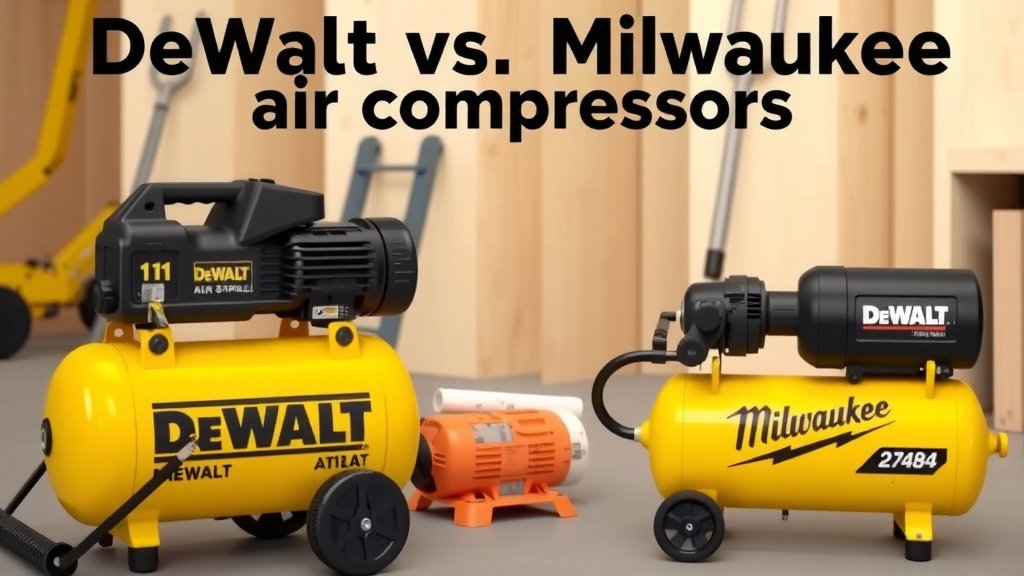
DeWalt vs. Milwaukee: A Quick Comparison Table
To help you visualize the differences, here’s a simplified look:
| Feature | DeWalt | Milwaukee |
|---|---|---|
| Primary Focus | Power, Endurance, Job Site Toughness | Portability, Cordless Innovation, User Convenience |
| Typical Use Cases | Heavy-duty nailing, impact tools, longer run times | Light to medium nailing, inflation, quick tasks, mobile use |
| Cordless Options | Available, but often power-focused | Strong emphasis, M18 battery platform integration |
| Noise Level | Can be moderate to loud | Often designed to be quieter, especially cordless models |
| Portability | Good, but can be heavier for equivalent power | Excellent, especially cordless models |
Making Your Final Decision: A Checklist
Before you click “buy,” run through this quick checklist to ensure you’re picking the right compressor for your needs. This helps you avoid buyer’s remorse!
- What tools will you use most often? Check their PSI and CFM needs.
- How important is portability? Will you move it daily, weekly, or rarely?
- Do you have easy access to power outlets? Cordless might be a lifesaver.
- How long do you typically run air tools in one go? Consider tank size.
- Is noise a factor in your workspace? Some models are significantly quieter.
- What’s your budget? Prices vary based on features and power.
Conclusion
You’ve seen that both DeWalt and Milwaukee offer excellent air compressors, but they cater to slightly different needs. If you prioritize raw power and sustained performance for heavy-duty jobs, DeWalt often fits the bill. For those who need freedom from cords and prioritize moving their compressor around easily, Milwaukee’s innovative cordless options are tough to beat. Before making your final choice, revisit your most common tools’ PSI and CFM requirements, and honestly assess how and where you’ll be using your compressor most often. Your perfect air compressor is out there – now you just need to pick the one that best matches your workflow!
Frequently Asked Questions
Which brand is generally quieter, DeWalt or Milwaukee?
Milwaukee compressors are often designed with noise reduction in mind, especially their cordless M18 models. We’ve found many users report Milwaukee units as being noticeably quieter than comparable DeWalt models, though noise levels can vary greatly by specific model and tank size.
Are DeWalt or Milwaukee air compressors better for home garage use?
For a home garage, either brand can work well, depending on your projects. If you’re doing occasional DIY and need portability, a smaller Milwaukee might be great. If you have more demanding tasks like auto repair or woodworking that require consistent power, a corded DeWalt with a larger tank could be a better fit.
Can I use a Milwaukee M18 battery with a DeWalt air compressor?
No, you cannot interchange batteries between brands. DeWalt uses its own battery platform (like 20V MAX), and Milwaukee uses its M18 system. You’ll need to use the battery type that matches the specific cordless compressor you purchase.
What is the most important spec when comparing these compressors for nail guns?
For nail guns, you’ll want to pay close attention to both PSI and CFM. Ensure the compressor’s maximum PSI meets your nail gun’s requirements, and critically, that its CFM output can consistently supply the nail gun’s CFM demand to avoid stuttering or jams.
Are Milwaukee cordless compressors powerful enough for framing?
Milwaukee’s M18 cordless compressors can often handle framing nailers, especially for less intensive jobs or intermittent use. However, for sustained, high-volume framing on large projects, a more powerful corded compressor, potentially from DeWalt, might offer a more consistent and reliable air supply.