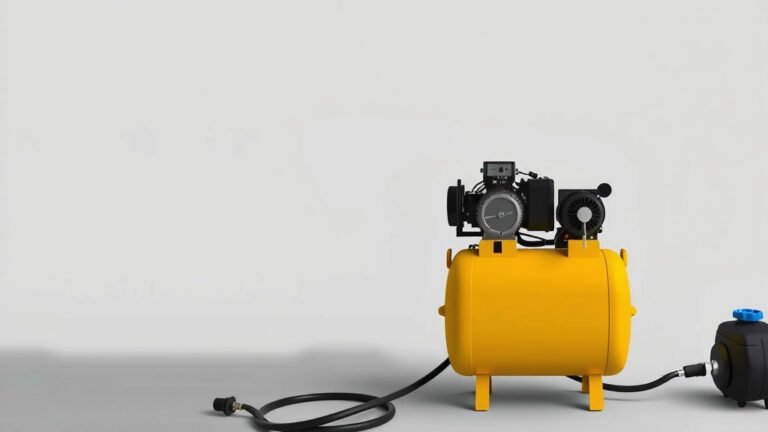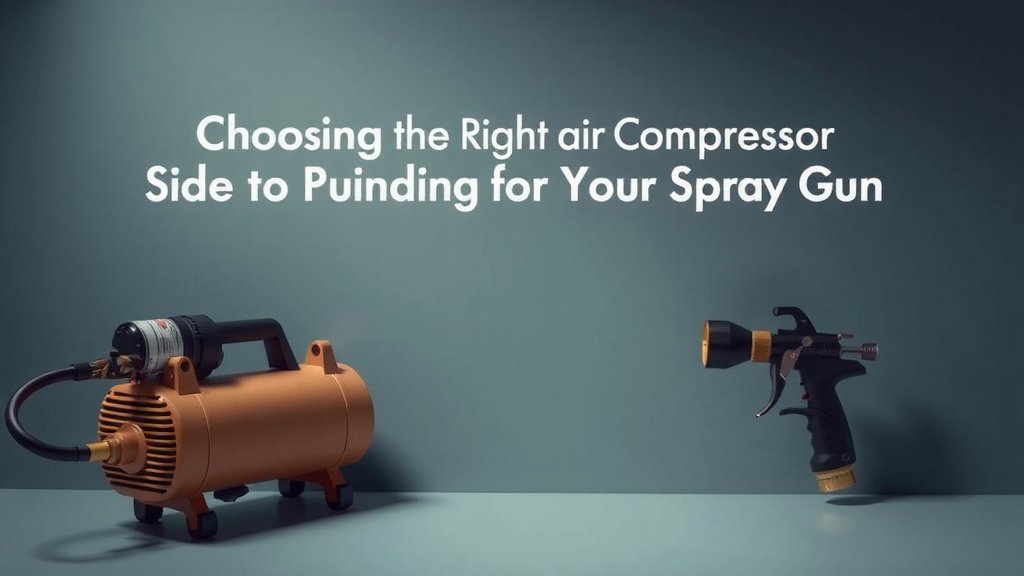
Choosing the Right Air Compressor Size for Your Spray Gun
To choose the right air compressor for your spray gun, you need to match its CFM output to your spray gun’s requirements. Generally, look for a compressor that delivers at least 90 PSI and a CFM rating slightly higher than your spray gun’s needs. This ensures consistent airflow for a smooth finish.
The air compressor is the powerhouse behind your spray painting. Getting it wrong can lead to sputtering paint, uneven coats, and a lot of frustration. We’ve researched the key factors to help you avoid common pitfalls and find the perfect air compressor that won’t leave your projects looking less than stellar.
- Match CFM: Choose a compressor with higher CFM than your spray gun.
- Check PSI: Ensure it can maintain at least 90 PSI.
- Tank Size Matters: Larger tanks offer more sustained air.
- Oil vs. Oil-Free: Consider maintenance and air quality needs.
- Noise Levels: Some compressors are much louder than others.
Let’s break down exactly what to look for and why it matters for your spray gun projects.
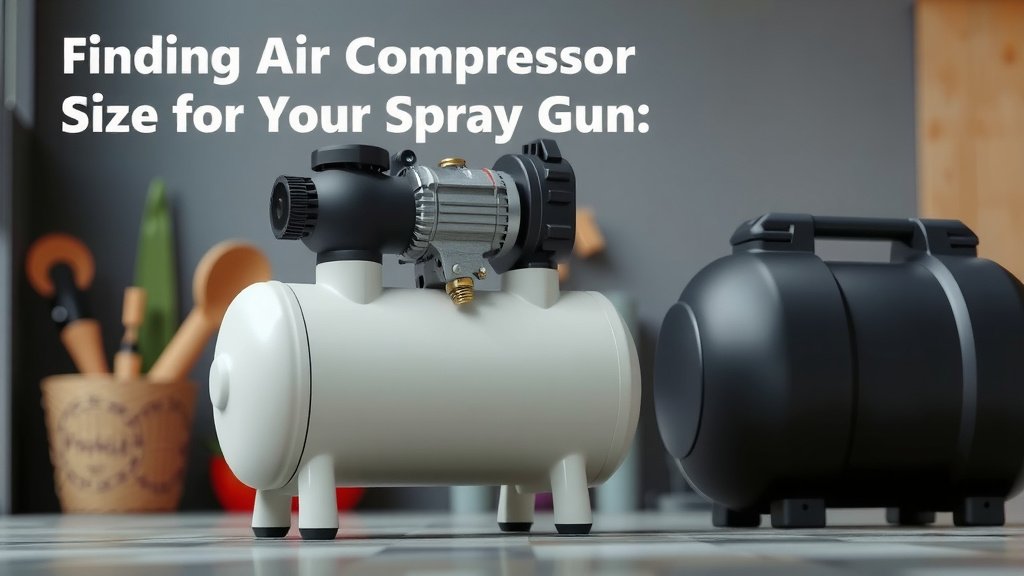
Finding the Right Air Compressor Size for Your Spray Gun
Choosing the correct air compressor for your spray gun is like picking the right tool for any job. You want it to perform smoothly and efficiently. We’ve researched the key factors to help you get this right.
Understanding Airflow: CFM is King
The most critical factor is the compressor’s CFM (Cubic Feet per Minute) output. This tells you how much air the compressor can deliver at a specific pressure. Your spray gun has a CFM requirement, usually found in its manual. It’s often listed as a range, like 4-8 CFM. You need a compressor that meets or slightly exceeds this requirement.
Why CFM Matters Most
If your compressor’s CFM is too low, your spray gun won’t get enough air. This can lead to spitting paint and an uneven finish. Imagine trying to blow up a balloon with a tiny puff of air – it’s just not going to work well. A higher CFM ensures a consistent, strong airflow for a smooth application.
How to Find Your Spray Gun’s CFM Needs
Always check your spray gun’s instruction manual or manufacturer’s website. This information is essential. If you can’t find it, look for similar models online to get a general idea. It’s better to have a little extra CFM than not enough.
Pressure Matters Too: PSI Explained
Next up is PSI (Pounds per Square Inch). This is the force of the air. Most spray guns operate effectively around 40-70 PSI for the paint being sprayed. However, your compressor needs to be able to deliver this pressure consistently, even when it’s running. Many compressors are rated for a maximum PSI, but it’s the sustained pressure that counts.
Recommended PSI for Spray Guns
While your spray gun might only need 40-70 PSI to atomize paint, you should aim for a compressor that can maintain at least 90-100 PSI. Why? Because the compressor needs to work harder to maintain the lower operating pressure. Having extra power means it won’t struggle and will deliver air more smoothly.
Tank Size: More Air, Less Waiting
The air compressor tank acts as a reservoir, storing compressed air. A larger tank means you can spray for longer periods before the compressor motor needs to kick in and refill it. This leads to fewer interruptions and a more consistent painting experience.
Matching Tank Size to Your Project
For small touch-up jobs or airbrushing, a smaller tank (2-6 gallons) might suffice. However, for larger projects like painting a car or furniture, you’ll want a bigger tank, perhaps 20 gallons or more. This prevents the compressor from cycling on and off too frequently, which can cause pressure fluctuations.
How Tank Size Affects Performance
A larger tank acts like a buffer. It smooths out the air delivery, even if the compressor motor cycles. Think of it like a water tower; it provides a steady supply even when demand increases. This is especially important for spray guns that require a continuous, stable flow of air.
Oil vs. Oil-Free Compressors: What’s the Difference?
When looking at compressors, you’ll see two main types: oil-lubricated and oil-free. Both have their pros and cons for spray painting.
Oil-Lubricated Compressors: The Workhorses
These compressors tend to be more durable and operate more quietly. The oil lubricates the internal parts, leading to a longer lifespan. However, they require regular maintenance, like oil changes. There’s also a small risk of oil getting into the air stream, which could contaminate your paint job. Using an air filter or regulator can help prevent this.
Oil-Free Compressors: Low Maintenance, Higher Noise
Oil-free compressors are generally lighter, more portable, and require less maintenance. You don’t need to worry about oil levels. Their main drawback is that they can be louder and may not last as long under heavy use compared to their oil-lubricated counterparts. They are often a good choice for DIYers and less frequent use.
A Quick Checklist for Your Compressor Hunt
Ready to find the perfect match? Here’s a quick rundown to keep in mind:
- CFM Rating: Aim for a compressor that delivers at least 1.5 to 2 CFM more than your spray gun’s requirement at 90 PSI.
- PSI Output: Ensure it can reliably produce and sustain at least 90 PSI.
- Tank Capacity: For hobby use, 6-20 gallons is often fine. For larger projects, consider 20-60 gallons.
- Duty Cycle: Check how long the compressor can run continuously (e.g., 50% or 75%). Higher is better for longer spray sessions.
- Oil or Oil-Free: Decide based on your maintenance tolerance and noise sensitivity.
- Portability: Do you need to move it around, or will it stay in one place?
Conclusion
Finding the right air compressor for your spray gun boils down to matching its performance to your tool’s needs. Remember, CFM is king for consistent airflow, while sufficient PSI ensures your gun operates correctly. Don’t overlook the importance of a tank size that supports your project’s duration. By considering these factors and whether an oil or oil-free model suits you best, you’re well on your way to achieving professional-looking finishes. Your next step is to check your spray gun’s manual for its specific requirements and then shop smart for a compressor that meets or slightly exceeds them.
Frequently Asked Questions
What’s the absolute minimum CFM my air compressor needs for a spray gun?
We researched this, and there isn’t a single minimum for all spray guns. Your spray gun’s manual will list its specific CFM requirement, often around 4-8 CFM. Always choose a compressor that can deliver at least this much, and ideally a bit more, to avoid spitting paint.
Do I really need a compressor that can go above 100 PSI if my spray gun only uses 40 PSI?
Yes, you do. Your spray gun operates within a range like 40-70 PSI, but the compressor needs extra power to maintain that pressure consistently. A compressor rated for 90-100 PSI can more easily sustain your spray gun’s working pressure without struggling.
How large of a tank do I need for occasional DIY projects?
For most DIYers and smaller jobs, like painting a piece of furniture or a small fence, a tank size between 6 and 20 gallons is usually sufficient. This provides enough stored air to avoid constant compressor cycling and interruptions.
Will an oil-free compressor affect the quality of my paint job?
Generally, no, especially with modern oil-free designs. While older models had a higher risk, today’s oil-free compressors are reliable. For absolute peace of mind on critical projects, you might still consider an inline air filter to catch any trace moisture or oil.
What does “duty cycle” mean for an air compressor, and why does it matter for spray painting?
The duty cycle tells you how long a compressor can run continuously before needing to cool down. For spray painting, you want a compressor with a higher duty cycle, like 75% or more. This means it can run for longer periods without overheating, which is essential for sustained, uninterrupted spraying.