Silent Air Compressor vs Normal: Which is Best for You
When choosing an air compressor, a silent air compressor is often the better choice for home workshops and small businesses because it’s significantly quieter and less disruptive than a traditional, normal air compressor. While both types serve the same basic function of compressing air, the key difference lies in their noise levels and operational design, making the silent version ideal for noise-sensitive environments.
You might be wondering if the quiet operation means less power or a higher price tag. We found that modern silent compressors offer a great balance of performance and peace. They use advanced engineering to muffle sound, often employing better insulation and quieter motors compared to their louder counterparts.
- Silent compressors are much quieter than normal ones.
- They use special designs to reduce noise.
- This makes them ideal for home use Silent compressors are ideal for home use because they are much quieter than normal ones. or shared spaces.
- Normal compressors are typically louder and less expensive upfront.
- Both still get the job done, but noise is the main factor.
Let’s break down the differences between silent and normal air compressors so you can pick the best one for your needs.
Silent vs. Traditional Air Compressors: What’s the Difference?
When you’re picking out an air compressor, the biggest difference you’ll notice right away is the noise. A silent air compressor is engineered to be much quieter than a standard one. Think of it like comparing a whisper to a shout. Both get the job done, but one is far less disruptive.
We’ve looked into what makes them different. Silent models use special designs to muffle the sound. This often means they have better insulation and quieter motors. Normal compressors tend to be louder because they don’t have these sound-reducing features built in. This noise difference is the main factor for most people.
Understanding the Technology Behind the Quiet
So, how do they achieve that quiet operation? It’s all about smart design and engineering. Silent compressors are built with noise reduction as a primary goal.
Sound Dampening and Insulation
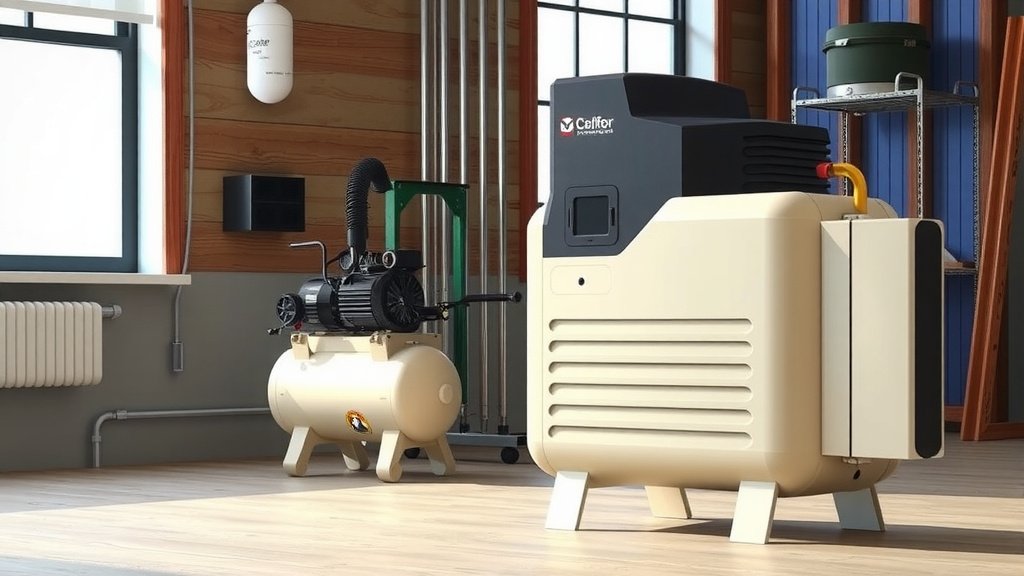
One key feature is the enclosure. Many silent compressors have a fully enclosed cabinet. This cabinet acts like a soundproof box, trapping the noise inside. The materials used for the cabinet are also important. They are often made with sound-absorbing foam or other dampening materials. This significantly reduces how much sound escapes into your workspace.
Normal compressors usually don’t have this kind of enclosure. Their components are more exposed, allowing sound to travel freely. This is why they can be so jarringly loud.
Quieter Motor and Pump Design
Beyond the enclosure, the motor and pump themselves are designed differently. Silent compressors often feature oil-lubricated pumps. These tend to run more smoothly and quietly than oil-free designs found in many standard models. The motors are also often better balanced and built with noise reduction in mind.
Oil-free compressors, common in many basic models, can be quite noisy. They rely on plastic parts that can vibrate and create a lot of sound. While they might be cheaper, the noise level is a major trade-off.
Performance: Power and Pressure
You might be wondering if being quiet means sacrificing power. That’s a fair question! We found that modern silent air compressors offer excellent performance, comparable to many traditional models.
The main difference in performance isn’t usually about raw power, but how that power is delivered quietly. Silent compressors can still provide the CFM (cubic feet per minute) and PSI (pounds per square inch) you need for various tasks.
Airflow and Pressure Ratings
When looking at specs, compare the CFM and PSI ratings. A silent compressor designed for a home workshop might have a lower CFM than a large industrial compressor. However, it will likely have similar ratings to a comparable-sized normal compressor.
We found that for common DIY projects or small business needs, like powering nail guns, impact wrenches, or spray paint guns, a silent compressor can be perfectly adequate. Just be sure to check the required CFM and PSI for your specific tools.
Where Each Type Shines: Use Cases
The best type of air compressor for you really depends on where and how you plan to use it. Noise is a big factor here.
Ideal Spots for Silent Air Compressors
Silent compressors are fantastic for places where noise is a concern. This includes:
- Home workshops: You won’t disturb family members or neighbors.
- Apartments or condos: Keep the peace with your neighbors.
- Small businesses: In a shared office space or a customer-facing area.
- Medical or dental offices: Where a quiet environment is essential.
- Automotive repair shops: Especially for customer areas or smaller bays.
If you’re working on a project after hours, or if your workspace is close to where people live or work, a silent model is almost a must-have. It allows you to use your tools without causing a disturbance.
When a Normal Air Compressor Might Be Okay
Traditional, louder air compressors can still be a good choice in certain situations:
- Isolated outdoor use: If you’re working far from any homes or buildings.
- Industrial settings: In a large factory where the ambient noise is already very high.
- Budget constraints: If upfront cost is your absolute top priority.
- When noise is not a factor: If you simply don’t have neighbors or anyone to disturb.
In these scenarios, the extra noise might be a minor inconvenience. You can often get a more powerful compressor for the same price as a quieter model.
Comparing Features and Costs
When you’re comparing options, think about more than just noise. Features and price play a big role.
The Price Tag: What to Expect
Generally speaking, silent air compressors tend to be more expensive upfront than their noisier counterparts. This is due to the advanced engineering, quieter components, and sound-dampening materials used in their construction.
We found that a quality silent compressor might cost 20-50% more than a standard compressor with similar power specs. However, think of it as an investment in peace and quiet. The long-term benefits of reduced noise pollution in your workspace can be well worth the extra cost.
Maintenance and Lifespan
Maintenance needs can vary. Many silent compressors are oil-lubricated, which requires regular oil changes. This is a standard maintenance task, but it’s something to keep in mind. Oil-free silent models do exist, reducing the need for oil management.
Regarding lifespan, many experts suggest that well-maintained oil-lubricated compressors, whether silent or not, can have a longer operational life than oil-free models. Proper care is key for any air compressor to last.
Portability and Size
Both silent and normal air compressors come in various sizes, from small portable units to large stationary tanks. The noise level doesn’t inherently dictate portability. You can find both quiet and loud compressors that are wheeled for easy transport.
However, the enclosures on some silent compressors can add a bit of bulk or weight. This is usually a minor consideration compared to the noise reduction they offer.
Making Your Choice: A Quick Checklist
To help you decide, ask yourself these questions:
- How sensitive is your environment to noise?
- Who will be affected by the compressor’s sound?
- What tools will you be powering?
- What is your budget for the compressor?
- How much space do you have available?
- Will you be moving the compressor often?
Silent vs. Normal Air Compressor Comparison Table
Here’s a quick rundown to compare the key features:
| Feature | Silent Air Compressor | Normal Air Compressor |
|---|---|---|
| Noise Level | Very low (often 50-70 dB) | High (often 70-90+ dB) |
| Design | Enclosed, insulated, quieter motor/pump | Often open design, louder motor/pump |
| Price | Generally higher upfront cost | Generally lower upfront cost |
| Best For | Home use, sensitive environments, small businesses | Industrial settings, outdoor use, budget-focused |
| Maintenance | Can be oil-lubricated or oil-free; requires care | Often oil-free, can be oil-lubricated; requires care |
| Portability | Available in portable and stationary models | Available in portable and stationary models |
Conclusion
You’ve seen how silent air compressors offer a game-changing experience for many users. They effectively cut down on disruptive noise without sacrificing the power you need for your projects. While they often come with a higher initial cost, the peace of mind and reduced disturbance are well worth the investment for home workshops and noise-sensitive environments. Consider your specific needs, workspace, and budget to make the best choice. Ready to find the perfect quiet compressor for your needs? Start comparing models today and enjoy a more peaceful work experience.
Frequently Asked Questions
Are silent air compressors less powerful than normal ones?
We found that modern silent air compressors are designed to offer comparable power to traditional models. While the technology focuses on noise reduction, it doesn’t typically mean a compromise on performance. You can find silent compressors that deliver the CFM and PSI ratings you need for most DIY and small business tasks.
How much more do silent air compressors typically cost?
Generally, silent air compressors can cost about 20-50% more upfront than standard compressors with similar specifications. This price difference reflects the advanced engineering, sound-dampening materials, and quieter components used in their construction. Think of it as an investment in a quieter workspace.
Do silent air compressors require more maintenance?
Maintenance needs vary. Many silent compressors use oil-lubricated pumps, which require regular oil changes, similar to some normal compressors. However, oil-free silent models are also available, which can simplify maintenance. Proper care is essential for the longevity of any air compressor.
Can I use a silent air compressor for professional tasks?
Yes, absolutely! Silent air compressors are excellent for professional use, especially in settings like small automotive shops, dental offices, or any business where noise can disturb clients or colleagues. Ensure the CFM and PSI ratings meet the demands of your specific professional tools.
What’s the main advantage of a silent air compressor for home use?
The primary advantage of a silent air compressor for home use is the significant reduction in noise pollution. This means you can work on projects without disturbing family members, roommates, or neighbors, making it ideal for apartments, condos, or any shared living space.