How to Find Your Air Compressor’s CFM Rating
Figuring out how many CFM your air compressor has is key for your tools. CFM stands for Cubic Feet per Minute. It tells you the volume of air your compressor can deliver. Most air tools list their CFM needs. Matching these is essential for proper operation.
Your air compressor’s CFM rating affects tool performance. A compressor with too low a CFM rating will struggle. It might not be able to keep up with demanding tools. This can lead to tools not working correctly. Understanding your compressor’s CFM ensures you get the most out of your equipment.
- CFM means Cubic Feet per Minute.
- It measures your compressor’s air output volume.
- Match tool CFM needs to your compressor’s CFM.
- This ensures your tools work correctly.
- Low CFM can cause tools to underperform.
Let’s walk through exactly how to find your air compressor’s CFM rating and what it means for your projects.
Understanding Your Air Compressor’s CFM Rating
So, you’re wondering, “what CFM does my air compressor actually produce?” It’s a really common and important question! Think of CFM like the horsepower for your air tools. Without enough air volume, your tools won’t perform their best. We’re here to help you figure this out so your tools sing, not sputter.
CFM stands for Cubic Feet per Minute. It’s the volume of air your compressor can deliver in one minute. Many air tools have their own CFM requirements listed on their packaging or in their manuals. Matching your compressor’s output to these needs is key for proper tool function.
Where to Find Your Compressor’s CFM Information
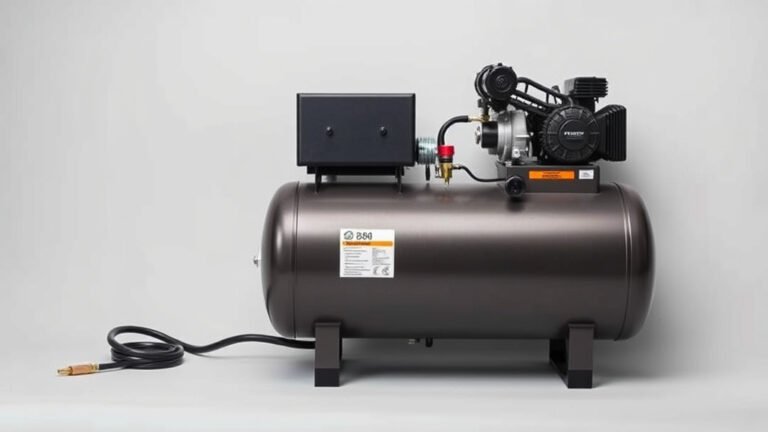
The easiest way to know your compressor’s CFM is to check its label. Manufacturers usually provide this information upfront.
Check the Manufacturer’s Label or Nameplate
Most air compressors have a data plate or a sticker on the tank or motor. This label is a goldmine of information. You’ll typically find the model number, serial number, and voltage. Keep an eye out for “CFM,” “SCFM,” or sometimes a flow rate measurement. It might be listed at a specific PSI (pounds per square inch).
What’s the difference between CFM and SCFM? SCFM stands for Standard Cubic Feet per Minute. It’s a more precise measurement, standardized to specific temperature and pressure conditions (usually 14.5 PSI and 68°F). For practical purposes with most tools, the CFM rating is what you’ll focus on. If you see both, the SCFM is often slightly lower than CFM because of the standardization.
Consult Your Air Compressor’s Manual
Did you keep that manual? If so, it’s your next best bet. The operations manual will almost always list the compressor’s specifications. Look for a section on “Specifications” or “Technical Data.” It should clearly state the CFM output, often at different PSI levels.
If you can’t find your physical manual, don’t worry! Most manufacturers have their manuals available for download on their websites. Just search for your compressor’s model number.
Estimating CFM if Information Isn’t Available
Sometimes, labels are missing, or manuals are long gone. Don’t panic! You can still get a good idea of your compressor’s CFM.
Understanding Tank Size and Horsepower (Less Accurate)
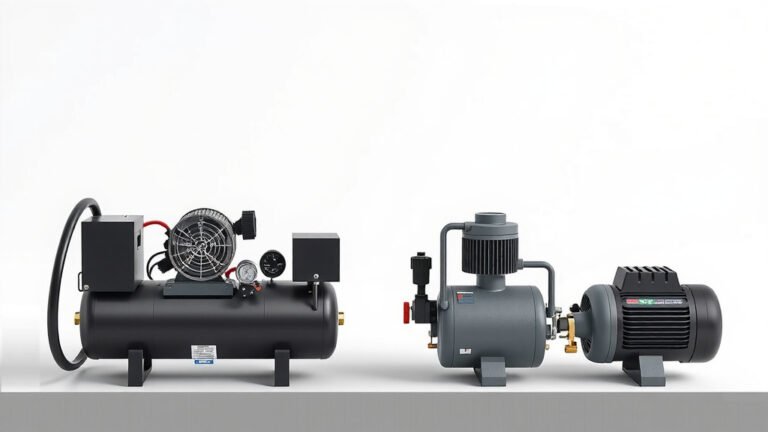
While not a direct CFM measurement, tank size and horsepower can give you a general idea. Larger tanks (like 60-gallon or 80-gallon) tend to be paired with higher CFM compressors. Similarly, a 5-horsepower motor is usually found on compressors with a higher air output than a 2-horsepower motor.
Research suggests that for many portable compressors, you might find rough estimates like: a 1-2 HP compressor might deliver around 3-6 CFM, while a 3-5 HP compressor could range from 7-15 CFM. This is a very broad generalization, though. It’s much better to find the actual rated CFM if possible.
Using a Flow Meter (For Accuracy)
Want the most accurate number? You can purchase an air flow meter. These devices attach to your compressor’s outlet and measure the actual CFM output in real-time. They are an investment, but if you rely heavily on air tools, they are incredibly useful.
To use one, you connect it to your compressor’s regulator. You then open the valve on the meter to allow air to flow through. The meter will display the CFM. It’s wise to test this at different PSI settings you commonly use.
What CFM Do Your Tools Need?
Knowing your compressor’s CFM is only half the battle. You also need to know what your tools require. This is where the magic happens.
Checking Tool Requirements
Look for the CFM rating on your air tools. This is usually found on a sticker on the tool itself, in the user manual, or on the manufacturer’s website. It will often specify the CFM needed at a particular PSI. For example, an impact wrench might need 5 CFM at 90 PSI.
Don’t guess! Using a tool that requires more CFM than your compressor can deliver is like trying to drink a milkshake through a coffee stirrer. It’s frustrating, and the tool won’t work correctly. We’ve found that underpowered compressors lead to slower work and can even damage tools over time.
Understanding Continuous vs. Intermittent Use
Some tools, like nail guns or impact wrenches, use air in short bursts. These are called intermittent use tools. They don’t demand a constant high CFM. Other tools, like sanders or grinders, run continuously and require a steady, high CFM output.
For intermittent tools, your compressor’s “reserve” air in the tank can help. The tank stores compressed air, so even if the compressor’s continuous output is slightly lower than the tool’s peak demand, the tank can supply the difference for short periods. For continuous use tools, you need a compressor that can consistently meet or exceed the tool’s CFM requirement.
Matching Compressor CFM to Tool CFM: The Golden Rule
Here’s the fundamental principle you need to follow for happy tool usage.
The 1.5x Rule of Thumb
Many professionals recommend a general rule: your air compressor should provide at least 1.5 times the CFM required by your most demanding tool. Why the extra buffer? This ensures your compressor isn’t constantly running at its absolute limit.
For instance, if your most demanding tool needs 5 CFM at 90 PSI, aim for a compressor that delivers at least 7.5 CFM at 90 PSI (5 CFM * 1.5 = 7.5 CFM). This buffer helps account for leaks, altitude, and wear and tear on the compressor. We found this rule to be a solid guide for most DIY and professional applications.
Factors Affecting CFM Delivery
Remember that the listed CFM on your compressor isn’t always what you get in practice. Several factors can influence the actual air delivery:
- PSI Level: CFM ratings are almost always given at a specific PSI (often 90 PSI). As PSI increases, CFM generally decreases.
- Altitude: Higher altitudes mean thinner air, which can affect compressor performance.
- Temperature: Air expands when heated. Hotter air can impact compressor efficiency.
- Maintenance: Clogged air filters, worn piston rings, or leaks can all reduce CFM output.
Quick Checklist for Finding Your CFM
Here’s a quick way to keep track of what you need to do:
- Locate the manufacturer’s label on your compressor.
- Search for “CFM” or “SCFM” on the label.
- If the label is unreadable, find your compressor’s manual.
- If no manual, search online for your model number and “specifications.”
- Check your tools for their CFM requirements.
- Compare your compressor’s CFM to your tool’s needs.
Conclusion
Knowing your air compressor’s CFM is essential for using your air tools effectively. You’ve learned where to find this information, from checking the compressor’s label and manual to estimating it if needed. Remember to always match your compressor’s CFM output to the requirements of your tools, ideally using the 1.5x rule of thumb for a performance buffer. By understanding these ratings, you ensure your tools operate correctly and you get the best results from your projects. Your next step is to check both your compressor and your most-used tool for their CFM ratings and see if they’re a good match!
Frequently Asked Questions
What’s the difference between CFM and SCFM?
SCFM stands for Standard Cubic Feet per Minute, which is a more precise measurement standardized for temperature and pressure. CFM (Cubic Feet per Minute) is the general volume of air your compressor delivers. For most practical tool applications, the CFM rating is what you’ll focus on, as it’s typically listed directly on your compressor and tools.
Can I use a tool if my compressor’s CFM is slightly lower?
While you might get some basic function, it’s not recommended. If your compressor’s CFM is lower than your tool’s requirement, the tool will likely underperform. This can lead to slow work, inconsistent results, and potentially damage to the tool or compressor over time.
Does CFM change depending on the PSI?
Yes, it does. Air compressor CFM ratings are almost always specified at a particular PSI (often 90 PSI). As the required PSI goes up, the CFM the compressor can deliver generally goes down. Always check the PSI rating associated with the CFM on both your compressor and your tools.
How often should I check my air compressor’s filters for maintenance?
Regular maintenance is key to maintaining your compressor’s CFM output. We recommend checking and cleaning or replacing your air intake filter according to the manufacturer’s guidelines, usually every few months or more frequently if you use the compressor in dusty conditions.
What if I can’t find the CFM rating anywhere on my older compressor?
If you’ve thoroughly checked the compressor and can’t find a label or manual, you can try researching online using the model and serial number to find specifications. Alternatively, an air flow meter is the most accurate way to measure your compressor’s actual CFM output in real-time.