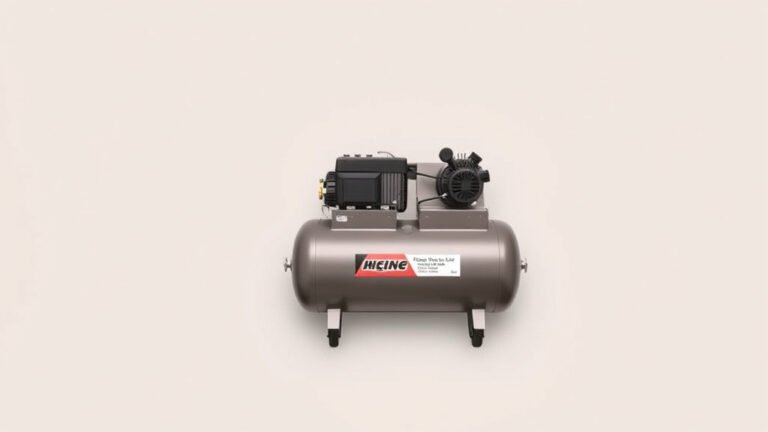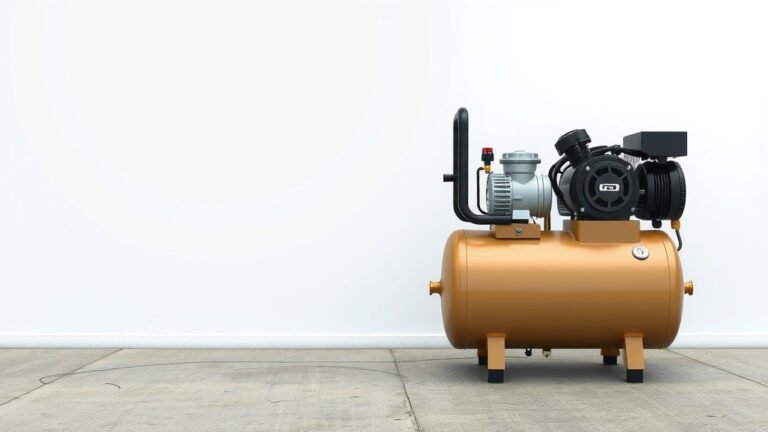
How Many CFM Air Compressor Do You Need for Your Tools
Figuring out how many CFM your air compressor needs can feel like a puzzle. Generally, you’ll want a compressor with at least 5 CFM at 90 PSI for most common DIY tasks. This measurement is key to powering your tools effectively. Don’t worry if this sounds a bit technical; we’ll break it down so you can make the right choice for your needs.
The CFM, or cubic feet per minute, tells you how much air the compressor can deliver. This is more important than the PSI (pounds per square inch) for many tools. Matching your compressor’s CFM output to your tool’s air consumption will ensure it runs smoothly. We found that underestimating this can lead to frustrating slowdowns.
- CFM at 90 PSI is your go-to number.
- Aim for 5 CFM for most home projects.
- Higher CFM is needed for continuous-use tools.
- Check your tool’s manual for its air needs.
Ready to stop guessing and start powering your projects? Let’s dive into how to calculate the exact CFM you need for your specific tools and tasks.
Choosing the Right CFM Air Compressor for Your Projects
So, you’re looking to buy an air compressor, but the CFM number is throwing you off. Don’t sweat it! We’ve all been there, staring at specs and wondering what it all means. Think of CFM as the muscle of your air compressor. It tells you how much air it can deliver over time. This is your key to making sure your tools actually work the way they’re supposed to.
You’ve probably seen PSI listed too. While PSI measures the force of the air, CFM measures the volume. For most air tools, especially those you’ll use around the house or in a small shop, CFM is usually the more important factor. We found that getting the CFM wrong is a common mistake people make.
Understanding CFM: The Heart of Air Compression
CFM stands for Cubic Feet per Minute. This is the standard way to measure the airflow capacity of an air compressor. It tells you how much air the compressor can produce and deliver at a certain pressure. Most manufacturers rate their compressors at 90 PSI. This is a pretty standard pressure for many air tools.
Why 90 PSI? Many common air tools, like nail guns and impact wrenches, operate best around this pressure. So, when you see a compressor listed as “5 CFM at 90 PSI,” it means it can supply 5 cubic feet of air every minute while maintaining a pressure of 90 pounds per square inch. It’s like the engine size for your air-powered tools.
CFM vs. PSI: What’s the Real Difference?
It’s easy to get these two mixed up. Imagine a garden hose. PSI is like the water pressure coming out of the nozzle. A high PSI means the water is coming out with a lot of force. CFM, on the other hand, is like how much water is flowing out of the hose. A high CFM means a lot of water is coming out, even if the pressure isn’t super high.
For many tasks, you need a consistent, steady supply of air. This is where CFM becomes more critical than just high PSI. A tool that needs a lot of air will stutter and stop if the compressor can’t keep up with its CFM demands, even if the PSI is technically high enough. We found this to be a major frustration for DIYers.
How to Find the CFM Needs of Your Tools
This is the most important step in figuring out what CFM air compressor you need. Your tools are the ones telling you what they require. You can’t just guess; you need to find out their specific air consumption. It’s like choosing the right size shoes – they have to fit your feet, not the other way around.
Check Your Tool’s Manual or Label
The easiest way to find out a tool’s CFM requirement is to look at its instruction manual. Most manufacturers list the air consumption, often in CFM, at a specific PSI. You might also find this information directly on the tool itself, perhaps on a sticker or metal plate.
Sometimes, the requirement is listed in SCFM (Standard Cubic Feet per Minute). While similar, SCFM uses standard conditions for temperature and humidity. For most home use, the difference between CFM and SCFM at 90 PSI is often small enough that you can use the listed SCFM number to guide your choice. We found that this is a reliable method.
Consider Continuous vs. Intermittent Use Tools
This distinction is vital. Some tools use air in short bursts, while others require a constant flow. Knowing this helps you decide if you need a bit of extra CFM capacity.
Intermittent Tools: Nail Guns, Staplers, Tire Inflators
Tools like nail guns, staple guns, and tire inflators use air in short, quick bursts. They don’t demand a huge amount of air constantly. You can often get away with a compressor that has a CFM rating just slightly higher than the tool’s peak requirement.
Continuous Tools: Sanders, Grinders, Paint Sprayers
Tools such as orbital sanders, grinders, and paint sprayers use air continuously. These tools will drain a compressor’s tank very quickly if it can’t keep up. For these, you’ll need a compressor with a significantly higher CFM output than the tool’s rating. We found that overestimating here is better than underestimating.
Calculating Your Total CFM Requirement
Once you know the CFM needed for each of your tools, you can figure out the right compressor size. It’s not just about the highest CFM tool you own. You need to consider what you’ll be using most often, or if you’ll ever use more than one tool at a time.
Add a Safety Margin
Experts generally recommend adding a buffer to your total CFM calculation. A common rule of thumb is to add 30% to 50% to the combined CFM of the tools you’ll use simultaneously. This ensures your compressor doesn’t run constantly and helps it maintain pressure.
For example, if your primary tool needs 5 CFM and you might occasionally use a smaller tool that needs 2 CFM at the same time, you’re looking at 7 CFM. Adding a 50% safety margin brings that to 10.5 CFM. This extra capacity prevents the compressor from working too hard. We found this buffer is essential for longevity.
| Tool Type | Average CFM Needed | Usage Type |
|---|---|---|
| Brad Nailer | 0.5 – 2 CFM | Intermittent |
| Impact Wrench | 4 – 6 CFM | Intermittent |
| Orbital Sander | 8 – 12 CFM | Continuous |
| Spray Gun (HVLP) | 10 – 15 CFM | Continuous |
| Air Ratchet | 3 – 5 CFM | Intermittent |
When in Doubt, Go Bigger
If you’re unsure about your exact needs, or if you plan to expand your tool collection later, it’s often wise to opt for a slightly larger compressor. A compressor that’s too small will lead to frustration and poor tool performance. You might find yourself waiting for it to “catch up” more often than you’d like. Buying a bit more than you think you need now can save you money and hassle in the long run.
Quick Checklist for Your CFM Needs
Here’s a quick way to summarize your CFM needs:
- List all your air tools.
- Note the CFM requirement for each tool (at 90 PSI).
- Determine which tools you’ll use at the same time.
- Add up the CFM for tools used simultaneously.
- Add a 30-50% buffer for continuous use and longevity.
- Choose a compressor that meets or exceeds this final number.
Conclusion
You’ve learned that understanding CFM is key to powering your air tools effectively. We’ve seen that the magic number is often CFM at 90 PSI, with 5 CFM being a good starting point for many DIY tasks. Remember to always check your tool’s specific needs, whether they’re intermittent or continuous users. By adding a safety margin and considering future projects, you’ll avoid frustration and ensure your tools perform their best. Take a moment to list your tools and their requirements, and you’ll be ready to choose the perfect compressor for your workshop.
Frequently Asked Questions
What happens if my air compressor CFM is too low?
If your compressor’s CFM is too low, your tools won’t perform correctly. You might experience sputtering, reduced power, or the tool might stop working altogether. For continuous tools like sanders or paint sprayers, this is especially problematic and can lead to a frustrating workflow.
Do I need to add CFM for multiple tools used at once?
Yes, absolutely. If you plan on using more than one air tool simultaneously, you must add up the CFM requirements of all the tools you’ll be running together. Then, add your safety margin to that total for a proper compressor sizing.
Is SCFM the same as CFM for practical purposes?
While technically different, SCFM (Standard Cubic Feet per Minute) and CFM at 90 PSI are often close enough for most home and DIY applications. Manufacturers typically rate compressors using CFM at 90 PSI, so using the SCFM number from your tool’s manual is usually a reliable guide.
What’s a good general rule for the CFM needed for a small home garage?
For a small home garage with basic tools like a brad nailer, impact wrench, or tire inflator, a compressor around 5 to 7 CFM at 90 PSI is often sufficient. If you plan on using more demanding tools like sanders, you’ll need to look for higher CFM ratings, closer to 10-12 CFM or more.
How much of a buffer should I add to my CFM calculation?
Experts generally recommend adding a buffer of 30% to 50% to your total CFM requirement. This buffer ensures your compressor isn’t constantly running at its maximum capacity, which helps with its longevity and maintains consistent air pressure for your tools.