Paint Gun Air Compressor: What Gallon Size Do You Need
For most paint gun projects, you’ll want an air compressor that’s at least 20 gallons, but 30 to 60 gallons is often ideal for consistent results. A larger tank means less cycling and more steady airflow for your paint sprayer. Getting this right is key to avoiding frustrating pauses mid-coat.
Choosing the right air compressor size matters a lot for painting. Too small, and you’ll get weak, sputtering paint. Too big, and you might be wasting energy. We found that matching your compressor to your paint gun’s CFM needs is the best approach. It ensures a smooth, even finish without the compressor constantly running.
- Tank Size is Key: Aim for 20-60 gallons for most paint jobs.
- CFM Matters Most: Check your paint gun’s CFM requirement.
- Avoid Interruptions: Larger tanks prevent the compressor from stopping.
- Smooth Finish: The right compressor means better paint application.
Let’s get your project painted beautifully by figuring out the perfect air compressor for your paint gun.
Choosing the Right Air Compressor Gallon Size for Your Paint Gun
Picking the correct air compressor gallon size is a big deal for your painting project. It’s not just about having air; it’s about having the *right kind* of air. You want air that’s steady and powerful enough. Let’s dive into what makes a compressor a good fit for your paint gun.
Understanding Airflow: CFM is King
While gallon size is important, the real hero here is CFM. CFM stands for Cubic Feet per Minute. This measurement tells you how much air the compressor can deliver at a certain pressure. Think of it like the water pressure from your hose. Too little, and your sprinkler won’t reach far. Too much, and you might flood your garden.
Why CFM Matters for Paint Guns
Your paint gun needs a specific amount of CFM to work correctly. If the compressor doesn’t provide enough CFM, your paint won’t spray evenly. You might get splatters, thin spots, or a rough texture. Your paint gun’s manual will tell you the exact CFM it requires. This is the most critical number to look for.
How Tank Size Affects CFM Delivery
The tank size helps buffer the CFM delivery. A larger tank acts like a reservoir. It stores compressed air. This means your compressor doesn’t have to run non-stop to keep up. It can fill the tank and then let you paint. This prevents the pressure from dropping suddenly. We found that a good tank size means a more consistent spray.
Matching Compressor CFM to Your Paint Gun
So, how do you bridge the gap between your paint gun’s needs and what a compressor offers? You need to compare their CFM ratings. Most paint guns use anywhere from 4 to 12 CFM. Hobbyist sprayers might be on the lower end. Professional tools often demand more.
Finding Your Paint Gun’s CFM Needs
Always check the label or manual that came with your paint gun. It will state the required CFM at a specific PSI (Pounds per Square Inch). For example, it might say “6 CFM @ 90 PSI.” This is the target you need to meet or exceed.
How to Check Compressor CFM
Compressor specifications usually list two CFM ratings: one at 90 PSI and sometimes another at 40 PSI. You’ll want to look at the rating at 90 PSI because that’s where most paint guns operate. Many sources suggest you should choose a compressor that provides at least 1.5 to 2 times the CFM your paint gun needs.
Why Add a Buffer?
Adding that buffer ensures your compressor isn’t always working at its absolute limit. When a compressor runs at its max, it wears out faster and produces more heat. A little extra capacity means it runs more efficiently. This also helps maintain consistent pressure. We found that a 1.5x buffer is a good starting point for most DIYers.
The Role of Gallon Size in Compressor Performance
Now, let’s talk gallons. The gallon size refers to the storage capacity of the air tank. Why does this matter so much?
Larger Tanks Mean Less Cycling
Imagine you’re trying to fill a bucket with a tiny cup. It takes forever, right? A small air compressor tank is like that tiny cup. It runs, fills a little bit of air, and then stops. Your paint gun uses air, and the tank empties quickly. The compressor has to start up again. This frequent starting and stopping is called “cycling.” It’s annoying when you’re painting.
How Tank Size Affects Paint Flow
A larger tank stores more air. This means your compressor can run for a while, fill the tank, and then shut off. You get a longer, more consistent blast of air. This steady flow is vital for a smooth, even paint finish. You won’t get those frustrating pauses or sudden drops in pressure. Many painting guides suggest a larger tank is always better for finishes.
Recommended Gallon Sizes for Different Tasks
We’ve found a general guideline that many people follow:
- Small touch-ups or air brushing: A 1-6 gallon portable compressor might suffice if your tool uses very little CFM.
- Light DIY projects, smaller furniture: A 10-20 gallon compressor can work if your paint gun’s CFM needs are low (under 4 CFM).
- Most DIY painting, furniture, doors, trim: A 20-30 gallon compressor is often a sweet spot. This provides enough air for many common spray guns and reduces cycling.
- Larger projects, car parts, cabinets, full rooms: You’ll likely want a 30-60 gallon compressor. This size offers excellent air storage for more demanding tools and longer spray times.
- Professional, continuous use: Industrial compressors of 60 gallons and above are common.
Understanding Compressor Types and Their Impact
Not all compressors are built the same. The type can influence how much air they deliver and how efficiently they do it.
Piston vs. Rotary Screw Compressors
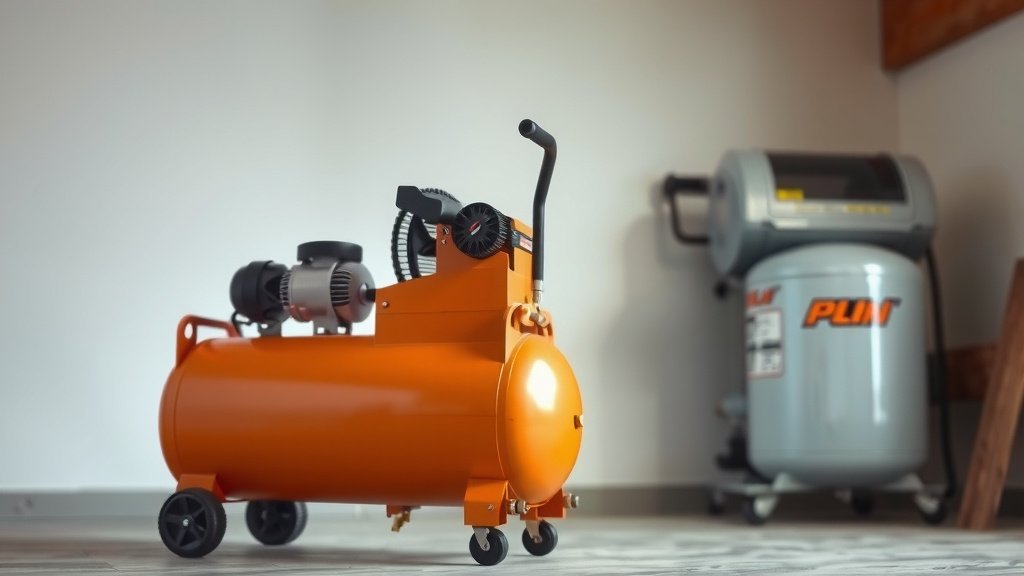
Most DIYers will encounter piston compressors. These are the ones with a cylinder and piston, much like a car engine. They are generally more affordable and suitable for intermittent use. Most DIYers will encounter piston compressors, which are generally more affordable; learn about 1-cylinder vs. 2-cylinder air compressors.
Rotary screw compressors are more industrial. They use two intermeshing screws to compress air. They provide a more consistent air supply and are built for continuous operation. However, they are much more expensive and overkill for most home projects.
Oil-Lubricated vs. Oil-Free Compressors
Oil-lubricated compressors tend to be quieter and last longer. The oil lubricates the moving parts. However, they can sometimes put a small amount of oil into the air stream. For painting, you’ll want to use an air filter or regulator with a water/oil separator.
Oil-free compressors are lighter and require less maintenance. They don’t risk oil contamination in your paint. However, they can be louder and may not last as long as oil-lubricated models. Many sources suggest oil-lubricated is better for longevity if you can manage potential oil in the air.
Essential Accessories for Your Paint Setup
Beyond the compressor and paint gun, a few other items are important. They help ensure your paint job looks its best.
Air Filters and Regulators
An air regulator lets you control the exact PSI going to your paint gun. This is vital for consistent results. An air filter, especially one that removes water and oil, is a must-have. Moisture or oil in your air can ruin a paint job. We found that a good combo regulator/filter unit is a worthwhile investment.
Hoses and Fittings
Make sure your air hose is rated for the PSI your compressor and paint gun use. A hose that’s too small can restrict airflow, reducing your CFM. Fittings should match your compressor and paint gun’s connections. A A 25-foot hose is a good starting point, but you might need longer; learn about air compressor hose sizes.25-foot hose is a good starting point, but you might need longer.
Quick Checklist for Your Compressor Purchase
Before you buy, run through this quick list:
- Confirm your paint gun’s required CFM at 90 PSI.
- Choose a compressor with at least 1.5x that CFM rating.
- Aim for a 20-30 gallon tank for most DIY painting.
- Consider a 30-60 gallon tank for larger or more frequent projects.
- Factor in the need for an air regulator and filter.
- Ensure your hose and fittings are compatible and properly rated.
Conclusion
Choosing the right air compressor for your paint gun is all about matching CFM needs with tank size. Remember, CFM is king for consistent spray, but a larger tank size, ideally 20-60 gallons for most projects, prevents frustrating interruptions. You’ve learned to check your paint gun’s requirements and add a buffer for efficient operation. Don’t forget those essential accessories like regulators and filters for a professional finish. Your next step is to check your paint gun’s CFM rating and then select a compressor that meets or exceeds it, ensuring your painting projects are smooth sailing from start to finish.
Frequently Asked Questions
What if my paint gun needs more CFM than a 20-gallon compressor can provide?
If your paint gun demands more CFM than a 20-gallon unit can consistently deliver, you’ll want to look at larger tanks, typically 30-60 gallons. These larger reservoirs store more air, helping to maintain the necessary CFM output for your tool. You might also need to consider a compressor with a higher CFM rating itself.
Can I use a small 6-gallon compressor for painting car parts?
Generally, a 6-gallon compressor is too small for painting car parts. These projects usually require a higher CFM and a more sustained airflow than a small tank can provide. You’ll likely experience frequent compressor cycling and inconsistent spray, leading to a poor finish. We recommend a 30-60 gallon compressor for this type of work.
How does oil-lubricated versus oil-free affect my paint job?
Oil-lubricated compressors can potentially introduce tiny oil droplets into the air stream, which can contaminate your paint. For the best results, it’s essential to use an air filter with a water and oil separator if you’re using an oil-lubricated model. Oil-free compressors eliminate this concern but can sometimes be louder.
Do I really need an air regulator for painting?
Yes, an air regulator is highly recommended for painting. It allows you to dial in the precise PSI your paint gun needs for optimal atomization and flow. This helps you achieve a smooth, consistent finish and prevents runs or splatters caused by too much or too little air pressure.
What’s the difference between PSI and CFM for a paint gun?
PSI (Pounds per Square Inch) measures the *pressure* of the air, while CFM (Cubic Feet per Minute) measures the *volume* or flow rate of the air. Your paint gun needs a specific PSI to operate correctly, but it needs a certain CFM to atomize the paint effectively. The compressor must meet both requirements, with CFM being the primary factor for determining tank size and compressor power.