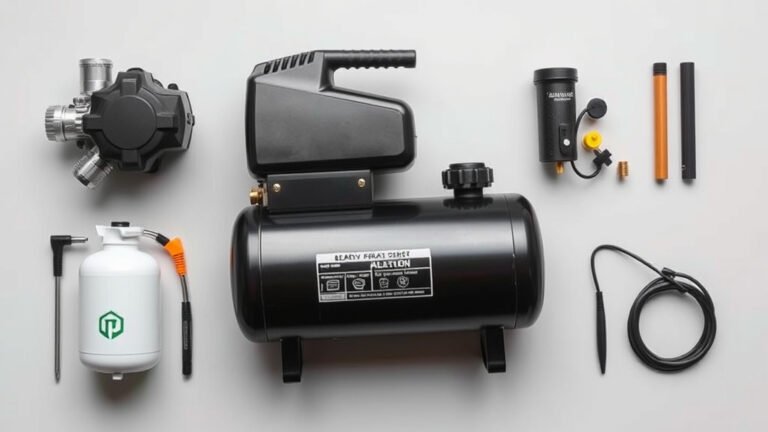
How Much Does an 80 Gallon Air Compressor Weigh
Wondering how much a 80 gallon air compressor weighs? You’re likely planning a move or installation. Most 80-gallon air compressors weigh between 200 and 500 pounds. This wide range depends heavily on the tank size, motor, and construction materials used. Don’t plan on lifting one yourself unless you’re incredibly strong (and likely risking injury!).
These hefty machines are built for serious work. Think professional garages or industrial settings. The weight comes from the robust steel tank and the powerful motor needed to keep those gallons of air ready. It’s this sturdy construction that ensures they can handle the constant pressure and demands of heavy-duty use.
- 80-gallon air compressors are heavy.
- Expect weights from 200 to 500 lbs.
- Weight varies by tank, motor, and build.
- They are designed for professional use.
Below, we’ll break down the factors influencing the weight and what you should consider before you try to move yours.
Understanding the Weight of Your 80-Gallon Air Compressor
So, you’re curious about how much that big 80-gallon air compressor actually weighs. It’s a smart question to ask, especially if you’re planning to move it. These aren’t exactly portable generators you can easily toss in the trunk. We found that most 80-gallon models tip the scales somewhere between 200 and 500 pounds.
This might sound like a huge range, and it is! The final number depends on a few key components. Think of it like buying a car; a small sedan weighs less than a heavy-duty truck, even if they both have four wheels. We’ll break down what makes one compressor heavier than another, so you can get a clearer picture.
Factors That Influence Your Compressor’s Weight
Several things contribute to the overall heft of your 80-gallon air compressor. The main culprits are usually the tank itself and the motor driving it. Let’s look closer at each of these.
The Air Tank: More Steel Means More Weight
The 80-gallon tank is the largest component, and it’s typically made from thick, sturdy steel. This is essential for safety and durability. You need a robust tank to handle the high pressures involved in storing compressed air. We found that the thickness and quality of the steel used directly impact the tank’s weight. A thicker gauge of steel means more material, and therefore, more pounds.
Some tanks might also have internal baffles or thicker end caps for added strength. These little extras add up. Think of it like a balloon – a thin balloon is light, but a heavy-duty weather balloon built to withstand serious forces will be much more substantial. Your compressor’s tank is built for the latter.
The Motor: Power Comes with Mass
The motor is the powerhouse of your air compressor. For an 80-gallon unit, you’re looking at a powerful electric motor, often ranging from 5 to 10 horsepower (HP) or even more. Larger, more powerful motors generally use more copper wiring, heavier magnets, and a more substantial casing to dissipate heat. All of these elements contribute to the motor’s weight.
We found that some high-efficiency motors might use lighter materials, but the core components for generating that kind of power often require significant mass. It’s a trade-off between raw power and added weight. So, a compressor with a more powerful motor will almost certainly weigh more than one with a less potent motor.
Construction Materials and Design
Beyond the tank and motor, the overall construction plays a role. Are there extra features like robust handles, heavy-duty wheels, or a sturdy frame to support everything? These additions, while helpful for usability, also add to the total weight. Some manufacturers might use cast iron components for durability, which are inherently heavier than aluminum or plastic.
We also noticed that the design itself can influence weight. A more compact design might try to save space and weight, while a more spread-out design could offer easier access to components but add bulk. It’s a balancing act for manufacturers trying to create a machine that is both powerful and reasonably manageable.
Comparing Different Types of 80-Gallon Compressors
When you look at 80-gallon compressors, you’ll often find them categorized by their configuration. This can also give you clues about their weight.
Vertical vs. Horizontal Tanks
An 80-gallon vertical tank compressor takes up less floor space. This is great for smaller workshops. However, the taller, narrower design might require more robust internal bracing to stay stable, potentially adding a bit of weight. The base structure to keep it upright also needs to be solid.
An 80-gallon horizontal tank compressor usually has a lower profile. These can sometimes feel more stable due to their wider stance. The distribution of weight might be different, but the overall material quantity for the tank is similar. We found that the choice between vertical and horizontal often comes down to space constraints rather than a dramatic weight difference.
Single-Stage vs. Two-Stage Pumping
Most 80-gallon compressors are two-stage. This means they compress air in two steps, which is more efficient for high-demand applications. Two-stage pumps have more internal parts, including an intercooler. This added complexity and componentry usually translates to a heavier pump assembly. Single-stage compressors are less common in this size but would generally be lighter.
Typical Weight Ranges for 80-Gallon Models
Based on our research, here’s a general idea of what you might encounter. Remember, these are estimates, and you should always check the manufacturer’s specifications for the exact model you’re interested in.
| Compressor Type | Estimated Weight Range (lbs) | Key Factors |
|---|---|---|
| Standard 80-Gallon (Two-Stage) | 250 – 450 lbs | Motor HP, tank thickness, material quality |
| Heavy-Duty/Industrial 80-Gallon | 350 – 500+ lbs | Higher HP motor, reinforced tank, industrial-grade components |
| Portable (with wheels) 80-Gallon | 200 – 350 lbs | Often lighter construction, but still substantial |
As you can see, even the “portable” options are incredibly heavy. They might have wheels, but they are designed to be rolled, not easily lifted or carried.
What You Need to Consider Before Moving Your Compressor
Knowing the weight is only half the battle. Moving such a heavy piece of equipment requires serious planning. Trying to muscle it around by yourself is a recipe for disaster. We’ve heard stories, and it’s rarely pretty.
Safety First: Never Lift Alone
Seriously, don’t do it. The risk of back injuries or crushing something (or someone!) is extremely high. Always have at least one, preferably two, strong helpers. You might even need specialized equipment.
Essential Moving Gear
To move your 80-gallon compressor safely, you’ll likely need:
- A heavy-duty appliance dolly or furniture dolly.
- Moving straps or a furniture lift system.
- Plenty of strong packing tape and bubble wrap if you’re storing or shipping it.
- A ramp or lifting platform if moving it into or out of a truck.
- Gloves for better grip and hand protection.
We found that many people underestimate the amount of effort and equipment needed. It’s better to be over-prepared than to find yourself stuck.
Professional Moving Services
For many, the safest and easiest option is to hire professional movers. They have the experience, the right equipment, and the manpower to handle heavy items like air compressors. While it costs money, it can save you a lot of potential headaches and injuries.
Many moving companies specialize in transporting large equipment. When getting quotes, be sure to mention the exact type and estimated weight of your air compressor. This helps them prepare properly. We think this is often the best route for peace of mind.
Checklist for Moving Your Heavy Compressor
Before you even think about touching that compressor, run through this quick checklist:
- Confirm the exact weight of your model.
- Assess the path for moving it (doors, stairs, tight corners).
- Gather all necessary equipment (dolly, straps, gloves).
- Recruit sufficient help – more than you think you’ll need!
- Plan the route and clear any obstacles.
- Consider professional help if unsure or if moving long distances.
Taking these steps will help ensure your heavy-duty compressor moves from point A to point B without incident. You’ve got this!
Conclusion
You’ve learned that an 80-gallon air compressor is a serious piece of equipment, typically weighing between 200 and 500 pounds. This weight is due to its robust steel tank and powerful motor, essential for professional-grade performance. Remember, these aren’t lightweights; they require careful planning and the right tools for any move. Don’t risk injury or damage trying to move one solo. Your next step should be to check the specific weight for your model and gather the necessary equipment or schedule professional movers.
Frequently Asked Questions
Can I move an 80-gallon air compressor myself?
We strongly advise against moving an 80-gallon air compressor by yourself. These units can weigh 200 to 500 pounds or more, posing a high risk of serious injury. Always enlist at least one or two strong helpers, and preferably use specialized moving equipment like a heavy-duty dolly.
What makes some 80-gallon compressors heavier than others?
The main factors contributing to weight are the thickness and quality of the steel tank and the size and power of the motor. Additional features like reinforced frames, heavy-duty wheels, or industrial-grade components also add to the overall heft. We found that higher horsepower motors generally mean more weight.
Do vertical 80-gallon compressors weigh less than horizontal ones?
Generally, there isn’t a significant weight difference solely based on tank orientation. While a vertical tank might have a smaller footprint, it often requires robust internal bracing for stability. A horizontal tank might have a lower center of gravity but uses a similar amount of material for the tank itself. The overall construction materials tend to be the bigger weight influencer.
Are “portable” 80-gallon air compressors actually easy to move?
Even “portable” 80-gallon models are quite heavy, often weighing 200-350 pounds. While they include wheels, these are designed for rolling the compressor across a workshop floor, not for true portability. You will still need significant physical effort and likely a helper to maneuver them effectively.
What’s the best way to transport an 80-gallon air compressor if I’m moving house?
For moving house, we recommend hiring professional movers who specialize in heavy equipment. They have the correct dollies, straps, ramps, and manpower to safely load and transport your compressor. If you must move it yourself, rent an appliance dolly, secure it properly in your vehicle, and have multiple strong individuals assist with the loading and unloading process.