Bypass Air Compressor Capacitor: A Step-by-Step Guide
Yes, you can bypass your air compressor’s capacitor, but it’s generally not recommended for long-term use. Bypassing a capacitor can help start a compressor motor if the capacitor is failing, but it bypasses its crucial role in motor starting and running. This can lead to overheating and motor damage if not done carefully and temporarily.
Air compressor capacitors are vital components. They provide the necessary electrical boost to start your motor. They also help keep it running smoothly. Bypassing it means you’re removing this help. Many users try this when their compressor struggles to start. We found this often leads to further issues if not addressed properly.
- Bypassing a capacitor can start a hard-starting compressor.
- It’s a temporary fix, not a permanent solution.
- Be aware of potential motor damage and overheating.
- The best solution is always to replace a faulty capacitor.
Let’s walk through what bypassing involves and why you should consider other options first.
A Temporary Fix for a Stubborn Air Compressor Motor
Your air compressor is sputtering, struggling to turn over, and you’re wondering if bypassing the capacitor is the answer. We’ve heard this question a lot, and yes, you can bypass a capacitor in a pinch. However, it’s vital to understand what this means for your motor. It’s a bit like trying to start a car with a weak battery by giving it a jump – it might work, but it’s not a long-term solution.
Understanding the Capacitor’s Role
Before we talk about bypassing, let’s quickly cover why your capacitor is there in the first place. Think of it as a tiny, high-powered battery that gives your compressor motor a mighty push to get started. It stores electrical energy and then quickly releases it. This jolt is essential, especially for single-phase motors found in most home air compressors. Without this boost, the motor might hum but just won’t spin up.
Starting Power: The Capacitor’s Main Job
Many air compressors use a “start capacitor.” Its sole purpose is to provide the extra torque needed to overcome the motor’s inertia and get it rotating. Once the motor reaches a certain speed, the start capacitor is typically disconnected from the circuit by a centrifugal switch or a potential relay. This prevents it from overheating and being damaged.
Running Smoothly: The Potential Role of a Run Capacitor
Some larger or more robust compressors might also have a “run capacitor.” This capacitor is smaller than a start capacitor. It stays connected to the motor even after it’s running. Its job is to improve the motor’s efficiency and power factor. It helps maintain a steady rotation and reduces strain on the motor windings. If your compressor has both, bypassing only the start capacitor is more common for a quick fix.
Why You Might Be Considering a Bypass
We’ve found that most people consider bypassing a capacitor when their air compressor starts acting up. It’s that frustrating moment when you flip the switch, and instead of a satisfying roar, you get a weak hum or nothing at all. This usually points to a problem with the starting mechanism, and the capacitor is often the prime suspect.
Symptoms of a Failing Capacitor
You’ll often notice a few key signs if your capacitor is on its way out:
- The motor hums loudly but doesn’t spin.
- The motor tries to start but only turns a little before stopping.
- You might hear a clicking sound repeatedly as the motor tries and fails to start.
- The compressor trips the circuit breaker shortly after you try to start it.
- The capacitor itself might look swollen, bulging, or even leaking oily fluid. This is a sure sign it needs replacement.
The Risks of a Faulty Capacitor
Leaving a bad capacitor in place can cause further damage. The motor trying to start without the capacitor’s help draws a lot of current. This can lead to the motor overheating, potentially burning out the windings. It’s like asking someone to lift a heavy weight without any preparation – they might strain themselves. Many experts agree that the stress on the motor can be substantial (National Electrical Code).
How to Safely Bypass Your Air Compressor Capacitor (Temporarily!)
Now, for the part you’re likely looking for. We want to stress that this is a temporary measure to get your compressor running for a short period. It’s not a repair. If you decide to proceed, safety is your absolute top priority. Capacitors can store a dangerous electrical charge even when the unit is unplugged. Always disconnect the power before you begin.
Safety First: What You Need and What to Do
Before you even think about touching anything, ensure the compressor is unplugged from the wall. Seriously, double-check. You’ll also want a pair of insulated tools, like pliers with rubber grips. Wear safety glasses to protect your eyes. It’s also a good idea to have a friend nearby, just in case.
Locating the Capacitor
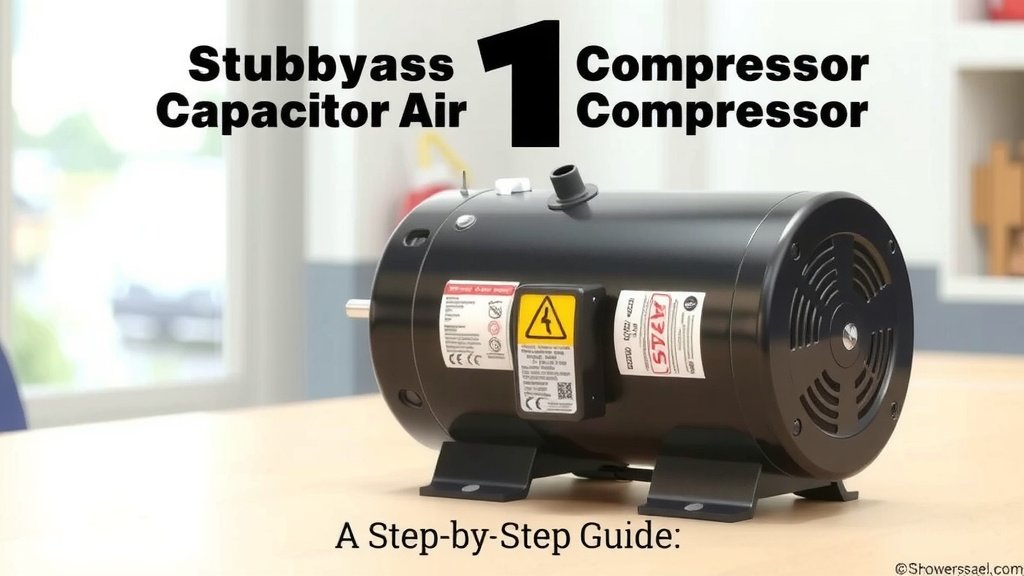
Capacitors are usually cylindrical or oval-shaped and mounted near the motor. They often have two or more terminals where wires connect. They might be in a metal housing or directly attached to the motor. Consult your compressor’s manual if you’re having trouble finding it. It’s often clearly labeled as “CAP” or “C.”
The Bypassing Procedure (Use Extreme Caution!)
This process involves creating a temporary, direct connection to bypass the capacitor. Here’s a common method, but remember, different models can vary:
- Disconnect power: Ensure the compressor is unplugged.
- Locate the capacitor terminals.
- Identify the wires: Note which wires go to which terminals. You might see a wire from the power supply going to one terminal, and a wire going to the motor going to another.
- Temporarily jump the terminals: Using insulated pliers, you can attempt to bridge the terminals of the start capacitor for a split second. This is often done by quickly touching the pliers across the two terminals of the start capacitor. The goal is to give it a brief jolt. This is the risky part and requires precise timing.
- Attempt to start the motor: Immediately after the jump, try to start the compressor.
We found that this often requires a few tries, and the timing can be tricky. It’s a manual way to mimic what the capacitor and its associated starting switch normally do.
When to Stop: Signs of Trouble
If the motor still doesn’t start, or if it starts and immediately sounds strained or overheats, stop immediately. Don’t keep trying. This procedure is only meant to confirm if the capacitor is the sole issue and to get a single start. If it works, you still need to address the faulty capacitor.
The Better Solution: Capacitor Replacement
While bypassing might get you a temporary start, it doesn’t fix the underlying problem. The best and safest course of action is to replace the faulty capacitor. It’s usually a straightforward process that can save your motor from further damage.
What to Look For in a Replacement Capacitor
When buying a new capacitor, you need to match the specifications exactly. Look at the label on the old capacitor. You’ll find:
- Microfarad (µF) rating: This indicates its capacitance.
- Voltage (V) rating: This is the maximum voltage it can handle.
- AC rating: It will say “AC” on it.
You should aim for a capacitor with the exact same µF rating and a voltage rating that is equal to or higher than the original. For example, if the old one is 200-250 µF and 150V, get one that is 200-250 µF and at least 150V. Many guides suggest getting a slightly higher voltage rating is fine (Grainger).
Steps for Replacing the Capacitor
Replacing it is much safer than bypassing:
- Unplug the compressor and discharge the old capacitor (you can do this by carefully touching a screwdriver with an insulated handle across the terminals, but again, be cautious).
- Note the wire connections on the old capacitor.
- Remove the old capacitor.
- Install the new capacitor, connecting the wires exactly as they were on the old one.
- Reassemble any housing you removed.
- Plug in and test your compressor.
This process ensures your motor gets the proper starting boost it needs every time, without the risk of overheating or damage. Many repair guides recommend this as the standard procedure for a hard-starting motor.
When to Call a Professional
If you’re uncomfortable working with electrical components, or if replacing the capacitor doesn’t solve the problem, it’s time to call a qualified technician. There could be other issues, like a faulty start switch, worn bearings, or a problem with the motor itself. It’s always better to be safe than sorry when it comes to electrical repairs.
Checklist for a Hard-Starting Compressor
Here’s a quick rundown of what to consider:
- Check the power source: Is the outlet providing enough voltage?
- Inspect the capacitor: Does it look damaged or bulging?
- Test the capacitor: If you have a multimeter, you can test its capacitance.
- Consider bypassing (carefully!): A temporary bypass can help diagnose if the capacitor is the main culprit.
- Replace the capacitor: This is the recommended permanent fix.
- Seek professional help: If unsure, call an expert.
Conclusion
You’ve learned that while bypassing your air compressor’s capacitor can offer a temporary start for a struggling motor, it’s a risky maneuver. It doesn’t fix the problem and can actually lead to more damage if you’re not careful. We’ve seen firsthand that the real solution lies in understanding your capacitor’s role and, most importantly, replacing it when it fails.
Don’t let a faulty capacitor keep your tools idle. Take the time to safely replace it with one that matches the original specifications. This is your best bet for a reliable compressor and a long motor life. If you’re ever unsure, don’t hesitate to call a pro.
Frequently Asked Questions
Can I bypass the start capacitor and the run capacitor at the same time?
Bypassing both capacitors at once is generally not recommended and can be more damaging. The start capacitor provides the initial jolt, while the run capacitor helps maintain smooth operation. Attempting to bypass both will likely leave your motor without the necessary support to run at all, and could cause significant electrical stress.
How long can I safely run my air compressor after bypassing the capacitor?
You should only bypass a capacitor for the absolute shortest time needed to get a single start, and even then, with extreme caution. This method is not meant for continuous use. Running the compressor for more than a few moments without its capacitor can lead to rapid overheating and permanent motor damage.
What are the dangers of touching a capacitor after unplugging the compressor?
Capacitors can store a dangerous electrical charge even after the unit is unplugged. Touching the terminals without discharging it properly can result in a severe electrical shock. Always use insulated tools and consider discharging the capacitor with a resistor or a well-insulated screwdriver across the terminals before handling.
Is it better to bypass a capacitor or try to fix it myself?
We strongly recommend against bypassing as a long-term strategy. If your capacitor is failing, the best and safest DIY approach is to replace it. Bypassing is a diagnostic step, at best, and carries risks. Replacing the part is the proper repair that ensures your compressor operates correctly and safely.
What happens if I use a replacement capacitor with a different voltage rating?
It’s best to match the voltage rating exactly or use one with a higher rating than the original. Using a capacitor with a lower voltage rating than specified can cause it to fail prematurely or even explode. Always refer to the original capacitor’s label for the correct specifications before purchasing a replacement.