How Truck Air Compressors Work: A Detailed Explanation
A truck air compressor works by using a piston and cylinder to squeeze air into a storage tank. This compressed air then powers various truck systems. It’s a vital component for your rig’s operation.
Think of it like your lungs, but for your truck. It takes in atmospheric air and compresses it to a high pressure. This pressurized air is stored and then used when needed for things like your brakes and suspension. We found this process is surprisingly simple yet incredibly effective.
TL;DR:
- Truck air compressors squeeze air using a piston.
- This compressed air stores in a tank.
- The air powers essential systems like brakes.
- It’s like your truck’s “breathing” system.
Ready to dive a bit deeper into how your truck’s air compressor keeps things rolling? Let’s break down the process step by step.
How Your Truck’s Air Compressor Works
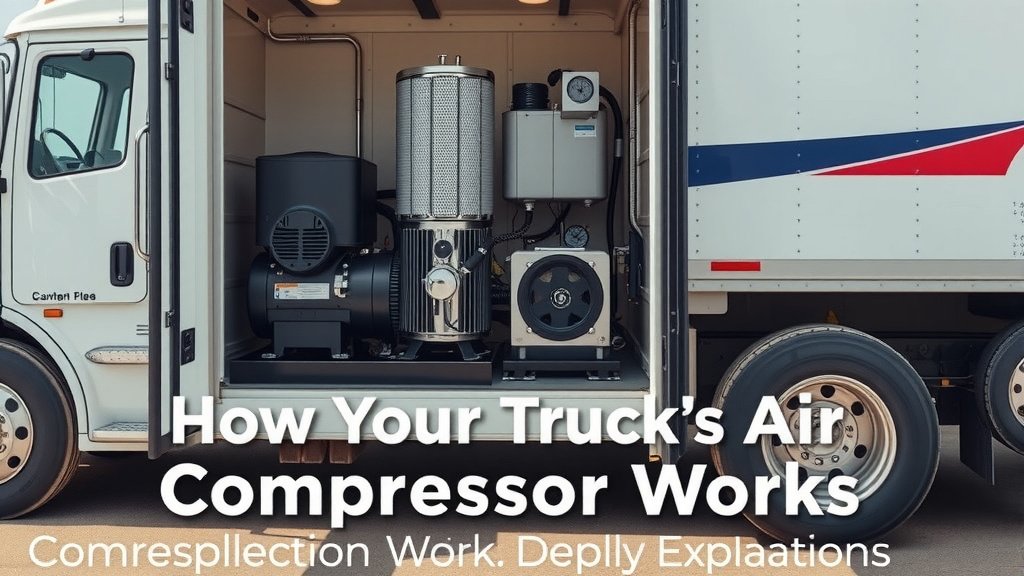
A truck air compressor is the heart of your air brake system. It’s responsible for creating the compressed air your truck needs. Without it, your brakes wouldn’t engage. Your suspension wouldn’t adjust. Many other systems would simply stop working. We found this component is surprisingly straightforward in its design.
The Basic Principle: Squeezing Air
At its core, a truck air compressor does one thing: it takes in atmospheric air and squeezes it. This squeezing process, called compression, dramatically increases the air pressure. This high-pressure air is then stored and ready for use. Think of it like pumping up a bike tire, but on a much larger scale.
Types of Truck Air Compressors
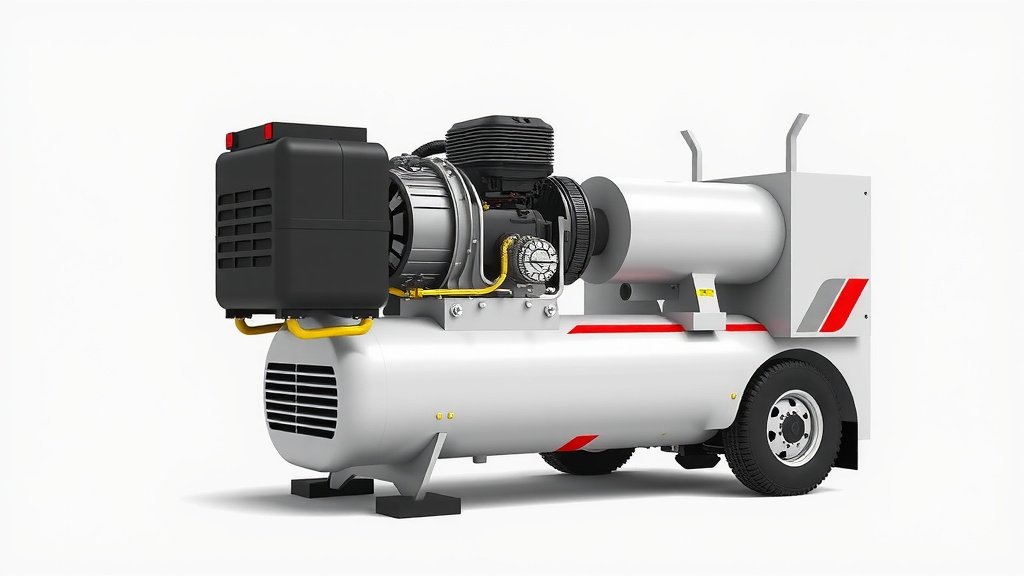
Most heavy-duty trucks use either a piston-type or a rotary screw compressor. Piston compressors are very common. They operate much like an engine’s cylinder. Rotary screw compressors are also used, especially in larger applications. Most heavy-duty trucks use either a piston-type or a rotary screw compressor, with a 1 cylinder vs 2 cylinder compressor being a key distinction.
Piston-Type Compressors
This is the most common type you’ll find. A piston moves up and down inside a cylinder. This motion draws air in and then compresses it. It’s a reliable and well-understood technology.
You might even see them referred to as “reciprocating” compressors. This just means they go back and forth. We found research indicating their design hasn’t changed drastically for decades. This speaks to their effectiveness.
Rotary Screw Compressors
These are less common in standard highway trucks but are found in some specialized vehicles. They use two intermeshing helical rotors. As the rotors turn, they trap air and push it towards the discharge port. This creates continuous compression.
While efficient, they are often more complex and costly. For most of your everyday trucking needs, a piston compressor gets the job done. Many fleet managers stick with what they know works best.
The Compression Cycle Explained
Let’s focus on the piston-type compressor, as it’s what most drivers will encounter. The process involves several key stages:
Intake Stroke
First, the piston moves downward within the cylinder. This creates a vacuum. An intake valve opens, allowing outside air to be drawn into the cylinder. It’s like the cylinder is taking a deep breath.
Compression Stroke
Next, the piston moves upward. The intake valve closes. This traps the air inside the cylinder. As the piston continues upward, it squeezes the air into a smaller volume. This is where the pressure builds.
Discharge Stroke
When the air reaches a certain high pressure, a discharge valve opens. The piston pushes the compressed air out of the cylinder. This air then travels towards the air storage tank. The cycle is now complete.
Lubrication and Cooling
Running a compressor generates a lot of heat. Lubrication is also critical to prevent wear and tear. Many compressors are engine-driven, meaning they use the truck’s engine oil for lubrication and cooling. Some have their own dedicated oil supply.
We found that the system needs to manage heat effectively. Overheating can lead to component failure. That’s why proper maintenance is so important. Think of it like keeping your own body at a stable temperature.
What Happens After Compression?
Once the air is compressed, it doesn’t just disappear. It has a vital journey through your truck’s systems. We found that understanding these next steps helps appreciate the compressor’s role.
The Air Storage Tank
The compressed air flows from the compressor into an air storage tank, also known as the air reservoir. This tank acts like a buffer. It holds a supply of pressurized air. This ensures you have air readily available whenever needed. Your truck might have multiple tanks.
The Governor’s Role
A crucial part of the system is the air compressor governor. This device monitors the air pressure in the tank. When the pressure reaches a set maximum, the governor tells the compressor to stop compressing air. This prevents over-pressurization. When the pressure drops too low, the governor signals the compressor to start working again.
We found this control mechanism is key to efficiency. It prevents the compressor from running constantly. It also ensures you always have enough air for your brakes. It’s a smart system working behind the scenes.
Why Compressed Air is Essential
Now, why does your truck need all this compressed air? It powers several critical systems:
- Air Brakes: This is the primary use. Pressurized air activates the brake chambers, forcing the brake pads against the rotors.
- Air Suspension: Many heavy trucks use air suspension. Compressed air helps maintain ride height and absorb shocks.
- Air Horns: That loud blast? It’s powered by compressed air.
- Clutch Actuation: Some clutch systems use air assistance.
- Other Accessories: Things like automatic tire inflation systems can also use compressed air.
We found that the sheer number of systems relying on compressed air highlights the compressor’s importance. It’s truly a vital component for safe and efficient operation. Without a functioning compressor, your truck is essentially grounded.
Checklist: Basic Air Compressor Maintenance
Keeping your air compressor in good shape is manageable. Here’s a quick rundown of what to keep an eye on:
- Check for air leaks regularly.
- Ensure the air dryer is functioning correctly.
- Drain water from the air tanks as recommended.
- Listen for unusual noises from the compressor.
- Follow the manufacturer’s recommended service intervals.
Conclusion
You’ve now seen how your truck’s air compressor works to power essential systems. It takes atmospheric air, compresses it using a piston, and stores it for use. This compressed air is your truck’s lifeline for brakes, suspension, and more. Understanding this process highlights why regular maintenance is so important.
To keep your rig running smoothly, make sure you’re performing the basic maintenance we outlined. Regularly check for leaks and drain your air tanks. This simple care will help prevent costly breakdowns and keep you on the road.
Frequently Asked Questions
What happens if my truck’s air compressor fails?
If your air compressor fails, you’ll likely lose the ability to build air pressure. This means your air brakes will stop functioning, making the truck unsafe to drive. Other air-powered systems, like your suspension, will also cease to work.
How often should I drain the air tanks?
You should drain water from your air tanks regularly, typically at least once a week or more if you operate in humid conditions. Water buildup can freeze in cold weather or cause corrosion and damage to the air system components.
Can a truck air compressor run constantly?
A healthy air compressor system should not run constantly. The governor is designed to cycle the compressor on and off based on air tank pressure. If it’s running non-stop, it usually indicates a leak somewhere in the system or a malfunctioning governor.
What’s the difference between a piston and a rotary screw compressor?
Piston compressors use a back-and-forth moving piston in a cylinder to compress air, similar to an engine. Rotary screw compressors use two intermeshing rotors to trap and compress air continuously. Piston types are more common in standard highway trucks.
Why is lubrication so important for the air compressor?
Lubrication is vital for the air compressor to prevent friction and wear between moving parts, like the piston and cylinder. Proper lubrication also helps dissipate heat generated during the compression process, preventing overheating and premature component failure.