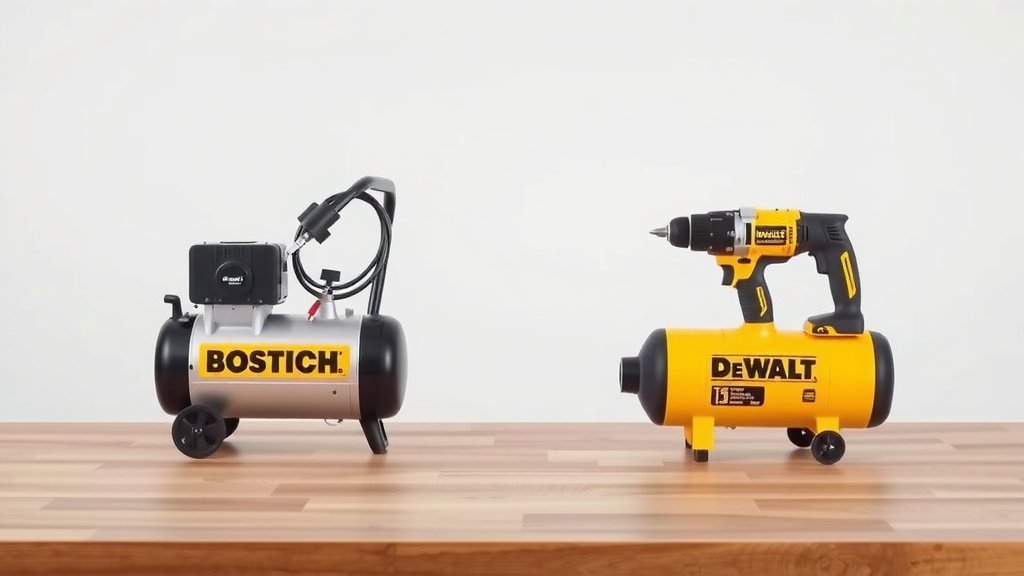
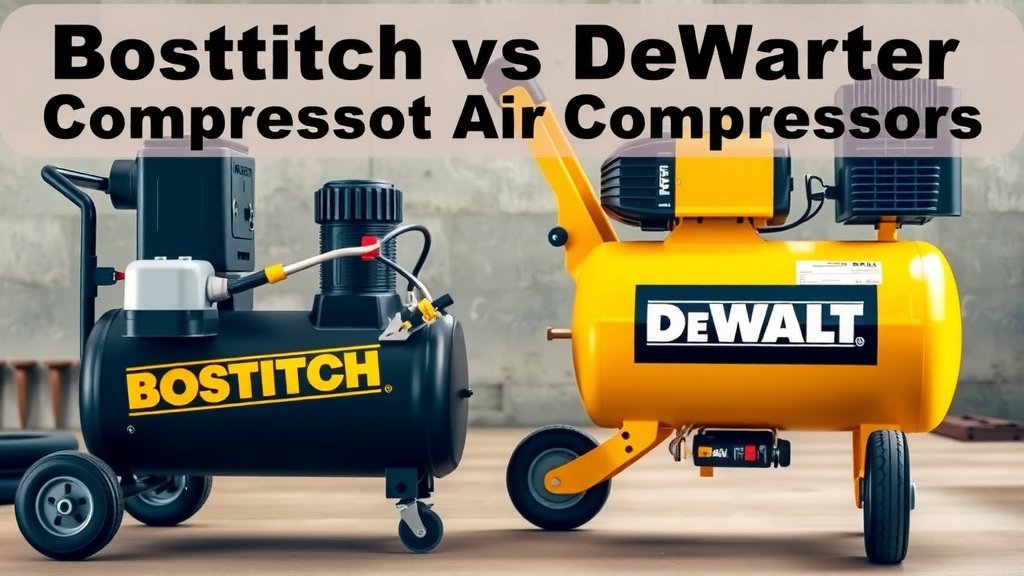
Bostitch vs DeWalt Air Compressor: Which is Best
When choosing between a Bostitch vs DeWalt air compressor, the best choice often depends on your specific project needs and budget. Bostitch generally offers robust performance for professional use, while DeWalt provides a solid balance of durability and affordability, making it a favorite for many DIYers and trade professionals alike.
Both brands are well-respected in the tool industry. We found that comparing them involves looking at factors like tank size, horsepower, and noise levels. Understanding these differences will help you make a smart investment for your workshop or job site. Think of it as finding the perfect engine for your power tool dreams! Our guide to gallon air compressors can help you match tank size to your needs.
- Bostitch: Often favored for heavy-duty professional applications, known for durability.
- DeWalt: Great for a mix of pro and DIY, offering good value and reliability.
- Key factors include tank size, CFM output, and noise.
- Consider your typical projects to pick the right compressor.
Let’s dive into the specifics of each brand to help you decide which air compressor will be your new best friend. We’ll break down what makes each one stand out so you can feel confident in your choice.
You’re probably wondering what the real differences are between a Bostitch and a DeWalt air compressor. Both brands have a solid reputation, but they often cater to slightly different needs. We’ve looked into what makes each one tick, and it boils down to a few key areas. This comparison should help you figure out which one aligns better with your work. Let’s get this sorted!
Comparing Bostitch and DeWalt Air Compressors
Deciding between these two popular brands involves looking beyond just the price tag. We found that both offer reliable performance, but their strengths lie in different places. Think of it like choosing between a trusty workhorse and a versatile all-rounder. Your specific tasks will guide you to the better fit.
Brand Philosophy and Target Audience
Bostitch often positions itself for the demanding professional. Their tools are built with heavy-duty use in mind, aiming for maximum durability on job sites. Many professionals trust them for consistent, powerful air delivery, day in and day out. This focus means you’re often paying for that rugged build quality and long-term reliability.
DeWalt, on the other hand, strikes a fantastic balance. They’re a go-to for many trade professionals, but they also appeal strongly to serious DIYers. You get a blend of durability, performance, and user-friendly features. DeWalt often delivers great value, offering tools that can handle tough jobs without breaking the bank. It’s a sweet spot for many users.
Key Performance Metrics to Consider
When you’re comparing air compressors, several specs matter most. These numbers tell you how well a compressor will perform with your tools. We’ll break down the main ones you’ll see.
Tank Size: How Much Air Storage Do You Need?
The tank size dictates how long your compressor can run a tool before it needs to cycle up and refill. Larger tanks mean longer run times and less frequent cycling. Forcing a compressor to cycle too often can lead to overheating and reduced lifespan.
Bostitch often features compressors with larger tanks, suitable for continuous operation. Think of tasks like painting large areas or running multiple nail guns simultaneously. These models are built to keep up with your pace without complaint.
DeWalt offers a range of tank sizes. You’ll find compact, portable options perfect for trim work or air ratchets. They also have larger stationary models for more demanding tasks. Their offering tends to be very versatile, fitting a wide spectrum of user needs and budgets.
CFM Output: The Power Behind Your Tools
CFM stands for Cubic Feet per Minute. This is the volume of air a compressor can deliver. It’s arguably the most critical spec. Your air tools have a CFM requirement, and your compressor needs to meet or exceed it. Insufficient CFM means tools won’t perform correctly. Your nailer might not sink nails flush, or your impact wrench might lack torque.
Bostitch is known for providing high CFM outputs, especially in their professional-grade units. This ensures they can power through the most air-hungry tools and applications. If you’re running sanders or grinders, this is where Bostitch shines.
DeWalt also offers robust CFM ratings across their lineup. They ensure that their compressors are capable of supporting common professional tools. Many of their models provide excellent CFM for their size and price point, making them a smart economic choice without sacrificing essential power.
Horsepower (HP) and Pump Type
Horsepower is often linked to CFM and how quickly the compressor can build pressure. More HP generally means a stronger, faster pump. However, CFM is a more direct measure of output.
When it comes to pump type, most compressors use either a single-stage or a two-stage pump. Single-stage pumps compress air once, suitable for home use and lighter tasks. Two-stage pumps compress air twice, building higher pressures more efficiently, ideal for continuous industrial use.
Many Bostitch compressors feature powerful motors and robust pump designs, often geared towards heavy-duty, continuous use. You’ll find models built to withstand the rigors of daily professional operation. This often translates to higher HP ratings that support sustained output.
DeWalt offers excellent horsepower in their units, balancing power with efficiency. They use well-regarded pump designs that provide dependable performance. You’ll find their compressors capable of handling demanding tasks, often with a focus on energy efficiency as well.
Noise Levels: Is Your Workspace Going to Be Loud?
Nobody enjoys working in a deafening environment. Air compressors can be notoriously noisy. Manufacturers are increasingly focusing on quieter operation, which is a big plus for workshops and job sites.
Bostitch has models that prioritize power and portability, which can sometimes mean they operate at higher decibel levels. However, they do offer some quieter options, especially in their larger stationary units designed for dedicated workshops. It’s worth checking the specific model’s noise rating.
DeWalt has made significant strides in noise reduction. Many of their popular models are advertised as “quiet” or “low noise” compressors. We found that DeWalt often aims for a quieter user experience without compromising on performance. This is a major advantage if your workspace is in a residential area or shared environment.
Portability vs. Stationary: Where Will It Live?
The intended location of your compressor is a huge factor. Do you need to move it around the job site or from home to a work location? Or will it be a permanent fixture in your garage or shop?
Bostitch excels in providing rugged, portable compressors. Many of their units are designed with sturdy wheels and handles, making them relatively easy to transport despite their robust construction. They are built to withstand being moved around, though some larger models can be quite heavy.
DeWalt also offers an excellent range of portable compressors, often prioritizing lightweight design and ease of maneuverability. Their smaller units are exceptionally portable, perfect for getting to various spots around a house or job site. For stationary needs, they also offer larger, more powerful options.
Durability and Build Quality
When you invest in an air compressor, you want it to last. Both brands are known for good quality, but their approaches can differ.
Bostitch has a long-standing reputation for industrial-grade durability. Their tools are often built with heavier gauge materials and components designed for extended, heavy use. Many users report that their Bostitch compressors are workhorses that stand up to harsh conditions year after year.
DeWalt also builds its compressors to be durable, with a focus on robust construction and reliable components. They use high-quality materials and undergo rigorous testing. While perhaps not always as “heavy-duty” as some of Bostitch’s top-tier professional lines, DeWalt compressors offer excellent longevity for most users, including professionals.
User Reviews and Reputation
We looked at what users are saying. Many DIYers and pros praise DeWalt for its great value and dependable performance. It’s a brand that consistently meets expectations for its price point. The accessibility and wide range of options make it a crowd favorite.
Bostitch garners respect for its unwavering power and resilience. Users who need top-tier performance for demanding applications often choose Bostitch. They are frequently cited as tools that can handle the toughest jobs without faltering. When you need that extra grunt, Bostitch is often the name that comes up.
A Quick Comparison Table
Here’s a simplified look at how they stack up:
| Feature | Bostitch | DeWalt |
|---|---|---|
| Best For | Heavy-duty professional, continuous use | Versatile pro and DIY, value |
| Tank Size Options | Often larger, suited for demanding jobs | Wide range, from compact to large |
| CFM Output | High, consistent power | Strong, good for many applications |
| Noise Level | Can be louder, but some quiet models exist | Often prioritizes quieter operation |
| Durability | Industrial-grade, very robust | Excellent, reliable for long-term use |
| Price Point | Generally mid to high | Mid-range, good value |
Making Your Final Choice: What Do You Need?
To wrap this up, think about your daily grind. Are you a contractor on a busy site needing a compressor that can run all day, every day? Then a Bostitch model might be your best bet, especially if power and sheer toughness are your top priorities. They are built to be pushed.
Or, are you a remodeler, a woodworker in your garage, or a DIY enthusiast who needs a reliable compressor that performs well across various tasks? A DeWalt compressor could be the perfect fit. You’ll likely find a great balance of power, noise reduction, and affordability. They truly hit a sweet spot for many users.
Here’s a quick checklist to guide your decision:
- What air tools will you use most often?
- Do you need portability or a stationary unit?
- How important is noise level in your workspace?
- What’s your budget for this investment?
- How much run time do your typical projects require?
- Do you prefer industrial-level toughness or a great all-around performer?
Conclusion
So, you’ve weighed the scales between Bostitch and DeWalt air compressors. Remember, Bostitch often leans towards the heavy-duty professional who needs industrial-grade toughness and continuous power. On the flip side, DeWalt offers that excellent blend of durability, performance, and value that many pros and serious DIYers seek. Your ideal compressor depends entirely on how you plan to use it and what features matter most to you. Take a moment to review your typical projects and budget, and you’ll find the perfect fit to power your work.
Frequently Asked Questions
Which brand is better for heavy-duty, daily use?
For consistent, demanding daily use, many users find Bostitch compressors to be exceptionally robust. They are often built with industrial-grade components designed to withstand heavy workloads over long periods. If your work requires maximum uptime and power, Bostitch is a strong contender.
Is DeWalt a good option for DIYers?
Absolutely. DeWalt offers a fantastic balance for DIY enthusiasts. You get reliable performance and durable construction at a more accessible price point. Their range includes user-friendly features that make them great for a variety of home workshop projects.
Which brand generally offers quieter operation?
DeWalt has put a strong emphasis on noise reduction in many of their compressor models. You’ll often find their units advertised as “quiet” or “low noise,” making them a better choice for residential areas or shared workshops. Bostitch does have some quieter stationary models, but portability often comes with more noise.
How do their tank sizes compare for different jobs?
Bostitch tends to offer larger tank sizes more frequently, which is ideal for continuous tool operation like prolonged spraying or running multiple nail guns. DeWalt provides a wider spectrum of tank sizes, from very compact units for trim work to larger ones for more involved tasks, offering more versatility.
Which brand provides better long-term durability for the money?
Both brands are known for good durability. Bostitch often excels in sheer industrial toughness for the most demanding environments. However, DeWalt typically offers excellent long-term reliability and build quality at a very competitive price point, providing great value for most users.