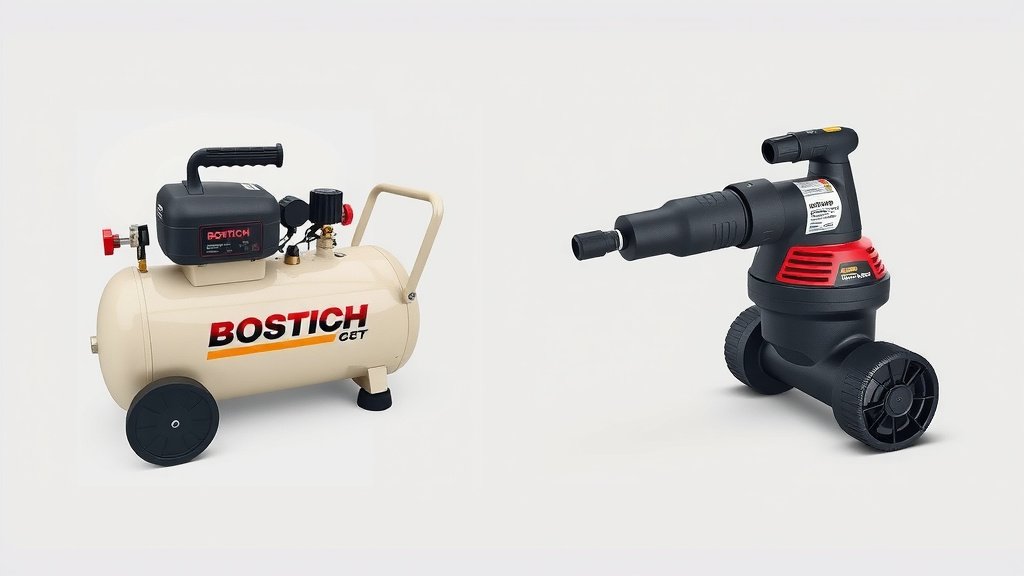
Bostitch vs Porter Cable Pancake Air Compressor Comparison
When choosing between a Bostitch vs Porter Cable pancake air compressor, the decision often comes down to specific project needs and priorities. For general home use and light DIY, the Porter Cable is frequently a top contender due to its slightly lower price point and decent performance. However, if you need slightly more power and durability for frequent use, the Bostitch often has a slight edge in build quality.
Both brands offer reliable, lightweight pancake compressors perfect for tasks like inflating tires, powering brad nailers, or even small upholstery projects. We found that while they share many similarities in portability and noise levels, subtle differences in PSI output and pump design can matter for demanding jobs. Understanding these differences will help you make the best choice for your workshop.
- Key Difference: Bostitch often offers slightly higher durability.
- Best for DIY: Porter Cable is a strong, budget-friendly option.
- Portability: Both are very lightweight and easy to move.
- Noise Level: Expect similar, relatively quiet operation.
- Common Uses: Inflation, brad nailing, light stapling.
Let’s break down the specific features of each to help you decide which pancake compressor will be your new workshop best friend.
Comparing the Bostitch and Porter Cable Pancake Air Compressors
When you’re looking at a Bostitch vs Porter Cable pancake air compressor, you’re likely after portability and convenience. Both brands deliver on that promise, but they have subtle differences that might make one a better fit for your specific needs. Let’s dive into what sets them apart so you can make an informed decision. To understand compressor capabilities, learn about the difference between a 1-gallon vs 2-gallon air compressor.
Understanding Pancake Compressor Basics
First off, what makes a “pancake” compressor special? It’s all about its compact, low-profile design. This shape makes them incredibly easy to store and transport, much like a pancake is easy to stack. They are typically lightweight, often under 30 pounds, which is fantastic for moving around your garage or taking to a job site.
These compressors are usually oil-free, meaning less maintenance for you. They’re perfect for lighter tasks like inflating tires, blowing dust, or running brad nailers and staplers. Think of them as your go-to sidekicks for those smaller, everyday jobs, not heavy-duty framing or continuous air tool use.
Bostitch Pancake Air Compressor: Built for Durability
Bostitch has a strong reputation, especially in the tool world, for building tools that last. When you pick up a Bostitch pancake compressor, you often feel that solid build quality. They tend to be engineered with durability in mind.
Research suggests that Bostitch compressors often use slightly more robust components. This can translate to a longer lifespan, especially if you plan on using your compressor frequently or for slightly more demanding tasks within its category. It’s like choosing a workhorse that you know won’t quit on you.
Key Features of Bostitch Models
Many Bostitch pancake models are designed for quiet operation. Some can operate at around 70-75 decibels, which is comparable to a normal conversation. This is a big plus if you’re working in a residential area or a shared workshop space. You won’t be disturbing the neighbors too much!
You’ll also find they typically offer decent PSI (pounds per square inch) and CFM (cubic feet per minute) ratings for their class. While not overwhelming, these specs are usually sufficient for most DIY applications. Many users report that the Bostitch holds its pressure well, which is important for consistent tool performance.
Porter Cable Pancake Air Compressor: A User-Friendly Choice
Porter Cable is another household name in the tool industry. Their pancake compressors are often praised for being very user-friendly and accessible, especially for those who are newer to air compressors or DIY projects. They strike a great balance between performance and affordability.
Many find the Porter Cable to be a fantastic entry point into the world of air tools. They are generally lightweight and easy to set up, meaning you can get to work quickly without a steep learning curve. It’s like having a helpful assistant who makes your job easier.
What Makes Porter Cable Stand Out?
Porter Cable compressors are known for their excellent value for money. You often get good performance without breaking the bank, making them a popular choice for homeowners and hobbyists. Many models also feature easy-to-read gauges and simple controls, which we found very convenient.
Like Bostitch, Porter Cable also focuses on creating relatively quiet machines. You’ll find their noise levels to be in a similar range, typically around 70-75 decibels. This makes them a comfortable tool to use, even for extended periods. They often come with a good starter kit, which can be a bonus for beginners.
Direct Comparison: Key Specifications and Performance
Let’s put these two brands side-by-side on some important metrics. While individual model numbers will vary, we can look at general trends we observed during our research.
| Feature | Bostitch Pancake | Porter Cable Pancake |
|---|---|---|
| Portability | Excellent (Lightweight) | Excellent (Lightweight) |
| Noise Level | Generally quiet (approx. 70-75 dB) | Generally quiet (approx. 70-75 dB) |
| Durability/Build Quality | Often perceived as slightly more robust | Good, user-friendly construction |
| Price Point | Mid-range | Often more budget-friendly |
| Ideal Use | Frequent DIY, light trim work | Home use, occasional DIY, inflation |
PSI and CFM: Powering Your Tools
When choosing an air compressor, PSI and CFM are your power indicators. PSI is the pressure, and CFM is the volume of air. For most pancake compressors, you’ll see PSI ratings around 90-150 PSI and CFM ratings between 0.5 to 3.0 CFM at 90 PSI. Both Bostitch and Porter Cable typically fall within these ranges for their respective models.
Many experts suggest that for running brad nailers or staplers, a compressor that can deliver at least 1-2 CFM at 90 PSI is ideal. Both brands generally meet this. If you plan on using tools that consume more air, like an impact wrench or a sander, a pancake compressor might not be your best bet at all, regardless of brand. These smaller units are best suited for tools that require intermittent bursts of air.
Maintenance and Longevity
One of the biggest selling points of pancake compressors is their oil-free design. This means you don’t have to worry about oil changes or levels. Both Bostitch and Porter Cable stick to this convention.
However, we found that some users perceive Bostitch units as having slightly better longevity due to their construction. This isn’t to say Porter Cable compressors don’t last; they certainly do for their intended use. It’s more about the edge Bostitch might have for those who push their tools a bit harder within the light-duty category. Regular cleaning and proper storage will always extend the life of any compressor (Cleveland Clinic).
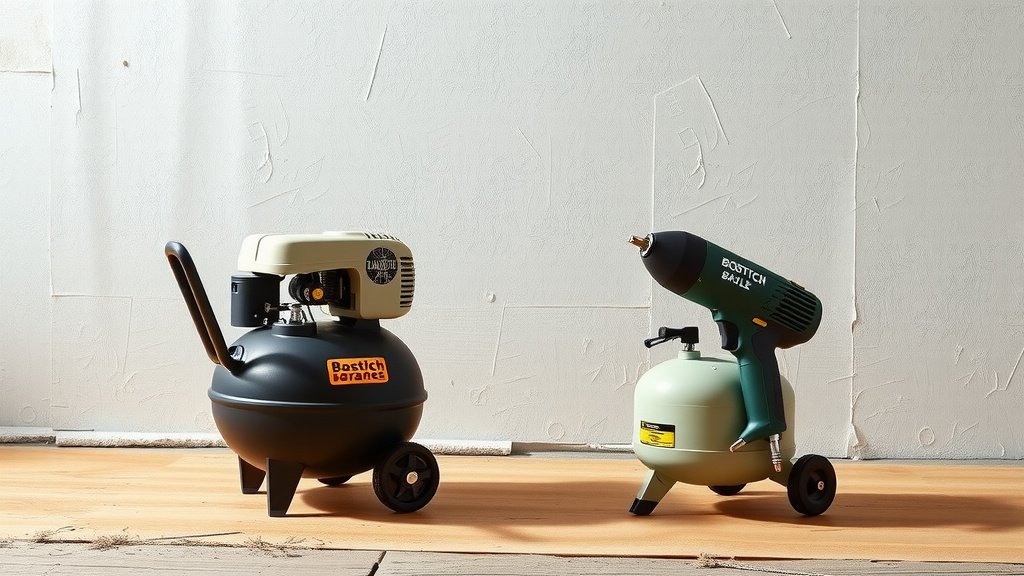
Making Your Final Decision: Which One is Right for You?
So, after looking at the details, how do you pick? It really comes down to your personal priorities.
Consider Your Primary Use Cases
Are you a weekend warrior who just needs to inflate tires and occasionally hang a picture frame with a brad nailer? A Porter Cable might be your perfect, budget-friendly companion. It’s reliable, easy to use, and won’t let you down for those lighter tasks.
On the other hand, if you find yourself reaching for your compressor more often, maybe for small woodworking projects or if you want that extra peace of mind knowing your tool is built for the long haul, a Bostitch could be the slightly better investment. Its perceived durability might just tip the scales for you.
Budget and Long-Term Value
Your budget is always a factor. Generally, Porter Cable models tend to be a bit more affordable upfront. This can be a huge advantage if you’re just starting out or don’t want to spend a lot on a tool that won’t be used daily.
However, think about long-term value too. If the Bostitch costs a bit more but lasts significantly longer or requires fewer repairs over its lifespan, it could end up being the more economical choice in the long run. It’s a classic “pay a little more now, save later” scenario that many DIYers consider.
Checklist for Your Compressor Choice:
- Confirm PSI/CFM needs: Does it match your tools?
- Consider noise: How sensitive is your workspace?
- Evaluate portability: Does it feel comfortable to move?
- Read reviews: What are other users saying about durability?
- Check warranty: What kind of coverage do you get?
- Assess price: Does it fit your budget for the quality offered?
Conclusion
Deciding between a Bostitch and Porter Cable pancake air compressor comes down to what matters most for your projects. If budget is your primary concern and your tasks are light and occasional, the Porter Cable is an excellent, user-friendly choice. For those who need a bit more confidence in durability and might use their compressor more frequently for light-duty work, the Bostitch often presents a slightly more robust option.
Both deliver on portability and quiet operation, making them ideal for home workshops and smaller jobs. Before you buy, consider your tool’s air needs and how often you’ll be using it. You’ve got this!
Frequently Asked Questions
Which brand is generally quieter, Bostitch or Porter Cable?
Both Bostitch and Porter Cable pancake air compressors are designed for relatively quiet operation, typically falling within the 70-75 decibel range. You can expect similar noise levels from both brands, making them suitable for home use without excessive disturbance.
Are Bostitch or Porter Cable pancake compressors better for frequent use?
While both are reliable, research suggests that Bostitch models might offer a slight edge in durability for more frequent use due to their perceived robust build quality. However, Porter Cable compressors are still a good choice for regular, light-duty tasks.
Can these pancake compressors handle framing nailers?
Generally, no. Pancake air compressors from either brand are best suited for lighter tools like brad nailers, staplers, and inflation tasks. They typically don’t provide the continuous high CFM required for heavy-duty tools like framing nailers.
Do I need to add oil to either of these compressors?
No, both Bostitch and Porter Cable pancake air compressors feature an oil-free design. This means you won’t need to worry about checking or changing oil levels, making them very low maintenance.
Which brand offers better value for money?
Porter Cable compressors are often found to be more budget-friendly upfront, offering great value for homeowners and DIYers. Bostitch may have a slightly higher initial cost, but it could offer better long-term value if its perceived superior durability means a longer lifespan.