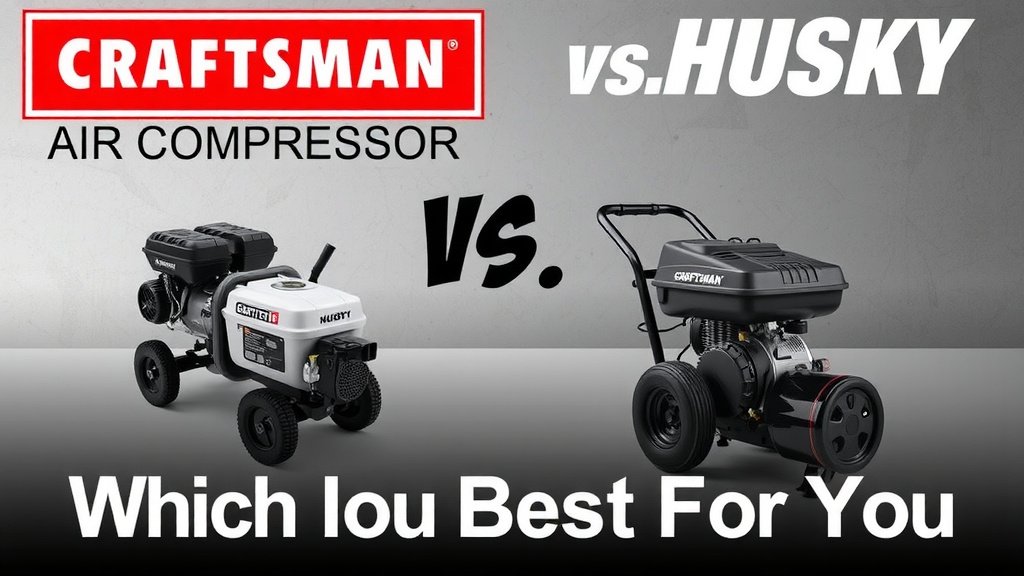
Craftsman vs Husky Air Compressor: Which Is Best For You
When deciding between a Craftsman vs Husky air compressor, think about your specific needs. For DIYers needing reliable, everyday power, Craftsman often provides a great balance of performance and price. Husky generally focuses on heavy-duty performance for more demanding jobs.
Both brands offer various models designed for different tasks, from simple inflation to powering air tools. We found that understanding the CFM (Cubic Feet per Minute) and PSI (Pounds per Square Inch) ratings is key for any comparison. Choosing the right compressor means matching its power to the tools you’ll use, ensuring Our guide to 1 gallon vs 2 gallon air compressors can help you match tank size to your needs.efficient and effective operation.
- Craftsman: Good for general DIY, home projects, and lighter tasks.
- Husky: Often suited for more demanding work, like continuous tool use.
- Check CFM and PSI: Match these to your air tools’ requirements.
- Consider portability: Some models are lighter and easier to move.
- Budget matters: Both offer options across various price points.
Let’s dive deeper into what makes each brand stand out, so you can make the best choice for your workshop or garage.
Choosing the right air compressor can feel like a big decision, especially when you’re weighing two popular brands like Craftsman and Husky. Both have earned a solid reputation, but they often cater to slightly different user needs and projects. We’ve researched these brands to help you see who might be the better fit for your garage or workshop.
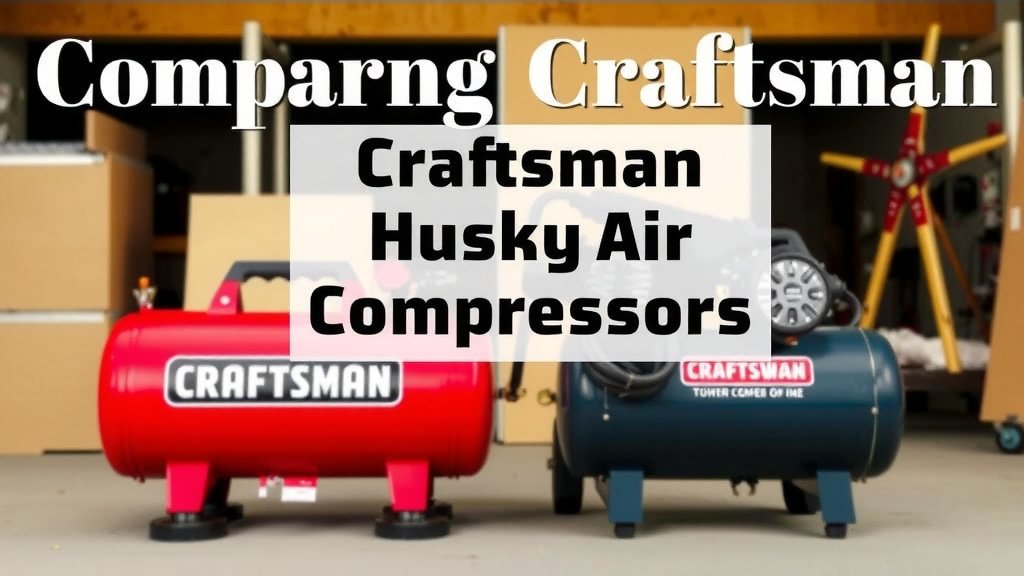
Comparing Craftsman and Husky Air Compressors
When you’re looking at Craftsman versus Husky air compressors, think about what you’ll be using it for most. Craftsman often aims for the DIY enthusiast who needs a dependable compressor for home use. Husky tends to lean towards those who might need a bit more power or durability for more demanding tasks.
Craftsman Air Compressors: Your Reliable DIY Partner
Craftsman has a long history of providing tools for homeowners. Their air compressors are typically designed with ease of use and general-purpose tasks in mind. If you’re just starting out with air tools or need something for simple jobs like inflating tires or powering a brad nailer, a Craftsman could be a great choice. Many users find them to be a good balance of price and performance.
Key Features of Craftsman Models
Craftsman often focuses on portability and user-friendly features. You’ll find many models that are relatively lightweight and easy to move around. They also tend to have simpler controls, making them less intimidating for beginners. We’ve seen that their tanks range from small, portable units perfect for on-the-go tasks to larger ones that can handle a bit more sustained use.
Who is Craftsman Best For?
If your toolbox consists of items like inflator nozzles, staplers, or small finishing nailers, Craftsman is likely to meet your needs. They are excellent for tasks around the house, in the garden, or for minor auto repairs. You get reliable power without overspending for capabilities you might not need.
Husky Air Compressors: Built for the Demanding Job
Husky, often found at home improvement stores, generally positions its air compressors for those who might push their tools a little harder. Think about continuous use of air-powered tools or tackling jobs that require a higher, consistent air supply. Husky models often boast features that appeal to users who need more grit and power.
Husky’s Focus on Durability and Power
Many Husky air compressors are built with durability in mind. They often feature more robust construction and higher CFM ratings compared to entry-level Craftsman models. This means they can keep up with tools that consume more air, like impact wrenches or spray paint guns, for longer periods. We found that many users appreciate their longevity and ability to handle tougher jobs.
Who is Husky Best For?
If you plan on using air tools for extended periods, or if your tools have higher air consumption requirements, Husky might be your go-to brand. They’re often a good fit for mechanics, serious DIYers who tackle larger projects, or anyone who needs their compressor to be a true workhorse.
Understanding Key Air Compressor Specs: CFM and PSI
No matter which brand you lean towards, understanding the technical specs is super important. The two main numbers you’ll see are CFM and PSI. Getting these right means your air tools will perform as they should. It’s like making sure your car has the right fuel for its engine.
What is CFM? (Cubic Feet per Minute)
CFM tells you how much air volume the compressor can deliver. Your air tools will have a CFM requirement listed on them, often at a specific PSI. You need a compressor that can meet or exceed this requirement. If your tool needs 5 CFM, and your compressor only delivers 3 CFM, your tool will struggle to work effectively. We found that matching CFM is key to tool performance.
What is PSI? (Pounds per Square Inch)
PSI is a measure of air pressure. Most air tools operate within a specific PSI range. Your compressor will have a maximum PSI rating, and you’ll typically set a regulator to deliver the correct pressure to your tool. For most DIY tasks, you won’t need the absolute highest PSI, but it’s good to know your compressor can reach it if needed. Many tools work well between 70-90 PSI (Craftsman, 2023).
Portability vs. Power: What’s Your Priority?
Think about where and how you’ll use your air compressor. Do you need to move it around the yard, or will it mostly stay in one spot in your garage? This is where portability and power often trade places.
Portable Compressors: Flexibility on the Go
Smaller, lighter compressors are fantastic for moving between jobs. Craftsman offers many excellent portable options. They might have smaller tanks or less powerful motors, but they are easy to carry and store. These are perfect for quick tasks like inflating car tires, cleaning out dusty corners with an air blower, or small upholstery projects.
Stationary Compressors: Uninterrupted Work
Larger, often wheeled, compressors are less about easy carrying and more about sustained output. Husky often features models in this category that can deliver more air for longer. They might be heavier and require more space, but they offer less downtime and more consistent power for continuous tool operation. If you’re building furniture or doing auto body work, this is where you’ll want to look.
Making Your Final Choice: A Quick Checklist
To help you decide between Craftsman and Husky, consider these points. We recommend jotting down your answers to make the comparison clearer for yourself.
- What specific air tools will you use?
- What are their CFM and PSI requirements?
- How often will you use the compressor?
- Do you need to move it frequently?
- What is your budget for this purchase?
- What kind of projects will you tackle?
Conclusion
So, you’ve learned that the choice between a Craftsman and Husky air compressor really boils down to your specific projects. For everyday DIY tasks and home use, Craftsman often delivers excellent value and ease of use. If your work demands more power for longer periods or tougher jobs, Husky typically offers the durability and performance you’ll need. Always remember to check the CFM and PSI ratings to ensure they match your air tools. Your next step? Grab a notepad, list your air tools and their needs, and then confidently pick the compressor that best fits your workshop’s requirements.
Frequently Asked Questions
Which brand is better for automotive work?
For general automotive tasks like airing up tires or using smaller impact wrenches, both can work. However, if you plan on continuous use of air tools like grinders or sanders, a Husky model with higher CFM might be a more robust choice.
Are Craftsman compressors good for painting?
A small Craftsman compressor might handle touch-ups or very light spray painting. For consistent air delivery needed for larger painting jobs, you’ll likely need a Husky model with a larger tank and higher CFM rating to avoid performance issues.
How do I know if I need more CFM?
Check the specifications plate on your air tool; it will list its CFM requirement at a certain PSI. If your compressor’s CFM rating is lower than your tool’s requirement, your tool will struggle to maintain power and efficiency.
Are Husky air compressors louder than Craftsman?
Noise levels can vary significantly by model within each brand. Generally, larger, more powerful compressors, which Husky often offers for demanding tasks, can be louder due to their bigger motors, but it’s best to check specific model reviews for decibel ratings.
Can I use a small portable compressor for a brad nailer?
Yes, most brad nailers have low CFM requirements, making them well-suited for smaller, portable Craftsman compressors. You should still verify the exact CFM needed for your nailer to ensure a good match.