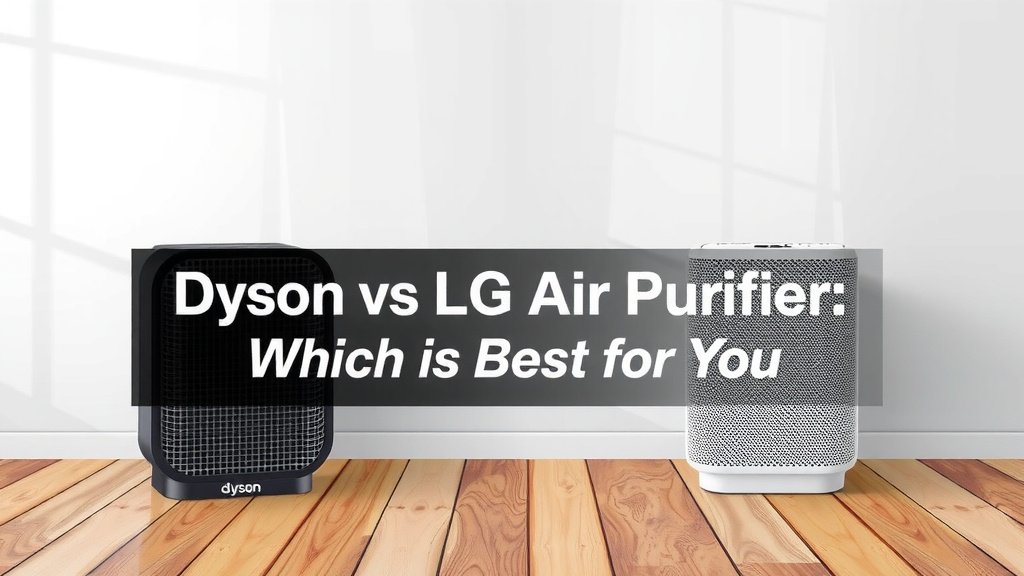
Dyson vs LG Air Purifier: Which is Best for You
Navigating the air purifier landscape in 2026, the Dyson versus LG showdown remains a top contender. Both brands consistently deliver cutting-edge tech and stylish aesthetics, but their approaches diverge. Dyson often champions hyper-efficient filtration and innovative airflow dynamics, while LG leans into seamless smart home integration and comprehensive multi-stage purification systems.
You want cleaner air, and that’s a smart goal. Air purifiers can make a big difference in your home’s air quality. We’ve looked at what makes each of these brands stand out for your family’s health and comfort.
- Dyson: Known for powerful filtration and unique fan design.
- LG: Highlights smart features and multi-stage cleaning.
- Both aim for cleaner, fresher air.
- Consider your specific needs and budget.
Let’s break down the key differences between Dyson and LG air purifiers so you can pick the perfect one for your space.
Comparing Dyson and LG Air Purifier Technology
When you’re looking at Dyson versus LG air purifiers, you’re comparing two leaders in home air purification. We found that both brands excel at removing pollutants. They just get there using slightly different paths. Dyson often highlights its unique airflow dynamics. LG tends to focus on a comprehensive multi-stage filtration system. Let’s see what that means for your home.
Filtration: The Heart of Clean Air
The primary job of any air purifier is to filter out the bad stuff. Both Dyson and LG use HEPA filters. These are designed to capture tiny particles. Think dust, pollen, and pet dander. Research shows HEPA filters are highly effective at trapping particles down to 0.3 microns.
Dyson’s Filtration Approach
Dyson purifiers are built with a strong emphasis on capturing microscopic particles. Their sealed filtration systems are a key feature. This means air is drawn through the filter, and what’s trapped there, stays trapped. We found this design helps prevent polluted air from leaking back into your room. Many Dyson models also include activated carbon filters. These are great for removing odors and gases.
LG’s Multi-Stage Purification
LG takes a slightly different route with their purification. They often employ a multi-stage process. This typically includes a pre-filter for larger particles like hair. Then comes the HEPA filter, followed by an activated carbon filter. Some LG units even add a special layer, like LG’s PuriCare 360˚ models. This can target specific airborne contaminants, such as viruses or bacteria. We found this layered approach aims for a thorough cleaning of the air.
Performance and Airflow
How well does the air purifier actually clean your room? This involves both filtration effectiveness and how quickly it can circulate the air. Dyson is famous for its fan technology.
Dyson’s Air Multiplier™ Technology
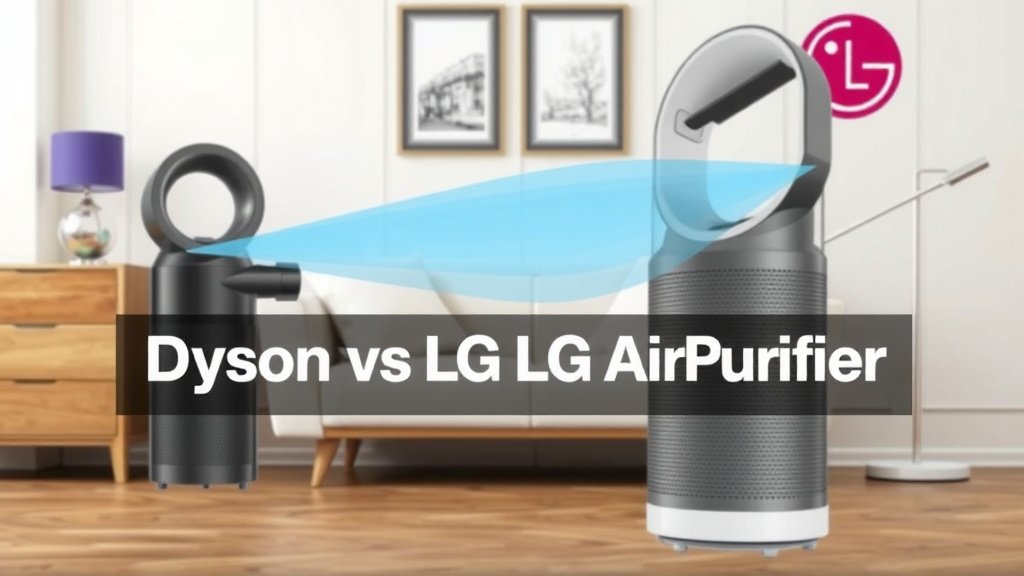
You might have seen Dyson fans before. They use what they call Air Multiplier™ technology. This system helps to project and circulate clean air throughout your space. We found it can create a powerful stream of purified air. This is designed to reach farther into your room. It’s like a gentle, consistent breeze of freshness.
LG’s Airflow Strategies
LG purifiers also focus on efficient air circulation. Models like the PuriCare line often feature 360-degree airflow. This means they draw air in from all sides. They then distribute clean air evenly across the room. We found this design aims to reduce dead spots. It helps ensure that purified air reaches every corner.
Smart Features and Connectivity
In today’s connected homes, smart features are a big deal. Both Dyson and LG offer models with advanced connectivity. This lets you control your purifier remotely. It also provides valuable air quality data.
Dyson’s Connected Experience
Dyson purifiers often connect via Wi-Fi. You can use the Dyson Link app to monitor air quality. The app shows real-time reports on pollutants like PM2.5 and VOCs. You can also control fan speed, set schedules, and receive filter life notifications. We found this app provides a user-friendly interface for managing your device.
LG’s Smart ThinQ™ Integration
LG’s purifiers typically integrate with their Smart ThinQ™ app. This allows for similar remote control functions. You can check air quality, adjust settings, and schedule operation. Some LG models also offer voice control compatibility. We found that LG’s smart features are designed for convenient, integrated home management.
Design and User Experience
Let’s be honest, how your air purifier looks matters. Both brands are known for their sleek and modern designs. They aim to blend into your home decor.
Dyson’s Aesthetic
Dyson purifiers often have a distinctive, futuristic look. They are typically tall and slender, with a bladeless fan design. This unique aesthetic is both functional and stylish. We found that many users appreciate the minimalist appearance. It doesn’t scream “appliance” but rather looks like a piece of modern decor.
LG’s Visual Appeal
LG purifiers also boast attractive designs. Many models feature a clean, minimalist aesthetic. Some have a more traditional tower shape. Others offer a unique look, like the PuriCare 360˚ spherical design. We found that LG focuses on creating units that are both efficient and visually pleasing.
Key Differences at a Glance
To help you make a decision, here’s a quick comparison.
| Feature | Dyson | LG |
|---|---|---|
| Filtration Type | Sealed HEPA + Activated Carbon | Multi-stage (Pre-filter, HEPA, Carbon, sometimes others) |
| Airflow Technology | Air Multiplier™ (focused projection) | 360˚ Airflow (even distribution) |
| Smart App | Dyson Link | Smart ThinQ™ |
| Design Emphasis | Futuristic, bladeless | Modern, varied shapes |
| Unique Features | Powerful, long-range airflow | Comprehensive purification layers, 360° models |
Making Your Choice: A Quick Checklist
Here’s a quick way to think about which might be right for you.
- Do you prioritize powerful, projected airflow? (Dyson might be for you.)
- Are you looking for a multi-layered purification approach? (LG could be a great fit.)
- Do you want to monitor and control your purifier remotely? (Both brands offer this.)
- Is a sleek, unique design important for your space? (Consider Dyson’s iconic look.)
- Are you interested in even air distribution throughout a room? (LG’s 360° options are worth looking at.)
- What is your budget? (Prices can vary significantly between models.)
Conclusion
Choosing between a Dyson and LG air purifier comes down to your priorities. Dyson often leads with its unique fan technology and powerful, projected airflow. LG excels with its multi-stage filtration systems and 360-degree air distribution. Both brands offer robust smart features for convenient control. Consider which aspect—focused airflow, layered purification, or design—best suits your home environment and needs. Once you’ve weighed these differences, you’ll be ready to make a confident purchase for cleaner air.
Frequently Asked Questions
Which brand is better for allergies?
Both Dyson and LG air purifiers are excellent for allergy sufferers. Dyson’s sealed filtration systems are designed to prevent leaks, ensuring all air passes through the HEPA filter. LG’s multi-stage approach also effectively captures allergens like pollen and dust. Your choice may depend on room size and desired airflow patterns.
Are Dyson or LG air purifiers quieter?
Noise levels can vary greatly by specific model. Generally, both brands aim for quiet operation, especially on lower fan speeds. Dyson’s bladeless technology can sometimes produce a different sound profile than LG’s more traditional fan designs. It’s best to check individual model specifications for decibel ratings.
How often do I need to replace filters?
Filter replacement schedules depend on usage and air quality. Typically, HEPA and carbon filters need replacing every 6-12 months. Both Dyson and LG purifier apps will notify you when it’s time for a change, making maintenance straightforward.
Can I use an LG purifier in a Dyson-only smart home ecosystem, or vice versa?
Yes, you can use air purifiers from different brands in your home. While Dyson and LG have their own apps (Dyson Link and Smart ThinQ™), they don’t directly integrate with each other. You’ll simply use the respective app for each device.
Which brand offers a better value for the money?
Price points vary significantly between models from both brands. Dyson units are often positioned at a premium price point, reflecting their unique technology and design. LG offers a wider range of models, potentially providing more budget-friendly options with strong performance. Assess the features you truly need against the cost for each brand.