Dyson vs Philips Air Purifier: Which is Best?
Navigating the Dyson vs. Philips air purifier showdown in 2026? It’s less about a single winner and more about finding your perfect match. Dyson continues to impress with its cutting-edge filtration and signature aesthetics, while Philips consistently delivers robust purification power and user-friendly operation, solidifying its reputation as a reliable go-to for countless households.
Both brands offer excellent air purification capabilities. We found that Dyson units frequently boast smart features and aesthetically pleasing designs. Philips units, on the other hand, often win for their user-friendly interfaces and proven air cleaning results. Deciding between them means weighing unique tech against dependable effectiveness.
- Dyson: Advanced tech, unique designs.
- Philips: Strong purification, user-friendly.
- Both offer excellent air cleaning.
- Consider your budget and desired features.
Let’s walk through exactly what makes each brand stand out, so you can make the best decision for your air quality needs.
Comparing Dyson and Philips Air Purifiers: What’s the Difference?
When you’re looking to breathe cleaner air, both Dyson and Philips offer impressive options. But what sets them apart? We found that Dyson often pushes the envelope with unique designs and smart technology. Philips, on the other hand, tends to focus on delivering proven purification power with user-friendly features.
Filtration Technology: How They Clean Your Air
Air purifiers are all about their filters. This is where the magic happens, trapping tiny particles that can affect your health. Let’s see how these two brands approach it.
Dyson’s Advanced Filtration Approach
Dyson purifiers often boast a HEPA filtration system. This means they capture about 99.97% of particles as small as 0.3 microns. Think dust, pollen, and even some bacteria. Many models also include an activated carbon layer. This layer is great for tackling odors and harmful gases like VOCs (volatile organic compounds). We found that Dyson’s commitment to capturing a wide range of pollutants is a key feature.
Philips’ Powerful Purification
Philips also heavily relies on HEPA filters, often using multiple layers. They frequently combine a pre-filter, an activated carbon filter, and a True HEPA filter. This multi-stage approach is designed to catch allergens, fine dust, and odors. Many experts agree that Philips’ systems are highly effective at removing common indoor air contaminants (Cleveland Clinic).
Comparing Filter Performance
While both use HEPA, the specifics can differ. We found that Dyson’s sealed filtration systems are a notable feature. This means air can’t bypass the filter, ensuring maximum capture. Philips also aims for high capture rates, with many units certified by organizations like the Asthma and Allergy Foundation of America.
Design and User Experience: What Do They Look Like and How Easy Are They to Use?
Beyond cleaning the air, how these purifiers look and feel in your home matters. User experience is also a big part of the decision.
Dyson: Innovative and Aesthetically Pleasing
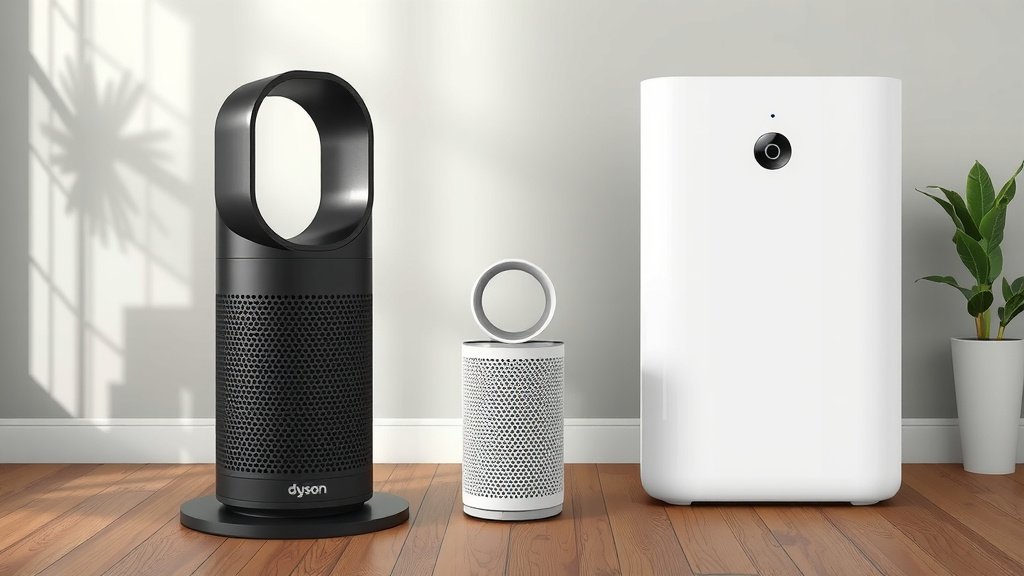
Dyson is known for its distinctive, futuristic designs. Their air purifiers often look more like modern sculptures than traditional appliances. Many models are bladeless and combine purification with fan functions. We found that the app control and smart features are often a highlight. You can monitor air quality and control settings remotely.
Philips: Practical and Intuitive
Philips purifiers typically sport a more classic and understated design. They are built to blend into your home without drawing too much attention. Ease of use is a strong suit here. Many models feature simple controls and clear displays. We observed that Philips often prioritizes an intuitive user interface, making it easy for anyone to operate.
Smart Features vs. Simplicity
If you love having the latest tech, Dyson’s app connectivity and real-time air quality monitoring might appeal to you. For those who prefer a straightforward operation, Philips offers a more no-fuss approach. Both brands ensure you know your air quality, just through different means.
Key Features and Technology Breakdown
Let’s dive into some of the specific technologies and features that make each brand stand out.
Dyson’s Integrated Technologies
Dyson often integrates multiple functions into one device. Many of their purifiers also act as bladeless fans, offering cooling during warmer months. They also heavily promote their Air Multiplier™ technology for widespread projection of purified air. The inclusion of sophisticated sensors that detect pollutants in real-time is another hallmark. We found that this all-in-one approach can be very appealing.
Philips’ Focus on Purification Effectiveness
Philips units are designed to excel at purification. They often feature advanced airflow control to ensure air circulates effectively throughout a room. Some models include specific modes, like a “Sensitive” mode for those with allergies, or a “Night mode” that dims lights and reduces noise. We saw that Philips often emphasizes performance metrics, like CADR (Clean Air Delivery Rate).
Coverage Areas and Room Size
Both brands offer units for different room sizes. It’s essential to match the purifier’s capacity to your space. Dyson often provides detailed coverage areas for their models. Philips also specifies room sizes, often highlighting their performance in larger areas.
When to Choose Which Brand: Making Your Decision
So, which one is right for you? It really comes down to what you value most in an air purifier.
Consider Dyson If…
You’re looking for a multi-functional device that purifies and cools. You appreciate smart home integration and app control. You want a unit with a modern, eye-catching design that can be a statement piece. And you don’t mind investing a bit more for advanced technology.
Consider Philips If…
Your primary goal is powerful air purification. You prefer a simple, intuitive user experience. You need a reliable performer that excels at capturing allergens and odors. And you’re looking for a solid, well-regarded unit that offers great value.
A Quick Checklist for Your Choice
To help you decide, consider these points:
- Budget: How much are you willing to spend?
- Features: Do you want smart controls or a simple appliance?
- Design: Does the look of the purifier matter in your space?
- Room Size: What size room do you need to purify?
- Noise Level: Is quiet operation a priority?
- Extra Functions: Do you need a fan or other features?
Dyson vs. Philips: A Quick Comparison Table
Here’s a snapshot to help you see the key differences at a glance:
| Feature | Dyson | Philips |
|---|---|---|
| Filtration | HEPA + Activated Carbon, Sealed System | Multi-layer (Pre-filter, Carbon, True HEPA) |
| Design | Modern, Futuristic, Often Bladeless | Classic, Understated, Practical |
| Smart Features | Strong App Control, Real-time Monitoring | Varies by model, some offer smart features |
| Extra Functions | Often includes Fan/Cooling | Primarily Purification Focused |
| User Experience | Tech-forward, App-driven | Intuitive, Easy-to-use controls |
Conclusion
Deciding between a Dyson and a Philips air purifier comes down to your personal needs. Dyson units often appeal to those seeking advanced smart features and a striking, modern design, sometimes bundled with fan functionality. Philips tends to focus on robust, user-friendly purification performance that effectively tackles allergens and odors. We found both brands offer reliable ways to improve your indoor air quality.
Consider your budget, your desire for tech integration, and the aesthetic you prefer. Whichever you choose, focus on matching the purifier’s coverage area to your room size. Taking these factors into account will help you make the best choice for a healthier home environment.
Frequently Asked Questions
Are Dyson air purifiers worth the higher price?
Dyson purifiers often come with a premium price tag. This is usually due to their advanced filtration, unique bladeless fan technology, and extensive smart features. If you value these integrated functions and a modern design, you may find them a worthwhile investment for your home.
How often do I need to replace filters for Dyson and Philips air purifiers?
Filter replacement frequency varies by model and usage. Generally, HEPA filters need replacement every 6-12 months. Carbon filters might need replacing more often if you have significant odor issues. Always check your specific model’s manual for exact recommendations.
Can Dyson and Philips air purifiers help with allergies and asthma?
Yes, both Dyson and Philips air purifiers are designed to help with allergies and asthma. Their HEPA filters are highly effective at capturing common allergens like dust, pollen, and pet dander. Many Philips models are even certified by organizations like the Asthma and Allergy Foundation of America.
Which brand is better for quiet operation?
While both brands offer quiet modes, Philips often receives praise for its user-friendly night modes that significantly reduce noise. Dyson units also offer quiet operation, but their fan function might introduce more sound than a dedicated purification-only Philips model.
Can I use an air purifier in a large open-plan living space?
Absolutely. Both Dyson and Philips offer models designed for larger rooms or open-plan areas. It’s important to check the CADR (Clean Air Delivery Rate) or recommended room size for each unit. You might consider using multiple smaller units if you have a very expansive space.
![5 Best Essential Oils for Purifying the Air [In 2026]](https://homeunderstandable.com/wp-content/uploads/2025/05/best-essential-oils-for-purifying-the-air-transform-your-space-naturally-768x432.jpg)
![What Is The Best Mattress for Asthma Sufferers [In 2026]](https://homeunderstandable.com/wp-content/uploads/2025/11/Best-Mattress-for-Asthma-Sufferers.jpg)