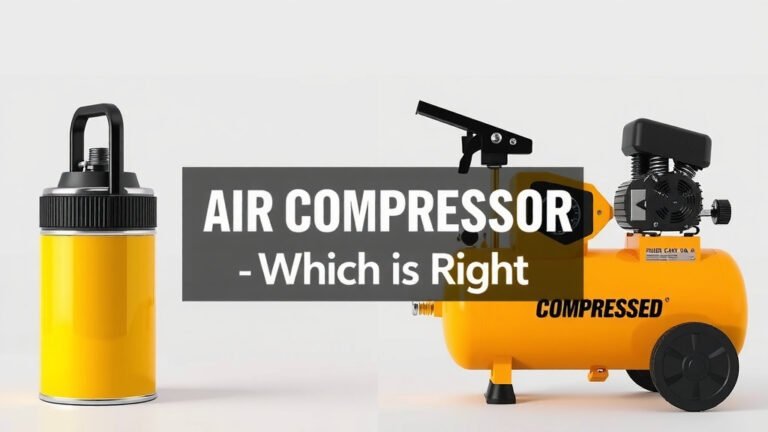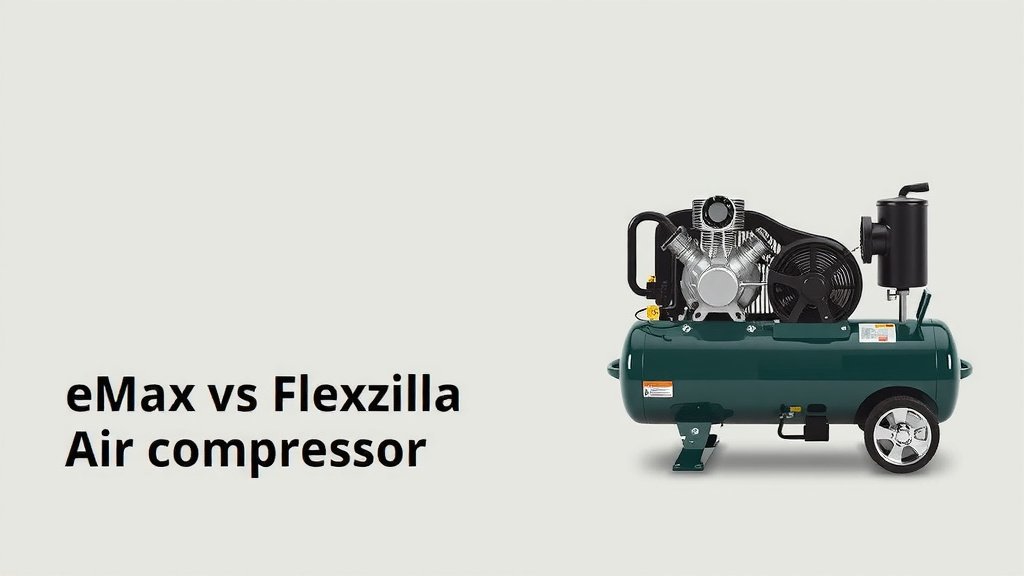
eMax vs Flexzilla Air Compressor: Which is Best for You
When comparing Emax vs. Flexzilla air compressors, the Flexzilla often emerges as the better choice for most DIYers and homeowners due to its superior hose technology and quieter operation. While both brands offer reliable compressors, Flexzilla’s focus on user experience and hose flexibility makes it a more practical pick for everyday tasks around the garage or house.
Choosing the right air compressor depends on your specific needs, whether it’s for inflating tires, powering air tools, or tackling bigger projects. We’ve researched what makes each of these popular brands stand out, looking at factors like noise levels, portability, and the overall performance you can expect from their various models.
- Flexzilla hoses are more flexible and durable.
- Emax compressors can sometimes offer higher CFM.
- Noise levels are a key difference.
- Consider your primary use case for the best fit.
Let’s dive into a head-to-head comparison to help you figure out which air compressor, Emax or Flexzilla, is the perfect match for your workshop.
Emax vs. Flexzilla: Which Air Compressor Reigns Supreme?
Deciding between an Emax and a Flexzilla air compressor can feel like a tough choice. Both brands have a solid reputation for delivering air when you need it. But when you dig a little deeper, you’ll find some key differences that might steer you toward one over the other. We’ve looked closely at what makes each compressor tick, focusing on what matters most to you: ease of use, durability, and performance for your projects.
Understanding Your Air Compressor Needs
Before we compare models, let’s think about why you need an air compressor. Are you just topping off car tires and inflating sports balls? Or do you plan to run air tools like nail guns, impact wrenches, or even sanders? Your primary use will heavily influence which compressor is the right fit. A compressor that’s perfect for a quick inflation task might struggle with continuous tool operation.
The Hose: A Surprisingly Big Deal
One of the most noticeable differences between Emax and Flexzilla often comes down to the hose. Flexzilla is famous for its hoses, and for good reason. They’re designed to be incredibly flexible, even in cold weather. This means no more wrestling with stiff, unwieldy hoses that kink up at the worst possible moment.
Flexzilla’s Flexible Advantage
Flexzilla hoses use a special polymer that keeps them pliable. This makes them much easier to manage around your workshop or job site. You’ll find they don’t leave annoying kinks that restrict airflow. This flexibility can save you a lot of frustration and time. Many users report that the hose alone is worth the price of admission.
Emax Hose Considerations
Emax compressors typically come with standard rubber or PVC hoses. While they function perfectly well, they lack that same level of flexibility. You might find yourself untangling them more often, and they can become quite stiff when the temperature drops. If hose management is a big concern for you, this is where Flexzilla often takes the lead.
Power and Performance: CFM and PSI Explained
When looking at air compressors, you’ll often see terms like CFM (Cubic Feet per Minute) and PSI (Pounds per Square Inch). These tell you how much air the compressor can deliver and at what pressure. You need enough CFM to power your air tools continuously without them sputtering. PSI tells you the maximum pressure it can output.
Emax: Pushing the Pressure?
In some comparisons, Emax models have been noted for offering slightly higher CFM ratings at similar PSI levels compared to some Flexzilla counterparts. This could be an advantage if you’re running tools that demand a lot of air volume consistently. For example, if you’re using high-demand tools like sanders or large paint sprayers, a higher CFM output from an Emax might keep your tools running smoothly without interruption. Always check the specifications for the specific model you’re considering.
Flexzilla: Meeting Everyday Demands
Flexzilla compressors generally provide ample CFM and PSI for most common DIY tasks. They are well-equipped for inflating tires, powering brad nailers, staplers, and even moderate use of impact wrenches. While they might not always boast the absolute highest CFM numbers, their output is more than sufficient for the average homeowner or hobbyist. You’re getting reliable performance that gets the job done.
Noise Levels: A Whisper vs. A Roar
Air compressors can be LOUD. This is often a major deciding factor, especially if you’re working in a residential area or a shared space. We found that noise levels are a significant point of differentiation between these two brands.
The Sound of Silence (or Close to It)
Flexzilla has made a strong effort to design quieter compressors. Many of their models are advertised as “quiet” or “low noise.” They often use features like enclosed motors or specialized pump designs to reduce the decibel output. For instance, some Flexzilla units are designed to operate at around 60-70 decibels, which is comparable to a normal conversation or a running dishwasher (National Institute on Deafness and Other Communication Disorders).
Emax: A More Robust Sound
Emax compressors can sometimes be louder. While they offer robust performance, you might find the operational noise to be more pronounced. This isn’t necessarily a bad thing if noise isn’t a primary concern for you, or if you always work outdoors. However, if you’re sensitive to noise or have neighbors close by, this is a crucial point to consider.
Portability and Design: Getting Around with Your Compressor
How easy is it to move your compressor from one spot to another? This matters whether you’re taking it to a job site or just moving it around your garage.
Weight and Wheels
Both brands offer a range of compressors, from small portable units to larger stationary ones. Generally, smaller pancake or hot dog style compressors from either brand will be relatively portable. They often feature sturdy handles and sometimes wheels. We found that the overall design for portability is comparable, but the flexibility of the hose can make setting up and packing up a Flexzilla system a bit quicker.
Tank Size and Build Quality
Tank size is measured in gallons and directly impacts how long you can run a tool before the compressor needs to refill. Emax and Flexzilla both offer various tank sizes. Build quality is generally good for both. Emax often emphasizes durable construction for heavy-duty use, while Flexzilla focuses on user-friendly features alongside solid engineering.
Making Your Final Choice: A Quick Checklist
To help you decide, ask yourself these questions. Answering them will point you toward the better compressor for your specific situation.
- What types of air tools will you be using most often?
- How important is a quiet operating noise level to you?
- Do you frequently work in cold weather where hose stiffness is an issue?
- Is portability a major factor in your decision?
- What is your budget and the maximum CFM you realistically need?
- Do you prefer a brand known for extreme durability or user-friendly features?
Quick Comparison Table
Here’s a simple breakdown to visualize the main differences:
| Feature | Emax | Flexzilla |
|---|---|---|
| Hose Flexibility | Standard, can be stiff in cold | Excellent, stays flexible in cold |
| Noise Level | Can be louder | Generally quieter, designed for less noise |
| CFM Output | May offer higher CFM in some models | Sufficient for most DIY tasks |
| User Experience | Focus on power and durability | Focus on ease of use and hose convenience |
| Typical Use Case | Demanding tasks, workshops | Home use, DIY, tire inflation, light-duty tools |
Ultimately, the “better” compressor depends on what matters most to you. If you’re looking for a user-friendly experience with a fantastic hose and quieter operation, Flexzilla is often the way to go. If your priority is maximizing CFM for demanding, continuous tool use and you don’t mind a bit more noise, Emax might be your pick.
Conclusion
As you can see, the choice between Emax and Flexzilla air compressors really comes down to your personal needs. We’ve found that Flexzilla often shines for DIYers and homeowners, thanks to its remarkably flexible hoses and quieter operation, making your projects more pleasant. If you need maximum airflow for demanding tools and don’t mind a bit more noise, Emax might offer that higher CFM. To make your final decision, think about what’s most important: ease of use and less noise, or raw power for heavy-duty tasks. We recommend revisiting your primary use case and considering which brand’s strengths best align with your workshop goals before you buy.
Frequently Asked Questions
Which brand is better for very cold weather use?
Flexzilla is generally the better choice for cold weather. Their hoses are specifically designed to remain flexible even in freezing temperatures, preventing the kinking and stiffness you might experience with standard rubber or PVC hoses that Emax often uses. This makes setup and use much easier when it’s chilly.
Can a Flexzilla compressor handle professional air tools?
While Flexzilla compressors are excellent for DIY and home use, their CFM output might be lower than some professional-grade Emax models. For continuous use of high-demand tools like sanders or grinders, you’ll want to carefully check the CFM specifications of the specific Flexzilla model against your tool’s requirements. For lighter tools like nail guns, it should be perfectly fine.
Is Emax always louder than Flexzilla?
While Emax compressors can sometimes be louder, it’s not a universal rule. Flexzilla has a strong focus on reducing noise, often advertising “quiet” models. However, the actual noise level can vary significantly between specific models within each brand. Always check the decibel rating if noise is a primary concern for you.
What does CFM really mean for my air tools?
CFM stands for Cubic Feet per Minute, and it tells you how much air volume a compressor can deliver. Your air tools have a CFM requirement to operate efficiently. If your compressor’s CFM output is lower than your tool’s demand, the tool will likely perform poorly, run intermittently, or not work at all. You need enough CFM to keep your tools running smoothly.
Which brand offers better portability?
Both brands offer portable options, especially in their smaller pancake or hot dog style compressors. Portability often comes down to the specific model’s weight, size, and whether it includes wheels and a sturdy handle. However, the superior flexibility of Flexzilla hoses can indirectly make the entire system feel more portable, as they’re easier to coil and maneuver.