
Halogen Air Fryer vs Air Fryer: What’s the Difference?
When you’re standing in the kitchen appliance aisle or scrolling through online stores, you’ve probably noticed something confusing. There are air fryers everywhere, but now there’s another player in the game: the halogen air fryer. Both promise crispy, delicious food with less oil, but are they actually the same thing? Or is one genuinely better than the other? Let me break this down for you in a way that actually makes sense.
Introduction to Air Frying Technology
Let me start with something that might surprise you. The air fryer revolution didn’t happen overnight, and it certainly didn’t come out of nowhere. People have been looking for ways to make fried food healthier for decades. When air fryers hit the mainstream market around 2010, they changed the game. But now, just when we thought we had it all figured out, halogen air fryers showed up and made us ask questions all over again.
Think of this like the smartphone market. When the first iPhone came out, it was revolutionary. Then Android phones appeared, and suddenly you had to choose between two different ecosystems. Air fryers and halogen air fryers aren’t quite that different, but they do operate on fundamentally different principles, and that matters more than you’d think.
Understanding Traditional Air Fryers
How Do Regular Air Fryers Work?
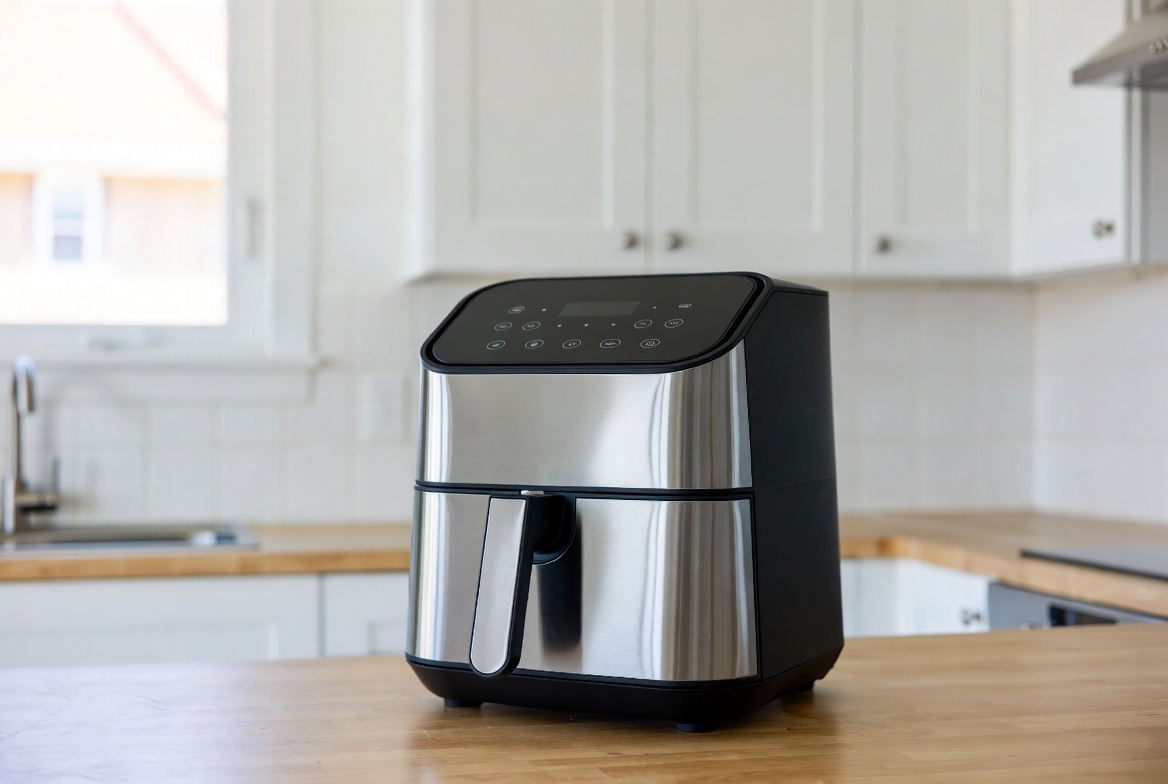
A traditional air fryer is essentially a compact convection oven. Inside, you’ll find a heating element that gets incredibly hot, and a powerful fan that circulates that hot air at high speeds around your food. This rapid circulation creates what we call the Maillard reaction, which is just a fancy way of saying your food gets brown, crispy, and delicious without swimming in oil.
The heating element in a typical air fryer uses either a coiled wire or a tube-style resistor. When electricity flows through it, it heats up to temperatures usually between 300 and 400 degrees Fahrenheit. That hot air gets pushed around by the fan, creating an environment that mimics deep frying but uses little to no oil.
Why Are They So Popular?
Air fryers took off because they deliver results that people actually want. You get crispy fries, crunchy chicken wings, and perfectly cooked frozen foods in a fraction of the time it takes to use a traditional oven. Plus, there’s the health angle. Using minimal oil appeals to anyone trying to watch their intake of fat and calories.
They’re also incredibly versatile. You can air fry vegetables, meat, fish, frozen foods, and even bake things in an air fryer if you’re creative enough. The learning curve is minimal, and cleanup is usually straightforward.
What Exactly Is a Halogen Air Fryer?
The Technology Behind Halogen Heating
Now, here’s where things get interesting. A halogen air fryer uses halogen bulbs as its heat source instead of traditional resistive heating elements. Halogen bulbs are those clear bulbs you’ve seen in high-intensity lamps. When electricity passes through the halogen gas inside the bulb, it produces intense heat and light.
This is actually not a brand-new technology. Halogen heaters have been around for years, and people have used them to warm rooms. But applying this technology to air frying is a relatively recent innovation. The halogen bulb sits at the top of the cooking chamber, and like traditional air fryers, there’s still a fan that circulates the hot air around your food.
One major thing that sets halogen air fryers apart is that the heat source is visible. You can literally watch your food cook through the glass top. It’s like having a front-row seat to the cooking magic happening inside.
Is It Really Different From a Regular Air Fryer?
This is the million-dollar question, and the answer is nuanced. Both devices use hot air circulation to cook food, so they share the same fundamental cooking method. However, the way they generate and distribute that heat is genuinely different, and those differences have real consequences for your cooking experience.
Heating Mechanisms: The Core Difference
Speed of Heat Generation
Halogen bulbs heat up incredibly fast. We’re talking seconds, not minutes. Traditional heating elements in conventional air fryers take a bit longer to reach their maximum temperature. If you’re someone who’s always in a rush, this might matter to you. You can preheat a halogen air fryer in about 30 seconds, whereas a regular air fryer might take 2-3 minutes.
Heat Distribution Patterns
Here’s something important: the way heat is distributed inside the cooking chamber differs between these two technologies. In a halogen air fryer, the heat comes from above, created by the glowing bulb. In a traditional air fryer, the heat element is usually positioned at the top and sides, with the fan doing the distribution work.
This means that halogen air fryers might cook food slightly differently. Some users report that halogen fryers tend to brown the tops of food more quickly, which can actually be a pro or con depending on what you’re cooking.
Temperature Consistency
Halogen bulbs can also maintain temperature more consistently throughout the cooking process. They respond more quickly to temperature adjustments, which means if you lower the temperature mid-cooking, the halogen fryer adjusts faster than a traditional air fryer would. This precision can be helpful when you’re cooking delicate items.
Cooking Speed and Efficiency
Let’s talk about something practical: how fast does your food actually cook? This is where the differences between these two technologies become noticeable.
Cooking Times Compared
Halogen air fryers generally cook food about 20-30% faster than traditional air fryers. If your conventional air fryer cooks chicken breast in 15 minutes, a halogen fryer might do it in 10-12 minutes. This speed advantage comes from the rapid heat generation and the intensity of halogen heating.
However, here’s the catch: faster isn’t always better. Going too fast means you might end up with unevenly cooked food. Some parts might be perfectly done while others are still raw. You need to watch your food more carefully and potentially adjust cooking times based on what you’re preparing.
Energy Efficiency
Despite cooking faster, halogen air fryers aren’t necessarily more energy-efficient. In fact, some studies suggest they use about the same amount of electricity as traditional air fryers, or sometimes slightly more. The speed advantage doesn’t translate to lower power bills because the halogen bulb burns hot and bright while it’s operating.
Temperature Control and Consistency
Precision Cooking
Both types of air fryers offer temperature control, but halogen fryers typically provide more responsive adjustments. If you’re cooking something that requires precise temperature management, like baking a cake or cooking fish, this responsiveness can be valuable.
Hot Spots and Cold Spots
Every cooking appliance has areas that cook hotter than others. In traditional air fryers, these hot spots are usually on the edges or near the heating element. Halogen air fryers have their own hot spots, typically right below the halogen bulb. This means rotating your food or shaking the basket becomes important in both cases.
The difference is that halogen air fryers can have more pronounced hot spots because the heat source is more concentrated. You might need to stir or flip your food more frequently when using a halogen fryer compared to a traditional one.
Food Quality and Texture Results
Crispiness Factor
Both devices create crispy food, but there are subtle differences in the results. Halogen air fryers tend to produce food with an exceptionally crispy exterior because of the intense, direct heat from above. If you’re a texture enthusiast who lives for that perfect crunch, you might prefer the halogen version.
Traditional air fryers produce crispy results too, but the crispiness might be slightly less intense. The heat distribution is more uniform, which means even cooking but potentially less of that ultra-crispy texture some people crave.
Interior Moisture Content
Here’s something interesting: because halogen air fryers cook faster, there’s less time for moisture to escape from the inside of your food. This means your chicken might stay juicier inside even though the outside is extra crispy. Traditional air fryers, with their longer cooking times, might dry out certain foods a bit more.
That said, this depends heavily on what you’re cooking and how much you fill the basket. Proper cooking technique matters more than the equipment itself.
Size, Capacity, and Kitchen Space
Physical Dimensions
Halogen air fryers tend to be taller because of the bulb housing at the top. They also typically have a more compact footprint because the transparent top design doesn’t require extra space for side venting. Traditional air fryers come in various shapes and sizes, but many have a wider base.
If you have limited counter space, a halogen air fryer might actually be a better fit because it takes up less room. However, you need to ensure you have enough vertical clearance because of the lid design.
Cooking Capacity
Both types come in different sizes, from small 2-liter models to large 9-liter ones. The capacity doesn’t really differ between halogen and traditional designs. What matters is what size you choose based on your family size and cooking needs.
Energy Consumption and Cost
Electricity Usage
Halogen air fryers typically use between 900-1500 watts of power. Traditional air fryers usually operate in the 800-1500 watt range. So they’re pretty comparable in terms of electricity consumption. Despite the halogen fryer cooking faster, the cost per use isn’t dramatically different.
Operating Expenses Over Time
One cost consideration that people often overlook is maintenance. If a halogen bulb burns out, you’ll need to replace it. That replacement bulb might cost anywhere from fifteen to forty dollars, depending on the brand. Traditional air fryers don’t have replaceable bulbs, so you won’t have this expense.
Over the lifetime of owning these appliances, the bulb replacement cost for halogen fryers can add up if the bulb fails frequently. However, most quality halogen bulbs last several years under normal use.
Ease of Use and Learning Curve
Controls and Interface
Both types of air fryers are incredibly user-friendly. Most come with simple digital controls where you set the temperature and time. Some have preset programs for common foods like fries or chicken wings. The learning curve is minimal for both.
The main difference is that halogen air fryers let you see your food cooking, which some people find helpful. You don’t have to guess whether your food is browning nicely. Traditional air fryers require you to open the drawer to check, which lets some heat escape and slightly extends cooking times.
Preheating Time
As mentioned earlier, halogen air fryers preheat much faster. If you’re cooking multiple batches of food, this can save you meaningful time throughout your cooking session. But if you’re only cooking once, the preheating difference is negligible in your overall kitchen workflow.
Cleaning and Maintenance Requirements
General Cleanliness
Both devices need regular cleaning to maintain optimal performance. You’ll need to wash the basket and any removable parts after each use. Both types are relatively easy to clean because the non-stick surfaces don’t require much scrubbing.
The Halogen Bulb Factor
Here’s where halogen air fryers introduce an extra consideration. The glass top can get greasy and might need regular cleaning to maintain visibility. You also need to be careful when cleaning because the halogen bulb is exposed. You shouldn’t touch it directly with your bare hands because oils from your skin can damage the bulb and potentially cause it to fail prematurely.
Traditional air fryers don’t have this concern. The heating element is hidden inside, so you don’t need to worry about accidentally damaging it during cleaning.
Maintenance Schedule
Halogen air fryers might require more frequent deep cleaning because of the glass top. Food splatters can be visible on the transparent lid, so you might be more motivated to clean it regularly. This isn’t necessarily a bad thing, but it is a difference in maintenance requirements.
Durability and Longevity
Expected Lifespan
Both halogen and traditional air fryers can last several years with proper care. Most quality models are built to withstand daily use for 5-10 years without major issues. The difference isn’t usually in how long they last, but rather what fails first.
Common Failure Points
In traditional air fryers, the most common failure is the heating element burning out or the fan motor failing. In halogen air fryers, the bulb is the most likely component to eventually fail. Both are replaceable in many models, but replacement costs differ.
The fan motor is similar in both designs and is equally prone to potential failure. The control board can also fail in either type, though this is relatively uncommon in quality brands.
Price Comparison
Initial Investment
Halogen air fryers typically cost slightly more than traditional air fryers. You can find a decent traditional air fryer for $80-150, while halogen versions usually start around $120-200. The price difference isn’t huge, but it’s noticeable.
Value for Money
Whether the extra cost is worth it depends on your priorities. If you value faster cooking times and the ability to watch your food cook, the halogen fryer might be worth the premium. If you just want reliable performance at a lower price point, a traditional air fryer makes more sense.
High-end models of either type can cost $200 or more, with features like multiple preset programs, larger capacities, and advanced controls.
Health Benefits of Each Option
Reduced Oil Consumption
Both halogen and traditional air fryers allow you to cook with minimal oil, which is the main health advantage of air frying in general. You can eat crispy, delicious food while using far less fat than deep frying would require. This reduction in oil consumption can help lower your calorie intake and fat consumption.
Nutrient Retention
The faster cooking time of halogen air fryers might
![5 Best Air Fryer for Big Family [In 2026]](https://homeunderstandable.com/wp-content/uploads/2026/03/5-Best-Air-Fryer-for-Big-Family.jpg)

![5 Best Air Fryer for 6 People [In 2026]](https://homeunderstandable.com/wp-content/uploads/2026/03/5-Best-Air-Fryer-for-6-People.jpg)
![What Is The Best Chicken Seasoning for Air Fryer [In 2026]](https://homeunderstandable.com/wp-content/uploads/2026/03/Best-Chicken-Seasoning-for-Air-Fryer-768x516.jpg)