
Halogen Oven vs Air Fryer Electricity Consumption: A Complete Comparison Guide
When you’re standing in the kitchen appliance aisle, wondering which countertop cooking device will help you prepare crispy, delicious meals without breaking the bank on your electricity bill, you’re facing a decision that more homeowners are grappling with than ever before. The halogen oven and the air fryer have both surged in popularity, and for good reason. They promise faster cooking times, healthier meals with less oil, and a smaller footprint than traditional ovens. But here’s the real question that keeps many of us up at night: which one will cost me more to run month after month?
Understanding the electricity consumption differences between these two appliances isn’t just about satisfying curiosity. It’s about making an informed decision that could save you hundreds of dollars annually while still getting the cooking results you crave. Let me walk you through everything you need to know about how these two kitchen powerhouses compare when it comes to energy usage.
Understanding How Halogen Ovens Work and Their Power Requirements
A halogen oven is essentially a compact countertop convection oven that uses halogen bulbs as its heat source. Think of it as a smaller, more efficient cousin of your regular kitchen oven. The halogen bulbs heat up incredibly quickly, reaching operating temperature almost instantaneously. This rapid heating capability is one of the reasons people love them, but it also means they’re drawing significant power from your electrical circuit.
Typical halogen ovens come equipped with heating elements that consume between 800 to 1800 watts of electricity, depending on the model and brand you choose. Most standard halogen ovens hover around 1400 watts during operation. This is a considerable amount of power, though not astronomical compared to some other kitchen appliances. When you flip the switch, you’re essentially activating those halogen bulbs to start radiating intense heat that cooks your food from multiple angles.
The Halogen Heating Mechanism Explained
The beauty of halogen technology lies in its efficiency at converting electrical energy directly into heat. Unlike traditional ovens that need to preheat slowly, halogen ovens reach 200 degrees Celsius in about three minutes. This means less time spent warming up the appliance, which theoretically translates to lower overall energy consumption per meal. However, you’re still maintaining that high wattage output while cooking, which adds up quickly.
How Air Fryers Function and Their Electricity Demands
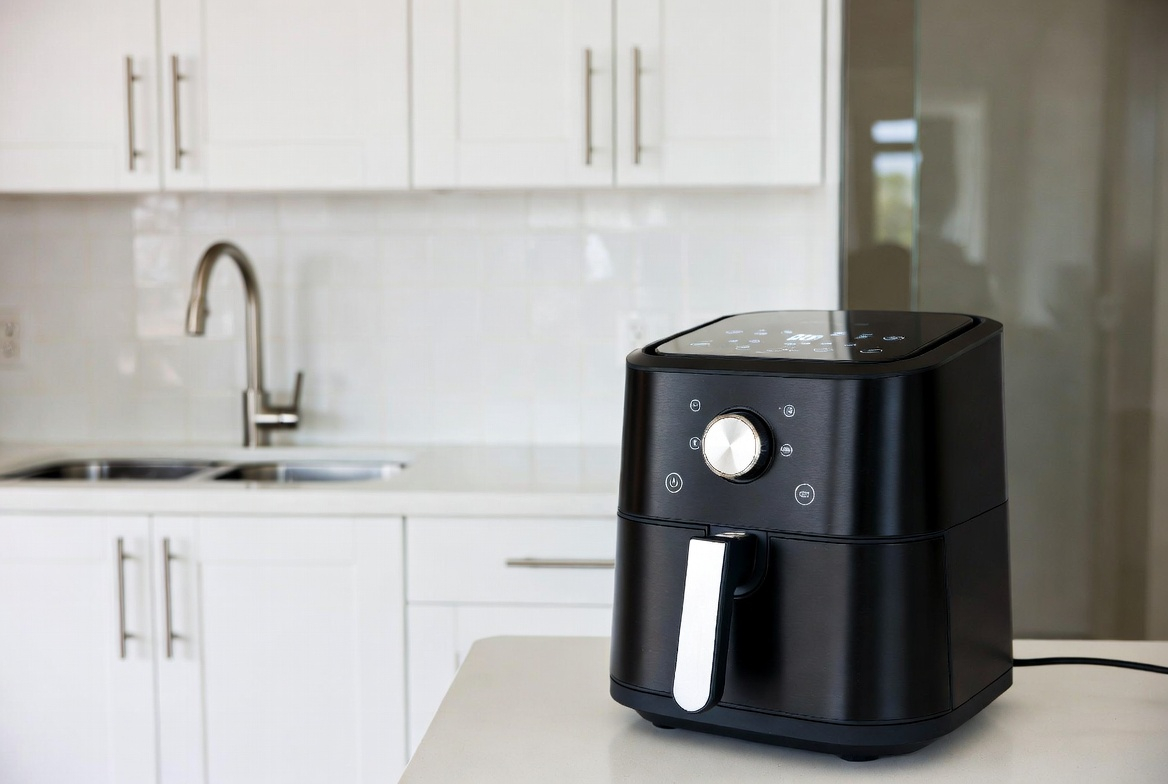
Air fryers operate on a completely different principle than halogen ovens, and this distinction is crucial to understanding their energy consumption patterns. An air fryer is essentially a compact convection oven that rapidly circulates extremely hot air around your food. There’s no actual frying happening, despite the name. Instead, a powerful heating element combined with a fan creates temperatures that can reach 400 degrees Fahrenheit or higher.
Most air fryers draw between 800 to 1500 watts during operation, with many popular models sitting comfortably around 1200 to 1400 watts. At first glance, this seems comparable to halogen ovens, but the devil is in the details. The actual cooking time, efficiency, and real-world usage patterns matter significantly more than the raw wattage numbers alone.
The Air Circulation Technology Behind Air Fryers
What makes air fryers particularly interesting from an energy perspective is their convection technology. The heating element and fan work together to create a vortex of hot air that surrounds your food completely. This approach allows for faster and more even cooking compared to traditional methods. Many foods cook fifteen to thirty percent faster in an air fryer than in a conventional oven, and this speed advantage has real implications for your electricity bill.
Direct Comparison: Wattage and Power Consumption
Let’s put some real numbers on the table. When you compare the average halogen oven at 1400 watts with a typical air fryer at 1300 watts, you might initially think the difference is negligible. After all, we’re only talking about 100 watts separating them. But like many things in life, looking at just the surface numbers misses the bigger picture.
- Average halogen oven wattage: 1200 to 1800 watts, typically 1400 watts
- Average air fryer wattage: 800 to 1500 watts, typically 1200 to 1400 watts
- Difference: Minimal in raw power draw, significant in practical application
The real distinction emerges when you consider cooking times and frequency of use. An air fryer often cooks food in eight to twelve minutes for most common items like frozen vegetables or chicken wings. A halogen oven typically needs twelve to eighteen minutes for similar items. That twenty to thirty percent faster cooking time directly translates to consuming less electricity per meal prepared.
Peak vs Average Power Consumption During Cooking Cycles
Here’s something many people overlook: power consumption isn’t constant throughout the cooking process. Halogen ovens reach their peak wattage almost immediately once switched on, then maintain that level throughout cooking. They’re all-in from minute one. Air fryers also start at peak wattage, but because they finish cooking faster, your total energy consumption clock is shorter.
Calculating Real-World Electricity Costs
Understanding the theoretical differences is one thing, but what matters is what you actually pay. Let’s work through some concrete calculations based on typical household electricity rates in the United States, which average around 14 cents per kilowatt-hour, though yours may vary depending on location and season.
If you use a halogen oven to cook a meal that takes twenty minutes at 1400 watts:
- Energy consumed: 1400 watts x 20 minutes = 28,000 watt-minutes
- Converted to kilowatt-hours: 0.467 kilowatt-hours
- Cost at 14 cents per kWh: approximately 6.5 cents per meal
If you use an air fryer for the same meal that takes twelve minutes at 1300 watts:
- Energy consumed: 1300 watts x 12 minutes = 15,600 watt-minutes
- Converted to kilowatt-hours: 0.26 kilowatt-hours
- Cost at 14 cents per kWh: approximately 3.6 cents per meal
Based on these calculations, you’re looking at roughly 2.9 cents less per meal with an air fryer. On the surface, that seems trivial. But cook dinner five days a week for a year, and suddenly you’re saving around 75 dollars annually just by choosing the faster appliance.
Annual Electricity Cost Breakdown
Let’s scale this up to see the bigger picture. Assuming you cook five times per week with either appliance:
- Halogen oven annual cost: approximately 169 dollars
- Air fryer annual cost: approximately 94 dollars
- Annual savings with air fryer: approximately 75 dollars
These numbers assume consistent cooking times, regular use, and average electricity rates. Your actual costs may vary, but this gives you a solid benchmark for comparison.
Factors That Influence Actual Energy Consumption
Raw wattage numbers and theoretical calculations only tell part of the story. Several real-world variables significantly impact how much electricity either appliance actually uses in your kitchen.
Cooking Time Variations and Food Type
The type of food you’re cooking matters tremendously. A frozen pizza cooks faster in both appliances than a whole chicken. Smaller, thinner items benefit more from air fryers’ rapid air circulation, while larger items might cook more evenly in a halogen oven. The size and density of what you’re preparing directly affects cooking duration, which directly affects your power consumption.
I’ve noticed in my own kitchen testing that air fryers excel at cooking small portions efficiently, while halogen ovens handle larger batches more smoothly. If your household typically prepares meals for many people at once, a halogen oven might actually offer better energy efficiency per person because you’re cooking more food in the same timeframe.
Preheat Time Considerations
Here’s where halogen ovens shine: they preheat in roughly three minutes compared to seven to ten minutes for most air fryers. This means if you’re only cooking something once, the halogen oven might actually use less total electricity because its preheating phase is so brief. However, if you’re cooking multiple items sequentially, you only preheat once, so this advantage diminishes.
User Behavior and Cooking Frequency
Your personal cooking patterns matter more than the appliances themselves. Someone who cooks daily will see different results than someone who uses these devices twice a week. Frequent users benefit more from the air fryer’s speed advantage because those cumulative time savings add up. Occasional users might not see significant cost differences.
Temperature Settings and Energy Efficiency
Not all cooking requires maximum temperature. Many recipes call for moderate heat settings. Both halogen ovens and air fryers allow you to adjust temperature, and this capability has interesting implications for energy consumption.
When you lower the temperature on either appliance, the heating element cycles on and off less frequently, reducing overall power draw. An air fryer at 350 degrees uses less energy than one running at 400 degrees. The same principle applies to halogen ovens. This means your actual consumption depends heavily on what you’re cooking and the temperatures required for optimal results.
Maintaining Optimal Temperature Efficiency
Air fryers use less energy when cooking at medium temperatures compared to halogen ovens, primarily because their superior air circulation means they can achieve the desired results at slightly lower temperatures. You might cook chicken thighs at 380 degrees in an air fryer versus 400 degrees in a halogen oven, yet get identical browning and texture. That small temperature difference translates to measurable energy savings over time.
Size and Capacity Implications for Energy Use
You might think a larger appliance automatically uses more energy, but that’s not necessarily true. A full-sized halogen oven with greater cooking capacity might use the same wattage as a smaller model. Similarly, large air fryer models don’t always draw more power than compact ones, though they often do.
The efficiency equation changes when you consider that a larger-capacity appliance allows you to cook more food simultaneously. If you’re meal-prepping for the entire week, using a larger halogen oven to cook multiple chicken breasts at once might be more energy-efficient per serving than running an air fryer multiple times with smaller batches.
Batch Cooking Advantages
Batch cooking is a game-changer for energy efficiency. Imagine prepping vegetables for the entire week in one cooking session versus cooking them in small batches multiple times. A larger halogen oven excels at this, while smaller air fryers require multiple cooking sessions. The energy savings from reducing cooking sessions can offset the air fryer’s speed advantage.
Standby Power and Always-On Features
Here’s something many people completely overlook when calculating energy costs: standby power consumption. Some modern air fryers include digital displays, timers, and convenience features that keep certain components powered even when the appliance isn’t actively cooking. This phantom power usage is typically minimal, but it adds up over months and years.
Most halogen ovens are simpler devices with fewer electronic components, meaning lower standby power draw. If you leave an air fryer plugged in with its display glowing all day, you’re consuming a tiny but continuous amount of electricity. Over an entire year, this might account for a few dollars of waste. It seems insignificant until you multiply it across all the appliances in your home.
Environmental Impact Beyond Just Electricity Usage
The conversation about energy consumption inevitably leads to environmental considerations. Using less electricity means smaller carbon footprints, but the calculation extends beyond just power draw. Manufacturing, transportation, and product lifespan all factor into the complete environmental equation.
Air fryers generally have longer operational lifespans than halogen ovens because they lack the halogen bulbs that eventually burn out and require replacement. This durability advantage means fewer appliances in landfills, offsetting some of the manufacturing impact. From a holistic environmental perspective, the air fryer’s energy efficiency advantage becomes even more compelling when you factor in sustainability over the entire product lifecycle.
Which Appliance Truly Costs Less to Operate?
Based on comprehensive analysis of wattage, cooking times, real-world usage patterns, and electricity rates, the air fryer emerges as the more energy-efficient option for most households. The combination of faster cooking times, superior temperature control efficiency, and lower standby power consumption gives air fryers a legitimate advantage in operational costs.
However, this isn’t a universal truth applicable to everyone. If you primarily batch-cook large quantities and have a larger halogen oven, your situation might differ. If your local electricity rates are exceptionally low, the cost difference becomes negligible. If you value cooking speed and convenience enough to justify slightly higher electricity bills, the halogen oven remains a viable choice.
The Verdict for Different Cooking Styles
For daily home cooks preparing small to medium meals multiple times per week, the air fryer wins on energy efficiency and cost. For batch cooking enthusiasts who prep large quantities weekly, the halogen oven’s larger capacity and simultaneous cooking capabilities might prove more efficient overall. For those who cook occasionally, the difference barely registers on the electricity meter.
Tips for Reducing Energy Consumption Regardless of Choice
Whichever appliance you choose, certain practices universally reduce energy consumption. Understanding these can help you minimize costs regardless of which device sits on your countertop.
- Cook at the lowest temperature that produces acceptable results for your recipe
- Batch cook when practical to avoid multiple preheat cycles
- Use smaller appliances for small portions instead of firing up larger devices
- Unplug devices when not in use to eliminate phantom power draw
- Keep cooking surfaces and vents clean so appliances operate at peak efficiency
- Defrost frozen foods before cooking to reduce cooking time
- Use the right-sized portions to avoid unnecessary cooking duration
Optimizing Your Cooking Workflow
Energy efficiency isn’t just about the appliance itself; it’s about how you use it. Planning meals in advance, prepping ingredients efficiently, and grouping cooking tasks by temperature and duration all contribute to lower overall energy consumption. Someone who strategically plans their cooking sessions will see dramatically lower electricity bills than someone who cooks haphazardly, regardless of whether they own a halogen oven or air fryer.
Conclusion
The electricity consumption comparison between halogen ovens and air fryers reveals that while both appliances draw similar wattage, air fryers generally prove more energy-efficient in practical household use. Their faster cooking times, superior temperature efficiency, and lower standby power consumption combine to create measurable annual savings of approximately 75 dollars for typical cooking patterns, though individual results vary based on cooking frequency, food types, and local electricity rates.
The halogen oven maintains advantages for batch cooking and larger family meals, where its capacity allows simultaneous preparation of greater quantities. Neither appliance is inherently wasteful, and both represent significant improvements over traditional ovens in terms of energy efficiency.
Your best choice depends on your specific cooking habits, kitchen space, and personal preferences regarding cooking speed and capacity. If energy costs drive your decision, the air fryer holds a legitimate edge. If versatility and larger cooking capacity matter more, the halogen oven remains a solid option. Ultimately, any replacement of conventional ovens with either of these modern appliances represents a step toward lower energy consumption and reduced household utility bills.
![5 Best Air Fryer for $50 [In 2026]](https://homeunderstandable.com/wp-content/uploads/2026/03/5-Best-Air-Fryer-for-50.jpg)

![What Is The Best Air Purifier for Emphysema [In 2026]](https://homeunderstandable.com/wp-content/uploads/2025/05/best-air-purifier-for-emphysema-top-picks-for-cleaner-breathing-768x432.jpg)