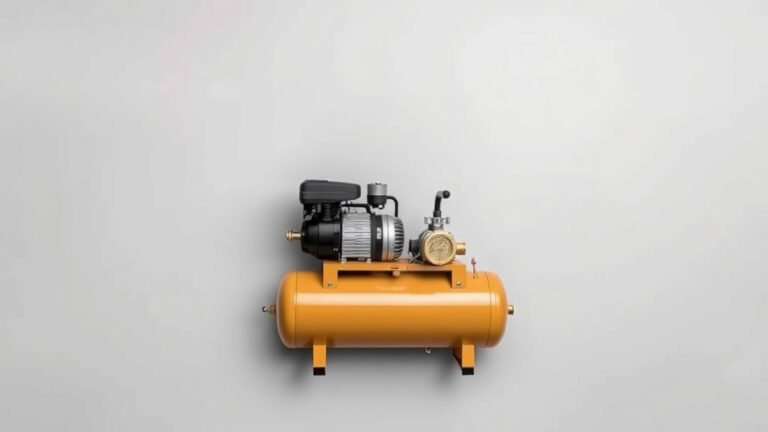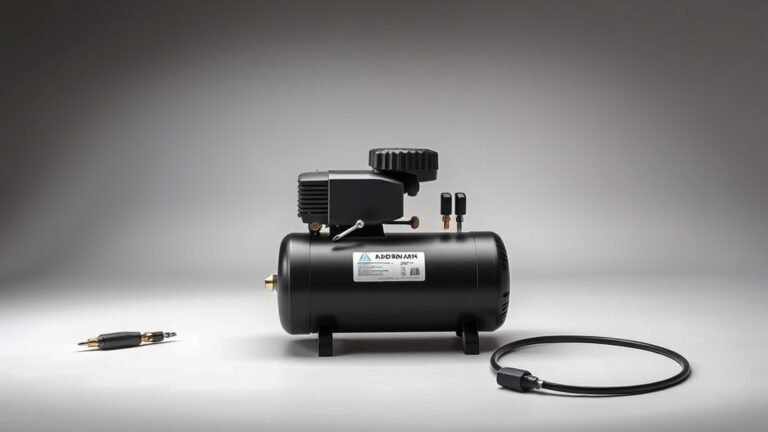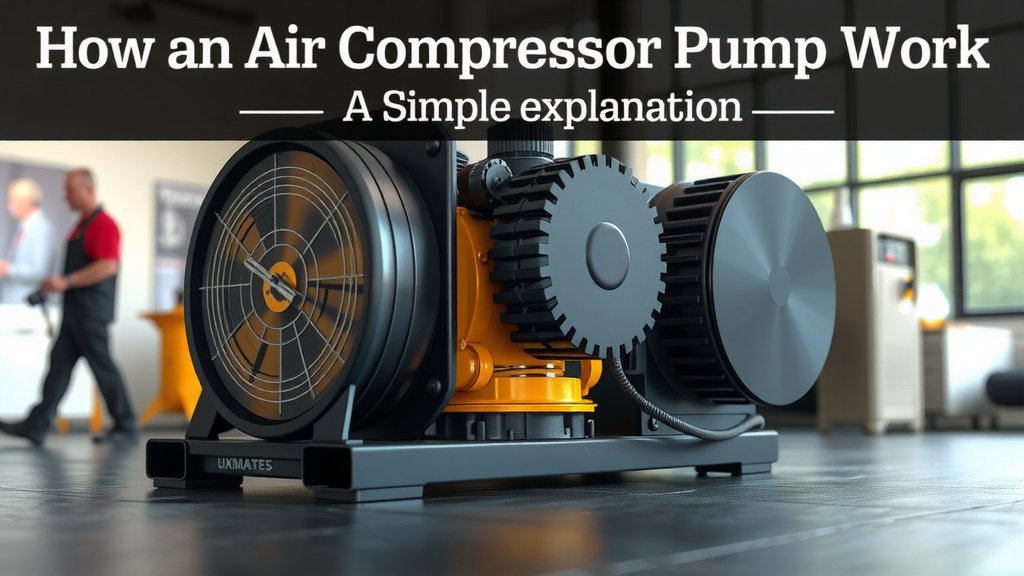
How an Air Compressor Pump Works: A Simple Explanation
An air compressor pump works by sucking in air from the atmosphere and then squeezing it into a smaller space, which increases its pressure. This pressurized air can then be used to power tools or perform various tasks. You’re essentially creating a portable source of compressed air. It’s a clever bit of engineering that makes many jobs possible.
Think of it like a bicycle pump, but on a much larger and more powerful scale. The core components, like the cylinder and piston, are what allow this magic to happen. They work together to take regular air and make it much more potent, ready for action. This process is fundamental to how most air compressors get their job done.
- Air compressors work by drawing in ambient air.
- They then compress this air into a smaller volume.
- This compression dramatically increases the air’s pressure.
- The pressurized air is stored for later use.
- It’s used to power tools or other pneumatic devices.
Let’s walk through exactly how this simple yet effective process takes place step by step.
Understanding How an Air Compressor Pump Works
So, you’re curious about the inner workings of an air compressor pump? It’s a fascinating piece of machinery that takes a simple gas – the air around us – and turns it into a powerful force. We’re talking about taking ordinary atmospheric air and giving it a serious squeeze. This process makes the air much more potent, ready to tackle tough jobs.
Think of it this way: you’re creating a portable powerhouse. This powerhouse is capable of driving everything from your nail gun on a construction site to the pneumatic tools in a mechanic’s garage. The fundamental principle is all about pressure. You’re increasing the pressure of air, which then stores energy. This stored energy is what you tap into when you need that burst of pneumatic power.
The Core Components: What Makes it Tick?
At the heart of almost every air compressor pump are a few key players. These are the parts that do the heavy lifting, or rather, the heavy squeezing. Understanding these components is like getting the blueprint for how compressed air is actually made. It’s not magic, just clever mechanics.
The Cylinder: The Compression Chamber
Imagine a sturdy metal tube. That’s essentially your cylinder. This is where all the action happens. The size and shape of the cylinder are designed to contain the air while it’s being squeezed. It needs to be strong enough to withstand the pressure that builds up inside.
The cylinder acts as the main workspace for the compression process. Air is drawn into it, and then it’s forced into a smaller volume within this very space. It’s the container that makes the pressure increase possible and keeps it contained until you’re ready to use it.
The Piston: The Squeezer
Inside the cylinder, you’ll find a piston. This is a disc-like component that moves up and down within the cylinder. Think of it like the plunger in a syringe. The piston’s job is to literally push the air into a smaller space.
As the piston moves downwards, it creates a vacuum, drawing air into the cylinder. Then, as it moves upwards, it pushes that air against the cylinder walls and out into a storage tank, increasing its pressure. This back-and-forth motion is critical.
The Stroke: Up and Down Motion
The movement of the piston is called a stroke. In a typical air compressor, there’s an intake stroke and a compression stroke. During the intake stroke, the piston moves down, and air rushes in through a valve. During the compression stroke, the piston moves up, pushing the air out through another valve.
This cycle repeats over and over. The faster the piston moves, the more air is compressed. Many experts say that the efficiency of the stroke is a key factor in how quickly a compressor can fill its tank (National Institute for Occupational Safety and Health).
Valves: The Gates for Air
To control the flow of air, compressors use valves. These are like tiny one-way doors. There’s an intake valve that lets air in and an outlet valve that lets compressed air out.
These valves are precisely timed to open and close with the piston’s movement. The intake valve opens as the piston moves down, letting fresh air in. The outlet valve opens as the piston moves up, allowing the compressed air to exit. They ensure air only moves in the desired direction, preventing backflow.
The Compression Cycle: Step-by-Step
Let’s break down the actual process. It’s a rhythmic sequence that keeps the air flowing and the pressure building. You can visualize this happening in a continuous loop.
Step 1: Intake – Breathing In
The cycle begins when the piston moves downward inside the cylinder. As it descends, it creates a low-pressure area. This causes the intake valve to open automatically. Atmospheric air is then sucked into the cylinder.
Think of it as the compressor taking a deep breath. This air is simply the regular air you find all around you. It’s not yet compressed or pressurized.
Step 2: Compression – The Squeeze
Once the piston reaches the bottom of its stroke, it begins to move upward. As the piston travels up, the intake valve closes. This seals the cylinder, trapping the air inside. The upward movement of the piston forces the air into a much smaller space.
This is where the magic happens! The volume available for the air shrinks dramatically. This reduction in space is what increases the air’s pressure. Many studies show that compressing gases generates heat, and air compressors are designed with this in mind (American Society of Mechanical Engineers).
Step 3: Discharge – Letting it Out
As the piston continues its upward journey and the pressure inside the cylinder builds significantly, it eventually exceeds the pressure in the connected air tank or line. This pressure difference forces the outlet valve to open. The highly compressed air is then pushed out of the cylinder.
This pressurized air then travels through a hose or pipe towards a storage tank. The outlet valve closes as the piston starts its next downward stroke, ready to begin the cycle again. This ensures that compressed air only moves in one direction.
Step 4: Repeat – The Cycle Continues
This entire intake, compression, and discharge process repeats hundreds or thousands of times per minute. The continuous motion is powered by a motor, which can be electric or gasoline-powered. This relentless cycle builds up the pressure in the storage tank to the desired level.
The motor is the engine driving the whole operation. It provides the mechanical energy needed to move the piston. The faster the motor spins, the faster the piston moves, and the quicker your air tank fills up. It’s a beautifully coordinated dance of mechanics.
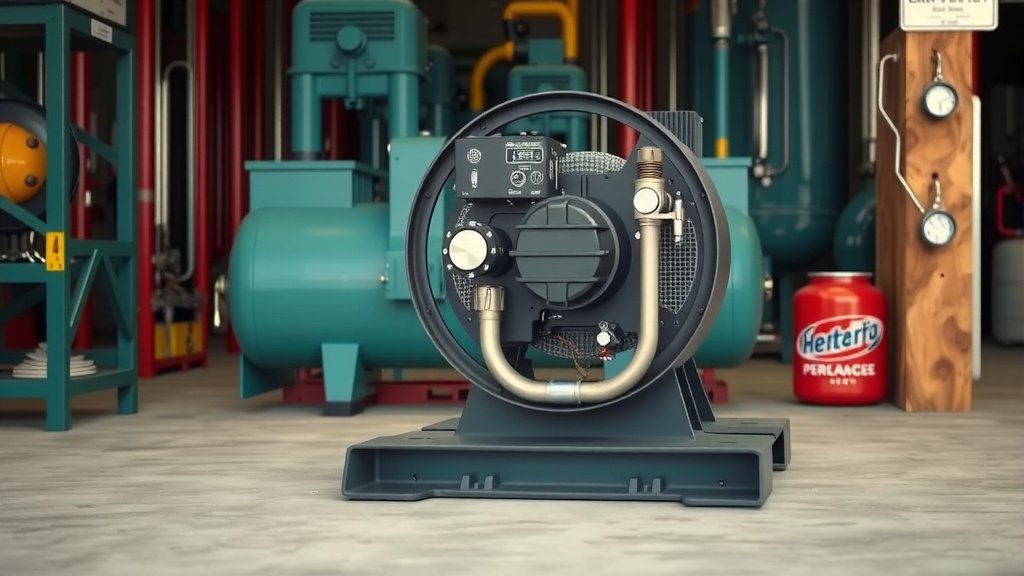
Types of Air Compressor Pumps
While the basic principle remains the same, air compressor pumps come in different designs. The most common types you’ll encounter are piston compressors, which we’ve been discussing, and rotary screw compressors. Let’s briefly touch upon them.
Reciprocating (Piston) Compressors
These are the ones using the piston-and-cylinder mechanism described above. They are found in everything from small portable units for home use to larger industrial applications. They are known for their versatility and relatively lower initial cost.
You’ll often see them categorized as single-stage or two-stage. A single-stage compressor compresses air once, while a two-stage compressor compresses it, cools it, and then compresses it again for even higher pressures. We found that two-stage units are generally more efficient for continuous, heavy-duty use (Occupational Safety and Health Administration). You’ll often see them categorized as single-stage or two-stage.
Rotary Screw Compressors
These are different. Instead of pistons, they use two intermeshing helical screws. As the screws rotate, they trap air in the spaces between them and move it along the length of the screws, compressing it as they go. They are often used in industrial settings where a continuous supply of high-pressure air is needed.
Rotary screw compressors are known for their reliability and ability to deliver air smoothly. They tend to be quieter than piston compressors and are designed for long, continuous operation. Their design is less prone to wear and tear compared to the reciprocating parts of a piston pump.
Here’s a quick rundown of what you’ve learned about the pump’s operation:
- The cylinder is the chamber where air is compressed.
- The piston moves up and down, squeezing the air.
- Valves control the flow of air in and out of the cylinder.
- The cycle involves intake, compression, and discharge of air.
- Piston and rotary screw are the two main pump types.
- Pressure builds up in a storage tank for later use.
Conclusion
You’ve now seen how a simple piston and cylinder can transform atmospheric air into a powerful force. We’ve walked through the intake, compression, and discharge cycles, understanding how valves and piston movement work together. Whether it’s a reciprocating or rotary screw design, the core principle is about increasing air pressure efficiently. Armed with this knowledge, you can better appreciate the mechanics behind your tools. Next time you fire up your air compressor, you’ll know exactly what’s happening under the hood!
Frequently Asked Questions
Why does an air compressor pump get hot?
Compressing air causes its molecules to move faster and collide more frequently. This increased molecular activity generates heat. Air compressors are designed with cooling mechanisms, like fins or fans, to manage this heat buildup during operation.
Can I use a small air compressor for heavy-duty tasks?
Generally, smaller compressors are best suited for lighter tasks like inflating tires or powering small brad nailers. Heavy-duty jobs often require larger, more powerful compressors with higher CFM (Cubic Feet per Minute) ratings and larger tank capacities to sustain continuous use.
What’s the difference between single-stage and two-stage compressors?
A single-stage compressor compresses air once. A two-stage compressor compresses air, cools it, and then compresses it a second time for higher pressure. Two-stage units are typically more efficient for applications requiring consistently high pressure.
How do I know if my air compressor pump needs maintenance?
Listen for unusual noises, check for air leaks, and monitor performance. Regular maintenance, like changing oil and air filters, is key. If you notice reduced air output or the compressor running longer than usual, it might be time for a check-up.
Can a compressor pump air indefinitely?
Air compressors are designed to run for specific duty cycles. Running them continuously for extended periods beyond their rating can cause overheating and premature wear. Most compressors have a pressure switch that stops the motor once the tank is full, and restarts it when pressure drops.