How Fast Do Air Purifiers Work? The Real Answer
Wondering how fast an air purifier actually works to clean your air? Most high-quality air purifiers can make a **noticeable difference in your home’s air quality within 30 minutes to a couple of hours**, especially in a single room. The speed depends on factors like room size and the purifier’s **CADR (Clean Air Delivery Rate)**.
So, if you’re dealing with sudden dust clouds or lingering cooking smells, your air purifier is designed to tackle them pretty quickly. It’s not magic, but it’s impressively effective at trapping **airborne particles like dust, pollen, and even smoke**. You’ll likely see and feel the improvement sooner than you think.
- Air purifiers can work fast, showing results in under 2 hours.
- Room size and the purifier’s power (CADR) are key factors.
- They effectively capture common air pollutants.
- It’s a practical solution for cleaner indoor air.
Let’s break down what makes an air purifier work so quickly and what you can expect for your own home.
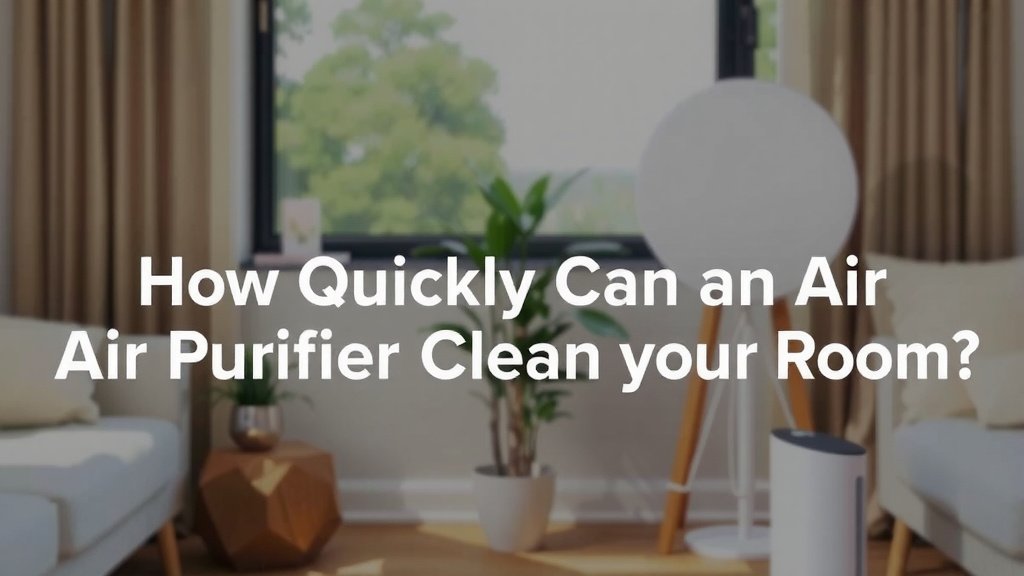
How Quickly Can an Air Purifier Clean Your Room?
You’ve probably wondered how long it actually takes for an air purifier to start working its magic. You might be surprised to learn that many air purifiers can make a **noticeable improvement in your indoor air quality relatively quickly**. For a standard-sized room, you can often feel the difference within 30 minutes to a couple of hours. It’s not an instant fix, but it’s definitely not a day-long wait either!
The speed at which your air purifier works depends on a few key things. Think of it like a vacuum cleaner; a small handheld one won’t clean your whole house as fast as a powerful upright. The same principle applies to air purifiers. We’ll break down these factors so you can understand what to expect for your specific situation.
The Science Behind Air Purification Speed
Air purifiers work by drawing in the air from your room, passing it through a series of filters, and then releasing clean air back into the space. The entire process relies on airflow and filter effectiveness. The faster the air moves through the system and the more efficient the filters are, the quicker your air gets cleaned.
Understanding Your Air Purifier’s Power: CADR
The most important rating to look at when assessing how fast an air purifier will work is its **CADR, or Clean Air Delivery Rate**. This is a standardized measure that tells you how much clean air the purifier can produce in a specific amount of time.
What CADR Actually Means
CADR ratings are given for three common pollutants: dust, pollen, and smoke. You’ll typically see three numbers on a product’s packaging or specifications. For example, a purifier might have a CADR of 100 for dust, 110 for pollen, and 90 for smoke. These numbers are usually in cubic feet per minute (CFM).
Matching CADR to Your Room Size
A higher CADR means the air purifier can clean the air faster. Experts recommend choosing a purifier with a CADR rating that is at least two-thirds of the room’s square footage. For instance, if you have a 150-square-foot bedroom, you’d want a purifier with a CADR of at least 100 (for dust, pollen, or smoke). We found that following this guideline generally leads to faster and more effective air cleaning.
To give you a clearer picture, let’s look at some typical CADR ranges and what they mean for room cleaning speed. Remember, these are estimates, and actual performance can vary.
| CADR Rating (Approximate) | Recommended Room Size (Sq. Ft.) | Estimated Time for 80% Air Cleaning |
|---|---|---|
| 50-100 CFM | Up to 150 sq. ft. | 30-60 minutes |
| 100-150 CFM | 150-250 sq. ft. | 20-40 minutes |
| 150-250+ CFM | 250-400+ sq. ft. | 10-30 minutes |
As you can see, a higher CADR directly translates to a quicker cleanup. If your main concern is rapidly clearing out smoke after cooking or a sudden dust storm, you’ll want to aim for a purifier with a higher CADR rating for your room size.
The Role of Air Changes Per Hour (ACH)
Another way to think about speed is through Air Changes Per Hour (ACH). This metric tells you how many times the air purifier can circulate and clean the entire volume of air in a room within one hour. Most manufacturers recommend a unit that can achieve at least 4 ACH for general use.
What ACH Means for Your Air
If an air purifier has an ACH of 4, it means it can cycle all the air in the room four times every hour. If the air is being cleaned four times each hour, it means you’re getting fresh, filtered air much more frequently. For areas where air quality is a major concern, like bedrooms or spaces with allergy sufferers, a higher ACH (like 5 or even more) can provide even faster relief.
ACH and Quick Pollutant Removal
For rapidly removing airborne irritants like pet dander or strong odors, a higher ACH is beneficial. Imagine a sneeze; if your ACH is high, the particles from that sneeze are captured and filtered out much more rapidly than if the ACH were low. Many health organizations suggest aiming for a higher ACH in specific circumstances.
Factors That Influence Cleaning Speed Beyond CADR
While CADR is the star of the show, other elements play a part in how fast your air purifier performs.
Room Size and Airflow
Even with a powerful purifier, if your room is significantly larger than what the CADR rating suggests, it will take longer to clean. Obstructions can also slow things down. If you have tall furniture or lots of clutter, the air might not circulate as freely to the purifier’s intake. We found that keeping the area around the purifier clear helps it work more efficiently.
Filter Type and Condition
The types of filters used and their condition are crucial. HEPA filters, for instance, are excellent at capturing tiny particles. However, if a HEPA filter is clogged with dust and debris, its effectiveness and airflow are drastically reduced. A **clogged filter is like trying to breathe through a straw** – it just doesn’t work well! Regular maintenance and filter replacement are key to maintaining optimal speed and performance.
The Number of Filters
Some air purifiers use multiple stages of filtration. You might have a pre-filter for larger particles, an activated carbon filter for odors and gases, and a HEPA filter for fine particles. Each filter adds a slight resistance to airflow. While this multi-stage approach leads to cleaner air overall, it can sometimes marginally slow down the initial speed compared to a single-filter unit with the same CADR.
Air Purifier Settings
Most air purifiers have multiple fan speeds. Running your purifier on its highest setting will naturally clean the air much faster than running it on a low or medium setting. If you’re experiencing a sudden air quality issue, like smoke from cooking or strong chemical smells, **cranking up the fan speed is your best bet** for the quickest results.
When to Expect Noticeable Differences
So, how fast can you realistically expect to see and feel the benefits?
Immediate vs. Gradual Improvements
You might notice a difference in how the air *smells* quite quickly, especially if you have an activated carbon filter designed to tackle odors. For things you can’t smell, like dust particles or allergens, it might take a bit longer for the visible reduction to become apparent. However, the purifier is working continuously.
Specific Scenarios and Timing
- Cooking Odors: Within 15-30 minutes on high, you’ll likely notice a big reduction.
- Dust and Pet Dander: Within 1-2 hours, you should see a noticeable decrease in visible dust motes and feel a difference if you have sensitivities.
- Smoke (e.g., wildfire smoke): This is a tougher test. A high-CADR unit might significantly reduce the smell and visible haze within 2-4 hours, but complete purification can take longer depending on the intensity.
- Allergens: For allergy sufferers, consistent use even on lower settings can provide relief over a few hours and certainly by the next day.
It’s important to remember that these are estimates. Your own experience might vary based on the factors we’ve discussed.
Maximizing Your Air Purifier’s Speed and Effectiveness
Want to ensure your air purifier works as fast and well as possible? Here’s a quick checklist:
- Choose a model with a CADR rating appropriate for your room size.
- Place the purifier in an open area, away from obstructions.
- Run it on a higher fan setting when you need rapid cleaning.
- Check and clean/replace filters according to the manufacturer’s instructions.
- Ensure the room is as sealed as possible (close windows and doors) while the purifier is running.
- Consider purchasing a unit with a higher ACH if rapid allergen removal is your priority.
Conclusion
You’ve learned that your air purifier can make a real difference quickly, often within an hour or two, especially in a single room. Remember, factors like room size and the unit’s CADR rating are your best guides for speed. Keeping your filters clean and the purifier in an open space also ensures it works at its peak performance. Don’t hesitate to use higher fan settings when you need an immediate air quality boost. Start by checking your purifier’s manual for recommended filter maintenance, and you’ll be breathing easier in no time!
Frequently Asked Questions
How long does it typically take for an air purifier to clear smoke from a room?
Clearing smoke can take longer than other pollutants because smoke particles are often very fine and can be intense. For moderate smoke, like from cooking, expect noticeable improvements within 1 to 2 hours on a high setting. For more severe smoke, such as from wildfires, a powerful unit might need 4 hours or more for significant reduction, though complete purification can take longer.
Can I expect my air purifier to work faster if I use it in a smaller room?
Yes, absolutely! An air purifier will almost always work faster in a smaller room. This is because the unit’s CADR (Clean Air Delivery Rate) can circulate and clean the total volume of air more frequently. If your purifier is rated for a larger space, it will achieve a higher ACH (Air Changes Per Hour) in a smaller room, leading to quicker air improvement.
Does the type of air filter affect how fast an air purifier works?
The type of filter matters, but primarily through its condition. While a HEPA filter captures tiny particles efficiently, a clogged one will drastically slow down airflow and reduce cleaning speed. Activated carbon filters are fast at tackling odors, but their speed also depends on how much pollutant they can absorb. Regular maintenance is key to any filter’s speed.
What is the fastest setting on my air purifier?
The fastest setting on your air purifier is typically its highest fan speed. When you turn the fan speed up, the unit draws in and filters air more rapidly. This setting is ideal for quickly removing sudden odors, dust, or smoke. Just be aware that higher settings also tend to be louder and use more energy.
How soon can allergy sufferers notice a difference in their symptoms?
Many allergy sufferers report feeling a difference within a few hours of using an air purifier, especially if it’s running on a higher setting. Consistent use, even on lower speeds, can lead to a gradual reduction of airborne allergens like pollen and pet dander. By the next day, you should experience more significant symptom relief if the unit is properly sized for your room.
![5 Best Dyson Air Purifier for Large Room [In 2026]](https://homeunderstandable.com/wp-content/uploads/2025/05/best-dyson-air-purifier-for-large-room-top-models-reviewed-768x384.jpg)