
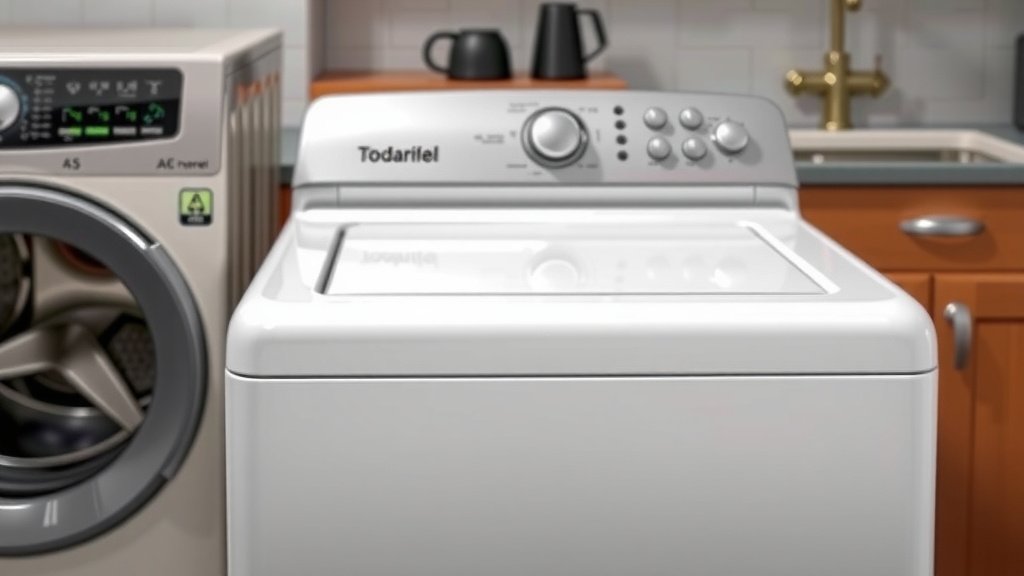
How Full Can You Load a Top Load Washer
Your top-load washing machine should be about two-thirds full with clothes for the best cleaning results. Overfilling can prevent clothes from moving freely. Underfilling means you might be wasting water and energy.
Finding the sweet spot ensures your clothes get a good wash without damage. It’s a balance between cleaning power and avoiding unnecessary wear on your machine. Getting this right helps your laundry come out cleaner and fresher.
- Don’t pack your washer too tight.
- Aim for about two-thirds full.
- Too many clothes mean poor cleaning.
- Too few can waste resources.
- The right load size protects your machine.
Let’s walk through exactly how to get that perfect load size every time.
How Full Should Your Top-Load Washer Be?
Figuring out the right load size for your top-load washing machine can feel a bit like Goldilocks searching for the perfect porridge. Too much, and your clothes won’t get clean. Too little, and you’re wasting water and energy. The sweet spot? Many experts suggest aiming for about two-thirds full.
This amount allows your laundry to move freely, which is key for effective cleaning. Think of it like a busy dance floor. If it’s too crowded, no one can move properly. If it’s mostly empty, the dancers get lost. Your clothes need space to tumble and get properly saturated with water and detergent.
Why Load Size Matters So Much
Your washing machine isn’t just a big tub of water. It’s designed to agitate your clothes in a specific way. This agitation helps to loosen dirt and stains. If your machine is packed too tightly, this crucial tumbling action is severely limited.
When clothes can’t move, the detergent can’t reach all the surfaces. This means dirt and grime might just get pushed around, not washed away. You might end up with clothes that still have visible stains or just don’t smell fresh. It’s like trying to scrub a floor when you can barely move your arms – you just can’t get to all the spots.
The Problem with Overfilling
Packing your top-loader to the brim is a common mistake. We often think more clothes mean fewer loads, saving time. However, this can actually lead to less effective cleaning. It also puts unnecessary strain on your machine.
When the drum is too full, clothes get compressed. They can’t fluff up and move through the water as intended. This leads to poor rinsing and detergent residue. You might even notice white streaks on dark clothes. Plus, the motor has to work harder to turn a heavy, overpacked drum. This can shorten the lifespan of your washing machine.
Signs You’re Overfilling
How can you tell if you’re guilty of overstuffing?
- Your clothes come out still smelling like they were worn.
- You see detergent residue or white marks.
- The machine struggles to agitate or spin properly.
- There’s a lot of wrinkling.
- The drum feels very tight even when empty.
The Pitfalls of Underfilling
On the flip side, running a load that’s too small isn’t ideal either. While it might seem efficient, it can actually be wasteful. Modern washing machines are designed to use a specific amount of water for a given load size.
If you only put a few items in, you’re still using the same amount of water and energy as a larger load. This is like using a full pot of coffee for just one cup. It’s not the most resource-efficient approach. Some experts also note that a larger load helps balance the drum during the spin cycle. A very small load can sometimes lead to off-balance spinning and more vibration.
Finding That “Just Right” Load Size
So, how do you visually estimate the perfect two-thirds full mark? Imagine your washing machine drum is a big circle. You want the clothes to fill that circle loosely, not packed down tightly.
The “Hand Test” is a great method. After you load your clothes, try to slide your hand in between the clothes and the top of the drum. If you can easily slide your hand in and feel a good amount of space, you’re probably good. If it’s a tight squeeze or you can’t get your hand in at all, you have too much. If your hand slides in with tons of room to spare, you might have too little.
What About Different Types of Items?
The type of items you’re washing also plays a role. Bulky items like towels and bedding will take up more space than smaller items like t-shirts and socks.
For instance, washing a load of heavy towels might mean you can only fill the machine about halfway to ensure they get clean and properly rinsed. Conversely, a load of lightweight synthetics might allow you to fill it closer to the two-thirds mark.
Water Level Settings Explained
Many top-load washers have water level settings. Some are automatic, while others allow you to choose. If you have manual controls, select a water level that just covers the clothes when they are saturated. You shouldn’t see a huge mound of clothes sitting way above the water line.
For automatic machines, the sensor does the work. However, if you suspect it’s not quite right, the “hand test” is still your best friend. The goal is for the water to surround and move through the clothes effectively. Many washing machine manufacturers, including Whirlpool, recommend not overloading the machine and allowing clothes to move freely.
A Quick Guide to Load Size
Here’s a simple way to think about it:
| Item Type | Ideal Fill Level (Approximate) | Notes |
|—|—|—|
| T-shirts, lightweight items | Two-thirds full | Ensure items can move freely. |
| Towels, jeans, heavier fabrics | One-half to two-thirds full | Avoid packing too tightly. |
| Bedding (sheets, pillowcases) | One-half full | Bulky items need space to move. |
| Mixed loads | Two-thirds full | Blend item types, but watch for overstuffing. |
Checking for Proper Agitation
Once your machine starts, take a peek. Are the clothes actually moving? Are they tumbling over each other? Or are they just sitting there in a compressed mass?
You should see a good amount of water and the clothes should be actively circulating. If the water level seems too low for the amount of clothes, or if they’re not moving much, you might need to adjust the load for your next wash. It might take a few tries to get it just right for your specific machine and laundry habits.
Your Load Size Checklist
To ensure you’re getting it right every time, keep this quick checklist in mind:
- Check the drum space. Can you easily fit your hand between clothes and the top?
- Observe the movement. Do clothes tumble freely during the wash?
- Consider fabric types. Adjust for heavier or bulkier items.
- Look for residue. Stains or white marks often mean overfilling.
- Listen to your machine. Is it struggling or making unusual noises?
- Trust your senses. If it looks too full, it probably is.
Conclusion
You’ve learned that the perfect load size for your top-load washer is usually about two-thirds full. This ensures your clothes have room to move, get properly clean, and avoid unnecessary wear on your machine. Overfilling can lead to dingy clothes and machine strain, while underfilling wastes water and energy. Use the hand test and observe your machine’s agitation to find that sweet spot.
Next time you do laundry, aim for that ideal fill. Your clothes will thank you with better cleaning and fewer wrinkles!
Frequently Asked Questions
Can I put a full load in my top-load washer if it’s a high-efficiency model?
Even high-efficiency top-loaders generally recommend a two-thirds full load. These machines use less water, so clothes still need ample space to tumble and get clean effectively. Always check your machine’s manual for specific guidance.
What happens if I always overload my washing machine?
Consistently overloading can prevent clothes from circulating properly, leading to poor cleaning and residue buildup. It also puts extra stress on the motor and other components, potentially shortening your washing machine’s lifespan.
Is it okay to mix different types of laundry in one load?
Yes, you can mix most laundry types as long as you don’t overfill the machine. If you’re washing heavy towels with delicate t-shirts, aim for a lower fill level to protect the lighter items.
My washer has an “automatic” water level setting. Do I still need to worry about load size?
Yes, you do. The automatic sensor fills based on the weight it detects. If the machine is overpacked, the sensor might not accurately gauge the water needed for proper cleaning. The two-thirds rule still applies to ensure clothes can move freely.
How do I know if my washing machine is too empty?
If your hand slides in with a lot of extra space and the clothes feel very loose, your load might be too small. Small loads waste water and energy because the machine uses a set amount of water regardless. Plus, very small loads can sometimes cause the machine to become unbalanced during the spin cycle.
![7 Best Small Washing Machines For Apartments [In 2026]](https://homeunderstandable.com/wp-content/uploads/2026/08/7-best-small-washing-machines-for-apartments-in-2026-featured-768x432.jpg)
![7 Best Brand Of Stackable Washer And Dryer [In 2026]](https://homeunderstandable.com/wp-content/uploads/2026/09/7-best-brand-of-stackable-washer-and-dryer-in-2026-featured-768x432.jpg)
![7 What Are Best Washer And Dryer To Buy [In 2026]](https://homeunderstandable.com/wp-content/uploads/2026/09/7-what-are-best-washer-and-dryer-to-buy-in-2026-featured-768x432.jpg)