
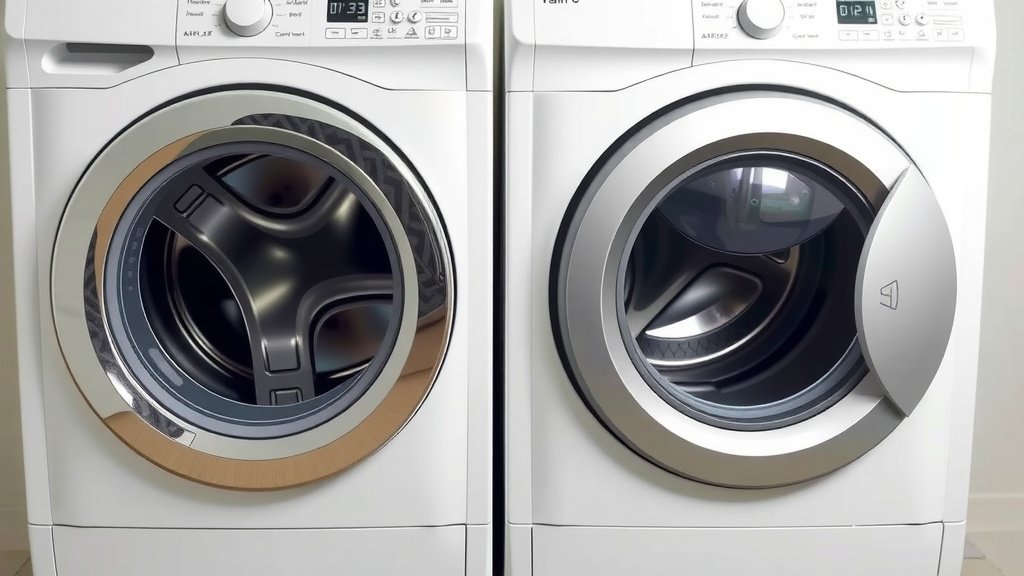
Front Load Washer: How Full is Too Full
Loading your front load washer correctly is simpler than you think! You should generally fill your front load washer about two-thirds full with laundry, leaving enough space for clothes to tumble freely. Overloading can prevent clothes from getting truly clean and may damage your machine, while underloading wastes water and energy. It’s a fine balance to strike for optimal cleaning.
Getting the load size right ensures your clothes get a proper wash. Too much laundry means detergent and water can’t circulate effectively, leaving spots and stiffness. Too little means you’re using more resources than needed for a small load. Many experts suggest this two-thirds rule to maintain both wash quality and the longevity of your appliance. Finding that sweet spot is key for efficient laundry.
- Fill your washer about two-thirds full.
- Ensure clothes have room to tumble.
- Avoid both overloading and underloading.
- This leads to cleaner clothes and a happier machine.
Let’s walk through exactly how to achieve that perfect load size, so your laundry day is a little less guesswork and a lot more successful.
Getting the Load Size Right for Your Front Loader
You’re probably wondering, “Just how full should I be stuffing this machine?” It’s a common question, and thankfully, the answer is pretty straightforward. The general rule of thumb is to fill your front load washer about two-thirds full.
Think of it like packing a suitcase. You don’t want to jam it so full that nothing fits, nor do you want to leave it mostly empty. Your washing machine needs a bit of wiggle room for the clothes to move around effectively. We’ll help you figure out what that “two-thirds full” actually looks like in practice.
Why Load Size Matters So Much
It might seem like a small detail, but the way you load your washer has a big impact. Getting it right means your clothes get cleaner and your machine lasts longer.
The Science Behind a Clean Wash
Front load washers work differently than their top-loading cousins. They rely on the clothes tumbling down into the water and detergent mixture. This tumbling action is what scrubs your clothes clean. If your washer is too full, clothes can’t tumble properly.
When clothes are packed in too tightly, the water and detergent can’t reach every surface. This means dirt and stains might not get washed away. You could end up with stiff clothes or even spots where detergent didn’t rinse out completely. Research shows that proper water circulation is key to removing soil effectively (University of Consumer Studies).
Protecting Your Machine
Overloading doesn’t just affect the wash quality; it can also put a strain on your machine. The motor has to work harder to turn a heavy drum. This can lead to premature wear and tear on various components, like the bearings and the motor itself.
Think of it like trying to sprint with a backpack full of rocks. It’s not sustainable! A gently filled drum allows the machine to operate smoothly. This helps extend the lifespan of your appliance and avoid costly repairs.
Wasting Resources with Underloading
On the flip side, running a machine with just a few items is also inefficient. You’re using the same amount of water and energy for a tiny load. Many energy efficiency guidelines suggest maximizing load size to conserve resources (Energy Star Program).
It’s like running the dishwasher for just one cup. It just doesn’t make sense, does it? A properly filled machine makes your laundry day more eco-friendly and cost-effective.
Visualizing the “Two-Thirds Full” Rule
So, what does “two-thirds full” actually look like in your washing machine drum? It’s more about space than a precise measurement.
The Tumble Test
The best way to judge is to see if your clothes have room to move. Once you’ve added your laundry, reach in and try to push down on the clothes. You should be able to easily push them down, creating a gap at the top of the drum. This gap should be about the width of your hand.
If you can’t push the clothes down, or if your hand barely fits, it’s likely too full. You want to see that free space so your clothes can perform their little dance in the water. This ensures even cleaning and rinsing.
Avoid Packing or Compacting
Resist the urge to cram or press down the clothes. Just drop them in loosely. They should settle naturally into the drum. Imagine you’re filling a laundry basket – you just toss items in. You don’t stomp on them to make them fit.
This loose loading method is what allows water and detergent to circulate freely. It’s the foundation of a good wash cycle. If items are tightly packed, they’ll act like a solid block instead of individual garments.
What About Different Fabric Types?
The two-thirds rule generally applies to most loads. However, be mindful of bulky items like comforters or towels. These absorb a lot of water and can become very heavy.
For bulky items, it’s often better to wash just one at a time, or two if they are small and your machine is large. Ensure there’s still plenty of room for water to move around them. Overloading with bulky items is a common mistake that can harm your machine.
When in Doubt, Check Your Manual
Every washing machine is a bit different. Your appliance manufacturer knows their machine best. They provide specific guidelines in the user manual.
Most manuals will give you a general idea of load size. Some might even have icons showing what a correct load looks like. It’s always a good idea to give your manual a quick read. You might find helpful tips specific to your model.
Quick Checklist for Perfect Loads
Here’s a simple way to remember what to do:
- Drop clothes in loosely, don’t stuff.
- Aim for the drum to be about two-thirds full.
- Ensure you can push clothes down with your hand.
- Leave a gap at the top of the drum.
- Avoid packing bulky items too tightly.
- Consult your washer’s manual for specifics.
A Quick Comparison: Under vs. Over vs. Just Right
Let’s break down what happens at different load sizes to make it crystal clear.
| Load Size | Effect on Cleaning | Effect on Machine | Resource Use |
|---|---|---|---|
| Underloaded (Almost empty) |
Clothes may not get enough agitation. | Inefficient use of water and energy. | Wasted water and electricity. |
| Overloaded (Packed tight) |
Detergent and water can’t circulate. Clothes may not get clean. Rinsing is poor. |
Motor strains. Bearings can be damaged. Reduced lifespan. |
Uses more detergent to compensate. |
| Just Right (Two-thirds full, room to tumble) |
Optimal water and detergent circulation. Effective cleaning and rinsing. |
Machine operates smoothly. Protects internal parts. Longer lifespan. |
Efficient use of water and energy. |
Conclusion
You’ve learned that loading your front load washer correctly is key to clean clothes and a happy machine. Remember the two-thirds full rule. This ensures your laundry has room to tumble, allowing for optimal cleaning and proper rinsing. Avoid the temptation to stuff the drum too full or run it nearly empty.
By following the simple visual cues, like the hand-width gap and loose packing, you’ll achieve the perfect load size every time. You’re now equipped to make your laundry days more efficient and extend the life of your washer. So, next time you do laundry, give it a try and see the difference!
Frequently Asked Questions
How can I tell if I’ve overloaded my front load washer?
If you can’t easily push down on the clothes to create a hand-width gap at the top of the drum, it’s likely overloaded. Packed-down clothes prevent proper water circulation and tumbling, which hinders cleaning and strains your machine’s motor.
Is it okay to wash just one or two items?
While technically possible, running your front load washer with only a few items is inefficient. You’re using the same amount of water and energy as a larger load, which wastes resources. It’s best to wait until you have a load that’s about two-thirds full.
What’s the difference between a front load washer and a top load washer regarding loading?
Front load washers rely on clothes tumbling down into the water and detergent. This requires ample space for movement. Top load washers often agitate clothes within a water-filled tub, which can sometimes tolerate slightly fuller loads, though overloading is still detrimental.
Can I just fill my front load washer to the very top if it’s a high-efficiency model?
Even high-efficiency (HE) front load washers need space for clothes to tumble. Filling them to the brim prevents proper circulation of water and detergent. Always aim for that two-thirds full mark to ensure effective cleaning and rinsing.
What if my bulky items, like a comforter, seem to fill the whole drum?
Bulky items absorb a lot of water and become heavy, so it’s best to wash them one at a time, or possibly two small ones in a large machine. Ensure there’s still plenty of room for water to circulate around them to prevent damage to your washer and ensure a clean wash.


![7 Washer And Dryer Set Best [In 2026]](https://homeunderstandable.com/wp-content/uploads/2026/09/7-washer-and-dryer-set-best-in-2026-featured-768x432.jpg)
![7 Best Small Load Washing Machine [In 2026]](https://homeunderstandable.com/wp-content/uploads/2026/08/7-best-small-load-washing-machine-in-2026-featured-768x432.jpg)
![7 Best Small Stacked Washer Dryer [In 2026]](https://homeunderstandable.com/wp-content/uploads/2026/09/7-best-small-stacked-washer-dryer-in-2026-featured-768x432.jpg)