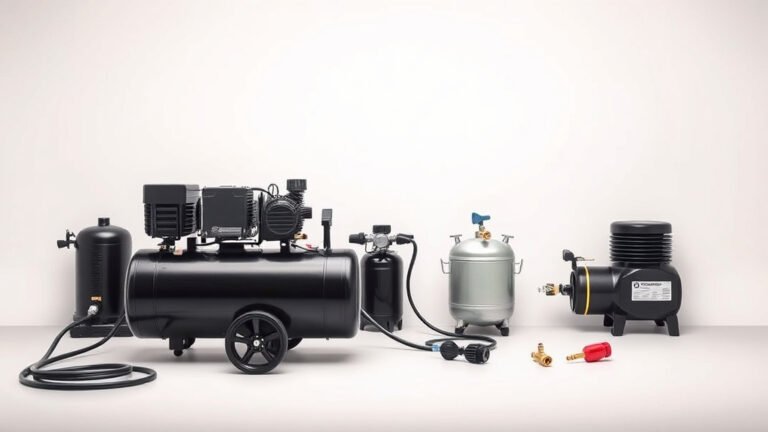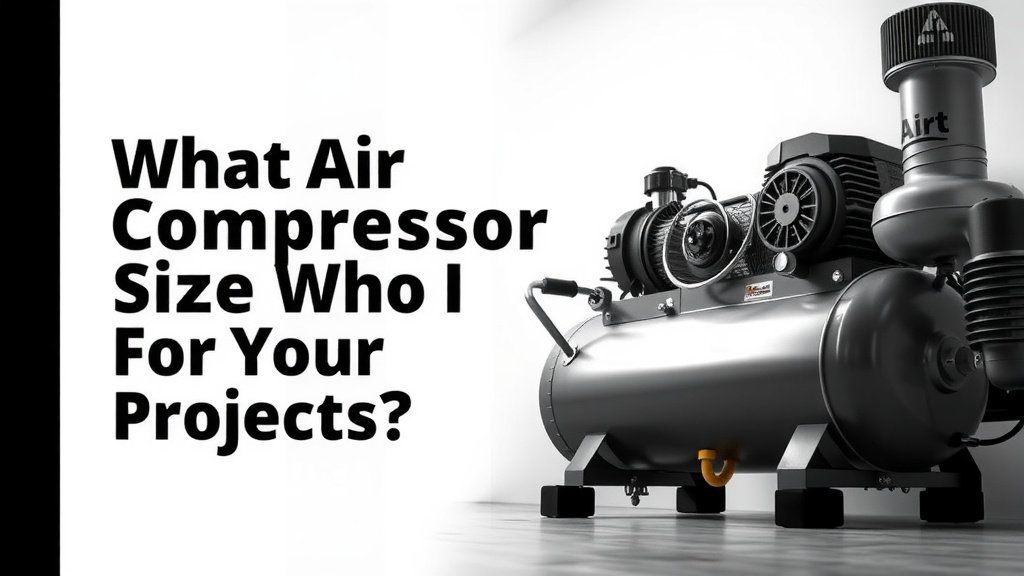
What Air Compressor Size Do You Need For Your Projects
Choosing the right air compressor size is all about matching its power to your tools. For most DIYers, a 20-30 gallon tank with at least 4 CFM at 90 PSI is a great starting point. This range handles common tasks like powering nail guns and impact wrenches effectively. Too small, and it won’t keep up; too big, and you’re wasting energy and money.
We found that understanding your tools’ air demands is key. Think about the types of projects you tackle and the specific tools you use most. Some tools sip air, while others guzzle it. Getting this wrong can lead to frustration and unfinished work, so it’s worth a little research upfront.
- Air compressors are measured by tank size and CFM (airflow).
- Most DIYers need a 20-30 gallon tank with 4 CFM at 90 PSI.
- Consider your most demanding tools to determine the best size.
- Bigger isn’t always better; match the compressor to your needs.
Let’s break down the factors that will help you pick the perfect air compressor for your workshop.
So, you’re ready to find the right air compressor. That’s fantastic! It’s a big step toward making your DIY projects smoother. But how large does it need to be? It’s not about getting the biggest one you can find; it’s about finding the one that’s just right for your needs.
Picking the Right Size for Your Air Compressor Needs
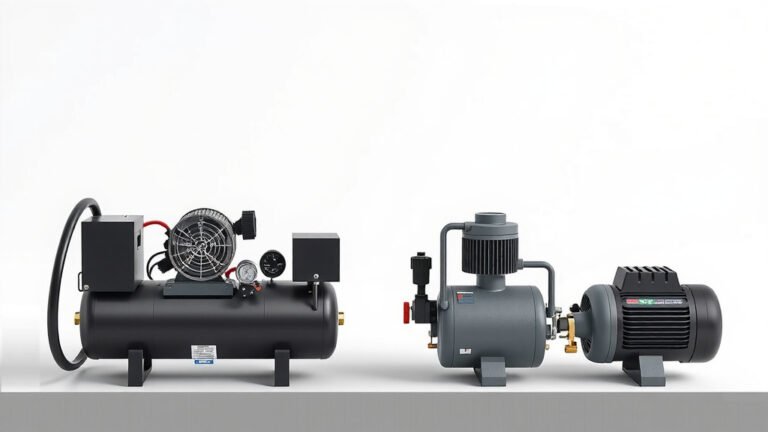
The “size” of an air compressor is a combination of two main things. You’ll hear about the tank size and the CFM rating. These two specs tell you how much air it can store and how quickly it can deliver that air. Getting these right means your tools will run smoothly without interruption.
Understanding Tank Size: The Air Reservoir
Think of the tank size like the gas tank in your car. A larger tank means you can run tools for longer before the compressor needs to kick on and refill it. This is especially important if you have tools that use a lot of air continuously.
Common Tank Sizes and What They’re Good For
For most home garages and DIYers, you’ll see tanks ranging from 1 gallon all the way up to 100 gallons or more.
- 1-6 Gallons: These are usually portable and great for small jobs. Think air brushing or light inflation tasks. They can’t power demanding tools for long.
- 10-30 Gallons: This is the sweet spot for many DIYers. You can tackle tasks like nailing, stapling, and some light impact wrench use. They offer a good balance of portability and air supply.
- 30-80 Gallons: If you’re doing more serious work, like automotive repairs or using more air-hungry tools, these are better. They can keep up with more demanding applications.
- 80+ Gallons: These are for serious workshops or professional use. They provide a massive air supply for continuous, heavy-duty tasks.
Decoding CFM: The Airflow Powerhouse
CFM stands for Cubic Feet per Minute. This is the most critical number for determining if a compressor can keep up with your tools. It tells you how much air the compressor can deliver at a specific pressure. You’ll usually see CFM listed at 40 PSI and 90 PSI. For most tools, the 90 PSI rating is the one to focus on.
Why CFM Matters More Than Tank Size for Tool Performance
A big tank is great, but if the compressor can’t make air fast enough, the tank will empty quickly. Your tool will then sputter or stop working. We found that many people overlook CFM and end up with a compressor that’s too weak for their needs, even if it has a large tank.
Matching CFM to Your Tools’ Needs
Every air tool has an air consumption requirement, usually listed in CFM. You need a compressor that can meet or exceed the highest CFM demand of any single tool you plan to use. But there’s a little trick!
Many experts suggest adding a buffer. You should aim for a compressor that delivers at least 1.5 times the CFM of your most demanding tool. This ensures it can keep up without constantly running on empty. For example, if your impact wrench needs 5 CFM, look for a compressor that provides at least 7.5 CFM.
Here’s a quick look at common tool needs. This is based on typical requirements:
| Tool Type | Typical CFM Needed (at 90 PSI) |
|---|---|
| Brad Nailer | 0.3 – 1.0 CFM |
| Stapler | 0.5 – 1.2 CFM |
| Finish Nailer | 1.0 – 2.0 CFM |
| Impact Wrench | 3.0 – 6.0 CFM |
| Orbital Sander | 6.0 – 10.0 CFM |
| Spray Gun (HVLP) | 8.0 – 12.0+ CFM |
Remember to check your specific tool’s manual for its exact CFM requirement. Many guidelines point to consulting the tool’s specifications as the first step (Tool Manufacturer Association).
Other Factors to Consider Beyond Size
While tank size and CFM are king, a few other details can influence your decision. Don’t let these little things trip you up!
Power Source: Electric vs. Gas
Most home users will opt for an electric air compressor. They are quieter, cleaner, and don’t require fuel. You just need a suitable outlet. Gas-powered compressors are typically more powerful and portable for job sites without electricity but are much louder and need ventilation.
Horsepower (HP): A Secondary Indicator
You’ll see horsepower (HP) listed for compressors, often in a range like 1.5 HP to 6.5 HP. While higher HP generally means more power, it’s not as direct a measure as CFM. A 3 HP compressor might outperform a 5 HP one if its design is more efficient. Think of HP as a supporting player to the main stars: tank size and CFM.
Duty Cycle: How Long Can It Work?
The duty cycle tells you how long a compressor can run within a given period before needing to cool down. It’s often expressed as a percentage. For example, a 75% duty cycle means the compressor can run for 7.5 minutes out of every 10 minutes. For DIY use, most compressors have a duty cycle high enough for intermittent tasks. If you’re running tools for extended periods, look for a 75% or 100% duty cycle.
Portability Needs: Stationary vs. Wheeled
Do you need to move your compressor around the garage or yard? If so, look for models with sturdy wheels and handles. Smaller, pancake-style compressors are very portable. For larger, stationary units, you might bolt them down or just accept they won’t move much.
Here’s a quick checklist to help you narrow it down:
- List your 2-3 most air-hungry tools.
- Find the CFM requirement for each tool at 90 PSI.
- Add a 1.5x buffer to the highest CFM number.
- Determine the tank size that supports that CFM for your typical use duration.
- Consider if you need portability or a stationary unit.
- Check your available power supply (e.g., 120V or 240V outlet).
Conclusion
You’ve learned that picking the right air compressor size isn’t just about gallons; it’s about matching its CFM output to your tools’ needs. For most DIY projects, a 20-30 gallon tank with at least 4 CFM at 90 PSI hits the sweet spot. Remember to always check your tools’ specific requirements and add a buffer for best performance. You’re now well-equipped to make a smart choice for your workshop. Your next step? Identify your most demanding tools and start shopping with confidence!
Frequently Asked Questions
How do I know if my current air compressor is too small?
If your tools are sputtering, stopping unexpectedly, or the compressor runs constantly without being able to keep up, it’s likely too small. You might also notice it takes a very long time to refill the tank after just a few minutes of use.
Can I use a smaller compressor for a tool that requires more CFM?
You can try, but it’s not recommended for consistent performance. The compressor will struggle to keep up, leading to weak tool power and potential damage to the compressor from overworking. It’s best to match or exceed the tool’s CFM requirement.
What’s the difference between PSI and CFM?
PSI (Pounds per Square Inch) measures air pressure, which is important for tool operation. CFM (Cubic Feet per Minute) measures the volume of air delivered over time, indicating how *much* air the compressor can supply. CFM is generally more critical for determining if a compressor can power your tools without interruption.
Do I need a higher HP compressor if I have a larger tank?
Not necessarily. While horsepower (HP) contributes to performance, CFM is a more direct indicator of how well the compressor can keep up with air demand. A higher HP motor paired with an efficient pump can deliver more CFM, but it’s the CFM rating you should prioritize for tool compatibility.
Is it okay to buy an air compressor that’s larger than I think I’ll need?
It can be a good idea if you anticipate expanding your tool collection or taking on more demanding projects in the future. However, be mindful of the increased energy consumption and space requirements. A slightly larger compressor with a good duty cycle can offer more flexibility.