How Long to Fill a Tire with an Air Compressor
Filling a tire with an air compressor is usually a quick process, often taking just a few minutes per tire. Most passenger car tires can be filled from flat to the correct pressure in under 5 minutes. The exact time depends on the compressor’s power and the tire’s size.
Several factors influence how long it takes to inflate your tires. The PSI your compressor can deliver matters. A higher PSI compressor will fill tires faster. Also, the size of the tire plays a role; larger tires naturally take longer to fill. Don’t forget the condition of your compressor; older or less powerful models will be slower.
- Most car tires fill in under 5 minutes.
- Compressor power is a big factor.
- Tire size affects inflation time.
- Check your compressor’s PSI rating.
- Always inflate to the correct PSI.
Let’s break down what affects tire inflation time and how to get it done efficiently.
Estimating Your Tire Inflation Time with an Air Compressor
So, you’re wondering how long it’ll take to get your tires back to that perfect pressure. We get it. Nobody wants to stand around at the gas station longer than they have to. Generally, filling a car tire with a decent air compressor is a pretty quick job. You’re likely looking at anywhere from 2 to 5 minutes per tire for most standard passenger vehicles.
What Makes the Clock Tick Faster or Slower?
Several factors really influence the speed of your tire inflation. Think of it like filling a bucket – a bigger bucket takes longer, and a stronger hose fills it faster. Your air compressor is the hose, and your tire is the bucket.
The Compressor’s Power: PSI and CFM
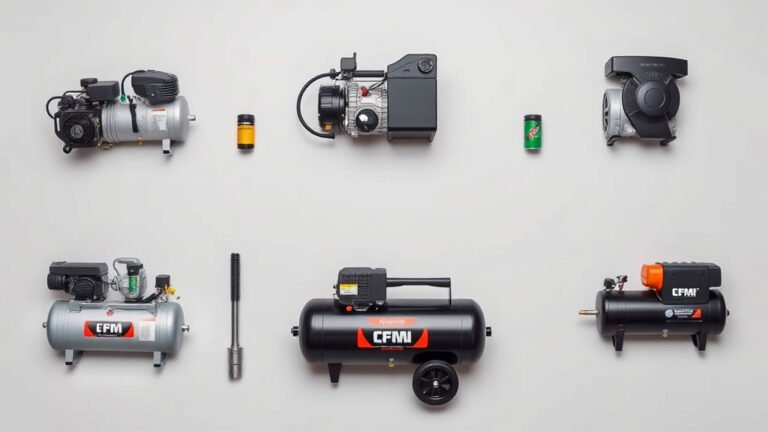
The main player here is the power of your air compressor. This usually comes down to two ratings: PSI (pounds per square inch) and CFM (cubic feet per minute). A higher PSI means your compressor can push more air into the tire. A higher CFM means it can deliver that air more quickly. A small, portable compressor might have a lower PSI and CFM, meaning it will take longer. A larger shop compressor will blow air much faster. The power of your air compressor, often related to whether it’s a 1 cylinder vs 2 cylinder model, is a primary factor in inflation speed.
Tire Size: A Bigger Balloon Needs More Air
It’s simple math, really. Larger tires have a greater volume. This means they require more air to reach the proper inflation pressure. Filling up the tires on a small compact car will be quicker than topping off the tires on a large SUV or truck. The sidewall of your tire will have its size printed on it (e.g., P215/60R16). The larger the numbers, the bigger the tire.
Starting Pressure: From Flat to Full
This is a big one. Are you topping off a tire that’s just a little low, or is it completely flat? If a tire is completely flat, it will naturally take the longest amount of time to fill. If it’s just a few PSI down, you’ll be done in a minute or two. Research from automotive associations often highlights that even a small loss of air pressure can affect your car’s handling and fuel efficiency.
The Air Hose and Nozzle Connection
Sometimes, the simplest things can slow you down. A kinked or narrow air hose can restrict airflow. Also, a leaky or poorly fitting air chuck on the nozzle can cause air to escape, making the process take longer. Ensuring a secure and tight seal on the tire valve is key for efficient inflation.
Typical Inflation Times for Different Compressors
To give you a better idea, let’s look at some common scenarios. These are estimates, of course, but they should help you set your expectations.
Portable 12V Tire Inflators
These are the little compressors that plug into your car’s 12V outlet. They’re super convenient for emergencies. Because they’re small, they tend to be slower. For a standard car tire, you might be looking at 5 to 10 minutes per tire, especially if it’s significantly low. They often have a lower PSI output, typically around 100-150 PSI.
Small Electric (AC) Compressors
These are often found in garages and can be more powerful than 12V models. They run on household electricity. Inflation time can be quicker, maybe 3 to 7 minutes per tire, depending on their PSI and CFM ratings. Some might reach up to 125-150 PSI.
Larger Shop Air Compressors
If you have a more robust compressor, like one used for power tools in a garage or workshop, you’ll likely see the fastest inflation times. These machines often have higher CFM ratings and can deliver air much more rapidly. You could potentially fill a standard car tire in as little as 1 to 3 minutes. They can also handle much higher PSI levels, though you won’t need that much for your car tires.
When Is It Too Slow?
If you’ve been filling a tire for 15 minutes and it’s still incredibly low, something might be wrong. It could be a leak in the tire itself, a faulty valve stem, or an issue with your compressor or hose. Don’t just keep filling; it’s time to investigate the problem.
Making Tire Inflation as Efficient as Possible
Want to get the job done without unnecessary waiting? Here are a few tips we found helpful:
- Check your tires regularly. Don’t wait until they’re very low. A quick top-off is always faster.
- Use the right PSI for your compressor. Make sure it’s set to deliver the correct pressure for your tires.
- Ensure a good seal. Press the air chuck firmly onto the tire valve to prevent leaks.
- Keep your compressor in good shape. Regular maintenance means it will perform better.
- Have the right equipment. A compressor with adequate PSI and CFM will always be faster.
It’s also worth noting that over-inflating can be just as bad as under-inflating. Your car’s recommended tire pressure is usually found on a sticker inside the driver’s side doorjamb or in your owner’s manual. Never inflate to the maximum pressure listed on the tire sidewall itself, as that’s the maximum the tire can hold, not the recommended pressure for your vehicle.
| Compressor Type | Estimated Time per Tire (Standard Car) | Typical PSI Range |
|---|---|---|
| Portable 12V | 5-10 minutes | 100-150 PSI |
| Small Electric (AC) | 3-7 minutes | 125-150 PSI |
| Large Shop Compressor | 1-3 minutes | 150+ PSI (but used at lower settings) |
So, while there’s no single exact answer, you can usually expect a tire fill-up to be a relatively brief task. Understanding the factors involved helps you know what’s normal and what might signal an issue. Getting your tire pressure right is important for safety and your car’s performance, and now you know how long you might be spending to achieve it!
Conclusion
You’ve now got a clear picture of how long it really takes to fill your tires with an air compressor. Remember, most standard car tires can be inflated in just 2 to 5 minutes. Factors like your compressor’s power, the tire’s size, and how low the pressure is can all affect this timing. Larger compressors and smaller tires will speed things up, while a flat tire or a weaker compressor will take a bit longer. The key is to stay informed so you know what’s normal and when to check for issues. Regularly topping off your tires is the best way to ensure they’re always ready to roll safely and efficiently!
Frequently Asked Questions
How long should I expect it to take to fill a completely flat tire?
Filling a tire from completely flat will take the longest. For a standard car tire, you could be looking at anywhere from 5 to 10 minutes, especially if you’re using a portable 12V compressor. Larger or more powerful compressors will reduce this time considerably.
Is it normal for a portable 12V compressor to take 10 minutes per tire?
Yes, it’s quite normal for portable 12V compressors to take that long, or even a bit more, to fill a tire from significantly low pressure. These smaller units have less power and CFM, so they just naturally take more time to do the job compared to larger, more powerful models.
What if my compressor seems too slow to fill a tire?
If you’ve been trying to fill a tire for over 15 minutes and it’s still very low, it’s time to investigate. This could indicate a slow leak in the tire itself, a faulty valve stem, or a problem with your air hose or compressor. It’s best to stop and check for these issues rather than continuing to run the compressor.
Does the PSI of my compressor affect how quickly the tire fills?
Yes, your compressor’s PSI rating is a major factor. A compressor with a higher PSI can push air into the tire with more force, generally leading to faster inflation times. While car tires don’t need extremely high PSI, a higher output compressor will still fill them more quickly than a lower PSI model.
Will filling a large truck tire take much longer than a car tire?
Absolutely. Larger tires have a greater volume, meaning they require significantly more air to reach the correct pressure. Filling a truck tire will take longer than a standard car tire, even with the same compressor. The difference in time can be substantial depending on the size difference between the tires.