How Long Should Your Air Compressor Run October 2026
So, how long should your air compressor run? The answer really depends. For most household tasks, a compressor might run for 10-20 minutes continuously to fill its tank. Longer jobs might require it to cycle on and off for several hours. Understanding your compressor’s duty cycle is key to preventing overheating and damage.
Many factors influence how long an air compressor should run. Things like the size of the air tank, the demand from your tool, and even the ambient temperature all play a role. Knowing these variables helps you operate your compressor efficiently and safely, extending its lifespan and ensuring it’s ready when you need it.
TL;DR:
- Short tasks: 10-20 mins to fill tank.
- Longer jobs: Can run for hours, cycling on/off.
- Duty cycle matters for preventing overheating.
- Tank size impacts run time.
- Tool demand is a big factor.
Let’s dive deeper into what affects your air compressor’s run time and how to keep it happy and healthy.
Your air compressor is a workhorse, but like any machine, it has limits. Pushing it too hard can lead to overheating, reduced performance, and even costly damage. So, how long can you realistically expect yours to run?
Understanding Your Air Compressor’s Duty Cycle
The key to knowing how long your air compressor should run lies in its duty cycle. This is a manufacturer-rated percentage indicating how long the compressor can run within a 10-minute period without overheating. It’s a really important specification!
What Does Duty Cycle Mean for You?
Think of it like this: a 50% duty cycle means your compressor can run for 5 minutes out of every 10 minutes. It then needs to rest for the remaining 5 minutes. If your compressor has a 75% duty cycle, it can run for 7.5 minutes out of 10. Most compressors for home use have a duty cycle between 50% and 75%.
You might see compressors rated for 100% duty cycle. These are typically designed for industrial use and can run continuously without a rest period. They are usually larger and more expensive.
How to Find Your Compressor’s Duty Cycle
You can usually find the duty cycle information in your air compressor’s user manual. It might also be listed on a sticker on the compressor itself or on the manufacturer’s website. Don’t guess – check the specs!
Factors That Influence Run Time
Several things affect how long your compressor can operate before needing a break. Understanding these helps you manage its workload effectively.
Tank Size: The Air Reservoir
The size of your air compressor’s tank plays a big role. A larger tank stores more compressed air. This means the compressor motor doesn’t have to kick on as often to refill it. For example, a 60-gallon tank will keep air flowing much longer than a 2-gallon portable model. You’ll hear it cycle less frequently.
Tool Demand: How Much Air Are You Using?
The tool you’re using is a major factor. Some tools are air hogs, while others sip air. A framing nailer uses less air than an impact wrench or a sander. If your tool is using a lot of air, the compressor will have to work harder and run more often to keep up. This can shorten the overall run time between cycles.
Understanding CFM Ratings
Look for the CFM (Cubic Feet per Minute) rating of both your compressor and your tool. The compressor’s CFM output should ideally be higher than the tool’s CFM requirement. If your compressor’s CFM is too low for the tool, it will struggle and run constantly, risking overheating.
Ambient Temperature: It Matters!
Where you use your compressor can impact its run time. Compressors generate heat as they work. If you’re operating in a hot environment, the compressor will heat up faster. This means it will reach its thermal limit sooner and need to cool down. Running a compressor in direct sunlight on a hot summer day is a recipe for trouble. Aim for cooler, shaded areas when possible.
Compressor Type: Oil vs. Oil-Free
The type of compressor also plays a role. Oil-lubricated compressors tend to be more durable and can often handle longer run times than oil-free models. They are also generally quieter and run cooler. Oil-free compressors are often lighter and more portable but might have a lower duty cycle and can be noisier.
Typical Run Times for Common Tasks
Let’s break down what you can expect for different jobs:
Short Bursts: Inflation and Brad Nailing
For quick tasks like inflating tires or using a brad nailer, your compressor will likely run for a short time to fill the tank initially. After that, it will cycle on and off as needed. You might not even notice it running much during these low-demand activities. The total continuous motor run time for filling the tank might be around 5-10 minutes.
Medium Duty: Painting and Impact Wrenches
Tasks like spray painting or using an impact wrench for extended periods will cause your compressor to cycle more frequently. You’re using air faster than with nail guns. Expect the compressor to run intermittently for several hours. Keep an eye on it to ensure it’s not running too long between cooling cycles.
Heavy Duty: Continuous Airflow Needs
For very demanding jobs that require a constant supply of air, like operating large sanders or multiple tools simultaneously, you might need a higher-duty cycle compressor or a larger tank. If your compressor is constantly running and not reaching its cut-off pressure, it’s likely being overworked. This is where a 100% duty cycle compressor shines.
Tips for Extending Compressor Life and Performance
Want your air compressor to last? Follow these simple tips:
- Always check your compressor’s duty cycle before starting a long job.
- Ensure the compressor is in a well-ventilated area.
- Don’t run the compressor in temperatures above 90°F (32°C) if possible.
- Maintain proper air pressure settings – don’t run it higher than needed.
- Perform regular maintenance, like draining the tank and checking oil levels.
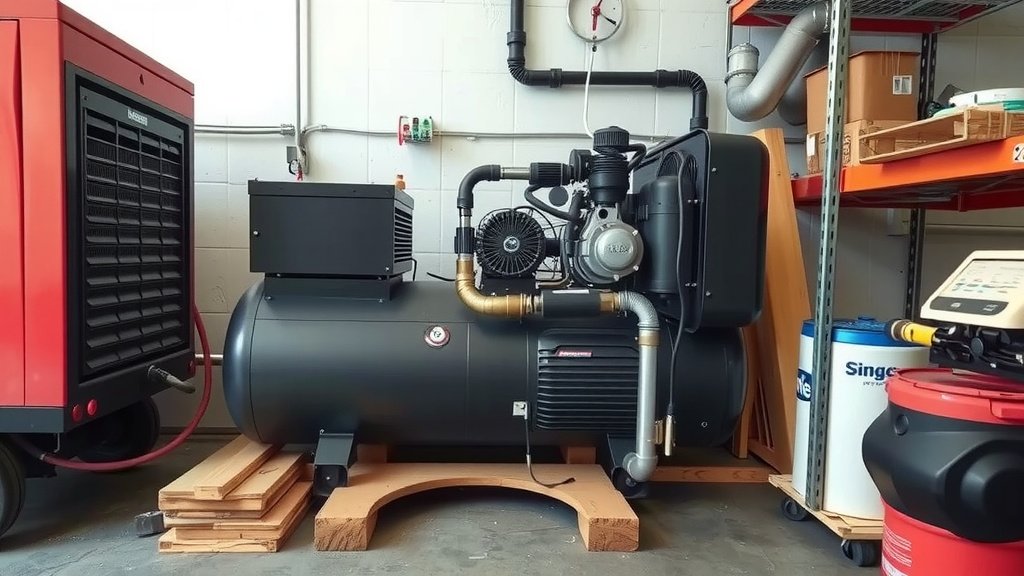
When to Let Your Compressor Rest
Listen to your compressor. If you hear it straining, running much hotter than usual, or cycling on and off excessively without much time to cool, it’s telling you it needs a break. Overheating is the enemy of air compressors.
Many compressor motors have thermal overload protection. This is a safety feature that will shut the motor off if it gets too hot. While this prevents immediate damage, frequent thermal cut-offs indicate you’re pushing the compressor too hard for its rated duty cycle or operating conditions.
If your compressor has a 50% duty cycle, and you’re using it for more than 5 minutes out of every 10 for an extended period, you’re asking for trouble. Give it a rest! It’s better to take a short break than to risk a breakdown.
Troubleshooting Common Run Time Issues
Encountering problems? Here’s a quick guide:
| Problem | Possible Cause | Solution |
|---|---|---|
| Compressor runs constantly, doesn’t shut off. | Low air pressure setting, faulty pressure switch, air leak. | Adjust pressure switch, check for leaks and repair. |
| Compressor shuts off frequently (thermal overload). | Overheating due to high ambient temperature, inadequate ventilation, duty cycle exceeded, low oil (if applicable). | Move to a cooler spot, improve ventilation, check duty cycle, check oil level. |
| Takes too long to build pressure. | Air leaks, worn piston rings, faulty check valve. | Check for and repair leaks, professional servicing may be needed. |
When in doubt, consult your owner’s manual or a qualified technician. They can help diagnose more complex issues.
Conclusion
Understanding your air compressor’s run time is all about respecting its limits. You’ve learned that duty cycle, tank size, and the demands of your tools are key players. Don’t push your compressor past its capabilities; listening to its sounds and observing its behavior will tell you when it needs a rest. Regular maintenance and proper operating conditions, like cooler temperatures and good ventilation, will help it perform its best for years to come. Your next step is to check your compressor’s manual for its specific duty cycle and keep these factors in mind for your next project.
Frequently Asked Questions
How often should my air compressor cycle on and off?
Your air compressor’s cycling frequency depends on its tank size and the demand from your tool. For low-demand tasks, it might cycle less often. For high-demand tasks, it will cycle more frequently to maintain pressure. If it’s cycling excessively without much rest, it might be overworked.
Can I run my air compressor longer than its rated duty cycle?
While you might get away with it occasionally, it’s not recommended. Running your compressor beyond its rated duty cycle can lead to overheating and premature wear, potentially causing damage. Always try to give it the rest periods it needs.
Does a larger air compressor tank mean I can run it longer?
Yes, a larger tank stores more compressed air. This means the motor doesn’t have to run as often to refill it. You’ll experience longer periods of air availability between motor cycles.
What happens if my air compressor overheats?
Most air compressors have a thermal overload protection feature that will automatically shut the motor off if it gets too hot. This prevents immediate damage, but frequent shut-offs indicate you’re exceeding its duty cycle or operating conditions.
Should I let my air compressor cool down completely before using it again?
You don’t necessarily need to wait for it to cool completely. The goal is to allow sufficient rest time according to its duty cycle. If it’s a 50% duty cycle, give it at least 5 minutes of rest for every 5 minutes of runtime to prevent overheating.