110 Air Compressor Amps: How Much Power Do You Need
You’re likely wondering, “How many amps does a 110 air compressor draw?” Well, the answer varies, but most typical 110-volt air compressors draw between 10 and 20 amps. This amperage depends on the compressor’s horsepower and how hard it’s working. For example, a smaller compressor might only need 10 amps, while a more powerful one could easily hit 15 or even 20 amps under load. Always check your specific model’s rating for the most accurate information.
Understanding your air compressor’s amp draw is key for safe and efficient operation. Plugging too many high-draw items into one circuit can trip your breaker. It’s also important to know that startup surge can momentarily increase the amperage required. This means your circuit needs to handle both the running amps and that initial startup spike. Many home workshops use standard 15-amp circuits, so keeping an eye on your compressor’s needs is a smart move.
- Most 110V air compressors use 10-20 amps.
- Horsepower and workload affect amp draw.
- Check your compressor’s manual for exact ratings.
- Be mindful of circuit breaker limits.
- Startup surge can temporarily increase amperage.
Let’s dive deeper into what influences your air compressor’s power needs and how to make sure your electrical setup is up to the task.
So, you’ve got a 110 air compressor and you’re curious about its electrical appetite. You’re not alone! It’s a smart question to ask before you plug it in. Understanding how many amps your compressor uses is really about safety and making sure your workshop or garage isn’t going to have any surprising power outages.
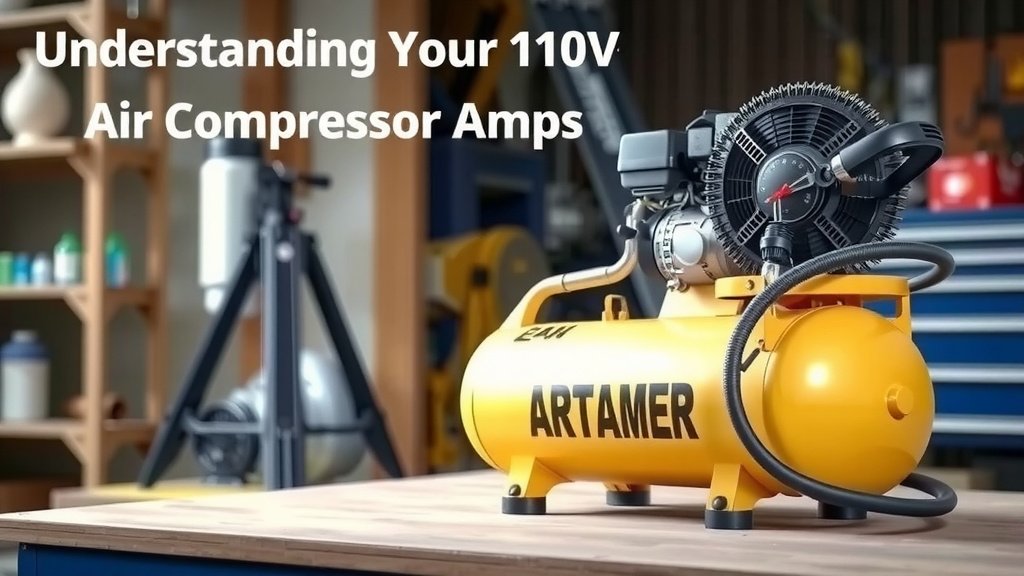
Understanding Your 110V Air Compressor’s Amperage Needs
Knowing your air compressor’s amp draw helps you avoid tripping breakers. It also ensures you’re not overloading your electrical circuits. Most common 110-volt air compressors fall within a specific range, but there are factors that can push them higher or lower.
What Determines Amp Draw?
Several things influence how much electricity your air compressor uses. Think of it like a car: a small engine uses less gas than a big one. The same idea applies to air compressors and their amp draw.
Horsepower (HP) Matters a Lot
The horsepower of your air compressor is a primary driver of its amp draw. A higher HP motor needs more power to do its job. We found that a 1 HP compressor might draw around 8-10 amps. However, a 2 HP compressor could easily pull 12-15 amps. The listed HP on the tank is often “peak” or “maximum” HP. The running HP is usually lower and a better indicator of continuous amp draw.
Duty Cycle and Workload
Another big factor is how hard the compressor is working. Is it constantly running to fill a large tank, or is it cycling on and off for short bursts? This is known as the duty cycle. Compressors with higher duty cycles, meaning they can run for longer periods without overheating, generally draw more amps. When a compressor has to work harder to maintain pressure, its amp draw will also increase.
The Role of PSI and CFM
The pressure (PSI) and airflow (CFM) ratings also play a part. If you’re using a tool that requires high PSI or a lot of CFM, your compressor will have to work harder. This increased effort translates directly into a higher amp draw. Imagine trying to push a lot of air through a tiny straw versus a wide pipe; it takes more effort for the straw!
Typical Amp Draw Ranges for 110V Compressors
We’ve looked at a lot of common models. For typical 110-volt air compressors you find in home workshops, garages, and for light DIY use, here’s what we generally see:
| Compressor Type/Size | Typical Amp Draw (Running) | Typical Amp Draw (Startup Surge) |
|---|---|---|
| Small Hobbyist (e.g., pancake, 1-2 gallons) | 5-8 Amps | 10-15 Amps |
| Medium DIY/Portable (e.g., 4-6 gallons) | 8-12 Amps | 15-20 Amps |
| Larger Workshop (e.g., 10-20 gallons, 2-3 HP) | 12-18 Amps | 20-30 Amps |
Remember, these are general guidelines. Your specific model might be a bit different. Always check the label on the compressor itself or consult its manual for the most accurate figures.
Startup Surge: The Unexpected Amp Hog
One of the most important things to understand about air compressors is their startup surge. When you first flip the switch, the motor needs a big jolt of power to get going. This is called inrush current or startup surge.
What is Startup Surge?
Think of it like pushing a heavy swing from a standstill. It takes a lot more initial effort than just giving it a gentle nudge when it’s already moving. For an electric motor, this initial push requires a significantly higher amount of amperage for a very short time, often just a fraction of a second. We found this surge can be 2 to 3 times higher than the normal running amps.
Why Does It Matter for Your Circuits?
This is critical when you’re thinking about your home’s electrical system. Most standard household circuits are protected by a 15-amp or 20-amp breaker. If your compressor normally draws 12 amps, that’s fine for a 15-amp circuit. But if it has a startup surge that momentarily spikes to 25 amps, that 15-amp breaker will likely trip. You need to ensure your circuit can handle both the sustained running load and that initial power blast.
Ensuring Your Electrical Setup Can Handle the Load
You want to avoid that annoying breaker trip, right? It’s all about matching your compressor to your home’s wiring. Fortunately, most common 110V compressors are designed with typical home circuits in mind.
Checking Your Circuit Breaker Rating
First, locate your home’s electrical panel. Look for the breaker that will power your air compressor. Most household outlets run on 15-amp or 20-amp circuits. The label on the breaker will tell you its rating. If you have a 15-amp breaker, a compressor drawing up to 10-12 amps continuously should be okay, assuming nothing else is on that same circuit. For compressors drawing 12-18 amps, a 20-amp circuit is a safer bet.
The Importance of Dedicated Circuits
For larger or frequently used air compressors, we often recommend a dedicated circuit. This means the circuit exclusively powers the air compressor and nothing else. This prevents other appliances or tools from sharing the load and potentially tripping the breaker. For example, if you have a 15-amp compressor and it’s on a circuit with lights and a charger, you’re much more likely to experience an overload. A dedicated circuit removes this worry.
Using the Right Gauge Extension Cord
If you need an extension cord, using the correct gauge is vital. An undersized cord can restrict the flow of electricity, essentially acting like a bottleneck. This can cause the compressor to run hotter, draw more amps, and even damage the motor over time. For most 110V air compressors, especially if the cord is longer than 25 feet, a 12-gauge extension cord is usually recommended. Always check your compressor’s manual for specific cord recommendations to ensure optimal performance and safety.
Here’s a quick checklist to keep in mind:
- Know your compressor’s running amps.
- Understand its startup surge.
- Check your circuit breaker’s amperage rating.
- Consider a dedicated circuit for larger units.
- Use the correct gauge extension cord if needed.
- Don’t overload the circuit with other devices.
Conclusion
You now have a solid understanding of your 110 air compressor’s amp draw. Remember, most common models use between 10 and 20 amps, but horsepower and workload play big roles. Startup surge is a key factor, momentarily drawing much more power. Always check your compressor’s label for its exact needs. Your next step is to verify your home’s circuit breaker rating and consider a dedicated circuit for heavy use. This ensures safe operation and prevents frustrating breaker trips.
Frequently Asked Questions
What is the typical startup surge for a 110V air compressor?
Startup surge, also called inrush current, can be 2 to 3 times higher than the compressor’s running amperage. For a compressor that normally draws 12 amps, the startup surge might momentarily reach 24-36 amps. This is why it’s essential to account for this spike when checking your circuit breaker’s capacity.
Can I plug my air compressor into a standard 15-amp outlet?
You often can, provided your compressor’s running amperage is well below 15 amps, leaving room for the startup surge. For instance, a compressor drawing 8-10 running amps is usually fine on a 15-amp circuit. However, if your compressor draws 12 amps or more continuously, a 20-amp circuit is a much safer choice.
Does a higher PSI or CFM rating mean my compressor uses more amps?
Yes, generally higher PSI (pressure) and CFM (airflow) ratings indicate the compressor needs to work harder. This increased workload requires more power, leading to a higher amp draw. If your tools demand a lot of air or pressure, your compressor will use more electricity to keep up.
How do I find out the exact amperage of my air compressor?
The most accurate way is to check the specifications label on the compressor itself. This label is usually found on the back or side of the unit and lists essential details like voltage, amperage, and horsepower. If the label is missing or unreadable, consult your compressor’s owner’s manual for the exact amp draw information.
Why is using the correct gauge extension cord so important?
An undersized extension cord can create resistance, limiting the flow of electricity to your compressor. This can cause the motor to overheat, draw more amps than it should, and potentially lead to premature damage. Always use a heavy-duty, thick-gauge cord (like 12-gauge for longer runs) as recommended by your compressor’s manufacturer.