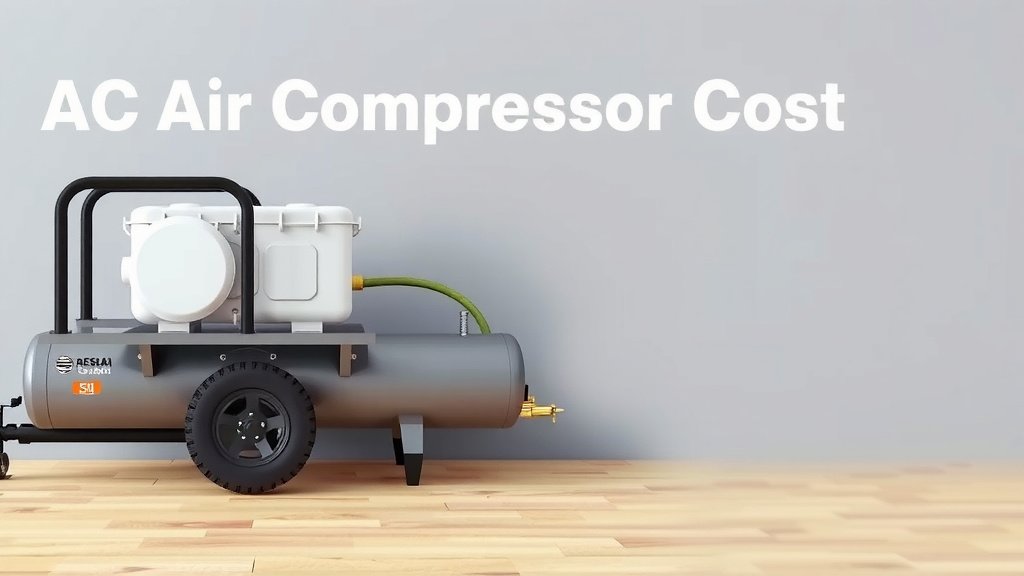
AC Air Compressor Cost: What to Expect
The cost of an AC air compressor can vary widely, typically ranging from $500 to $2,000 for parts alone, depending on the brand, type, and size. This price doesn’t include the labor for installation, which can add another $200 to $1,000 or more to the total bill. So, while you might find a compressor for a few hundred dollars, expect the full job to cost more.
Understanding this range is key when planning your HVAC budget. Many factors influence the final price, including whether you choose an OEM part or an aftermarket one, and the type of compressor your system uses. We found that newer, high-efficiency models often come with a higher price tag. It’s wise to get multiple quotes to ensure you’re getting a fair deal for your specific situation.
- Compressor part costs: $500 – $2,000
- Installation labor costs: $200 – $1,000+
- Total expected cost: $700 – $3,000+
- Factors affecting price: brand, type, size, parts vs. labor
- Always get multiple quotes.
Let’s dive into what determines these costs and what you should expect when replacing your AC air compressor.
Understanding AC Air Compressor Replacement Costs
So, your AC isn’t keeping its cool, and you’re wondering about the price of a new air compressor. This is a common concern, and it’s smart to get a handle on the potential costs. We found that the price tag for an AC air compressor can be a wide spectrum, generally running from $500 to $2,000 for the part itself. This price can jump up significantly when you factor in the professional labor needed to get it installed. You could be looking at an additional $200 to $1,000 or even more for that part of the job.
This means the total bill for a new compressor could easily fall between $700 and $3,000, and sometimes even higher. It’s not a small purchase, so understanding what influences this cost is key to budgeting effectively. We’ll break down the main factors that play a role so you can be prepared.
What Exactly Is An AC Air Compressor?
Think of your air conditioner like your car’s engine. The compressor is essentially the “heart” of your AC system. Its main job is to circulate the refrigerant, which is the fluid that carries heat away from your home. It does this by compressing the refrigerant gas, increasing its temperature and pressure, and then sending it to the outdoor unit to release heat.
When this critical component fails, your AC can no longer cool your home effectively. Many experts say that a compressor failure is often one of the most expensive AC repairs you can face. So, it’s no surprise that replacing it involves a considerable investment.
Key Factors Driving Compressor Prices
Why such a big range in prices? Several elements contribute to the final number you’ll see on an invoice. Let’s explore the biggest ones.
Brand Name Matters
Just like with any appliance or electronic device, brand reputation and perceived quality can impact cost. Some brands are known for their long-lasting performance and innovative technology, and you’ll often pay a premium for that name. Major brands like Carrier, Trane, and Lennox might have higher-priced compressors compared to lesser-known or aftermarket brands.
We found that some homeowners prefer sticking with the original equipment manufacturer (OEM) parts to ensure perfect compatibility. While this can offer peace of mind, it often comes with a higher price tag than generic or aftermarket options. However, sometimes the OEM part is the only option available for certain models.
Type of Compressor: Different Strokes for Different Folks
There isn’t just one kind of AC compressor. The technology used significantly affects the price. The most common types you’ll encounter are: To understand compressor types, learn about the difference between a 1-gallon vs 2-gallon air compressor.
Single-Stage Compressors
These are the most basic and generally the most affordable type. A single-stage compressor operates at one speed – either it’s on, or it’s off. It runs at full capacity until the thermostat is satisfied, then shuts off. They are reliable but can lead to more temperature fluctuations in your home.
Two-Stage Compressors
These compressors offer more control. They can run at a lower speed for most of the cooling needed, only kicking into high gear when temperatures really climb. This energy efficiency often means they cost more upfront. You’ll likely find them in mid-range AC units.
Variable-Speed (Inverter) Compressors
These are the most advanced and expensive option. Variable-speed compressors can adjust their output in tiny increments, providing incredibly consistent temperatures and superior humidity control. They are also the most energy-efficient. Because of their sophisticated technology, they carry the highest price tag.
Size and Capacity of Your AC Unit
The physical size and cooling capacity (measured in tons) of your air conditioning unit also influence the compressor’s cost. A larger home or a unit designed for higher cooling loads will naturally require a more powerful, and thus more expensive, compressor. Think of it like needing a bigger engine for a bigger truck.
The Age and Efficiency of Your System
Newer, high-efficiency AC systems often use more advanced compressor technology. These units are designed to meet stricter government energy standards. While they save you money on your energy bills over time, the initial cost of their components, including the compressor, tends to be higher. Older systems might use less sophisticated, and therefore cheaper, compressors, but they are often less energy-efficient.
Labor Costs: The Installation Factor
Let’s not forget the hands-on work involved. The price of the compressor part is only one piece of the puzzle. Installing a new AC compressor is a complex job that requires specialized tools and expertise. HVAC technicians need to safely handle refrigerants, electrical connections, and mechanical components.
The labor costs can vary based on several things. Your geographical location plays a role, as prevailing wages differ. The complexity of the installation – for example, if the unit is hard to access – can also increase the time needed and, therefore, the cost. We found that most HVAC companies charge an hourly rate for this type of work.
Aftermarket vs. OEM Parts: A Cost Comparison
When it’s time for a new compressor, you’ll often be presented with options: OEM (Original Equipment Manufacturer) parts or aftermarket parts. OEM parts are made by the same company that manufactured your original AC unit. They are designed to be a perfect fit and are generally considered the highest quality.
Aftermarket parts are made by third-party manufacturers. They are designed to be compatible with various AC models. While they can be significantly cheaper, the quality can vary. It’s wise to research the reputation of aftermarket part manufacturers and discuss this with your HVAC technician.
Getting the Best Value: Tips for Homeowners
So, how do you navigate these costs and ensure you’re getting a fair deal? Here are a few practical steps:
- Get Multiple Quotes: This is perhaps the most important step. Don’t settle for the first estimate you receive. We strongly recommend getting at least three detailed quotes from different reputable HVAC companies.
- Ask About Warranties: What kind of warranty comes with the new compressor? What about the labor? A good warranty can save you money down the line if issues arise.
- Understand the Part: Ask your technician to explain the type of compressor being recommended and why. Is it OEM or aftermarket? What brand?
- Check for Rebates: Sometimes, energy-efficient AC components qualify for utility company or government rebates. It’s worth asking if any are available.
- Consider the Age of Your Unit: If your AC unit is very old, and the compressor is failing, it might be more cost-effective in the long run to replace the entire system rather than just the compressor.
Conclusion
Replacing your AC air compressor is a substantial investment, with costs typically ranging from $700 to $3,000 or more when you factor in both parts and labor. We’ve learned that brand names, compressor type (single-stage, two-stage, or variable-speed), system size, and whether you choose OEM or aftermarket parts all play a role. Remember that labor is a significant portion of the total bill, and installation complexity can affect the price. To ensure you get the best value and a reliable repair, your next step should be to gather at least three detailed quotes from reputable HVAC professionals.
Frequently Asked Questions
How long does an AC air compressor typically last?
With regular maintenance, an AC air compressor can last anywhere from 10 to 15 years. Factors like climate, usage, and the quality of the unit itself can influence its lifespan. If your system is approaching this age, it might be worth discussing potential replacements with your HVAC technician.
Is it worth repairing a broken AC compressor?
Whether it’s worth repairing depends on the age of your AC unit and the cost of the repair versus replacement. If your AC is older than 10-12 years, a costly compressor repair might not be the best long-term solution. We found that often, replacing the entire AC unit is more cost-effective when major components like the compressor fail on an older system.
Can I replace the AC compressor myself?
Replacing an AC air compressor is a highly technical job that requires specialized tools, knowledge of refrigerant handling, and electrical expertise. We strongly advise against DIY replacement. It’s a job best left to certified HVAC professionals to ensure safety and proper installation.
What are the signs of a failing AC compressor?
Common signs of a failing AC compressor include your AC blowing warm air, strange noises (like buzzing or grinding) coming from the outdoor unit, or your AC cycling on and off frequently. You might also notice a significant increase in your energy bills if the compressor is struggling to work efficiently.
Are variable-speed compressors really worth the extra cost?
Variable-speed (inverter) compressors are the most expensive upfront but can offer significant long-term savings. We’ve seen that their ability to precisely control cooling output leads to greater energy efficiency, more consistent temperatures, and better humidity control. For many homeowners, the energy savings and comfort improvements can justify the higher initial investment.