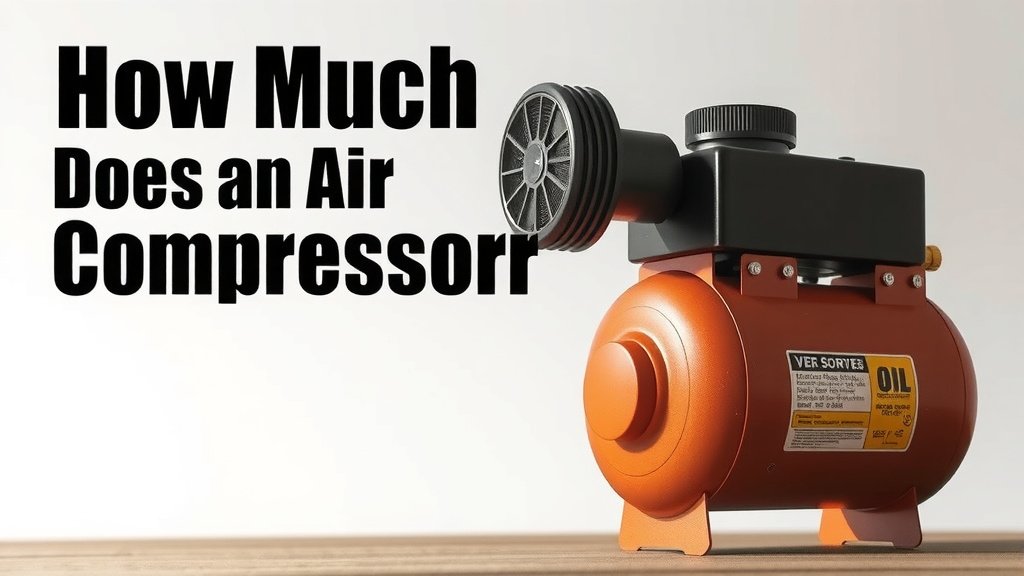
How Much Oil Does an Air Compressor Need
The amount of oil your air compressor needs depends heavily on its specific model and size. Most small, portable compressors use between 10 to 30 ounces of oil, while larger stationary units can require significantly more. Always check your owner’s manual for the precise capacity to keep your compressor running smoothly.
Knowing the right oil level is key for your compressor’s performance and longevity. Too little oil can cause expensive damage from friction. Too much can lead to oil being pushed through the air lines, which is messy and potentially harmful. It’s a simple check that makes a big difference.
- Oil capacity varies by compressor size.
- Always consult your owner’s manual for exact amounts.
- Too little or too much oil causes problems.
- Proper oil levels ensure peak performance.
Below, we’ll walk you through how to find that exact amount and what happens if you get it wrong.
Understanding Your Air Compressor’s Oil Needs
Knowing precisely how much oil your air compressor requires is a bit like knowing how much gas your car needs. It’s not a one-size-fits-all situation.
The exact oil capacity for your compressor is primarily determined by its tank size and pump design. Think of it this way: a tiny portable compressor is like a compact car, needing just a few quarts. A large industrial unit is more like a semi-truck, requiring a much larger volume.
Why Oil Level Matters So Much
The oil in your compressor is the unsung hero. It works tirelessly to lubricate moving parts, preventing them from grinding against each other. This friction would quickly lead to overheating and catastrophic failure.
Oil also plays a vital role in cooling the compressor. As parts move rapidly, they generate heat. The circulating oil absorbs this heat and carries it away, keeping everything at a manageable temperature. Without enough oil, this cooling mechanism fails.
Finally, oil creates a seal. It helps prevent air leaks within the pump mechanism. This ensures the compressor operates efficiently, building pressure as it should without wasting energy.
Finding the Correct Oil Capacity for Your Unit
Your owner’s manual is your absolute best friend here. It contains the manufacturer’s specific recommendations for your model. Don’t guess or assume!
If you can’t find your physical manual, most manufacturers have them available for download on their websites. You’ll typically need your compressor’s model number to find the right document.
Look for a section detailing maintenance, specifications, or oil requirements. It will clearly state the type of oil needed and the exact fill capacity.
What If I Can’t Find My Manual?
Don’t panic if your manual has gone AWOL. There are still a few ways to find the information you need.
First, check the compressor itself. Many units have a data plate or sticker affixed to the tank or pump that lists key specifications, including oil capacity.
Second, visit the manufacturer’s website. Search for your model number. Often, you can find product pages with downloadable manuals or specification sheets.
Third, contact the manufacturer’s customer support. They can usually provide the oil capacity if you give them your model and serial number.
Typical Oil Capacities by Compressor Type
While the manual is always the definitive source, understanding typical ranges can give you a general idea. These are not substitutes for your manual’s information.
| Compressor Type | Typical Oil Capacity Range |
|---|---|
| Small Portable (Pancake, Hot Dog) | 10-20 ounces |
| Medium Portable/Jobsite | 15-30 ounces |
| Larger Vertical/Stationary (Home Garage) | 30-60 ounces |
| Industrial/Large Stationary Units | 60+ ounces (can require multiple quarts) |
As you can see, there’s a wide variation. A small compressor might only need about a can of soda’s worth of oil, while a large industrial unit could need as much as a small car’s oil change.
The “Fill to the Mark” Rule
Most compressors have a sight glass or dipstick. This is your visual guide for the correct oil level.
The goal is to fill the oil until it reaches the “full” or “max” line indicated on the sight glass or dipstick. Never fill it above this line.
It’s better to be slightly under the full mark than significantly over. You can always add a little more oil if needed. The crucial part is to ensure it’s never below the minimum or “add” line.
Consequences of Incorrect Oil Levels
Getting the oil level wrong isn’t just a minor inconvenience; it can lead to serious issues. Both too little and too much oil can cause problems.
Too Little Oil: The Silent Killer
Running a compressor with insufficient oil is like running your car without oil. Friction takes over.
Internal components, like the piston rings and cylinder walls, won’t be adequately lubricated. This accelerated wear can quickly lead to reduced performance and eventually, component failure.
You might notice overheating, unusual noises, or a decrease in air output. These are warning signs that your compressor is struggling due to low oil.
In severe cases, a lack of lubrication can cause pistons to seize in the cylinders. This is a catastrophic failure that often means the compressor is beyond repair (National Institute for Occupational Safety and Health).
Too Much Oil: The Messy Menace
While it might seem like more oil equals better protection, that’s not the case. Overfilling can also be detrimental.
When the oil level is too high, the rapidly spinning crankshaft can churn the excess oil into a frothy mixture. This aerated oil doesn’t lubricate as effectively. It can also lead to excessive pressure buildup within the crankcase.
The most common symptom of overfilling is oil being carried over into the air lines. You’ll see oily residue on your tools and in the compressed air. This is not only messy but can damage sensitive pneumatic tools and create hazardous work environments (Occupational Safety and Health Administration).
Excessive oil can also cause the compressor to overheat, as the aeration reduces its cooling efficiency. It can even lead to oil blowing out of the crankcase breather, creating a significant mess.
Checking and Topping Off Your Oil
Making oil checks a regular part of your maintenance routine is smart. It only takes a minute.
First, ensure your compressor is turned off and unplugged. Safety first!
Second, position the compressor on a level surface. An unlevel surface will give you an inaccurate reading.
Third, locate the sight glass or dipstick. Clean it off with a rag.
Fourth, check the oil level. If it’s below the “add” or minimum mark, carefully add the recommended type of oil, a little at a time.
Fifth, re-check the level after each small addition. Stop when it reaches the “full” or maximum mark.
Sixth, replace the dipstick or cap securely.
It’s generally recommended to check your oil level before each use, especially if you use your compressor frequently. This simple habit can prevent many costly repairs down the line.
Conclusion
Your air compressor’s oil level is a simple yet vital aspect of its maintenance. We’ve seen how capacity varies greatly by size and design, making your owner’s manual your ultimate guide. Remember, both too little and too much oil can lead to costly repairs and reduced performance. Regularly checking your oil and keeping it at the proper level ensures your compressor runs efficiently and reliably for years to come. The easiest next step? Grab your manual, find your compressor’s model number, and confirm that exact oil capacity today.
Frequently Asked Questions
How do I know what type of oil to use?
Your owner’s manual will specify the exact type of oil recommended by the manufacturer. This is usually a specific weight, like SAE 30 or 20W, and may also mention if it needs to be synthetic or non-detergent.
Can I use automotive oil in my air compressor?
Generally, it’s best to avoid using standard automotive oil. Air compressor oils are formulated differently to handle the higher temperatures and specific pressures found within a compressor’s pump. Always stick to manufacturer recommendations.
What is a compressor’s “sight glass”?
A sight glass is a small, transparent window, usually on the side of the compressor’s crankcase, that allows you to visually check the oil level without needing a dipstick. It will typically have “min” and “max” or “add” and “full” marks.
How often should I check my air compressor’s oil level?
It’s a good practice to check your air compressor’s oil level before each use, especially if you use it frequently. For less frequent use, checking it weekly or monthly is also recommended.
Will a little bit of overfilling really hurt my compressor?
While a tiny amount over the ‘full’ line might not immediately cause damage, it’s not ideal. Overfilling can lead to oil being forced into the air lines, cause foaming, and potentially lead to overheating. It’s always best to aim for the exact ‘full’ mark.