Washer and Dryer Space: How Much Do You Need
Figuring out how much space you need for a washer and dryer is easier than you think. Generally, you’ll need about 30-36 inches in width for each appliance and at least 60 inches in depth to accommodate the machines and door swing. This standard size fits most common laundry setups.
Proper spacing ensures your laundry appliances function correctly and safely. It also prevents damage to your machines and surrounding walls. Understanding the minimum clearances for ventilation and access is key to a smooth laundry day. We’ve researched common laundry room dimensions.
- Standard washer/dryer needs about 30-36 inches wide each.
- Total depth should be around 60 inches for machines and doors.
- Always check your appliance’s manual for specific spacing.
- Consider space for venting, water hookups, and power cords.
- Factor in room to open doors and load/unload clothes easily.
Let’s walk through exactly how to measure and plan your laundry space to fit your new washer and dryer perfectly. We’ll cover the essentials so you can avoid any surprises.
Figuring Out Your Laundry Appliance Footprint
So, you’re ready to get your laundry room set up, or perhaps you’re upgrading your current machines. Great! One of the first, and most important, things to tackle is space planning. You don’t want to end up with a washer and dryer that are crammed in, making laundry day a struggle. We found that most standard washers and dryers need about 30 inches of width.
This measurement covers the main body of the machine. But what about when the doors are open? Or the hoses? We’ll get into all those details. For now, think of that 30-inch figure as your starting point for each appliance.
Understanding the Width Requirements
When we talk about width, we’re talking about the side-to-side space each machine needs. Most standard washing machines and dryers are around 27 to 30 inches wide Most standard washing machines and dryers are around 27 to 30 inches wide. Our guide to standard front load washer size explains these dimensions.. However, some high-capacity models can be a bit wider, sometimes reaching up to 33 inches.
It’s crucial to know the exact width of the models you’re considering. Manufacturers usually list the dimensions clearly. Always double-check the product specs before you buy. This simple step can save you a lot of headaches later on.
Standard vs. High-Capacity Machines
For most households, standard-sized appliances will do the trick. They fit comfortably in the typical 30-inch space. But if you have a large family or do a lot of bulky loads, you might be looking at high-capacity machines.
These powerhouses offer more room for your clothes. Research indicates they can be 2 to 3 inches wider than standard models. So, instead of 30 inches, you might need closer to 33 inches for these. Always factor in this extra bit of width when you’re measuring your space.
Measuring Your Current Space
Before you even look at new appliances, grab your tape measure! You need to know the actual width available in your laundry area. Measure from wall to wall, or from one cabinet to another, if your machines will be in a built-in nook.
Remember to account for any existing obstructions. Are there pipes, electrical outlets, or vents that stick out? These can eat up precious inches. Measure the narrowest points of the space to get the most accurate idea of what you can fit.
Depth: More Than Just the Machine’s Footprint
Depth is where many people run into trouble. It’s not just about how deep the washing machine or dryer itself is. You also need to consider the space for hoses, electrical cords, and, importantly, the door swing.
Many machines are around 30 to 34 inches deep. But when you add the vent hose for the dryer and the water hoses for the washer, that depth can easily jump to 35 to 39 inches. Don’t forget the front door swing!
Accounting for Door Clearance
This is a big one. You need enough space for the doors to open fully, allowing you to load and unload clothes without bumping into anything. For front-loading machines, the doors typically swing out about 90 degrees or more.
If a machine is 34 inches deep, and its door swings open another 15 inches, you’re looking at needing nearly 50 inches of clear floor space in front of it just for the door. This is why a total depth of at least 60 inches is often recommended.
Allowing for Ventilation and Connections
Washers and dryers need to breathe, especially dryers! Proper ventilation prevents overheating and ensures your dryer works efficiently. Many dryer models require 4 to 6 inches of clearance behind the machine for the vent hose to connect properly without kinks.
Washers also need a little space for water hookups and drain hoses. While these are usually more compact, it’s wise to allow at least 2 to 3 inches behind the washer. Combining these, you can see how quickly the depth requirement grows.
Calculating Your Total Space Needs
Let’s put it all together. You’ll likely need two main measurements: width and depth.
Width Calculation
For two standard machines side-by-side: * Washer width (approx. 30 inches) * Space between machines (optional, but nice if possible, say 1 inch) * Dryer width (approx. 30 inches) * Total: Roughly 61 inches if placed side-by-side. If you stack them, you only need the width of one machine. This is a huge space saver!
Depth Calculation
For a single machine (like a front-loader): * Machine depth (approx. 34 inches) * Hose/vent clearance (approx. 5 inches) * Door swing clearance (approx. 15-20 inches) * Total: Around 54 to 59 inches needed in front of the appliance.
We found that aiming for a minimum of 30-36 inches wide per appliance and at least 60 inches deep from the wall is a good rule of thumb for most setups. This gives you enough room for everything we’ve discussed.
Considering Different Laundry Setups
Not all laundry rooms are created equal. Where you place your washer and dryer will affect the space you need.
Side-by-Side Arrangement
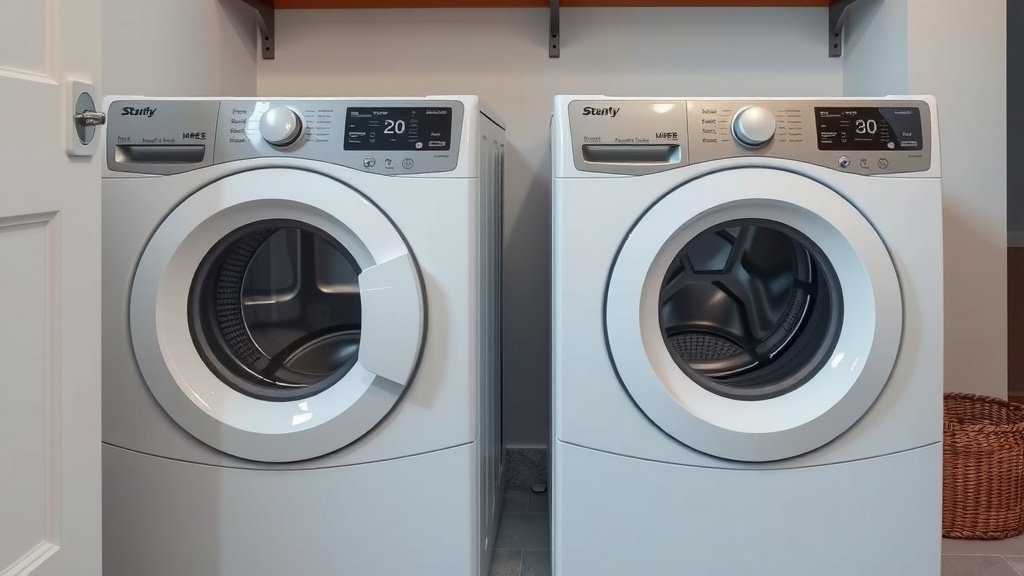
This is common in larger laundry rooms or garages. You place the washer and dryer next to each other. You’ll need the combined width of both machines, plus any desired gap between them.
For example, two 30-inch wide machines side-by-side will require about 60 inches of clear horizontal space. The depth needed for each machine still applies, so ensure you have enough room for doors to swing open without hitting each other or walls.
Stacked Arrangement
This is perfect for smaller spaces, like closets or alcoves. You’ll need a laundry pedestal or a stacking kit. This setup requires only the width of a single appliance but doubles the depth requirement for the combined unit.
You’ll need enough depth for the two stacked machines, plus clearance for hoses and maintenance. While you save width, ensure your walls and ceiling can accommodate the height. Most stacked units are around 70-80 inches tall.
In-Closet Setups
Often found in apartments or smaller homes, these are typically smaller, compact units. They fit into a standard closet. You still need to account for door swings of the closet itself, plus the appliance doors, and that all-important ventilation.
Research from appliance manufacturers suggests that even compact units need about 4 inches of clearance around them for airflow. So, if your closet is exactly 30 inches wide, a 27-inch machine might be a tight squeeze once you add that clearance.
Your Quick Space Planning Checklist
Before you commit to a new washer and dryer, run through this quick checklist:
- Measure the width of your intended laundry space.
- Measure the depth of your intended laundry space.
- Check the exact width and depth of the appliances you are considering.
- Account for at least 5 inches of clearance behind the machines for hoses and vents.
- Ensure at least 15-20 inches of clearance in front for door swings and loading.
- Consider if stacking or side-by-side makes more sense for your space.
By taking these measurements and considerations into account, you’re well on your way to a perfectly functioning and frustration-free laundry space. It’s all about planning ahead!
Conclusion
You’ve learned that fitting a washer and dryer comes down to smart measurement and planning. Remember, the typical setup needs about 30-36 inches of width per appliance and at least 60 inches of depth for clearance. Always check your specific machine’s manual for exact dimensions. By accounting for door swings, ventilation, and hookups, you ensure your laundry area works efficiently and safely. Before you buy, grab that tape measure and confirm your space can comfortably accommodate your new laundry setup. This thoughtful approach will save you frustration and ensure smooth laundry days ahead.
Frequently Asked Questions
What if my laundry space is very narrow?
If your space is narrow, consider a stacked washer and dryer unit If your space is narrow, consider a stacked washer and dryer unit. Our guide covers the best rated apartment-size options.. This arrangement saves significant width, needing only the footprint of a single appliance. You’ll need to ensure your walls can support the height and that you have enough depth for both machines plus clearance.
Do I really need 60 inches of depth for a front-loader?
The 60 inches of depth is a guideline to accommodate the machine itself, the necessary space for hoses and vents behind it, and the full swing of the door. For front-loaders, the door swing is the biggest factor, often needing 15-20 inches of clear floor space to open fully without obstruction.
Can I put my washer and dryer in a closet?
Yes, you can often fit a washer and dryer in a closet, especially if you choose compact or apartment-sized units. Ensure the closet is wide enough for the appliances plus at least 4 inches of clearance for airflow. Always verify the closet’s depth can handle the machines and their connections.
What’s the minimum space needed between side-by-side units?
While not strictly required by all manufacturers, leaving a small gap of 1 inch between side-by-side washers and dryers is often recommended. This gap helps with airflow and makes it easier to access the sides of the machines for cleaning or maintenance. More space is always better if your area allows.
How much space do I need for dryer venting?
Most dryers require about 4 to 6 inches of clearance behind the unit for the vent hose. This space is crucial to prevent kinks in the hose, which can reduce drying efficiency and pose a fire hazard. Make sure your chosen location allows for this rear clearance without forcing the vent hose into sharp bends.

![7 Best Washer Dryer Stackable Combo [In 2026]](https://homeunderstandable.com/wp-content/uploads/2026/09/7-best-washer-dryer-stackable-combo-in-2026-featured-768x432.jpg)

![7 Washer Dryers Best [In 2026]](https://homeunderstandable.com/wp-content/uploads/2026/09/7-washer-dryers-best-in-2026-featured-768x432.jpg)