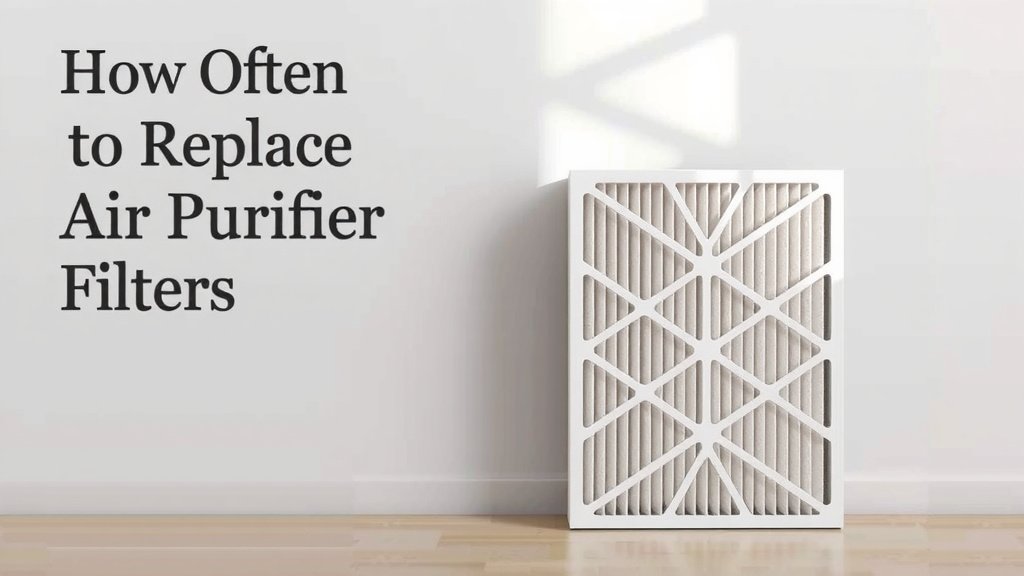
How Often to Replace Air Purifier Filters
You generally need to replace your air purifier filter every 6 to 12 months, but this can vary greatly. Some filters last only 3 months, while others might go a full year. The lifespan of your air purifier filter depends on factors like usage, air quality, and the type of filter you have. You’ll want to keep an eye on it to ensure your purifier works effectively.
Ignoring your air filter can reduce its ability to clean your air. A clogged filter means your purifier has to work harder. This can lead to poorer air quality and potentially shorten the life of your appliance. We found that regular checks are key to maintaining a healthy home environment.
- Air purifier filters usually need changing every 6-12 months.
- Filter life depends on usage, air quality, and filter type.
- Check your filter regularly for dust and debris.
- A dirty filter makes your purifier work harder and less effectively.
So, how often should *you* be swapping out that filter? Let’s break down what really impacts your air purifier’s filter life.
How Often Should You Swap Your Air Purifier Filter?
You’re probably wondering when it’s time to change your air purifier’s filter. The general rule of thumb is every six months to a year. But this isn’t a hard and fast rule for everyone. Think of it like changing the oil in your car. You don’t want to wait too long, or things can get messy.
Several factors play a big role in how quickly your filter gets clogged. You might need to replace it sooner than the recommended time. Or, you could potentially get a little more life out of it. Let’s look at what makes your filter’s lifespan tick.
Understanding Your Filter’s Lifespan: Key Factors
The type of filter is the most significant factor. HEPA filters, for example, are designed to capture very fine particles. This means they can fill up faster than simpler filters. Pre-filters, which catch larger debris like pet hair, often need cleaning or replacement more frequently than the main HEPA filter.
Your home environment also makes a difference. If you live in an area with high pollen counts or deal with a lot of dust, your filter will work harder. Pets can also drastically shorten filter life. Their dander and shedding are a constant challenge for any air purification system.
How often you run your air purifier matters too. Running it 24/7 in a busy home will wear down the filter faster than using it only a few hours a day. Many experts suggest running your purifier on a medium setting most of the time. This offers a good balance between air cleaning and filter longevity (Consumer Reports).
Different Filter Types, Different Timelines
Air purifiers use various filter technologies. Each one has its own typical replacement schedule. Knowing which type you have is key to knowing when to replace it.
HEPA Filters: The Workhorses
True HEPA filters are incredibly effective. They capture 99.97% of particles 0.3 microns in size. We found that because they grab so much, they tend to have a lifespan of about 6 to 12 months for most users. Heavy use or very dirty air can reduce this to 3-6 months.
Activated Carbon Filters: Odor Eaters
These filters are great for trapping odors, gases, and VOCs. They work by adsorbing these airborne pollutants. Activated carbon filters usually last about the same time as HEPA filters, but they can degrade faster if they become saturated with odors. Some manufacturers recommend changing them every 6 months.
Pre-filters: The First Line of Defense
Most air purifiers have a pre-filter. It’s often washable. Its job is to catch larger particles like dust, lint, and pet hair. This protects the more sensitive HEPA and carbon filters. You should clean your pre-filter regularly, perhaps once a month. If it’s damaged, you’ll need to replace it, but it doesn’t have a set “lifespan” in the same way as other filters.
Signs Your Air Purifier Filter Needs Replacing
Your air purifier will often give you clues when its filter is ready for a change. You don’t always have to rely on a calendar. Pay attention to how your purifier sounds and smells. These are important indicators.
One of the most obvious signs is reduced airflow. If you notice that the air coming out of your purifier seems weak, even on the highest setting, the filter is likely clogged. It’s like trying to breathe through a stuffed-up nose!
Strange odors are another tell-tale sign. If your air purifier starts to emit a musty or unpleasant smell, it’s probably because the filter is full of trapped pollutants and is starting to break down. This is the opposite of what you want an air purifier to do.
Many modern air purifiers have a filter change indicator light. This is a helpful feature. It takes the guesswork out of the process. When the light comes on, it’s time to get a new filter. We found these indicator lights to be very reliable (Wirecutter).
What Happens If You Don’t Replace Your Filter?
Ignoring a dirty filter can lead to a few problems. First, your air quality will suffer. A clogged filter can’t capture new pollutants effectively. It might even start releasing trapped particles back into the air.
Your air purifier will work harder. This extra strain can reduce the lifespan of the motor. You might also notice your electricity bill creeping up slightly because the unit is using more energy to try and push air through the blockage.
We found that a neglected filter can also become a breeding ground for mold and bacteria. This is especially true in humid environments. This completely defeats the purpose of having an air purifier in the first place.
Making a Filter Replacement Checklist
To help you stay on top of filter changes, here’s a simple checklist. It will help you keep your air purifier running efficiently.
- Check your air purifier’s manual for the recommended filter life.
- Clean your pre-filter monthly if it’s washable.
- Note any decrease in airflow from your unit.
- Listen for unusual noises or smells from the purifier.
- Watch for the filter change indicator light on your model.
- Schedule a filter replacement every 6-12 months as a general rule.
When to Consider Professional Help
While most filter replacements are straightforward DIY tasks, there are times when you might want professional help. If your unit is old or seems to be malfunctioning beyond just a dirty filter, it might be time for a service check.
Sometimes, disassembling certain parts to reach the filter can be tricky. If you’re not comfortable with it, don’t force it. Many manufacturers offer videos or guides to help you. However, if you’re still unsure, a local appliance repair service can assist.
We found that most users can easily manage filter replacements themselves with a little guidance. The main goal is to maintain clean air in your home, and timely filter changes are a huge part of that. It’s a small effort that makes a big difference to your indoor air quality.
| Filter Type | Estimated Lifespan (Months) | Notes |
|---|---|---|
| HEPA Filter | 6-12 | Can be shorter with heavy use or poor air quality. |
| Activated Carbon Filter | 6-12 | May need earlier replacement if odors are a major issue. |
| Pre-filter | N/A (Cleanable) | Clean monthly; replace if damaged. |
Conclusion
You’ve learned that air purifier filter replacement isn’t one-size-fits-all. Your filter’s life depends on its type, your home’s air quality, and how often you run the unit. Regularly checking for reduced airflow or odd smells can signal it’s time for a change, rather than just relying on a calendar. Making a simple checklist can help you stay on track.
Don’t forget to clean your washable pre-filter monthly to extend the life of your main filters. By staying proactive with filter maintenance, you ensure your air purifier continues to provide the cleanest air possible for your home. Your next step is to check your air purifier’s manual and set a reminder to inspect your current filter!
Frequently Asked Questions
How do I know which type of filter my air purifier has?
You can typically find this information in your air purifier’s user manual. If you no longer have it, check the manufacturer’s website with your model number. Sometimes, the filter itself will have labels indicating its type, like “HEPA” or “Activated Carbon.”
Can I wash my air purifier filter instead of replacing it?
Only pre-filters are usually designed to be washed. True HEPA and activated carbon filters are not washable and must be replaced once they are dirty. Washing these filters can damage them and make them ineffective, so always refer to your manual.
My air purifier has a filter change light, should I always trust it?
The filter change indicator light is a very reliable guide. However, it’s still a good idea to periodically check your filter manually. If you live in a particularly dusty or smoky environment, the light might come on sooner than expected, and a visual check confirms this.
What’s the difference between a HEPA filter and an activated carbon filter?
A HEPA filter is designed to capture tiny airborne particles like dust, pollen, and pet dander. An activated carbon filter focuses on absorbing odors, gases, and volatile organic compounds (VOCs). Many air purifiers use both for comprehensive air cleaning.
Can I use a non-OEM (Original Equipment Manufacturer) filter for my air purifier?
Many third-party filters are available and can be more affordable. While some work perfectly well, others may not fit as precisely or offer the same level of filtration. Always check reviews and ensure the third-party filter is compatible with your specific air purifier model.