How Rotary Screw Air Compressors Work: A Deep Dive
A rotary screw air compressor works by trapping air between two intermeshing helical rotors. These rotors spin in opposite directions, creating expanding chambers that suck in air. As the rotors turn, these chambers get smaller, compressing the air before it’s discharged. This continuous compression makes them great for constant air needs.
Unlike older piston-style compressors, rotary screw designs offer a more stable air supply. They are known for their efficiency and durability, making them a top choice for industrial and commercial applications. Many people choose them because they can run for longer periods without overheating. They are a reliable workhorse.
- Rotary screw compressors use two intermeshing rotors to compress air.
- They create expanding and shrinking chambers to move and compress air.
- This method provides a continuous and steady flow of compressed air.
- They are generally more efficient and quieter than piston compressors.
- They are well-suited for applications requiring consistent air pressure.
Let’s walk through exactly how this clever piece of engineering makes compressed air, step by step.
Understanding the Rotary Screw Compressor Mechanism
You’re curious about how a rotary screw air compressor actually makes compressed air. It’s a pretty neat system, really. At its heart are two specifically shaped rotors. These rotors are designed to mesh perfectly, like two interlocked gears. They spin at high speeds. This spinning action is what creates the magic of air compression.
The Role of the Rotors
Think of the rotors as the main event. One rotor is typically the ‘male’ rotor. It has external lobes. The other is the ‘female’ rotor. It has internal flutes or grooves. These lobes and flutes are precisely engineered. They create a series of sealed cavities or chambers as they rotate together. The shape and timing of these rotors are critical for efficient operation.
How Air is Trapped
As the rotors turn, they create spaces that grow larger. Imagine a door opening. This expanding space pulls in ambient air from the inlet port. Air rushes in to fill the void. This happens on one side of the rotors. The rotors then continue to spin. This movement carries the trapped air along with them.
The Compression Process
Now, here’s where the compression really kicks in. As the rotors keep turning, the chambers holding the air start to decrease in size. It’s like a door closing. The air is forced into a smaller and smaller space. This squeezing action is what builds up pressure. The air molecules are pushed closer together. This is how you get high-pressure compressed air.
Discharge and Continuous Flow
Eventually, the compressed air reaches the discharge port. It’s pushed out of the compressor and into your system. Because the rotors are constantly spinning and creating new chambers, this process is continuous. You get a steady, consistent supply of compressed air. This is a big difference compared to older, stop-and-start piston designs.
Key Components and Their Functions
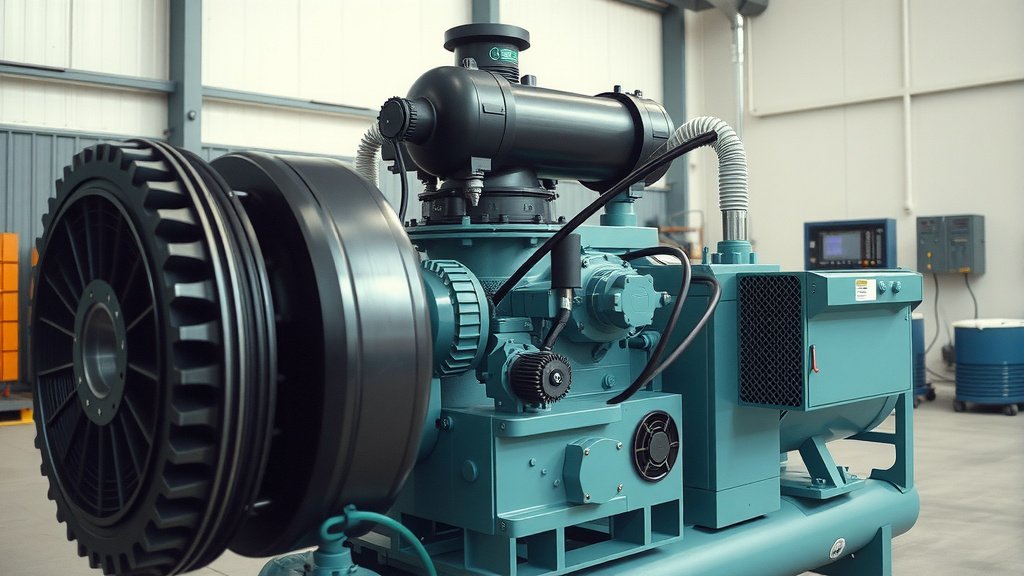
Beyond the rotors, a few other parts are essential. These components work together to ensure smooth and efficient operation. They also help protect the compressor from damage. Let’s look at some of these key players.
The Air Intake and Inlet Valve
Air enters the compressor through an intake port. This port is usually located at the end of the rotors. An inlet valve controls the flow of air into the compression chamber. It opens to let air in and closes to prevent it from escaping backward. This valve is carefully timed with the rotor’s rotation for optimal air intake.
Lubrication System: Oil-Flooded vs. Oil-Free
Many rotary screw compressors are ‘oil-flooded’. This means they inject oil directly into the compression chamber. Why? This oil serves several purposes. It acts as a sealant between the rotor lobes. It also cools the rotors and the air being compressed. Lastly, it lubricates the bearings and gears. This oil is then separated from the compressed air before it leaves the compressor. For applications where oil contamination is a concern, like food processing or electronics manufacturing, oil-free models are used. These use special materials and designs to avoid oil injection.
Oil Separation is Key
After compression, the mixture of air and oil needs to be separated. A large oil separator tank does the heavy lifting. The oil is collected and recirculated back into the system. Modern separators are highly efficient. They can remove over 99% of the oil from the compressed air. This is crucial for maintaining air quality.
Cooling System: Keeping Things Chill
Compressing air generates a lot of heat. A robust cooling system is vital. It prevents the compressor from overheating. This usually involves an air-to-air or air-to-oil heat exchanger. Cool air or oil circulates through these exchangers. It removes heat from the compressed air or the compressor’s internal components. Proper cooling ensures peak performance and longevity.
Control System and Monitoring
Modern rotary screw compressors have sophisticated control systems. These systems manage the compressor’s operation. They adjust output based on demand. They also monitor critical parameters like temperature and pressure. This intelligent control helps optimize energy usage. It also provides alerts if something is not right. Many systems can be integrated into larger automation networks.
Rotary Screw Compressor vs. Piston Compressor: A Quick Comparison
You might wonder how these stack up against the older piston types. We found some clear differences that make rotary screws popular for many jobs. Here’s a quick peek:
| Feature | Rotary Screw Compressor | Piston Compressor |
|---|---|---|
| Air Delivery | Continuous, smooth flow | Pulsating, intermittent flow |
| Duty Cycle | 100% continuous operation | Limited, prone to overheating with continuous use |
| Noise Level | Generally quieter | Typically louder |
| Size and Footprint | Compact for their output | Can be bulky |
| Maintenance | Fewer moving parts, often simpler maintenance | More vibration, more wear and tear on parts |
As you can see, for tasks needing a steady air supply, rotary screws often have the edge. Their ability to run for extended periods is a major plus for many industries.
Your Checklist for Understanding Rotary Screw Air Compressors
To wrap up, let’s quickly recap the essentials. Think of this as your quick mental checklist:
- Did you grasp how the two rotors trap and squeeze air?
- Do you understand the role of expanding and shrinking chambers?
- Can you recall the importance of the lubrication and cooling systems?
- Do you know why their continuous output is so beneficial?
- Are you clear on the difference between oil-flooded and oil-free designs?
Conclusion
You’ve now seen how rotary screw air compressors transform basic air into a powerful resource. Their ingenious design, using intermeshing rotors, provides a continuous and stable air supply. This makes them a reliable choice for demanding jobs. Understanding their mechanism, from rotor action to essential components like lubrication and cooling, helps you appreciate their efficiency. If your operations need consistent, high-quality compressed air, a rotary screw compressor is likely your best bet. Consider your specific air requirements to ensure you select the right model for your needs.
Frequently Asked Questions
How long can a rotary screw air compressor run continuously?
Rotary screw air compressors are designed for 100% duty cycle operation. This means you can run them non-stop without worrying about overheating. They are built for continuous use in industrial settings where air demand is constant.
What is the main difference in air output between rotary screw and piston compressors?
The primary difference is the continuity of air delivery. Rotary screw compressors provide a smooth, constant flow of air. Piston compressors, on the other hand, deliver air in pulses, with intermittent operation.
Why is oil used in some rotary screw compressors?
In oil-flooded models, oil serves multiple vital functions. It seals the rotor gaps, lubricates moving parts, and helps to cool the air and rotors during compression. This ensures efficient and long-lasting operation.
Are rotary screw compressors noisy?
Compared to piston compressors, rotary screw units are generally much quieter. Their design minimizes vibration and the noise produced during the compression cycle. This makes them more pleasant to work around.
What happens to the oil after it’s used in the compression chamber?
After compressing the air, the oil is separated from it. A high-efficiency oil separator removes the oil, which is then collected and recirculated back into the compressor. This process ensures the compressed air is clean and free of oil contamination.